


ArdorComm Media Group

Tuesday, June 9, 2026 11:50 AM

Indian higher education

NIRF Rankings 2025: IIT Madras leads overall for 7th year, IISc retains top university spot for 10th year

The National Institutional Ranking Framework (NIRF) 2025, released by the Union Ministry of Education on Thursday, reaffirmed the dominance of India’s premier institutes. The Indian Institute of Technology (IIT) Madras once again clinched the top position in the overall category for the seventh consecutive year, while the Indian Institute of Science (IISc), Bengaluru, was named the best university for the tenth straight year. The top 10 list in the overall rankings was largely led by IITs, alongside All India Institute of Medical Sciences (AIIMS), New Delhi, Jawaharlal Nehru University (JNU), and IISc. Among universities, JNU retained its second rank, while Delhi University improved its standing to fifth. A major highlight was BITS Pilani breaking into the top 10 universities for the first time since 2016, after climbing from 19th place last year. In the colleges category, Delhi University institutions dominated. Hindu College and Miranda House maintained the first and second positions, while Hansraj College and Kirori Mal College achieved their best-ever rankings at third and fourth, overtaking St. Stephen’s College (fifth this year). Lady Shri Ram College slipped significantly from 10th to 17th. Notably, Hansraj had been ranked 21st and Kirori Mal 20th back in 2018, highlighting their steady rise. Institutions were assessed on parameters including Teaching, Learning & Resources (TLR), Research & Professional Practice (RP), Graduation Outcomes (GO), Outreach & Inclusivity (OI), and Perception (PR). IIT Madras excelled with a perfect 100 in perception—an achievement it has maintained since 2023—alongside strong scores in TLR (90.58). However, its weakest area remained inclusivity, with a score of 63.34. Among colleges, Hansraj College and Atma Ram Sanatan Dharma College recorded the strongest research and professional practice scores (above 96), whereas Hindu College led on perception. In the universities category, JNU stood out for graduation outcomes (99.93), while IISc topped in teaching, learning, and perception but lagged in inclusivity. The 2025 edition saw a record 7,692 institutions participate, compared to 2,426 in the inaugural 2016 rankings. This year introduced a new Sustainable Development Goals (SDG) category, recognizing institutions’ green and innovation practices. IIT Madras ranked first here as well, besides leading in engineering and innovation. In management, IIM Ahmedabad retained its crown. Anil D. Sahasrabudhe, Chairman of the National Board of Accreditation, highlighted a new rule—negative marking for retracted research papers—to address growing concerns over academic integrity. IIT Madras Director Prof. V. Kamakoti credited the institution’s consistent top performance to “focused team effort.” Source: Indian Express 
NIRF Rankings 2025: IIT Madras leads overall for 7th year, IISc retains top university spot for 10th year Read More »

Delhi University Allows Pause and Resume Option for UG Students under NEP 2020 Guidelines

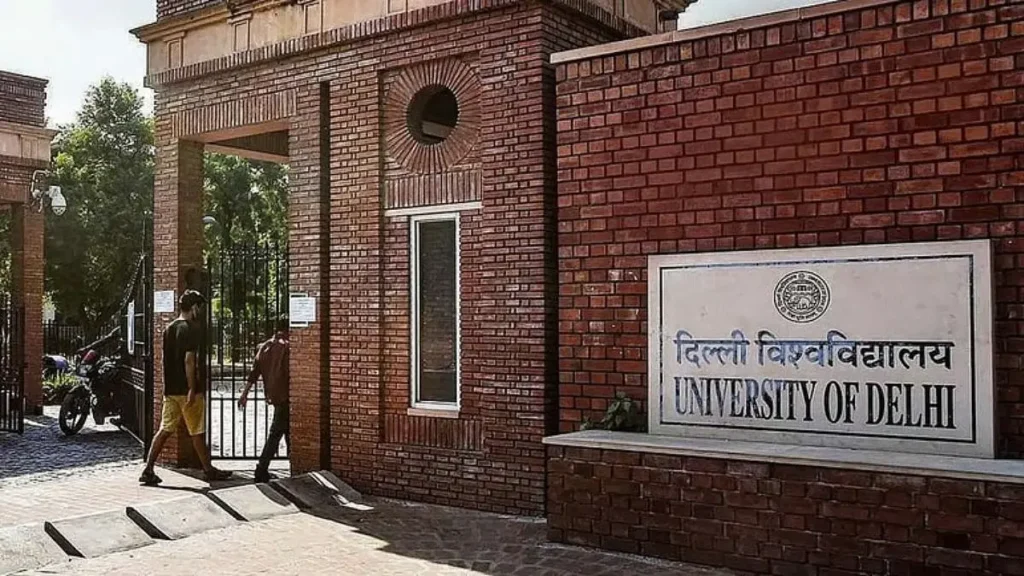
In a landmark step towards making higher education more flexible and inclusive, Delhi University (DU) has rolled out a new academic policy allowing undergraduate students to pause and resume their degree programmes. The change comes under the Multiple Entry and Exit (ME-ME) system, introduced as part of the National Education Policy (NEP) 2020 and implemented through the Undergraduate Curriculum Framework (UGCF) 2022. The ME-ME system enables students to exit a programme after completing any even-numbered semester and rejoin within a defined period—without losing their earned academic credits. The move is expected to particularly benefit students facing interruptions due to personal, financial, or professional commitments. What the New System Offers: Exit after 1st Year (Semester II): Undergraduate Certificate (minimum 44 credits) Exit after 2nd Year (Semester IV): Undergraduate Diploma (minimum 88 credits) Exit after 3rd Year (Semester VI): Bachelor’s Degree (minimum 132 credits) Continue till 4th Year (Semester VIII): Bachelor’s with Honours/Research/Entrepreneurship (minimum 176 credits) Students re-entering the programme must do so within three to four years, depending on the exit level, and within an overall seven-year cap. The credit system is based on classroom and lab hours, with one credit representing one hour of teaching or two hours of lab/field work per week. DU has clarified that students must apply for an official exit before the next academic session begins. If a student exits mid-session, only the qualification corresponding to the last completed academic year will be recognised. Any disputes related to the new system will be resolved by the Vice Chancellor. Additional rules regarding lateral admissions from other universities or institutions are expected in the coming months. Why It Matters In an era where student priorities are increasingly shaped by internships, entrepreneurial pursuits, competitive exams, or family responsibilities, this move brings Indian higher education in step with global norms. The modularity of the ME-ME system recognises academic effort at every stage and ensures students do not have to abandon their goals due to temporary setbacks. With this reform, Delhi University is not just reducing dropout rates—it is reimagining higher education for the 21st century. Source: TOI

Delhi University Allows Pause and Resume Option for UG Students under NEP 2020 Guidelines Read More »

IIT Delhi Surpasses IIT Bombay in QS World Rankings 2025, Becoming India’s Top University

In a notable shift in the QS World University Rankings 2025, IIT Delhi has overtaken IIT Bombay to become India’s highest-ranking university. This year’s rankings underscore the remarkable progress of India’s higher education system within Asia, with two Indian institutions in the top 50 and seven in the top 100. IIT Delhi rose to the 44th position, an improvement from last year’s 46th, bolstered by an employer reputation score of 99%. IIT Bombay follows closely at 48th, achieving an impressive employer reputation score of 99.5% and an academic reputation score of 96.6%. One of the most significant leaps was made by the University of Petroleum and Energy Studies (UPES), which climbed 70 spots to secure 148th, marking the biggest improvement among Indian institutions. Additionally, five Indian institutions—namely, IIT Madras (56), IIT Kharagpur (60), Indian Institute of Science (62), IIT Kanpur (67), and the University of Delhi (81)—secured places within the top 100. The University of Delhi advanced significantly from 94th to 81st place, receiving a score of 96.4% in the International Research Network indicator. Meanwhile, Anna University achieved a perfect 100 in the Papers Per Faculty indicator, highlighting India’s strength in academic research. Further achievements include North Eastern Hill University and the University of Agricultural Sciences, Bangalore, both attaining perfect scores in the faculty-student indicator, showcasing top-tier academic environments. The high standards across Indian universities were further evidenced by 15 institutions scoring above 99% in the staff with PhD indicator, reflecting the country’s emphasis on advanced teaching and research. The upward trajectory of Indian universities in the QS rankings is a testament to the country’s commitment to strengthening its educational and research foundations on a global scale. Source: ABP Live Photo Credit: ABP Live

IIT Delhi Surpasses IIT Bombay in QS World Rankings 2025, Becoming India’s Top University Read More »