ArdorComm Media Group

Saturday, March 7, 2026 2:35 AM

ISRO

PM Modi Unveils ₹1 Lakh Crore R&D Fund, Calls for Ethical and Inclusive Innovation at ESTIC 2025

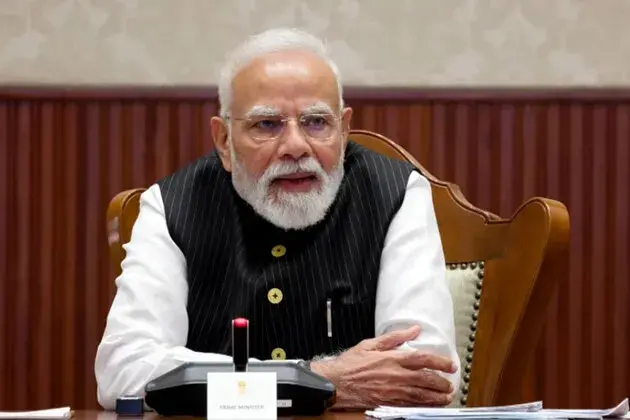
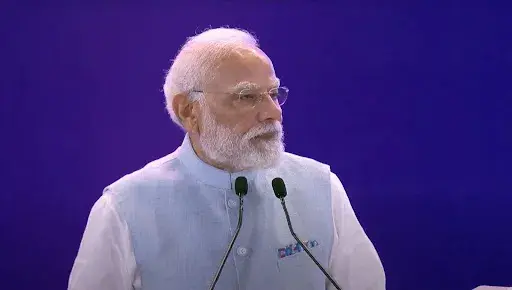
Prime Minister Narendra Modi addressed the Emerging Science, Technology and Innovation Conclave (ESTIC) 2025 at Bharat Mandapam on Nov 3, highlighting India’s growing leadership in science, technology, and innovation. Welcoming participants from India and abroad — including scientists, innovators, academics, and policymakers — the Prime Minister celebrated India’s landmark achievements in both sports and science. Opening his remarks, PM Modi congratulated the Indian women’s cricket team for their historic ICC Women’s World Cup victory, saying the nation was “immensely proud” of their achievement, which will inspire millions of young Indians. The Prime Minister also hailed India’s scientists for successfully launching the heaviest communication satellite, commending ISRO for its continued contribution to India’s space advancements. He noted that both achievements reflected India’s growing spirit of excellence and innovation. R&D Boost: ₹1 Lakh Crore RDI Scheme Announced Underscoring the government’s commitment to strengthening India’s research ecosystem, PM Modi formally launched the ₹1 lakh crore Research, Development and Innovation (RDI) Scheme Fund, designed to boost private sector–led R&D. He emphasized that, for the first time, capital will be made available for high-risk, high-impact research projects, and reaffirmed that the government is “building a modern innovation ecosystem” by easing financial rules, procurement norms, and regulatory frameworks to accelerate the journey from lab to market. He also referred to the establishment of the Anusandhan National Research Foundation (ANRF) to expand research and innovation across Indian universities. India’s Innovation Momentum PM Modi highlighted India’s transformation into a global innovation hub — noting that R&D spending has doubled in the past decade, patent registrations have risen 17-fold, and India now ranks as the world’s third-largest startup ecosystem. Over 6,000 deep-tech startups are driving progress in areas such as clean energy, materials science, and semiconductors, while India’s bio-economy has grown from $10 billion in 2014 to $140 billion today. He said, “India is no longer a consumer of technology — it is a driver of technological transformation,” citing the nation’s indigenous vaccine success during the COVID-19 pandemic and the reach of its Digital Public Infrastructure, which connects over two lakh gram panchayats with optical fibre. Empowering Women in Science Highlighting inclusive innovation, the Prime Minister celebrated the rising participation of women in STEM. He noted that women now make up 43% of STEM students in India — above the global average — and that annual patent filings by women have increased from fewer than 100 to over 5,000. He added that Indian women scientists are now at the forefront of space research and innovation. Encouraging the Next Generation PM Modi underscored the importance of nurturing scientific curiosity among youth. Recalling the public excitement around Chandrayaan and the recent Indian space station mission, he said these moments have inspired young minds to explore science. He announced plans to expand Atal Tinkering Labs from 10,000 to 25,000 labs, giving over one crore students a platform for hands-on innovation. The Prime Minister also shared that 10,000 new research fellowships will be awarded over the next five years under the Prime Minister’s Research Fellowship to further empower young scientists. India’s Vision for Ethical AI and Future Technologies Speaking about the future of emerging technologies, PM Modi stressed that science and technology must remain ethical, inclusive, and human-centric. He cited the India AI Mission, with an investment of ₹10,000 crore, aimed at making AI accessible and beneficial for all. He also announced that India will host the Global AI Summit in February 2026, focusing on inclusive and safe AI governance. Calling for innovation in critical areas such as nutrition security, biofortified crops, clean energy storage, bio-fertilisers, and genomic medicine, the Prime Minister urged scientists to work towards achieving self-reliance in key inputs and technologies. Concluding his address, PM Modi invoked the spirit of “Jai Vigyan, Jai Anusandhan”, reaffirming the government’s full support for researchers and innovators. He expressed confidence that the outcomes of ESTIC 2025 will chart a new roadmap for India’s scientific and technological future. Source: PIB


PM Modi Unveils ₹1 Lakh Crore R&D Fund, Calls for Ethical and Inclusive Innovation at ESTIC 2025 Read More »

NCERT Must Build Competence, Knowledge for Nation-Building: Dharmendra Pradhan

On the 65th Foundation Day of NCERT, Union Education Minister Dharmendra Pradhan emphasized the council’s crucial role in shaping an empowered and knowledgeable society. He called upon NCERT to adopt global best practices while remaining rooted in India’s cultural and linguistic strengths. “NCERT’s responsibility is to make our people competent and raise knowledge levels. You are the true nation-builders,” Pradhan said, addressing the gathering. He stressed the need for children to gain proficiency in English while also achieving conceptual clarity through their mother tongues. Reflecting on past curriculum reforms, Pradhan referred to the National Curriculum Frameworks (NCF) of 2000 and 2005, noting that changes introduced earlier created confusion. He asserted that NCERT is now setting the framework in the right direction, free from what he termed a “slave mentality” that deprived the nation of self-reliance and pride. He further praised new NCERT modules, such as those on Operation Sindoor and Partition Horrors Remembrance Day. Former ISRO Chairman S. Somanath, also present at the event, credited NCERT textbooks for shaping his early academic foundation but noted their shortcomings. “Those books built my career, yet they missed highlighting India’s scientific heritage and achievements. I had to relearn many things later. Today, I see a transformation, with more focus on our own legacy,” he said. Somanath also stressed the importance of promoting learning in Indian languages, pointing out that reliance on foreign textbooks during higher education limited students’ connection with indigenous knowledge systems. “Rooting education in our own language is essential,” he remarked. Source: Indian Express

NCERT Must Build Competence, Knowledge for Nation-Building: Dharmendra Pradhan Read More »

From bicycles to the Moon: NCERT brings India’s space journey into classrooms

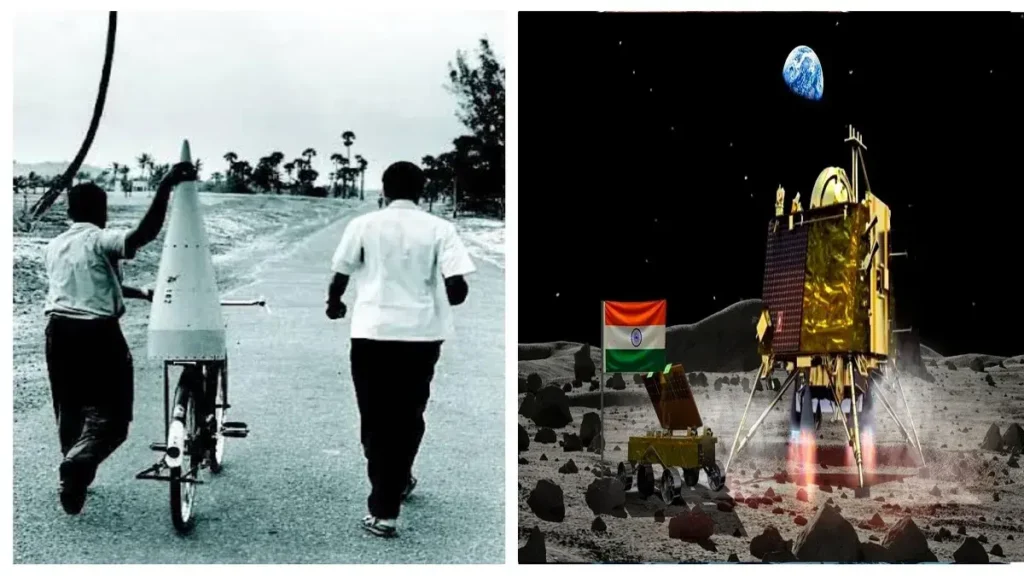
India’s space story — from humble beginnings of carrying rocket parts on bicycles and bullock carts to achieving landmark missions like Chandrayaan, Mangalyaan, and the upcoming Gaganyaan — has now been woven into NCERT’s new learning modules. The special set of two modules, titled “India: A Rising Space Power”, traces the evolution of the Indian space programme. It begins with the creation of the Indian National Committee for Space Research (INCOSPAR) in 1962 under Dr. Vikram Sarabhai, which later transformed into the Indian Space Research Organisation (ISRO), now counted among the world’s top space agencies. One of the modules highlights how India’s first rocket was so lightweight that its parts were transported using bicycles and bullock carts. Scientists avoided motorised vehicles since their electric and magnetic fields could interfere with delicate instruments, proving that simple means ensured success. The modules also honour India’s astronauts — Squadron Leader Rakesh Sharma, who became the first Indian in space in 1984, and Group Captain Shubhanshu Shukla, who in June 2025 became the first Indian to live aboard the International Space Station. They feature a quote from Prime Minister Narendra Modi: “Space may seem distant, but is an integral part of our daily life… India’s space programme is a perfect example of our vision of Scale, Speed and Skill.” Key milestones listed include: Chandrayaan-1 (2008): Discovered water molecules on the Moon. Mangalyaan (2013): Made India the first Asian nation to reach Mars, and the only country to succeed on its maiden attempt. Chandrayaan-2 (2019): Though its lander was lost, the orbiter continues to provide valuable lunar data. Aditya-L1 (2023): India’s first solar observatory at Lagrange Point-1, dedicated to studying the Sun and solar storms. Looking ahead, the modules also highlight the NASA-ISRO NISAR satellite, expected to deliver high-resolution global data every 12 days on ecosystems, glaciers, and natural disasters. Source: PTI

From bicycles to the Moon: NCERT brings India’s space journey into classrooms Read More »

India and Philippines Forge Deeper Ties: 14 MoUs Signed to Boost Defence, Trade, Maritime, and Tourism Cooperation

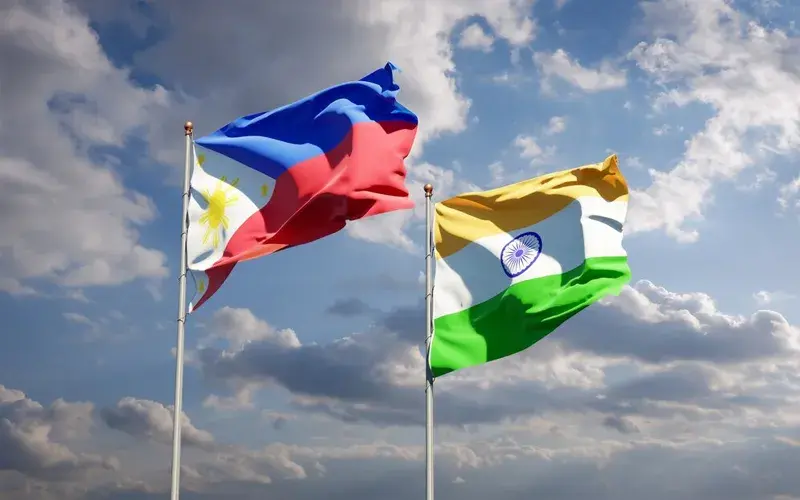
In a significant diplomatic move marking the 75th anniversary of their bilateral ties, India and the Philippines on Tuesday signed 14 Memoranda of Understanding (MoUs) to broaden cooperation across key strategic areas. The agreements were exchanged in the presence of Indian Prime Minister Narendra Modi and Philippine President Ferdinand Romualdez Marcos Jr., who is on his first state visit to India. These new agreements signal a strengthening of ties between the two nations and include a wide range of sectors such as defence, maritime security, space, digital technology, science, tourism, and legal collaboration. One of the key outcomes was the adoption of Terms of Reference for negotiations on a Preferential Trade Agreement (PTA), laying the foundation for deeper economic integration. This step is expected to enhance bilateral trade and investment flows between the two growing economies. The MoUs also include treaties on mutual legal assistance in criminal matters, a Treaty on the Transfer of Sentenced Persons, and structured staff talks between the respective Air Forces, Armies, and Navies. Additionally, the two countries agreed to enhance coordination between their Coast Guards, especially in the context of rising maritime challenges in the Indo-Pacific. The maritime dimension of the partnership was further highlighted by the recent completion of the first India-Philippines Maritime Cooperative Activity (MCA) in the South China Sea — a region rife with overlapping territorial claims. Three Indian naval vessels — INS Delhi (D61), INS Kiltan (P30), and INS Shakti (A57) — participated in the joint patrols. The partnership also takes a leap forward in science, space, and technology. India’s ISRO and the Philippine Space Agency signed a Statement of Intent to collaborate on the peaceful use of outer space, while a new Programme of Cooperation in Science and Technology (2025–2028) was signed to foster joint research and innovation. In tourism, both nations agreed on an Implementation Program for Cooperation in Tourism (2025–2028). As a goodwill gesture, India also announced a gratis e-tourist visa facility for Filipino citizens for one year starting August 2025. Cultural connections were celebrated through a commemorative stamp release, featuring the national flowers — India’s lotus and the Philippines’ Sampaguita — symbolizing enduring ties. A Cultural Exchange Programme was also agreed upon to promote people-to-people connections. Prime Minister Modi emphasized the “ancient cultural bond” between the two countries, citing the Philippine version of the Ramayana — Maharadia Lawana — as a testament to their long-standing relationship. “We are friends by choice and partners by destiny,” Modi said. President Marcos hailed the elevation of the partnership to strategic status, noting India as the Philippines’ fifth strategic partner. He pointed to the growing synergy between the two nations and their alignment on global and regional issues. To guide the growing cooperation, both countries adopted a Strategic Partnership Plan of Action for 2025–2029, which will serve as a roadmap across multiple sectors — including health, pharmaceuticals, fintech, digital economy, infrastructure, culture, and multilateral coordination. India has also extended support to help the Philippines build a Sovereign Data Cloud Infrastructure as part of its digital transformation efforts and has invited the Philippines to participate in the Information Fusion Centre – Indian Ocean Region (IFC-IOR). This wide-ranging set of agreements reflects the shared vision of India and the Philippines to shape a secure, prosperous, and interconnected Indo-Pacific region. Source: ANI

India and Philippines Forge Deeper Ties: 14 MoUs Signed to Boost Defence, Trade, Maritime, and Tourism Cooperation Read More »

Shubhanshu Shukla Becomes Second Indian in Space, 41 Years After Rakesh Sharma

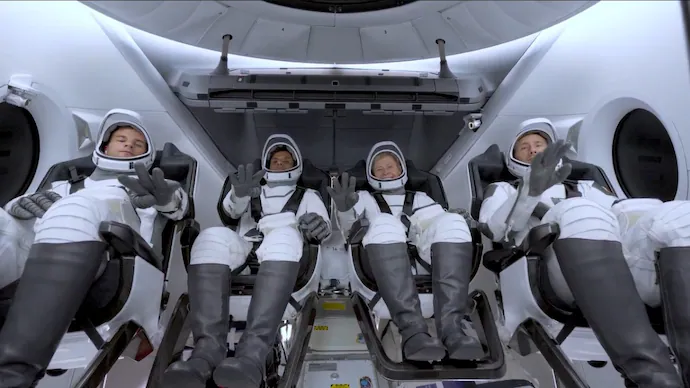
India has once again etched its name into the stars. Group Captain Shubhanshu Shukla of the Indian Air Force launched into space, becoming only the second Indian to do so — and the first to reach the International Space Station (ISS). His milestone flight comes 41 years after the legendary Rakesh Sharma’s 1984 mission aboard the Soviet Soyuz T-11. Launched from NASA’s Kennedy Space Center in Florida aboard SpaceX’s Dragon spacecraft, Shukla joins the Ax-4 mission of Axiom Space, marking a new era in India’s space journey. The crew, a mix of global astronauts, will live and work aboard the ISS for 14 days, conducting crucial scientific experiments. A Launch Worth the Wait The road to space was anything but smooth. Originally set for May 29, the launch faced seven delays due to technical issues, weather concerns, and complications aboard the ISS. SpaceX, NASA, ISRO, and Axiom Space worked tirelessly to resolve these, all while the crew remained quarantined and mission-critical biological samples were replenished. Despite the setbacks, the launch was a flawless spectacle. The Falcon-9 rocket’s engines thundered into life, lifting the Dragon capsule toward Low Earth Orbit. The first stage of the rocket returned to Earth successfully, while the second stage propelled Dragon into its planned path to the ISS. An Astronaut with a Purpose Shukla, born in 1985 — a year after Sharma’s flight — has long dreamed of reaching space. A decorated test pilot with experience flying aircraft like the MiG-21, Sukhoi-30 MKI, and Dornier, he now serves as the mission pilot. Although the Dragon is designed for autonomous docking, Shukla is responsible for monitoring flight systems and standing by for manual intervention if needed. His family watched the liftoff with pride from the viewing gallery, marking a moment not only of personal achievement but of national significance. International Crew, Shared Vision The Ax-4 crew reflects a spirit of global collaboration. Commanding the mission is Dr. Peggy Whitson — a legendary American astronaut and the most experienced spacefarer from the U.S., with over 675 days in orbit. Joining her are Poland’s Sawosz Uznanski, a CERN physicist and engineer representing the European Space Agency, and Hungary’s Tibor Kapu, a polymer technology expert involved in the HUNOR space program. Science in Orbit During the mission, Shukla will conduct seven India-designed experiments. These range from growing traditional Indian crops like moong and methi in microgravity to studying the behavior of microbes, muscle degeneration, the effects of prolonged screen exposure on mental health, and cellular ageing. One experiment will even explore algae as a sustainable space food source. The findings aim to inform future deep-space missions to the Moon and Mars. He will also connect with Indian students from orbit, inspiring the next generation of scientists and dreamers. Strategic Leap for Gaganyaan Shukla’s role in the Ax-4 mission is also a dress rehearsal for India’s upcoming Gaganyaan human spaceflight program, in which he is one of the four shortlisted astronauts. The operational knowledge — from international collaboration and pre-launch protocols to microgravity adaptation and scientific procedures — will feed directly into Gaganyaan’s readiness. This mission is not just about scientific progress; it strengthens India’s growing capabilities in human spaceflight, setting the stage for self-reliant space exploration. As Shubhanshu Shukla orbits Earth, he carries not only instruments and experiments — but the collective hopes of 1.4 billion Indians. His voyage is a testament to India’s rising stature in global space exploration and a symbol that the stars are indeed within reach. Source: India Today Photo Credit: SpaceX

Shubhanshu Shukla Becomes Second Indian in Space, 41 Years After Rakesh Sharma Read More »

Didn’t have the Courage to Sit for IIT Entrance’: ISRO Chief S Somanath Earns PhD from IIT-Madras

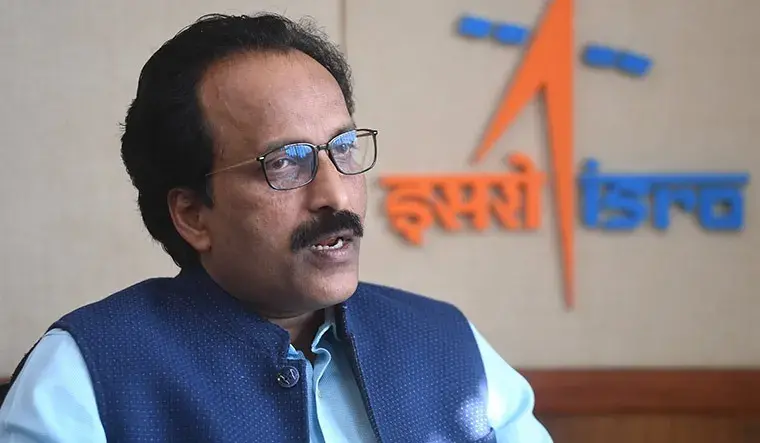
S Somanath, the 60-year-old chairman of the Indian Space Research Organisation (ISRO), received his PhD from IIT-Madras on Friday. Despite being the topper in the state for science, Somanath revealed, “I did not have the courage to write an entrance for IIT.” Speaking at the 61st convocation ceremony of IIT-Madras, Somanath, who was born in a village in Kerala, received his PhD degree for a thesis titled “Vibration Response Studies on Modified Hyper Elastic Material Models for Application in Aerospace Systems.” He expressed his deep connection to the topic, stating, “It is related to vibration isolators, which I started as an engineer in ISRO years ago. But this remained with me.” Somanath began his doctoral studies while working on the Geosynchronous Satellite Launch Vehicle Mark III (GSLV Mk III) project. However, the demands of his work at ISRO forced him to put his studies on hold. He shared, “Since I was immersed in that work then, I couldn’t take forward my PhD. It is a real good fortune that I could complete it after having assumed the office of chairman of ISRO. It is really a great honour.” Under Somanath’s leadership, ISRO achieved significant milestones, including the Chandrayaan-3 mission, which made India the first country to land near the south pole of the Moon, and the launch of India’s first solar observatory, Aditya-L1. The degree was awarded to him by IIT-M Director Prof V Kamakoti and Dr Pawan Goenka, Chairman of the Board of Governors, IIT-M. The convocation ceremony at IIT-Madras was attended by 2,636 graduates, their families, and guests. Among the graduates were 764 B.Tech students, 277 Dual Degree B.Tech and M.Tech students, and 481 M.Tech students. The event also featured a speech by Mechanical Engineering student Dhananjay Balakrishnan, who highlighted the ethical responsibilities of engineers in the context of global conflicts. “There is a mass genocide going on in Palestine. People are dying in large numbers and there is no end in sight. Why should we bother by this, you may ask? Because STEM as a field in itself has historically been used to advance the ulterior motives of the imperial powers such as Israel,” he said.

Didn’t have the Courage to Sit for IIT Entrance’: ISRO Chief S Somanath Earns PhD from IIT-Madras Read More »

ISRO’s Aditya-L1 Mission: India’s Solar Observatory Launches Successfully

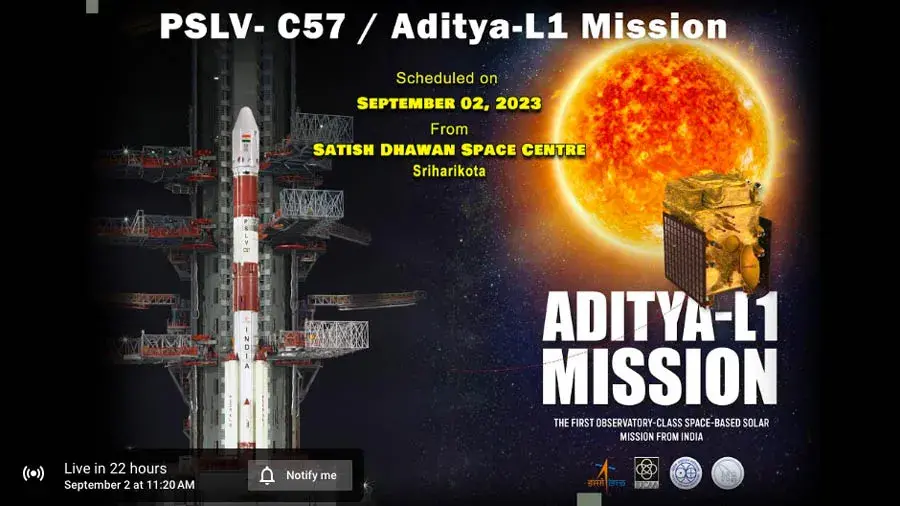
In a historic leap for India’s space exploration endeavours, the Indian Space Research Organisation (ISRO) has achieved a remarkable milestone with the successful launch of the Aditya-L1 solar observatory. This mission marks India’s inaugural foray into dedicated solar research, as the spacecraft embarks on a groundbreaking journey to the Sun-Earth L1 point. With precise placement into its intended orbit, Aditya-L1 now sets its sights on unravelling the enigmas of our nearest star, promising groundbreaking insights into solar dynamics and their influence on space weather. This mission not only positions ISRO at the forefront of solar science but also holds immense potential for advancing our understanding of the solar system’s intricate workings and their implications for life on Earth. PSLV-C57/Aditya-L1 Mission: The launch of Aditya-L1 by PSLV-C57 is accomplished successfully. The vehicle has placed the satellite precisely into its intended orbit. India’s first solar observatory has begun its journey to the destination of Sun-Earth L1 point. — ISRO (@isro) September 2, 2023 Prime Minister Narendra Modi congratulated the scientists and engineers at ISRO for the successful launch of India’s first Solar Mission, Aditya -L1. After the success of Chandrayaan-3, India continues its space journey. Congratulations to our scientists and engineers at @isro for the successful launch of India’s first Solar Mission, Aditya -L1. Our tireless scientific efforts will continue in order to develop better… — Narendra Modi (@narendramodi) September 2, 2023 Aditya-L1 will be India’s pioneering space-based mission focused on unravelling the mysteries of our nearest star, the Sun. This state-of-the-art spacecraft will be positioned in a halo orbit around the Lagrange point 1 (L1) of the Sun-Earth system, situated approximately 1.5 million kilometers from Earth. This unique orbit offers a significant advantage – uninterrupted views of the Sun, free from any eclipses or occultations. Consequently, Aditya-L1 will provide invaluable real-time observations of solar activities and their impact on space weather. The spacecraft is equipped with seven payloads designed to observe various layers of the Sun, including the photosphere, chromosphere, and the outermost layer, the corona. These payloads utilize electromagnetic, particle, and magnetic field detectors to gather data. Positioned at the Lagrange point L1, four of these payloads will directly observe the Sun, while the remaining three will conduct in-situ studies of particles and fields, offering crucial insights into the dynamics of solar activity within the interplanetary medium. The Aditya-L1 payloads are expected to deliver vital information on several key aspects, including the enigmatic problem of coronal heating, coronal mass ejections, pre-flare and flare activities, space weather dynamics, and the propagation of particles and fields in space. Science Objectives: The primary scientific objectives of the Aditya-L1 mission encompass: Solar Atmospheric Dynamics: Investigating the dynamics of the solar upper atmosphere, particularly the chromosphere and corona. Coronal Heating and Plasma Physics: Studying the mechanisms behind chromospheric and coronal heating, as well as the behavior of partially ionized plasma, initiation of coronal mass ejections, and solar flares. Particle Dynamics: Observing the in-situ particle and plasma environment to provide data for understanding particle dynamics originating from the Sun. Corona Heating Mechanism: Examining the physics of the solar corona and its heating mechanisms. Plasma Diagnostics: Providing diagnostics for coronal and coronal loop plasma, including temperature, velocity, and density measurements. Coronal Mass Ejections: Investigating the development, dynamics, and origins of coronal mass ejections (CMEs). Magnetic Field Studies: Studying magnetic field topology and measurements in the solar corona. Space Weather Drivers: Identifying the drivers for space weather, including the origin, composition, and dynamics of the solar wind. The launch of Aditya-L1 heralds a significant milestone in India’s space research efforts, positioning the country at the forefront of solar science and space weather forecasting. As Aditya-L1 embarks on its mission to unlock the secrets of the Sun, it promises to shed light on crucial aspects of our solar system, benefiting both scientific understanding and practical applications on Earth.

ISRO’s Aditya-L1 Mission: India’s Solar Observatory Launches Successfully Read More »

PM Modi Declares August 23 as ‘National Space Day’ After Chandrayaan-3’s Lunar Success

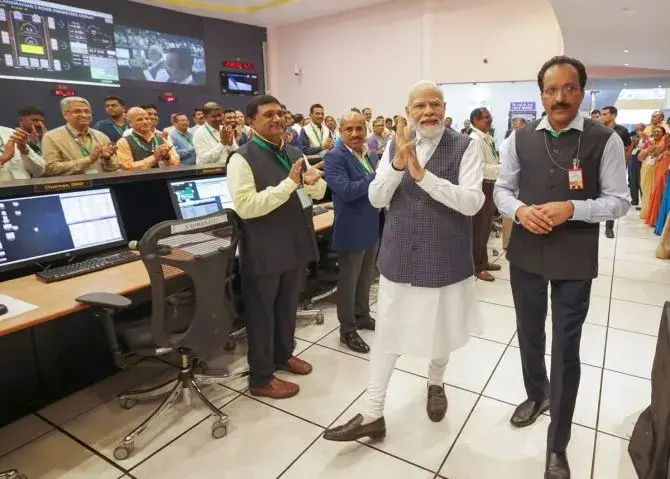
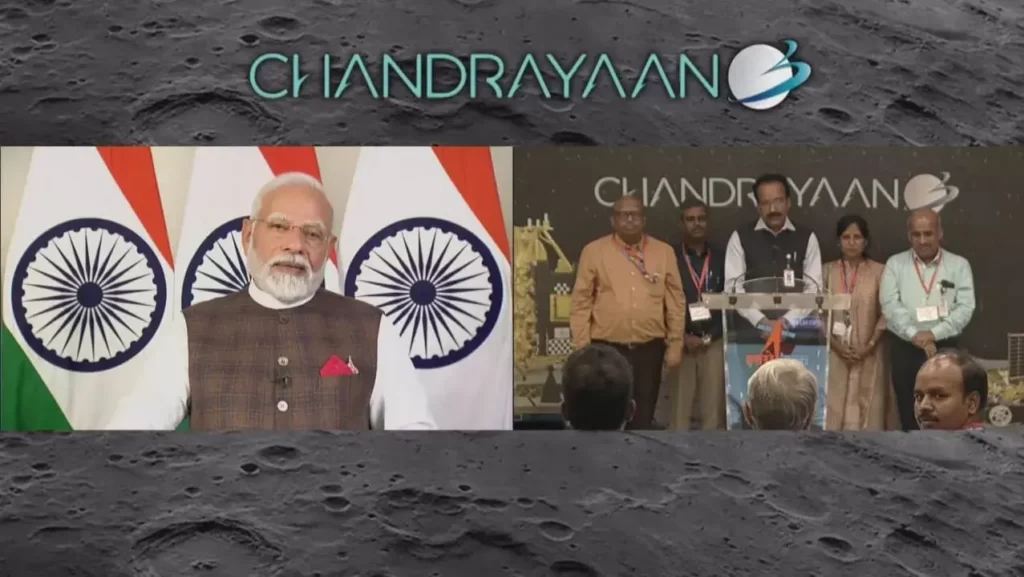
In a momentous announcement, Prime Minister Narendra Modi declared August 23rd as ‘National Space Day,’ during his address to the accomplished scientists at the Indian Space Research Organisation (ISRO) command centre in Bengaluru. The significance of this date stems from the successful soft landing of Chandrayaan-3 on the Moon’s south pole, a remarkable achievement celebrated as a milestone in India’s space exploration journey. Prime Minister Modi expressed his admiration for the Chandrayaan-3 team and particularly lauded the contributions of women scientists who played a pivotal role in the mission’s success. He revealed that the precise spot on the lunar surface where Chandrayaan-3 touched down would be named ‘Shivshakti,’ serving as an inspiration for future generations to utilize science for the betterment of humanity. He also designated the location where its predecessor, Chandrayaan-2, had landed as the ‘Tiranga’ point. Highlighting the importance of advancements in science, technology, and space exploration, PM Modi emphasized that nations leading in these fields are scripting history. To encourage the youth’s involvement in science, technology, and space endeavours, he proclaimed August 23rd, the day of Chandrayaan-3’s lunar landing, as National Space Day. Modi celebrated the fact that India’s national pride now resides on the Moon, marking an unprecedented achievement. He commended the scientists for taking the ‘Make In India’ initiative to the lunar surface, underscoring the boost to indigenous production resulting from Chandrayaan-3’s success. Despite not being physically present during the Chandrayaan-3 landing, PM Modi virtually attended the event, congratulating ISRO chairman S Somanath and the entire team for their historic achievement in the lunar south pole region. Chandrayaan-3, a follow-up mission to Chandrayaan-2, aims to accomplish three key objectives: a safe and soft landing on the lunar surface, rover mobility on the Moon, and in-situ scientific experiments. Following its successful landing on August 23rd, the lander (Vikram) and rover (Pragyan) will conduct a series of experiments on the lunar surface over the next two weeks. On a significant note, Pragyan rover has already made its debut on the Moon, covering a distance of 8 meters. While Chandrayaan-2’s soft-landing attempt didn’t succeed, ISRO’s orbiter from that mission continues to provide valuable data. ISRO’s historic achievement positions India among the world’s top four nations to achieve a soft landing on the Moon’s surface, and notably, it’s the first country to reach the unexplored southern polar region of the Moon.

PM Modi Declares August 23 as ‘National Space Day’ After Chandrayaan-3’s Lunar Success Read More »

India Rejoices as Chandrayaan-3 Successfully Lands on Moon’s South Pole

In a monumental achievement for India’s space exploration endeavours, Chandrayaan-3, the third lunar mission by the Indian Space Research Organisation (ISRO), successfully executed a soft landing on the Moon’s south pole today at 6:04 PM local time. The world watched in awe as India became the first country to reach this challenging region of the lunar surface. Chandrayaan-3 Mission:'India🇮🇳,I reached my destinationand you too!': Chandrayaan-3 Chandrayaan-3 has successfullysoft-landed on the moon 🌖!. Congratulations, India🇮🇳!#Chandrayaan_3#Ch3 — ISRO (@isro) August 23, 2023 The historic event was accompanied by live telecasts and updates, building anticipation across the nation and around the globe. Prime Minister Narendra Modi, addressing the nation following the successful landing, stated, “No country has reached there (the South Pole of the moon) before. With the hard work of our scientists, we have reached there.” He hailed the achievement as a symbol of India’s progress and innovation. Leaders from various sectors and regions joined in congratulating ISRO and the nation on this remarkable feat. Uttar Pradesh Chief Minister Yogi Adityanath celebrated the momentous occasion, and sweets were distributed at the Embassy of India in the United States in honor of the Chandrayaan-3’s success. PM Modi, who was in South Africa for the BRICS Summit, connected to ISRO via video conferencing to witness the historic moment firsthand. The mood at ISRO’s Mission Operation Complex in Bengaluru was one of jubilation as the nation’s pride soared high. Chandrayaan-3’s journey to this point was marked by meticulous planning and unwavering dedication from the ISRO team. The spacecraft underwent rigorous checks, and the mission was on schedule as the lander, named Vikram, began its descent. The mission’s success was not without its challenges. Chandrayaan-3’s landing was a complex process that involved reducing its speed from over 6,000 km/hr to nearly zero, transitioning from horizontal to vertical orientation, and finally achieving a soft landing on the lunar surface. Dr. Anand, a senior scientific officer at Nehru Planetarium in Bengaluru, assured the public that all instruments on the lander were functioning as expected. He praised ISRO’s preparedness for the mission. Chandrayaan-3’s success reflects India’s commitment to space exploration and engineering technology. The mission opens new horizons for lunar research and cements India’s position in the elite group of nations capable of reaching the Moon’s surface. The achievement comes after lessons learned from Chandrayaan-2, where the lander’s connection was lost above 2 kilometers. ISRO’s dedication to improvement and determination to succeed have now borne fruit with Chandrayaan-3. As the nation celebrates this historic milestone, it marks the dawn of a new era in India’s space exploration endeavors, inspiring the world with its commitment to scientific progress and innovation.

India Rejoices as Chandrayaan-3 Successfully Lands on Moon’s South Pole Read More »

India’s Chandrayaan-3 Moon Landing: A Bold Leap Towards Lunar Exploration

In just a few hours, India’s Chandrayaan-3 is set to attempt a historic soft landing on the moon’s southern pole. If successful, India will join an elite group of countries, including the US, China, and the former Soviet Union, in achieving this remarkable feat. The critical moment for the mission lies in the final 15 to 20 minutes, during which the Vikram lander, carrying the rover Pragyan, will gently touch down. The excitement surrounding this lunar touchdown is palpable, with celebrations and prayers being held in anticipation. The Indian Space Research Organisation (ISRO) will broadcast the landing live on its website, while DD National TV will begin its live coverage at 5:27 PM. The Chandrayaan-3 mission embarked on its journey from Sriharikota on July 14. The descent of the Vikram lander towards the lunar surface begins at a rapid velocity of 1.68 km per second. It then undergoes a deceleration process, but it’s still almost parallel to the moon’s surface. This phase, known as the rough braking phase, lasts for approximately 11 minutes. The critical transition to a vertical position relative to the moon’s surface marks the start of the fine braking phase. Any slight error in this delicate descent process could lead to a crash or damage to the spacecraft. A soft landing, in essence, involves a spacecraft descending and landing on the moon’s surface in a controlled manner without causing substantial harm to either the craft itself or its scientific instruments. However, there are significant challenges associated with achieving a soft landing, including overcoming high speeds and executing a precisely controlled descent. Chandrayaan-3 faces the daunting task of navigating these hurdles as it aims to make history on the lunar surface.

India’s Chandrayaan-3 Moon Landing: A Bold Leap Towards Lunar Exploration Read More »