ArdorComm Media Group

Sunday, November 8, 2026 11:34 PM

Jayant Chaudhary

Over 13,700 Teaching Vacancies in KVs and Navodaya Schools, Govt Assures Ongoing Recruitment Efforts
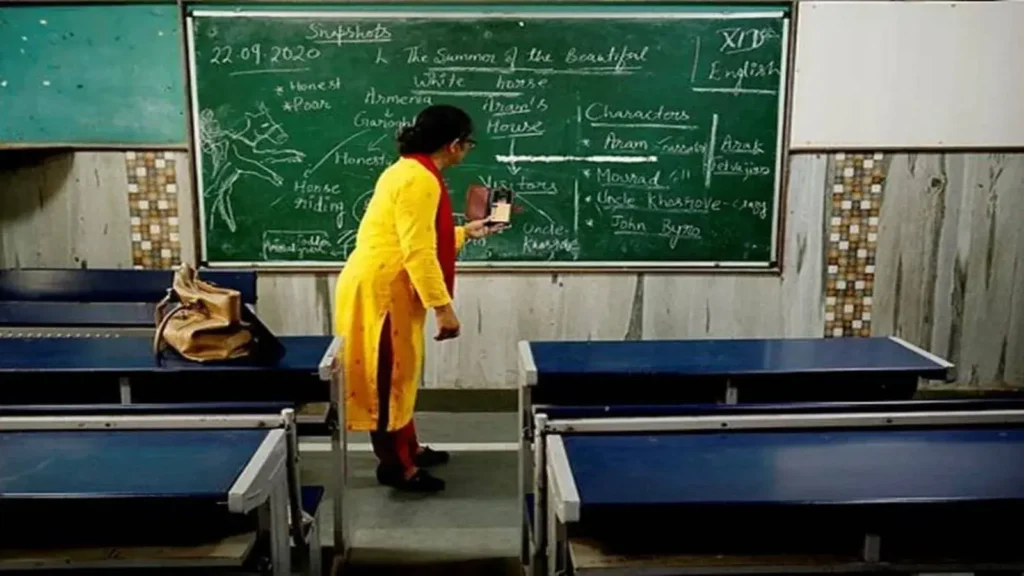
India’s central school systems — Kendriya Vidyalayas (KVs) and Jawahar Navodaya Vidyalayas (JNVs) — are currently facing a significant shortage of teaching staff, with over 13,700 positions lying vacant, the Ministry of Education informed Parliament. Responding to a written query in the Lok Sabha, Minister of State for Education Jayant Chaudhary revealed that 8,618 vacancies exist in KVs, while JNVs account for an additional 5,083 unfilled posts, taking the total deficit to 13,701. The minister attributed the shortfall to a range of factors, including the expansion of new schools, retirements, resignations, promotions, transfers, and institutional upgrades, all of which continuously generate new vacancies. He emphasized that recruitment is an ongoing process carried out in accordance with established rules, with efforts underway to fill positions as quickly as possible. In the meantime, both KVs and JNVs are relying on contractual teachers to ensure that academic activities continue without disruption. Chaudhary also reassured that despite the staffing gaps, student performance and academic standards remain stable, as reflected in consistent examination outcomes. Source: Indian Express  
Over 13,700 Teaching Vacancies in KVs and Navodaya Schools, Govt Assures Ongoing Recruitment Efforts Read More »

Govt Makes 150 Hours of On-the-Job Training Mandatory for ITI Trainees Under Craftsmen Training Scheme

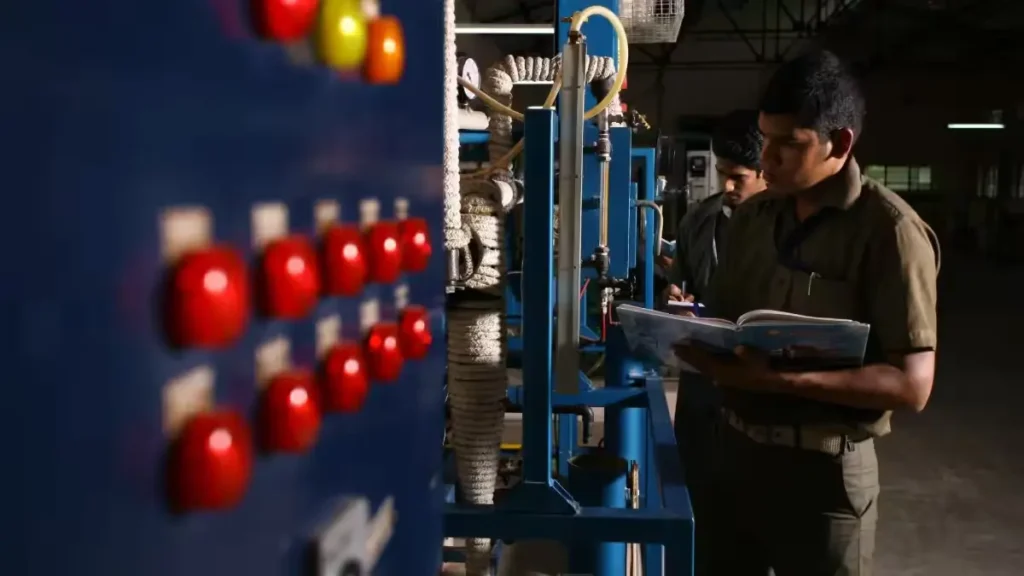
The Centre has made it compulsory for Industrial Training Institute (ITI) students enrolled under the Craftsmen Training Scheme (CTS) to complete 150 hours of structured on-the-job training (OJT) or a group project, as per fresh guidelines issued by the Directorate General of Training (DGT). The DGT operates under the Ministry of Skill Development and Entrepreneurship. Until now, ITI trainees primarily received practical instruction within campus workshops, working with tools and machinery available at their institutes. While this approach ensured foundational skills, it often limited exposure to modern industrial technologies and real-time workplace practices. Consequently, many trainees required additional hands-on training after entering the job market. To bridge this gap and align vocational education with industry demands, the DGT has restructured CTS qualifications in line with the National Education Policy (NEP) 2020. As part of the reforms, the annual training duration has been reduced from 1,600 hours to 1,200 hours. Additionally, a mandatory 150-hour OJT or group project component has been introduced to ensure practical industry exposure. Union Minister for Skill Development and Entrepreneurship Jayant Chaudhary termed the move a significant reform aimed at strengthening vocational education. He emphasised that classroom instruction alone is insufficient in a rapidly evolving industrial environment, and that real workplace experience is essential to build competence, confidence and professionalism among trainees. The initiative is also expected to deepen collaboration between industries and ITIs. Under the new guidelines, trainees will be eligible for OJT or project work only after completing at least three months of institutional training. The industry training will be conducted under the supervision of mentors, with regular performance assessments. The OJT component will also be integrated into a future data-driven grading framework. For students enrolled under the Dual System of Training (DST) mode, mandatory project work will replace OJT, as they already receive industry exposure during their course. Launched in 1950, the Craftsmen Training Scheme remains a key pillar of India’s vocational training ecosystem. The newly introduced OJT mandate aims to enhance employability, align skills with industry standards, and ensure smoother workforce integration for ITI graduates. Source: PTI

Govt Makes 150 Hours of On-the-Job Training Mandatory for ITI Trainees Under Craftsmen Training Scheme Read More »

India’s Literacy Rate Rises to 80.9% in 2023–24: Pradhan

ardorcomm news

India’s literacy rate has increased from 74% in 2011 to 80.9% in 2023–24, Union Education Minister Dharmendra Pradhan said on Monday during a virtual address on International Literacy Day 2025. Pradhan stressed that literacy is more than reading and writing, describing it as a path to dignity, empowerment, and self-reliance. He underlined that true progress would be achieved only when literacy becomes a lived reality for every citizen. Highlighting the government’s ULLAS–Nav Bharat Saaksharta Karyakram, the minister said over 3 crore learners and 42 lakh volunteers have joined the initiative. Around 1.83 crore learners have already taken foundational literacy and numeracy assessments, with a 90% success rate. The programme now offers study material in 26 Indian languages. Pradhan congratulated Ladakh, Mizoram, Goa, Tripura, and Himachal Pradesh for achieving full literacy, terming it a collective success of governments, society, and volunteers. Ladakh became the first Union Territory to be declared fully literate in June 2024, while Himachal Pradesh recently joined the list of fully literate states. The theme for this year’s International Literacy Day was “Promoting Literacy in the Digital Era.” Minister of State for Education Jayant Chaudhary noted that literacy in India has expanded to include digital literacy, crediting India’s digital public infrastructure for accelerating educational inclusion. “India has accomplished in a decade what could have taken fifty years, setting an example for the Global South,” Chaudhary said. Source: PTI

India’s Literacy Rate Rises to 80.9% in 2023–24: Pradhan Read More »

Over 4.7 Lakh Pirated NCERT Books Seized Since 2024, Says Education Ministry

In a significant crackdown on textbook piracy, the Ministry of Education revealed that over 4.7 lakh pirated NCERT textbooks have been confiscated across India since 2024. This update was shared in a written response by Union Minister of State for Education, Jayant Chaudhary, during a Rajya Sabha session on Wednesday. “Reports of NCERT textbook piracy have emerged from various parts of the country. From 2024 to 2025, enforcement teams seized around 4.71 lakh counterfeit books in multiple operations carried out in different states,” said Chaudhary. He emphasized that piracy is largely driven by the profit motives of unauthorized operators. NCERT’s mission, Chaudhary reiterated, is to provide high-quality educational resources at minimal cost to students across India, functioning on a no-profit, no-loss model. Highlighting recent efforts to combat the menace, he informed that in the past year alone, NCERT conducted raids on 29 locations linked to the production and distribution of pirated books. These included premises using unauthorized NCERT watermarked paper and illegal printing setups. Assets and equipment worth over ₹20 crore were seized during these raids. To address the root causes of piracy, several measures have been implemented, including a 20% price cut on textbooks, improved paper and print quality with advanced machinery, faster and timely textbook production, and expanded online availability through e-commerce channels. In a tech-driven approach, NCERT also tested an innovative anti-piracy mechanism—developed and patented by IIT Kanpur—on one million copies of a Class 6 textbook, aiming to deter counterfeit reproduction through secure tracking technology. Source: PTI Image Credit: iStock  

Over 4.7 Lakh Pirated NCERT Books Seized Since 2024, Says Education Ministry Read More »

Centre Urges Four States to Implement RTE, Reserve 25% Seats in Private Unaided Schools

The Centre has urged state governments to enforce the Right to Education (RTE) Act, which mandates reserving 25% of seats in private unaided schools for children from economically weaker sections. Minister of State for Education Jayant Chaudhary informed the Rajya Sabha that states like Punjab, Kerala, Telangana, and West Bengal have not yet implemented this provision. During the Question Hour, Education Minister Dharmendra Pradhan emphasized that education, being a concurrent subject, requires joint efforts from both the Centre and states to ensure school education up to class 12 for all children. He noted that while there is nearly 100% enrollment in class 1 due to collective efforts, the number of students decreases in higher classes, which depends on the proactive measures taken by state governments. Pradhan highlighted that the RTE Act, along with the National Education Policy (NEP), aims to ensure inclusive education for all children until class 12. He acknowledged the previous government for framing the RTE, which includes a significant provision for reserving 25% of seats for underprivileged kids. He appealed to the non-compliant states to implement this provision to achieve universal education. AAP’s Vikramjit Singh Sahney inquired about the number of children covered under RTE and the government’s actions to regulate higher education fees. Chaudhary responded that the RTE, passed in 2009, prioritizes inclusive education for children from poor families and has provisions for reintegrating those who missed formal education. He noted that the Punjab government, under AAP, cited a sufficient number of government schools as a reason for not implementing the 25% quota. Sahney also raised concerns about the high cost of education from kindergarten to postgraduate levels. Chaudhary pointed out that while education is a concurrent subject, states have a significant role in fee regulation. He mentioned that several states have formulated policies to regulate fees and that investments in education have increased, with the Centre’s budget for education doubling over the last decade. AAP’s Swati Maliwal highlighted the exploitation by private schools forcing parents to buy expensive uniforms and books. Pradhan reiterated that education is primarily a state subject, and state governments should take stringent actions against such profiteering, with the Centre’s support.

Centre Urges Four States to Implement RTE, Reserve 25% Seats in Private Unaided Schools Read More »