


ArdorComm Media Group

Friday, August 14, 2026 5:55 AM

Ministry of Environment

No immediate threat to Aravalli ecology; over 90% of region remains protected, says government

The central government has asserted that the ecological integrity of the Aravalli range is not under any immediate threat, stating that more than 90% of the region continues to remain under protection. The Ministry of Environment, Forest and Climate Change said sustained afforestation efforts, eco-sensitive zone declarations, and stringent oversight of mining and urban development are helping preserve the Aravallis as a vital ecological barrier and natural heritage. Union Environment Minister Bhupendra Yadav clarified that recent concerns around the Supreme Court’s 100-metre ruling on the Aravalli hills are based on misinterpretation. Addressing the media, he appealed to the public to refrain from spreading misinformation related to the fragile mountain range. The minister explained that the Aravalli range spans approximately 1.47 lakh square kilometres across Delhi, Haryana, Rajasthan, and Gujarat. Of this vast area, mining activities are permitted in only about 0.19%. He further emphasised that, in line with the Supreme Court’s directions, nearly 90% of the Aravalli region falls under protected status, with no relaxations granted. Highlighting Delhi’s status, Mr Yadav reiterated that mining is completely prohibited in the Aravalli hills within the national capital. He also noted that the Supreme Court has recently accepted the recommendations of a committee formed by the environment ministry, which redefined the Aravalli hill ranges. Under this definition, landforms with a height of less than 100 metres will no longer be classified as part of the ancient Aravalli system. The government maintained that these measures strike a balance between conservation and regulation, ensuring long-term ecological stability of the Aravallis. Source: newsonair
No immediate threat to Aravalli ecology; over 90% of region remains protected, says government Read More »

CPCB detects heavy metals in air across Delhi and nine other Indian cities

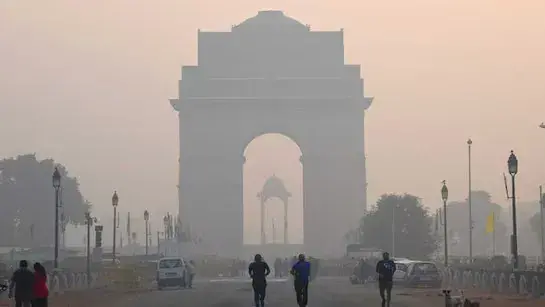
The Central Pollution Control Board (CPCB) has informed the National Green Tribunal (NGT) that heavy metals such as copper, zinc, chromium, and molybdenum have been detected in the air of ten Indian cities, including Delhi, where they constitute between 0.1% and 2.1% of the total PM10 concentration. The other cities included in the study are Jaipur, Bhopal, Lucknow, Ahmedabad, Nagpur, Kolkata, Bengaluru, Visakhapatnam, and Chennai. For Delhi, the CPCB collected air samples from Pitampura, Siri Fort, Janakpuri, and Shahdara during June and July 2025. The analysis followed an NGT directive from last year, which took suo motu cognisance of a Times of India report highlighting the presence of heavy metals in PM2.5 particles in East Delhi’s air. According to CPCB’s findings, these metals are typically bound to airborne particulate matter, meaning that reducing PM concentrations would likely lower their levels as well. During the monitoring period, Delhi’s average PM10 concentration was recorded at 130 µg/m³, with copper at 55.13 ng/m³, chromium at 12.25 ng/m³, molybdenum at 0.91 ng/m³, and zinc at 243.5 ng/m³. Previous studies have shown that chromium, copper, zinc, molybdenum, and lead are among the most common heavy metals present in PM2.5 in Delhi and other cities. The Heavy Metal Exposure Index (HEI) developed by researchers showed that East Delhi had one of the highest toxicity loads before the COVID-19 lockdown, later surpassed by Ludhiana. Areas such as Mayur Vihar, Dilshad Garden, and Laxmi Nagar were found to have significant levels. Lead researcher Kanhaiya Lal noted that India lacks national ambient air quality standards for several heavy metals, unlike countries such as Canada, which have established benchmarks. He also warned that airborne heavy metals pose serious health risks due to their toxic nature. The CPCB reiterated that under the National Clean Air Programme (NCAP) — launched in 2019 by the Ministry of Environment, Forest and Climate Change — India aims to achieve up to a 40% reduction in PM10 levels or meet the national standard of 60 µg/m³ by 2025–26, using 2017–18 as the baseline year. Source: TNN

CPCB detects heavy metals in air across Delhi and nine other Indian cities Read More »