ArdorComm Media Group

Thursday, September 17, 2026 3:26 AM

Ministry of Health

India’s Growing Metabolic Health Crisis: Obesity, Diabetes and Hypertension
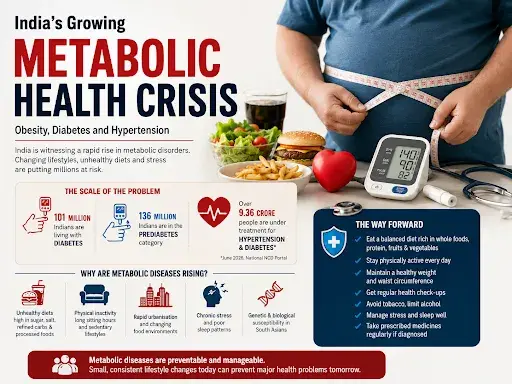
For years, India’s biggest health challenges were closely associated with infectious diseases, malnutrition and limited access to healthcare. But the country is now facing another major public-health challenge: a rapidly growing burden of metabolic and non-communicable diseases. Obesity, diabetes, hypertension and abnormal cholesterol levels are increasingly affecting Indians across age groups and income categories. What makes the situation particularly concerning is that these conditions are closely connected. A person with excess weight may develop insulin resistance, which can increase the risk of type 2 diabetes. High blood pressure and abnormal cholesterol can further increase the risk of heart disease and stroke. The problem is no longer confined to older adults. Younger Indians are increasingly exposed to sedentary lifestyles, calorie-dense diets, poor sleep and chronic stress, creating the conditions for metabolic problems much earlier in life. The World Health Organization identifies unhealthy diets, physical inactivity, tobacco use and harmful alcohol consumption as major behavioural risk factors for non-communicable diseases. These behaviours contribute to metabolic changes such as raised blood pressure, high blood glucose, overweight and obesity. The scale of India’s metabolic health problem One of the clearest pictures of India’s metabolic health comes from the ICMR-INDIAB study, a large population-based study covering adults across 31 states and Union Territories. Published in The Lancet Diabetes & Endocrinology in 2023, the study assessed more than 113,000 participants and examined the prevalence of diabetes, prediabetes, hypertension, obesity and other metabolic conditions. The findings estimated that India had around 101 million people living with diabetes, while another 136 million were in the prediabetes category. The study also highlighted substantial levels of hypertension and obesity, with considerable variation between states and between urban and rural populations. This variation is important. India does not have a single metabolic-health profile. Dietary habits, economic conditions, urbanisation, physical activity, genetics and access to healthcare differ significantly from one region to another. Yet the broader direction is clear: metabolic disorders have become a major component of India’s disease burden. Obesity is becoming a public-health issue Obesity is often discussed as an issue of appearance or weight management. Medically, however, excess body fat can have much broader consequences. India’s Ministry of Health and Family Welfare notes that overweight and obesity are important risk factors for conditions including coronary heart disease, hypertension, stroke, type 2 diabetes, fatty liver disease, certain cancers and osteoarthritis. The concern is also spreading to younger generations. In July 2026, reporting based on the World Obesity Atlas 2026 estimated that approximately 41 million children in India were overweight or obese. Around the same time, ICMR-NIN unveiled policy recommendations focused on improving children’s food environments, including measures involving food advertising, labelling, school canteens and the pricing of unhealthy foods. Childhood obesity is particularly concerning because metabolic risk can accumulate over decades. A child who develops unhealthy eating patterns and low physical activity early in life may carry those behaviours into adolescence and adulthood. That does not mean every overweight child will develop diabetes or hypertension. But it does mean that prevention has to begin much earlier than the traditional idea of starting health checks only in middle age. Diabetes: India’s expanding metabolic challenge Diabetes is perhaps the most visible part of India’s metabolic-health crisis. Type 2 diabetes develops when the body becomes resistant to insulin or does not produce enough insulin to maintain healthy blood glucose levels. Genetics can play a role, but lifestyle and environmental factors also influence risk. India’s dietary transition has become an important part of the discussion. A 2025 study based on ICMR-INDIAB data and published in Nature Medicine examined dietary patterns among more than 18,000 adults. It reported associations between higher consumption of low-quality carbohydrates, including refined grains and added sugars, and increased odds of type 2 diabetes, prediabetes and obesity. The study also found that replacing a portion of dietary carbohydrates with protein, particularly from sources such as pulses, legumes and dairy, was associated with lower diabetes risk. This does not mean that carbohydrates are inherently unhealthy or that Indians should eliminate rice or wheat from their diets. Rather, it highlights the importance of diet quality, portion sizes and dietary balance. For many Indians, the issue is not simply the presence of carbohydrates but a dietary pattern dominated by refined grains and added sugars, combined with insufficient protein, fibre, vegetables and other nutrient-dense foods. Hypertension: The silent component of the crisis If diabetes is often associated with blood-sugar testing, hypertension presents a different challenge. High blood pressure can remain undetected for years because many people experience no obvious symptoms. Persistently elevated blood pressure places additional strain on blood vessels and the heart and increases the risk of cardiovascular disease, stroke and kidney problems. India’s National Programme for Prevention and Control of Non-Communicable Diseases includes population-based screening for hypertension and diabetes among people aged 30 years and above. The screening process includes assessment of risk factors, BMI and blood pressure, among other measures. Government data also indicate the scale of the response required. The National NCD portal reported more than 9.36 crore people under treatment for hypertension and diabetes as of June 2026. Importantly, the number of people receiving treatment should not be interpreted as the total number of Indians living with these diseases. It represents people captured within the government’s treatment system. Why are metabolic diseases increasing? There is no single cause. 1. Changing food habits India’s food environment has changed rapidly. Traditional diets have increasingly been supplemented or replaced by packaged foods, sugary drinks, refined carbohydrates, fried foods and highly processed snacks. Convenience has become an important factor, particularly in urban areas where long working hours and commuting leave less time for preparing meals. 2. Physical inactivity Modern work increasingly involves sitting for prolonged periods. Office jobs, commuting, screen-based entertainment and reduced everyday physical activity can result in people expending far fewer calories than previous generations. Regular exercise cannot completely compensate for an unhealthy diet, but physical activity remains an important component of metabolic health. 3. Urbanisation Urbanisation has brought economic opportunity

India’s Growing Metabolic Health Crisis: Obesity, Diabetes and Hypertension Read More »
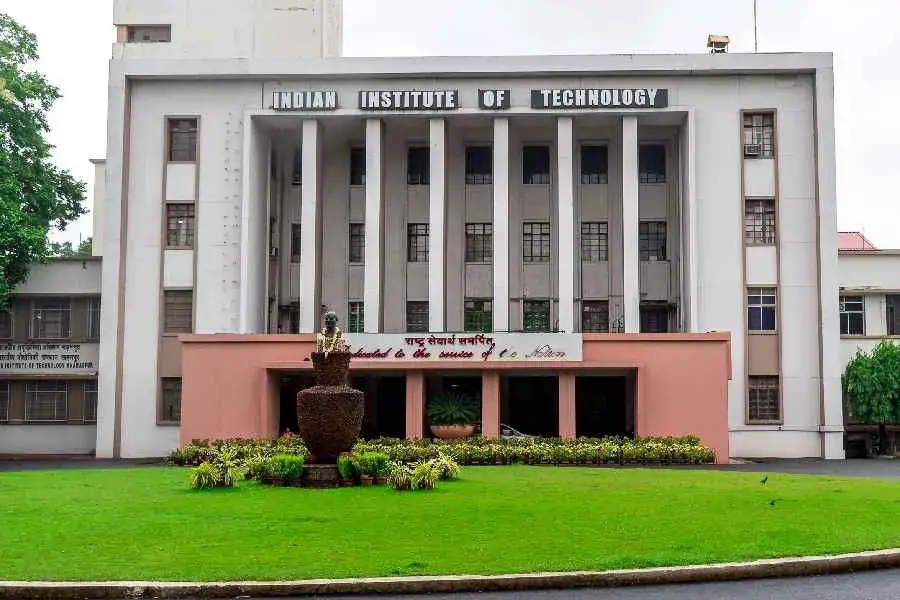
IIT Kharagpur Moves to Launch First-Ever MD Programme, Awaits NMC Clearance

Indian Institute of Technology Kharagpur has formally applied to the National Medical Council seeking approval to introduce a postgraduate Doctor of Medicine (MD) programme, marking a potential first for the IIT system. Institute Director Suman Chakraborty confirmed that the application has been submitted ahead of the March 31 deadline. While the Ministry of Education has expressed support, the final approval will depend on the Ministry of Health and Family Welfare, as the proposal requires coordination between multiple ministries. The institute plans to initially offer 20 seats under the MD programme. Preparations are already underway, including the recruitment of 20 doctors who will serve as faculty members. Training for students will take place at the institute’s medical facilities, including the Dr B C Roy Multi Specialty Medical Research Centre and the Syama Prasad Mookerjee Super Speciality Hospital. Admissions are expected to be conducted through the National Eligibility cum Entrance Test (NEET). Additionally, the Syama Prasad hospital is being expanded into a 220-bed inpatient department (IPD) facility under a mission-mode initiative, aimed at enhancing healthcare services for the campus and surrounding community. The proposal was earlier approved by the institute’s Board of Governors in September 2025, but timelines for final approval remain uncertain pending regulatory clearance. Source: PTI

IIT Kharagpur Moves to Launch First-Ever MD Programme, Awaits NMC Clearance Read More »

National Sports Governance Bill to Be Introduced in Parliament This Monsoon Session

Union Sports Minister Mansukh Mandaviya has confirmed that the much-anticipated National Sports Governance Bill will be tabled in Parliament during the upcoming monsoon session, set to begin on July 21. The minister made the announcement while speaking at an event organized to unveil new initiatives by the Department of Youth Affairs focused on combating drug abuse. Mandaviya stated, “The bill will be introduced in Parliament during the upcoming session. I will share further details in the next couple of days.” Designed to enhance transparency and accountability in Indian sports administration, the proposed bill seeks to establish a central regulatory board. This body will oversee the recognition and funding of National Sports Federations (NSFs), ensuring they comply with best practices in governance, finance, and ethics. The draft legislation also outlines the formation of independent Ethics Commissions and Dispute Resolution Commissions to safeguard the integrity and transparency of sports governance in the country. However, the bill has faced resistance, particularly from the Indian Olympic Association (IOA), which contends that the formation of such a regulatory board may infringe upon its authority as the apex body managing NSFs. In a parallel initiative, the Ministry of Youth Affairs and Sports will host a three-day Chintan Shivir in Varanasi from July 18 to 20, focusing on the issue of substance abuse among the youth. Titled ‘Nasha Mukt Yuva for Viksit Bharat’, the conclave aims to chart a roadmap toward a drug-free India by 2047. The event will begin with participant registration on July 18, and the main sessions will commence on July 19 at the Rudraksh Convention Centre. Around 500 delegates are expected to attend, with five representatives each from 100 spiritual and social organisations. The Ministry of Health, Ministry of Social Justice and Empowerment, Ministry of Culture, the Narcotics Control Bureau, the National Legal Services Authority (NALSA), and various youth groups will be actively involved in the event. The Kashi Declaration, a national action plan to address drug addiction, will be released at the conclusion of the conclave, summarizing the key discussions and outcomes from the sessions. Source: PTI  

National Sports Governance Bill to Be Introduced in Parliament This Monsoon Session Read More »

Niti Aayog Plans Overhaul of AIIMS Delhi to Expand Reach and Ease Patient Load

Ardorcomm news

The All India Institute of Medical Sciences (AIIMS), Delhi, could soon undergo a major transformation, as Niti Aayog is reportedly drafting a comprehensive revamp plan for the country’s premier medical institution. The proposal envisions expanding AIIMS’ clinical services beyond its central campus to various locations across the National Capital Region (NCR), according to a senior government official. The initiative aims to alleviate the overwhelming pressure on the existing infrastructure and allow doctors to dedicate more time to research. The proposal seeks to reserve the main AIIMS campus for critical care and trauma patients, which would also help reduce the long wait times for vital medical procedures. Currently, AIIMS Delhi handles an average of 7,200 patients daily at its Out-Patient Department (OPD) and 400-500 cases at the casualty ward. To address this high patient load, the VK Paul-led committee under Niti Aayog is examining internal systems and exploring ways to decentralise services without compromising the institute’s renowned quality of care. The committee is preparing a detailed blueprint that includes phased reforms—short-term, medium-term, and long-term—complete with implementation timelines. The report is expected to be submitted to the Ministry of Health in the latter half of 2025. One of the strategies under consideration is to utilise underused infrastructure in other government and possibly private hospitals to host AIIMS OPD services. This would allow for more efficient distribution of patient care and help manage the caseload more effectively. “All factors are being reviewed to ensure that service quality remains uncompromised,” said the official. “A final decision will be based on the recommendations of the expert panel.” A medical practitioner involved in the stakeholder consultations emphasized the need for both patient load reduction and administrative reforms to elevate the institution to global standards. However, they cautioned that success will depend on strict oversight. “The idea of decentralising OPDs will only work if there’s a robust monitoring mechanism to ensure the same level of care is provided as at AIIMS,” the practitioner noted, requesting anonymity. If implemented, the overhaul could significantly reshape the future of healthcare delivery in Delhi and set a precedent for other government-run medical institutions across the country. Source: ET Health

Niti Aayog Plans Overhaul of AIIMS Delhi to Expand Reach and Ease Patient Load Read More »

India Sees Uptick in COVID-19 Cases: Active Infections Near 4,000, Deaths Reported Across Key States

Ardorcomm news

India is witnessing a steady rise in COVID-19 infections, with active cases reaching 3,961 as of Monday, June 2—a jump of 566 cases from the previous day, according to data from the Ministry of Health and Family Welfare (MoHFW). The recent surge is driven primarily by states like Kerala, Maharashtra, and Delhi, which are reporting the highest case numbers. Since the start of the year, the country has registered 32 COVID-related deaths, including four in the last 24 hours. One fatality each was reported from Delhi, Kerala, Maharashtra, and Tamil Nadu. The deceased include a 22-year-old woman from Delhi with a history of post-tuberculosis complications and a 44-year-old man from Maharashtra suffering from acute respiratory distress and aortic valve problems. While Kerala confirmed another death, specific details are awaited. Delhi Records Steepest Daily Spike; Tamil Nadu, Karnataka Also Report Fatalities Delhi saw the most significant daily rise in active infections among major states, adding 47 new cases and logging one death. Tamil Nadu, with 189 active cases, reported the passing of a 25-year-old man with underlying bronchial asthma and acute kidney complications. Karnataka, currently reporting 253 active cases, recorded a fresh fatality, while Uttar Pradesh reported two deaths and has 157 active cases. In total, 16 states and Union Territories have recorded COVID-related deaths in 2025. However, the majority of cases remain mild, with limited hospital admissions. Kerala Leads in Caseload; Maharashtra, West Bengal Also on High Alert Kerala continues to report the highest number of active COVID-19 cases at 1,435, rising from 1,336 the previous day. Maharashtra follows with 506 active cases, and Delhi with 483. West Bengal has also seen a surge, reporting 331 active infections. Other notable figures include: Gujarat: 338 Karnataka: 253 Tamil Nadu: 189 Uttar Pradesh: 157 Rajasthan: 69 States like Madhya Pradesh (23), Haryana (28), and Odisha (12) have recorded smaller increases. In the last 24 hours, 203 patients have recovered, pushing the total number of recoveries and migrations this year to 2,188. Authorities Urge Caution, Not Panic Health experts and officials maintain that the situation is under control, emphasizing that most new cases are mild and manageable at home. Dr. Rajiv Behl, Director General of the Indian Council of Medical Research (ICMR), reassured the public that while increased vigilance is necessary, there’s no immediate cause for alarm. The rise in cases coincides with the detection of new Omicron sub-variants—LF.7, XFG, JN.1, and NB.1.8.1—identified in genome sequencing studies from western and southern India. These have been classified by the World Health Organization as “Variants Under Monitoring,” indicating they don’t currently pose a significant global threat. Preparedness Measures in Place as Precaution In response, state health departments—particularly in Delhi, Maharashtra, and Kerala—are ramping up hospital readiness and reviewing medical supply logistics. Citizens, especially vulnerable groups such as the elderly and those with pre-existing health issues, are being encouraged to wear masks in crowded or poorly ventilated settings. Experts stress that while the virus is spreading faster due to more contagious but less severe sub-variants, preventive strategies such as timely testing, vaccination, and community awareness remain key to containing its impact. Though the overall caseload is still far lower than during peak waves, the recent tenfold increase over two weeks underscores the need for continued monitoring, public cooperation, and proactive measures to avoid another significant outbreak. Source: Economic Times Photo Credit: iStock   

India Sees Uptick in COVID-19 Cases: Active Infections Near 4,000, Deaths Reported Across Key States Read More »

Singapore’s Ministry of Health Commits SG$200 Million to AI-Driven Healthcare Innovations

Health news

The Singaporean Ministry of Health (MOH) has announced a significant investment of SG$200 million (approximately $150 million) over the next five years to enhance the implementation of AI technologies across the country’s healthcare system. This financial boost is part of the MOH Health Innovation Fund, aimed at advancing technological innovations and expanding AI integration into system-wide, national projects. Key Initiatives Supported by the Investment: Generative AI for Record Automation: A major focus of the funding will be a generative AI project designed to automate the updating of medical records. The MOH plans to roll out this project across the public healthcare system by the end of 2025, with the goal of streamlining administrative tasks such as documentation and the summarisation of medical records. AI in Medical Imaging: The MOH will also invest in medical imaging AI for early detection of breast cancer. This technology, currently undergoing validation, is expected to be adopted as part of a national subsidised screening programme by the end of 2025. The initiative will enhance early detection and diagnosis through advanced AI-assisted imaging tools. Broader Trends in Singapore’s AI-Driven Healthcare: Singapore’s healthcare system has been making strides in integrating AI and generative AI (genAI) technologies, backed by the government. The national health tech agency Synapxe has expanded its partnership with Microsoft, working on projects like Secure GPT for Healthcare Professionals, which develops large language models (LLMs) for healthcare applications. The National University Health System (NUHS) has also developed RUSSELL-GPT, an AI chatbot that summarises patient case notes and generates referral letters. Additionally, Singapore General Hospital is exploring genAI use in pre-surgery assessments, and hospitals under SingHealth have adopted chest X-ray analysis AI through AimSG, a national radiology AI platform. The platform, launched last year, allows hospitals to integrate validated AI tools into their workflows. Genetic Testing Programme: The MOH also announced plans to launch a national genetic testing programme by mid-2025, with a focus on Familial Hypercholesterolemia, a genetic condition affecting cholesterol levels. This marks another step towards incorporating advanced technology into personalised healthcare. Strengthening AI Governance: As AI becomes more central to Singapore’s healthcare system, the MOH is committed to improving national governance for AI use in healthcare. The ministry emphasized the need to balance innovation with safety, ensuring that new AI solutions are implemented securely and deliver safe care to patients. Conclusion: Singapore’s investment in AI-driven healthcare innovations demonstrates its forward-thinking approach to enhancing healthcare delivery. With a focus on automation, early detection, and improving overall patient care Source: Business Standard

Singapore’s Ministry of Health Commits SG$200 Million to AI-Driven Healthcare Innovations Read More »