


ArdorComm Media Group

Monday, September 21, 2026 7:27 PM

Morgan Stanley

Manipal Health Raises ₹4,167 Crore from Anchor Investors Ahead of ₹9,275-Crore IPO
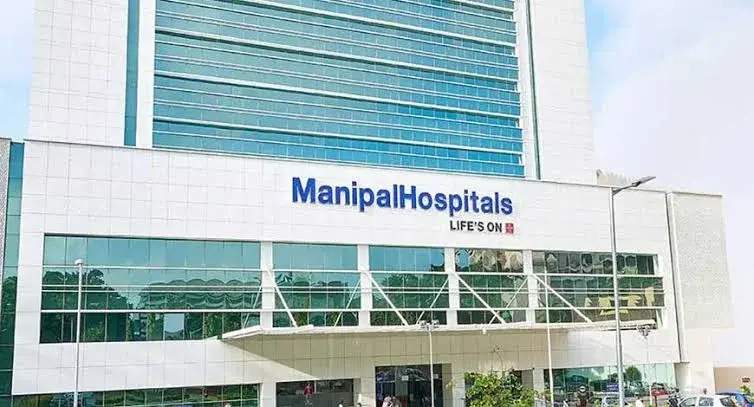
Manipal Health Enterprises has secured ₹4,167 crore from anchor investors ahead of the launch of its ₹9,275-crore initial public offering (IPO), which opened for public subscription on Wednesday. The IPO witnessed an initial subscription of 6% by 1:30 pm, according to data from the National Stock Exchange (NSE). The anchor investor round attracted several prominent global institutions, including the Abu Dhabi Investment Authority (ADIA), Allianz Global Investors Fund, Morgan Stanley Asia, Natixis International Fund, Societe Generale, and Goldman Sachs Bank Europe. Domestic institutional investors such as ICICI Prudential Mutual Fund, Kotak Mutual Fund, Aditya Birla Sun Life Mutual Fund, UTI Mutual Fund, and HSBC Mutual Fund also participated. As per a BSE filing, the company allotted over 7.06 crore equity shares to anchor investors at ₹590 per share, the upper end of the IPO’s price band. The public issue is priced between ₹560 and ₹590 per share, valuing the Bengaluru-headquartered healthcare provider at over ₹77,600 crore at the upper end. The IPO will remain open for subscription until July 31. The offering consists of a fresh issue of equity shares worth ₹8,000 crore and an offer for sale (OFS) of up to 2.16 crore shares by existing shareholders. Promoters Imperius Healthcare Investments Pte. Ltd. and Manipal Education and Medical Group India Pvt. Ltd., along with investors including TPG SG Magazine Pte. Ltd., Seventy Second Investment Company LLC, Ammar Sdn Bhd, Novo Holdings Invest Asia, and Phoenix Bear Investments LLC, are participating in the OFS. Manipal Health plans to utilise ₹5,378 crore from the fresh issue to repay or prepay borrowings of its subsidiary, Manipal Hospitals Pvt. Ltd. Another ₹574 crore has been earmarked to acquire the minority stake in Sahyadri Hospitals Pvt. Ltd., with the remaining proceeds allocated for general corporate purposes. At the upper price band, the IPO size is estimated at ₹9,275 crore, while at the lower end it stands at approximately ₹9,210 crore. One of India’s leading hospital networks, Manipal Health operates 49 multispecialty hospitals across the country with 13,037 licensed beds as of March 31, 2026. For the financial year 2025–26, the company reported revenue from operations of ₹10,336 crore and a net profit of ₹916.52 crore. The company’s equity shares are expected to be listed on the BSE and NSE on or around August 5. Source: PTI

Manipal Health Raises ₹4,167 Crore from Anchor Investors Ahead of ₹9,275-Crore IPO Read More »
India Set to Become World’s 3rd Largest Economy by 2028: Morgan Stanley

India is on course to become the third-largest economy in the world by 2028 and is expected to more than double its GDP to $10.6 trillion by 2035, according to a new report by Morgan Stanley released on Wednesday. The report highlights that several Indian states — notably Maharashtra, Tamil Nadu, Gujarat, Uttar Pradesh, and Karnataka — could individually near the $1 trillion GDP mark, placing them among the globe’s top 20 economies by the next decade. “Currently, Maharashtra, Gujarat, and Telangana lead the economic race among states,” the report noted, adding that states like Chhattisgarh, Uttar Pradesh, and Madhya Pradesh have climbed significantly in economic rankings over the past five years. India to Drive Global Growth Morgan Stanley projects that India will account for roughly 20% of global economic growth over the next ten years. As a result, the country is positioned to become a major growth engine for global corporations and investors. The report underscores the pivotal role of India’s federal structure — with 28 states and eight Union Territories — in propelling economic progress. It points out that each state manages its fiscal policies independently and competes to attract business and investment through favourable industrial policies and ease-of-doing-business reforms. “Every investment decision, factory setup, or enterprise ultimately lands in a particular state,” the report explains. Competitive Federalism as a Growth Catalyst The study places strong emphasis on “competitive federalism” — a model in which states innovate and vie with one another for economic advancement. This approach, Morgan Stanley argues, will be critical for India to become a global manufacturing powerhouse, significantly raise per capita income, and maintain a robust capital market performance over the coming years. As India moves toward its projected $10.6 trillion economic size, the role of states will become even more vital. Their ability to legislate independently and shape business environments allows them to create conducive ecosystems for growth. Infrastructure Boom Underway The report also points to a decade of strong infrastructure development. Central government capital expenditure has surged, growing from 1.6% of GDP in FY15 to 3.2% in FY25. This investment has led to a 60% increase in national highway length, a doubling of airports, and a fourfold expansion of metro rail systems. National-level programs such as PM Gati Shakti, the National Infrastructure Pipeline, Bharatmala, Sagarmala, and UDAN have all complemented state-led initiatives in infrastructure, energy, water, and urban development. For India to realize its long-term economic aspirations, the report concludes, continuous collaboration between the central and state governments will be essential. Source: IANS

India Set to Become World’s 3rd Largest Economy by 2028: Morgan Stanley Read More »