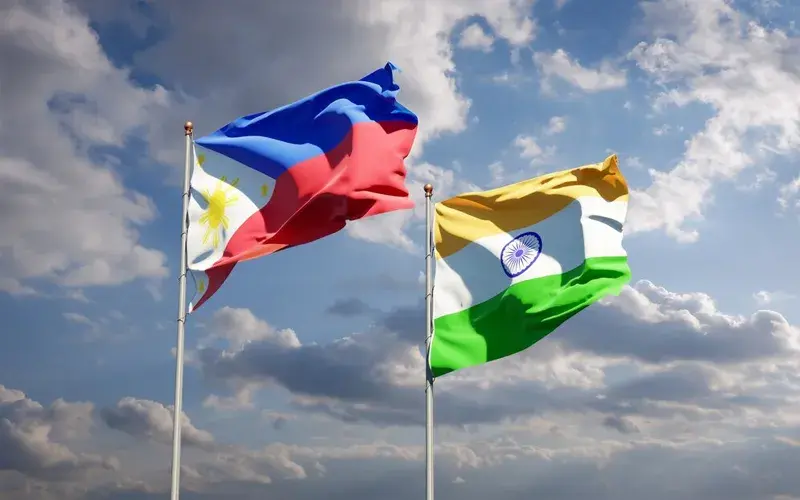
In a significant diplomatic move marking the 75th anniversary of their bilateral ties, India and the Philippines on Tuesday signed 14 Memoranda of Understanding (MoUs) to broaden cooperation across key strategic areas. The agreements were exchanged in the presence of Indian Prime Minister Narendra Modi and Philippine President Ferdinand Romualdez Marcos Jr., who is on his first state visit to India. These new agreements signal a strengthening of ties between the two nations and include a wide range of sectors such as defence, maritime security, space, digital technology, science, tourism, and legal collaboration. One of the key outcomes was the adoption of Terms of Reference for negotiations on a Preferential Trade Agreement (PTA), laying the foundation for deeper economic integration. This step is expected to enhance bilateral trade and investment flows between the two growing economies. The MoUs also include treaties on mutual legal assistance in criminal matters, a Treaty on the Transfer of Sentenced Persons, and structured staff talks between the respective Air Forces, Armies, and Navies. Additionally, the two countries agreed to enhance coordination between their Coast Guards, especially in the context of rising maritime challenges in the Indo-Pacific. The maritime dimension of the partnership was further highlighted by the recent completion of the first India-Philippines Maritime Cooperative Activity (MCA) in the South China Sea — a region rife with overlapping territorial claims. Three Indian naval vessels — INS Delhi (D61), INS Kiltan (P30), and INS Shakti (A57) — participated in the joint patrols. The partnership also takes a leap forward in science, space, and technology. India’s ISRO and the Philippine Space Agency signed a Statement of Intent to collaborate on the peaceful use of outer space, while a new Programme of Cooperation in Science and Technology (2025–2028) was signed to foster joint research and innovation. In tourism, both nations agreed on an Implementation Program for Cooperation in Tourism (2025–2028). As a goodwill gesture, India also announced a gratis e-tourist visa facility for Filipino citizens for one year starting August 2025. Cultural connections were celebrated through a commemorative stamp release, featuring the national flowers — India’s lotus and the Philippines’ Sampaguita — symbolizing enduring ties. A Cultural Exchange Programme was also agreed upon to promote people-to-people connections. Prime Minister Modi emphasized the “ancient cultural bond” between the two countries, citing the Philippine version of the Ramayana — Maharadia Lawana — as a testament to their long-standing relationship. “We are friends by choice and partners by destiny,” Modi said. President Marcos hailed the elevation of the partnership to strategic status, noting India as the Philippines’ fifth strategic partner. He pointed to the growing synergy between the two nations and their alignment on global and regional issues. To guide the growing cooperation, both countries adopted a Strategic Partnership Plan of Action for 2025–2029, which will serve as a roadmap across multiple sectors — including health, pharmaceuticals, fintech, digital economy, infrastructure, culture, and multilateral coordination. India has also extended support to help the Philippines build a Sovereign Data Cloud Infrastructure as part of its digital transformation efforts and has invited the Philippines to participate in the Information Fusion Centre – Indian Ocean Region (IFC-IOR). This wide-ranging set of agreements reflects the shared vision of India and the Philippines to shape a secure, prosperous, and interconnected Indo-Pacific region. Source: ANI