ArdorComm Media Group

Thursday, August 27, 2026 9:41 PM

National Health Mission

Autism Care Centre Crosses 1,000 Enrolments in 18 Months, Plans Major Expansion of Services

The Centre of Excellence for Persons with Autism has achieved a major milestone by registering more than 1,000 children within just 18 months of its launch, marking a significant step forward in specialised autism care and rehabilitation services in India. Established on December 5, 2024, at the Government Institute of Rehabilitation Medicine in K.K. Nagar, the centre has so far enrolled 1,050 children, with over 700 currently receiving regular therapy sessions. The facility now handles nearly 100 visitors daily and sees around eight to ten new patients each day, reflecting growing awareness and demand for specialised autism support services. According to officials, the centre initially received only a handful of patients in its first month, but steady word-of-mouth awareness has contributed to rapid growth. Families from across Tamil Nadu have approached the centre, while even visitors from countries including Canada and parts of the Middle East have sought consultation during their visits to India. The facility, which was initially supported by the National Health Mission, Tamil Nadu, is now preparing to expand its services significantly. Upcoming additions include physical education programmes, pre-vocational skill development for children under 18, vocational training for adults, and new infrastructure such as a hydrotherapy swimming pool and a sensory park designed specifically for therapeutic intervention. The centre operates with a multidisciplinary team comprising paediatricians, psychiatrists, clinical psychologists, occupational therapists, speech therapists, physiotherapists, and special educators. Children visiting the facility first undergo screening by paediatricians using internationally recognised autism screening tools that help identify developmental concerns at an early age. Medical experts at the centre say early signs of autism often include limited response to name calling, communication difficulties, and challenges in social interaction. Following diagnosis, children undergo personalised therapy plans where specialists work on improving daily life skills and addressing developmental gaps. Doctors also note that Autism Spectrum Disorder (ASD) often occurs alongside other conditions such as ADHD, anxiety, depression, and sleep disorders. In such cases, additional medical treatment is provided alongside therapy sessions to support overall development. The centre is also running a daycare programme in collaboration with the Madhuram Narayanan Centre for Exceptional Children, where young children receive structured training focused on building essential life skills. The curriculum covers hundreds of developmental activities ranging from eating independently and dressing to early writing skills. Looking ahead, the centre is developing a dedicated mobile application for parents and therapists to monitor therapy progress and treatment goals. Plans are also underway to introduce skill-based vocational programmes such as block printing, fireless cooking, computer training, and tailoring, aimed at improving long-term independence and employability for persons with autism. Source: The Hindu
Autism Care Centre Crosses 1,000 Enrolments in 18 Months, Plans Major Expansion of Services Read More »

India Aims to Eliminate Sickle Cell Anaemia Before 2047, Says President Murmu

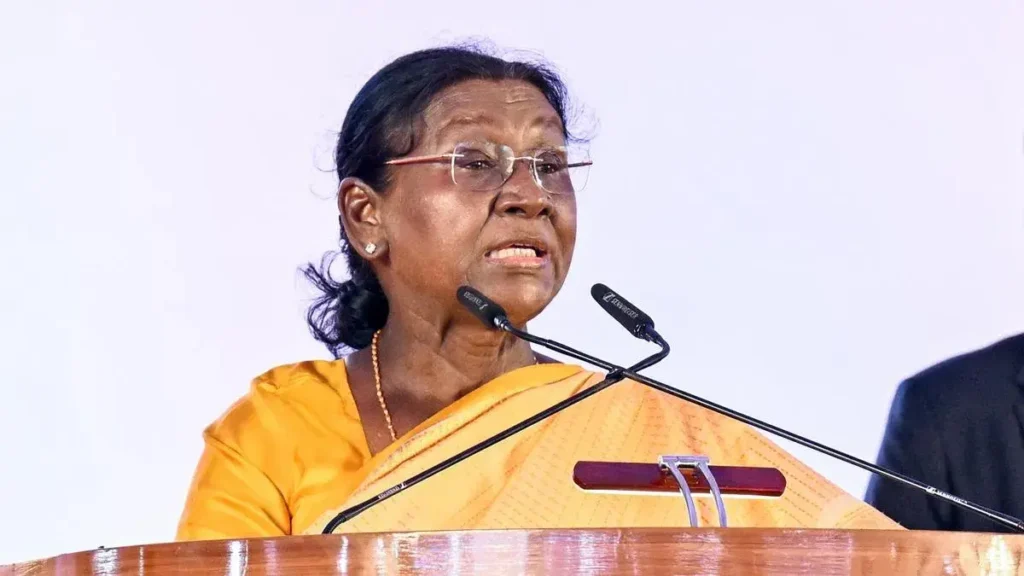
Droupadi Murmu has expressed confidence that India will eliminate sickle cell anaemia much before the government’s 2047 target, urging all states to intensify efforts and spread awareness about the disease, particularly among tribal communities where prevalence remains significantly higher. Speaking at a government event in Omkareshwar, Khandwa district of Madhya Pradesh, the President said that with collective participation from all states, the country is well-positioned to achieve its mission of eradicating sickle cell-related diseases ahead of schedule. She highlighted that since the launch of the National Sickle Cell Anaemia Elimination Mission in 2023, several major milestones have already been achieved, including the screening of over seven crore individuals aged between 0 and 40 years. The initiative has so far identified nearly 2.5 lakh affected patients and over 20 lakh carriers, making it one of the world’s largest genetic disease screening programmes. President Murmu also commended Madhya Pradesh for screening more than 1.25 crore people and distributing genetic counselling cards to a majority of beneficiaries. She emphasized that sickle cell anaemia should not be underestimated, as the hereditary disease passes from one generation to another, but can be treated and eventually eliminated through sustained intervention. The President praised the mission launched by Narendra Modi in Shahdol in 2023, describing it as India’s first nationwide campaign integrating public health, tribal welfare, genetic science, and digital monitoring. She noted that 17 states are actively participating in the campaign to help India achieve a sickle cell disease-free future. Source: The Hindu

India Aims to Eliminate Sickle Cell Anaemia Before 2047, Says President Murmu Read More »

Union Budget 2024: Health Sector Sees Marginal Increase, NHM Allocation Rises Amid Infrastructure Cuts

The Union Budget 2024, presented by Finance Minister Nirmala Sitharaman, revealed a modest 1.7% increase in the health sector allocation, bringing the total outlay to Rs 87,656 crore for the fiscal year 2024-25. Despite the increase, major announcements for the health sector were noticeably absent. One of the significant allocations was for the Ayushman Bharat health insurance scheme, which provides a Rs 5 lakh cover to the poorest 40% of the population. The allocation for this scheme increased slightly from Rs 7,200 crore last year to Rs 7,300 crore this year. The National Health Mission (NHM) received a substantial boost, with its allocation rising to Rs 36,000 crore from Rs 29,000 crore last year. The NHM focuses on reproductive, maternal, newborn, child, and adolescent health services, non-communicable diseases control, and enhancing access to comprehensive primary health care. However, the PM-Ayushman Bharat Health Infrastructure Mission (PM-ABHIM) saw a reduction in its budget from Rs 4,200 crore last year to Rs 3,200 crore this year. The revised estimate for this mission was even lower at Rs 2,100 crore. PM-ABHIM was launched to improve health infrastructure, including health centers, labs, and critical care hospital blocks, especially during the pandemic. Another infrastructure mission, the PM Swasthya Suraksha Yojana, also faced budget cuts, with its allocation dropping from Rs 3,365 crore last year to Rs 2,200 crore this year. This scheme supports the establishment of new AIIMS and the upgradation of district hospitals. The Ayushman Bharat Digital Health Mission (ABDM), which aims to create a digital health record platform for every citizen, saw its budget reduced from Rs 341 crore last year to Rs 200 crore this year. Despite this, the government plans to roll out its U-Win vaccine management portal as part of a 100-day plan, linking it to ABHA accounts for seamless health records. The tele-mental health program’s allocation decreased from Rs 133.7 crore to Rs 90 crore. This program was launched in the 2022 Budget to address mental health issues post-Covid-19 through a network of 23 mental health centers of excellence under NIMHANS. In contrast to the interim Budget’s significant health sector announcements, such as expanding the Ayushman Bharat insurance scheme and promoting HPV vaccination, the current Budget made only minor mentions. The Finance Minister’s speech included a reduction in custom duty on three cancer drugs and components for manufacturing X-ray machines.

Union Budget 2024: Health Sector Sees Marginal Increase, NHM Allocation Rises Amid Infrastructure Cuts Read More »

80% of Public Health Facilities in India Are Substandard, Reveals Government Survey

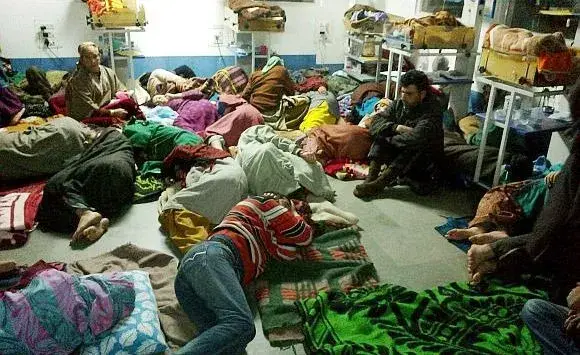
A recent government survey under the National Health Mission (NHM) has revealed that nearly 80% of public health facilities in India fail to meet the minimum standards for infrastructure, manpower, and equipment. This self-assessment exercise involved over 200,000 facilities, out of which only 8,089 scored 80% or higher for compliance. The government aims to make 70,000 facilities compliant within 100 days and will conduct surprise inspections to ensure standards are met. Public health facilities from states and Union Territories were asked to provide details on the number of doctors, nurses, and basic medical equipment available. The data shared on the Indian Public Health Standards (IPHS) dashboard showed that 40,451 facilities submitted key statistics through the Open Data Kit, a digital tool developed by the health ministry. The results were alarming, with only 20% of facilities qualifying as IPHS compliant, meaning they had the necessary infrastructure, human resources, drugs, diagnostics, and equipment to provide essential services. Approximately 42% of the facilities scored less than 50%, while the remaining scored between 50% and 80%. A senior health ministry official emphasized that the self-assessment and real-time monitoring are crucial to ensure health facilities maintain required standards, leading to better health outcomes and a more equitable society. The Centre is pushing states and UTs to address the identified gaps with full support to improve service quality. In addition to the IPHS, the National Quality Assurance Standards (NQAS) will continue to physically evaluate district hospitals, sub-district hospitals, community health centres, and primary health centres on best practices such as availability of essential medicines, equipment, waste management, infection control, support services, and patient rights. A new provision of virtual assessment has been introduced for Ayushman Arogya Mandir, the most numerous public health facilities under NHM. The NHM covers 60% of the costs for public health facilities, with the remaining expenses borne by the states.  

80% of Public Health Facilities in India Are Substandard, Reveals Government Survey Read More »