ArdorComm Media Group

Sunday, February 8, 2026 1:14 AM

NCERT

CBSE to Begin Recruitment for Teaching and Non-Teaching Roles in KVS and NVS

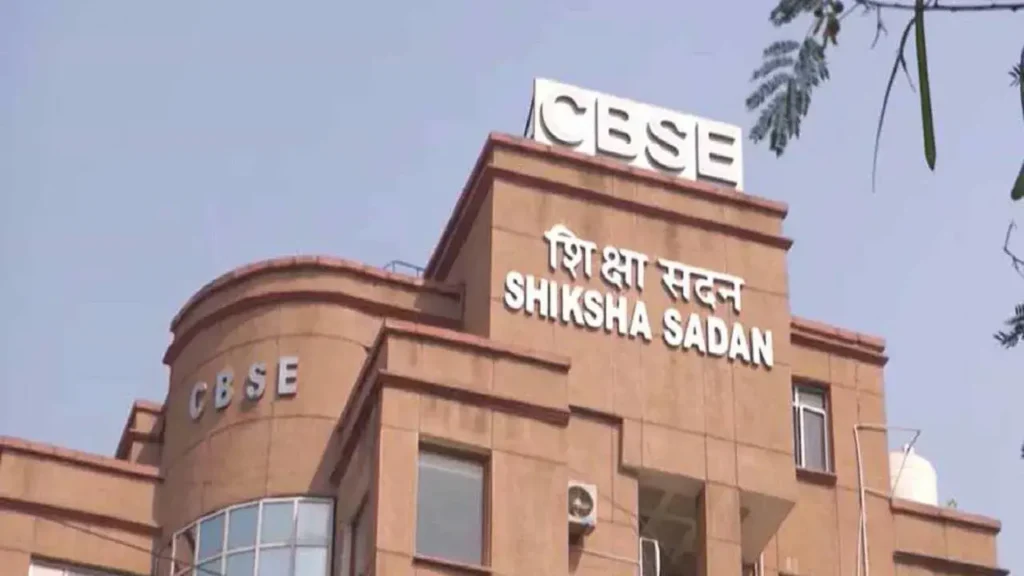
The Central Board of Secondary Education (CBSE) has announced that it will soon launch the recruitment process for multiple teaching and non-teaching vacancies across Kendriya Vidyalaya Sangathan (KVS) and Navodaya Vidyalaya Samiti (NVS). The recruitment will be carried out on a direct basis and is open to eligible Indian citizens. Online applications will open on November 14, 2025, and the last date to apply is December 4, 2025. A detailed notification specifying eligibility criteria, vacancies, and application procedures will be issued shortly by CBSE. Candidates are advised to apply exclusively through the official websites for authentic information: cbse.gov.in kvsangathan.nic.in navodaya.gov.in In a related development, the Cabinet Committee on Economic Affairs (CCEA), chaired by Prime Minister Narendra Modi, has approved the establishment of 57 new Kendriya Vidyalayas across 17 states and Union Territories. The initiative aims to provide equitable access to quality education, particularly for children of Central government employees posted in remote, aspirational, Left Wing Extremism-affected, hilly, or northeastern areas. The project, estimated to cost ₹5,862.55 crore over nine years, will include pre-primary sections and is projected to benefit more than 86,000 students, expanding the existing network of 1,288 Kendriya Vidyalayas across India. However, data from the Ministry of Education’s Department of School Education and Literacy indicates a decline in KV admissions. In response to a question raised by MPs B.K. Parthasarathi (TDP) and Sudha R (Congress), the Ministry reported that the total number of students enrolled dropped from 13,87,763 in 2020–21 to 13,50,518 in 2024–25 — a decrease of 37,245 students, marking a decline of roughly 2.86%. Kendriya Vidyalayas, managed by the Kendriya Vidyalaya Sangathan (KVS) under the Ministry of Education, follow a uniform curriculum designed by the National Council of Educational Research and Training (NCERT) and are affiliated with CBSE. Admissions primarily prioritize children of Central government and defence personnel, while others are accommodated based on the availability of seats. Source: Indian Express

CBSE to Begin Recruitment for Teaching and Non-Teaching Roles in KVS and NVS Read More »

Education Ministry Urges Schools to Adopt UPI for Fee Payments Under Digital Transformation Drive

ardorcomm news

In a major push toward digital governance, the Union Ministry of Education has urged states and educational bodies to integrate the Unified Payments Interface (UPI) system for school fee collection. The initiative aims to enhance transparency, improve efficiency, and simplify the payment process for parents. In an official communication, the Department of School Education and Literacy advised states and affiliated institutions to adopt secure digital payment systems such as UPI, mobile wallets, and internet banking. This reform is part of the government’s broader digital transformation agenda in the education sector, ensuring smoother administrative operations and reducing dependency on cash transactions. The directive also extends to national education bodies, including the CBSE, NCERT, Kendriya Vidyalaya Sangathan (KVS), and Navodaya Vidyalaya Samiti (NVS), encouraging them to implement digital platforms for admission and examination fee submissions. According to the ministry, transitioning to digital payments brings multiple benefits—parents can pay from the comfort of their homes, ensuring greater convenience and transparency in transactions. The move is also expected to foster financial literacy among stakeholders and strengthen the culture of digital payments in educational institutions. The Education Ministry emphasized that this step marks a key milestone in aligning school-level administration with India’s vision of a digitally empowered society. Source: PTI

Education Ministry Urges Schools to Adopt UPI for Fee Payments Under Digital Transformation Drive Read More »

NCERT Opens Admissions for Diploma in Guidance and Counselling 2026

ardorcomm news

The National Council of Educational Research and Training (NCERT) has announced the commencement of admissions for its Diploma Course in Guidance and Counselling (DCGC) for the 2026 academic session. This specialised programme is aimed at strengthening the skills of teachers, school heads, and educational professionals in providing effective mental health and career guidance to students. The diploma will be offered in a blended learning format, combining distance education with in-person training sessions. Interested applicants can access the online application form and detailed prospectus on the official NCERT website — ncert.nic.in. The deadline for submitting applications is November 5, 2025. Course Structure The year-long course will be conducted in three stages: Phase I (January–June 2026): Six months of distance learning.  Phase II (July–September 2026): Three months of face-to-face training at designated study centres.  Phase III (October–December 2026): A three-month internship in the participant’s home city or workplace. Eligibility Eligible applicants include teachers, teacher educators, school administrators, and untrained guidance personnel. Candidates must hold a postgraduate degree in Psychology, Education, Social Work, Child Development, or Special Education. Preference will be given to individuals with at least one year of relevant experience. The minimum qualifying marks are 50%, with a 5% relaxation for SC/ST candidates. Course Fee Central government deputed candidates: ₹19,500 State/UT government deputed candidates: ₹6,000 Private candidates: ₹30,000 Boarding and lodging costs during the contact programme will be borne by participants, though accommodation facilities will be available for outstation candidates. Study Centres and Selection Admissions will be offered at DEPFE, NCERT (New Delhi) and the Regional Institutes of Education located in Ajmer, Bhopal, Bhubaneswar, Mysuru, and Shillong, with an intake of 50 candidates per centre. Selection will be based on a multi-stage process, including document screening, an essay test, and a personal interview. Applicants are required to attach self-attested copies of academic qualifications and experience certificates along with their application. Source: Indian Express  

NCERT Opens Admissions for Diploma in Guidance and Counselling 2026 Read More »

NCERT to Handle Equivalence of Class 10 & 12 Certificates Across All Boards

The National Council of Educational Research and Training (NCERT) will now be responsible for granting equivalence to Class 10 and Class 12 certificates issued by various school education boards across India. This equivalence will be applicable for admissions to higher education institutions as well as recruitment in government jobs, according to an official announcement on Friday. The Department of School Education and Literacy, under the Ministry of Education, has published the notification in the e-Gazette. This move replaces the earlier notification of November 15, 2021, which had entrusted the task to the Association of Indian Universities (AIU). The responsibility will now be carried out by NCERT through its National Assessment Centre—Performance Assessment, Review and Analysis of Knowledge for Holistic Development (PARAKH)—set up under the provisions of the National Education Policy (NEP) 2020. According to the ministry, this institutional mechanism will ensure that the process of granting equivalence is conducted with academic rigour while upholding the highest educational standards. The system will apply to all school boards established by the central and state governments, statutory bodies, or recognised institutions. Importantly, the equivalence granted by NCERT will be valid nationwide, ensuring inter-board parity and enabling seamless student mobility across school education boards. Source: PTI    

NCERT to Handle Equivalence of Class 10 & 12 Certificates Across All Boards Read More »

NCERT Must Build Competence, Knowledge for Nation-Building: Dharmendra Pradhan

On the 65th Foundation Day of NCERT, Union Education Minister Dharmendra Pradhan emphasized the council’s crucial role in shaping an empowered and knowledgeable society. He called upon NCERT to adopt global best practices while remaining rooted in India’s cultural and linguistic strengths. “NCERT’s responsibility is to make our people competent and raise knowledge levels. You are the true nation-builders,” Pradhan said, addressing the gathering. He stressed the need for children to gain proficiency in English while also achieving conceptual clarity through their mother tongues. Reflecting on past curriculum reforms, Pradhan referred to the National Curriculum Frameworks (NCF) of 2000 and 2005, noting that changes introduced earlier created confusion. He asserted that NCERT is now setting the framework in the right direction, free from what he termed a “slave mentality” that deprived the nation of self-reliance and pride. He further praised new NCERT modules, such as those on Operation Sindoor and Partition Horrors Remembrance Day. Former ISRO Chairman S. Somanath, also present at the event, credited NCERT textbooks for shaping his early academic foundation but noted their shortcomings. “Those books built my career, yet they missed highlighting India’s scientific heritage and achievements. I had to relearn many things later. Today, I see a transformation, with more focus on our own legacy,” he said. Somanath also stressed the importance of promoting learning in Indian languages, pointing out that reliance on foreign textbooks during higher education limited students’ connection with indigenous knowledge systems. “Rooting education in our own language is essential,” he remarked. Source: Indian Express

NCERT Must Build Competence, Knowledge for Nation-Building: Dharmendra Pradhan Read More »

From bicycles to the Moon: NCERT brings India’s space journey into classrooms

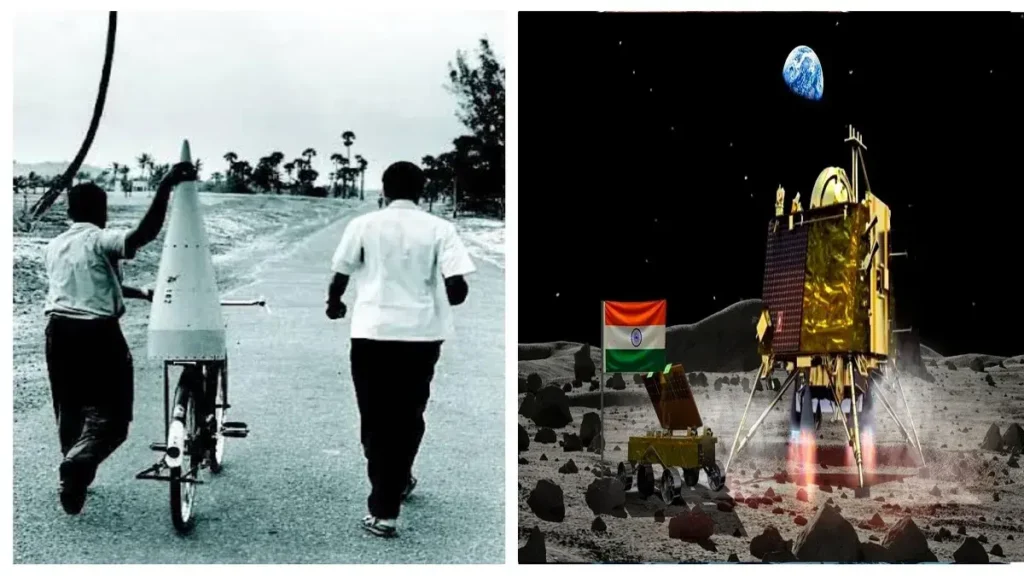
India’s space story — from humble beginnings of carrying rocket parts on bicycles and bullock carts to achieving landmark missions like Chandrayaan, Mangalyaan, and the upcoming Gaganyaan — has now been woven into NCERT’s new learning modules. The special set of two modules, titled “India: A Rising Space Power”, traces the evolution of the Indian space programme. It begins with the creation of the Indian National Committee for Space Research (INCOSPAR) in 1962 under Dr. Vikram Sarabhai, which later transformed into the Indian Space Research Organisation (ISRO), now counted among the world’s top space agencies. One of the modules highlights how India’s first rocket was so lightweight that its parts were transported using bicycles and bullock carts. Scientists avoided motorised vehicles since their electric and magnetic fields could interfere with delicate instruments, proving that simple means ensured success. The modules also honour India’s astronauts — Squadron Leader Rakesh Sharma, who became the first Indian in space in 1984, and Group Captain Shubhanshu Shukla, who in June 2025 became the first Indian to live aboard the International Space Station. They feature a quote from Prime Minister Narendra Modi: “Space may seem distant, but is an integral part of our daily life… India’s space programme is a perfect example of our vision of Scale, Speed and Skill.” Key milestones listed include: Chandrayaan-1 (2008): Discovered water molecules on the Moon. Mangalyaan (2013): Made India the first Asian nation to reach Mars, and the only country to succeed on its maiden attempt. Chandrayaan-2 (2019): Though its lander was lost, the orbiter continues to provide valuable lunar data. Aditya-L1 (2023): India’s first solar observatory at Lagrange Point-1, dedicated to studying the Sun and solar storms. Looking ahead, the modules also highlight the NASA-ISRO NISAR satellite, expected to deliver high-resolution global data every 12 days on ecosystems, glaciers, and natural disasters. Source: PTI

From bicycles to the Moon: NCERT brings India’s space journey into classrooms Read More »

CBSE, UNESCO Scale Up Health and Wellness Education to Impact 30,000 Schools Nationwide

Ardorcomm news

In a significant step toward integrating holistic health education into India’s school system, CBSE, UNESCO, and NCERT are expanding their collaborative School Health and Wellness Programme (SHWP) to 30,000 CBSE-affiliated schools across the country. The initiative, which began under the Ayushman Bharat mission in 2020, aims to positively influence the lives of nearly 15 million students by promoting mental, emotional, and physical well-being. Building a Network of Master Trainers Throughout June and July 2025, over 290 school leaders—comprising principals, teachers, and administrators—from 22 states and five union territories participated in a comprehensive training workshop held in Delhi. These individuals will serve as master trainers, cascading their knowledge and tools to educators across India to deliver health and wellness content effectively. The training sessions emphasized early intervention and the importance of understanding students’ socio-emotional environments. Prof. Dinesh Prasad Saklani, Director of NCERT, stressed that many student challenges originate outside the classroom. With proper training, teachers can better identify these issues and respond with empathy and support. A Curriculum Rooted in NEP 2020 Values Speaking at the workshop, Anandrao V Patil, Additional Secretary in the Ministry of Education, underscored how wellness and inclusive education go hand in hand, echoing the core principles of the National Education Policy 2020. He described educators as catalysts of social change, pivotal in shaping compassionate and resilient individuals. UNESCO’s South Asia Director, Tim Curtis, reinforced the belief that health and education are deeply interconnected. “Every trained teacher and every wellness conversation is a step closer to learner-centered systems,” he said. Multilingual Learning Tools for Lifelong Impact To support the initiative, NCERT and UNESCO have co-developed a 24-hour wellness curriculum, featuring training modules, handbooks, animated videos, and comics. These resources focus on 11 essential wellness themes—including mental health, gender sensitivity, online safety, and reproductive health—and are available in English, Hindi, and nine regional languages to ensure wider accessibility. Since 2022, NCERT has conducted eleven intensive five-day workshops, resulting in 970 trained master trainers. These professionals are now instrumental in guiding teacher development across CBSE’s regional Centres of Excellence. To date, over 40,000 teachers have been trained through more than 750 workshops nationwide. Rather than treating health education as a supplementary activity, SHWP is helping schools embed wellness into the very fabric of everyday learning—redefining education as a means to nurture both the mind and the heart. Source: India Today

CBSE, UNESCO Scale Up Health and Wellness Education to Impact 30,000 Schools Nationwide Read More »

Over 4.7 Lakh Pirated NCERT Books Seized Since 2024, Says Education Ministry

In a significant crackdown on textbook piracy, the Ministry of Education revealed that over 4.7 lakh pirated NCERT textbooks have been confiscated across India since 2024. This update was shared in a written response by Union Minister of State for Education, Jayant Chaudhary, during a Rajya Sabha session on Wednesday. “Reports of NCERT textbook piracy have emerged from various parts of the country. From 2024 to 2025, enforcement teams seized around 4.71 lakh counterfeit books in multiple operations carried out in different states,” said Chaudhary. He emphasized that piracy is largely driven by the profit motives of unauthorized operators. NCERT’s mission, Chaudhary reiterated, is to provide high-quality educational resources at minimal cost to students across India, functioning on a no-profit, no-loss model. Highlighting recent efforts to combat the menace, he informed that in the past year alone, NCERT conducted raids on 29 locations linked to the production and distribution of pirated books. These included premises using unauthorized NCERT watermarked paper and illegal printing setups. Assets and equipment worth over ₹20 crore were seized during these raids. To address the root causes of piracy, several measures have been implemented, including a 20% price cut on textbooks, improved paper and print quality with advanced machinery, faster and timely textbook production, and expanded online availability through e-commerce channels. In a tech-driven approach, NCERT also tested an innovative anti-piracy mechanism—developed and patented by IIT Kanpur—on one million copies of a Class 6 textbook, aiming to deter counterfeit reproduction through secure tracking technology. Source: PTI Image Credit: iStock  

Over 4.7 Lakh Pirated NCERT Books Seized Since 2024, Says Education Ministry Read More »

NCERT and Canva Partner to Offer Free Digital Certification Courses for Indian Educators

In a move aimed at empowering educators with 21st-century teaching skills, the National Council of Educational Research and Training (NCERT) has entered into a strategic partnership with Canva, a global visual communication platform. The collaboration will roll out three self-paced, online certification courses for school teachers across India—completely free of charge. These courses, designed to enhance digital fluency, creative instruction, and collaborative teaching practices, will be hosted on DIKSHA, the Ministry of Education’s flagship digital learning platform. To ensure inclusivity, they will also be televised via PM eVidya’s DTH channels, making the training accessible even in areas with limited or no internet access. The programme will be offered in multiple Indian languages to promote nationwide participation. Teachers participating in the training will explore Canva for Education’s features to create interactive lesson plans, visually engaging presentations, infographics, and a variety of educational content. The programme also includes exposure to collaborative pedagogies and artificial intelligence (AI) tools that can elevate classroom learning. Successful participants will receive joint certification from NCERT and Canva. As per the MoU, Canva will provide complimentary access to its educational suite and contribute to developing customized instructional resources. Meanwhile, NCERT will ensure the content aligns with India’s national curriculum framework and is tailored for regional relevance. This initiative supports the goals outlined in the National Education Policy (NEP) 2020, particularly around visual learning, critical thinking, and design-centric pedagogy. Teachers will also receive guidance on leveraging AI tools to boost classroom engagement and optimize lesson delivery. With over 500 integrated educational tools and apps—including games, translation aids, worksheets, and subject-specific infographics—Canva for Education is positioned as a comprehensive platform for modern teaching. Its AI-powered features simplify content creation, enabling teachers to plan and execute lessons more efficiently. Canva’s statement highlighted that its education arm saw remarkable growth in 2024, onboarding over 25 million students and teachers globally, with its total education community surpassing 100 million users. Teacher usage on the platform surged by 50%, while student engagement more than doubled, fueled by tools like Dream Lab that empower educators to create customized visual content. This collaboration marks a significant step towards digital empowerment in Indian classrooms, equipping teachers with the tools and training to thrive in a technology-integrated learning environment. Source: Indian Express

NCERT and Canva Partner to Offer Free Digital Certification Courses for Indian Educators Read More »

Govt Forms Panel to Probe Coaching Dependency and Fairness of Entrance Exams

The Ministry of Education has constituted a nine-member committee to investigate the growing dependence of students on coaching centres, the phenomenon of ‘dummy schools,’ and the integrity and fairness of competitive entrance exams like JEE and NEET, officials confirmed. Chaired by Higher Education Secretary Vineet Joshi, the committee will delve into systemic shortcomings within the school education framework that push students towards coaching hubs. The panel will examine the limited emphasis on critical thinking, analytical reasoning, innovation, and conceptual understanding in traditional schooling — factors that fuel rote learning and, in turn, coaching culture. One major concern to be addressed is the rise of ‘dummy schools’ — institutions where students enroll merely for board exam eligibility while devoting their full attention to intensive coaching. These setups allow aspirants to bypass classroom learning altogether, focusing solely on entrance exam preparation. Many also exploit state domicile criteria through such enrollments to gain regional admission advantages, such as eligibility for the Delhi state quota in medical colleges. “The committee will study how dummy schools undermine formal education and promote exclusive dependence on coaching. It will recommend ways to address this growing issue,” a senior ministry official said. The panel will also scrutinize the current model of entrance exams to assess their fairness and relevance in the context of mainstream schooling. It will investigate whether the absence of formative assessments and a weak focus on concept clarity in school systems are inadvertently supporting the proliferation of coaching institutes. Another key focus area is the imbalance between the rising demand for quality higher education and the limited seats available in top institutions — a gap that often drives students toward costly and stressful coaching environments. The panel’s mandate also includes evaluating students’ and parents’ awareness of diverse career opportunities beyond elite engineering and medical colleges. It aims to assess the status of career counselling mechanisms in schools and recommend strategies to enhance career guidance systems nationwide. Alongside Vineet Joshi, the committee comprises the CBSE chairperson, joint secretaries from the school and higher education ministries, representatives from IIT Madras, IIT Kanpur, NIT Trichy, NCERT, and principals from Kendriya Vidyalaya, Navodaya Vidyalaya, and a private school. This initiative follows increasing concerns over the coaching industry’s practices, including rising student suicides, fire hazards, inadequate infrastructure, and questionable teaching methods. The government hopes the panel’s findings will lead to more balanced, student-centric reforms in education and examination systems. Source: PTI

Govt Forms Panel to Probe Coaching Dependency and Fairness of Entrance Exams Read More »