


ArdorComm Media Group

Thursday, March 12, 2026 5:26 AM

Nipah Virus

Nipah outbreak under control in India, government says as neighbouring countries step up vigilance
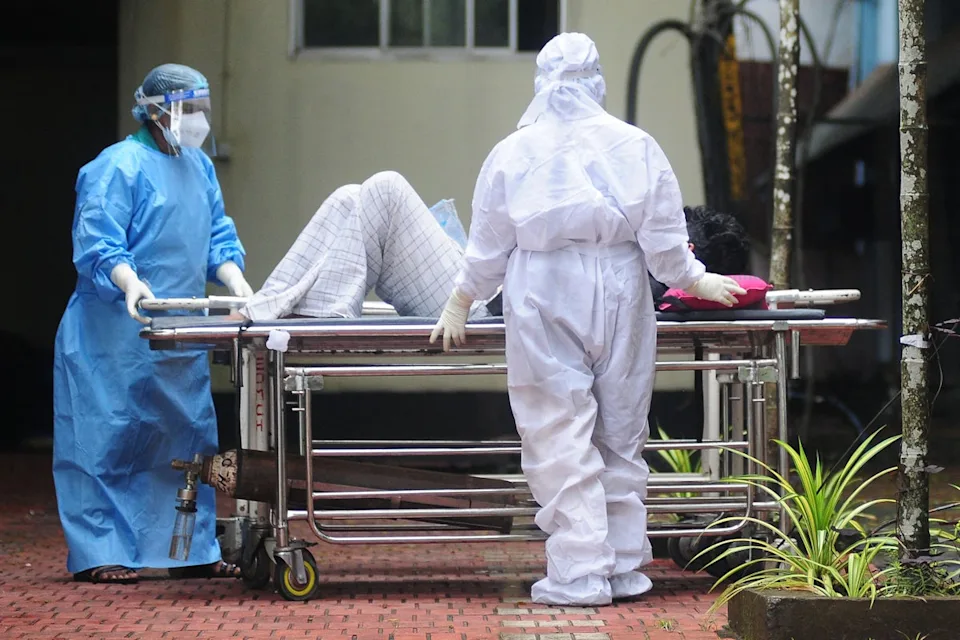
Indian authorities have moved to reassure the region after confirming that a recent outbreak of the Nipah virus has been successfully contained. The Ministry of Health and Family Welfare said late Tuesday that swift action helped prevent further spread after two cases were detected in West Bengal. According to the ministry, a total of 196 contacts linked to the confirmed cases were traced, monitored and tested, with all results returning negative. Officials said the clarification was issued to counter what they described as “speculative and inaccurate reporting” in sections of the media. “The situation is under constant monitoring and all necessary public health measures are in place,” the ministry said, noting that enhanced surveillance, laboratory testing and field investigations have been rolled out to ensure early detection of any new cases. Despite India’s assurance, several Asian countries have introduced additional health screening for travellers arriving from India. China said it was tightening disease prevention measures in border regions, with state media reporting risk assessments and specialised training for medical personnel. Countries including Indonesia and Thailand have stepped up airport checks through health declarations, temperature screening and visual assessments. Myanmar advised against non-essential travel to West Bengal and intensified fever surveillance at airports, a system originally introduced during the Covid-19 pandemic. Vietnam and Malaysia also directed authorities to strengthen monitoring at borders, ports of entry and healthcare facilities. The Nipah virus, a zoonotic disease first identified in Malaysia in the late 1990s, spreads through fruit bats, pigs and close human contact. There is no vaccine or specific treatment, with care limited to managing symptoms and complications. With a fatality rate estimated by the World Health Organization at 40–75%, Nipah is considered significantly more lethal than coronavirus infections. The first known human outbreak in 1998 led to more than 100 deaths among pig farmers and butchers in Malaysia and Singapore. Since then, sporadic outbreaks have been reported in Bangladesh, the Philippines and India, with Kerala witnessing Nipah cases almost annually since 2018. Source: Aljazeera

Nipah outbreak under control in India, government says as neighbouring countries step up vigilance Read More »

Indigenous Kit Developed for Accurate, Rapid Detection of Nipah Virus: ICMR-NIV

In a significant stride for India’s healthcare innovation, the Indian Council of Medical Research (ICMR) has unveiled a homegrown rapid diagnostic kit capable of detecting the Nipah virus with complete accuracy. Designed for swift deployment in the field, the portable test delivers results in just 1 to 2 hours without the need for sophisticated laboratory equipment. Dr. Naveen Kumar, Director of ICMR’s National Institute of Virology (NIV) in Pune, highlighted the effectiveness of the kit, stating, “It is 100% sensitive and specific, relying on the amplification of the viral gene without requiring specialised machinery.” The cost-effective test is priced at ₹250 and is based on the Loop-mediated Isothermal Amplification (LAMP) assay technique. The Nipah virus, a highly lethal zoonotic pathogen with a mortality rate of approximately 50%, is primarily transmitted to humans from fruit bats. It can also spread via contaminated food or human-to-human contact. Symptoms of the infection range from mild flu-like signs to severe respiratory distress and encephalitis, often proving fatal. Recent outbreaks of the disease, particularly the 2023 episode in Kerala’s Kozhikode district, underscore the urgent need for swift and reliable diagnostics. ICMR is concurrently collaborating with Zydus Health Sciences (Ahmedabad) and the Translational Health Science and Technology Institute (Faridabad) on the development of monoclonal antibodies. Efforts are also underway to create an indigenous vaccine for the virus. NIV remains the only laboratory in India equipped to culture the Nipah virus, making it central to the country’s disease surveillance and response capabilities. Source: ANI

Indigenous Kit Developed for Accurate, Rapid Detection of Nipah Virus: ICMR-NIV Read More »

Gennova Biopharma Partners with CEPI to Develop mRNA Nipah Vaccine

Gennova Biopharmaceuticals, a subsidiary of Emcure Pharmaceuticals, has announced a partnership with the Coalition for Epidemic Preparedness Innovations (CEPI) to develop a self-amplifying mRNA (saRNA) vaccine for the Nipah virus. The collaboration has secured up to $13.38 million in funding from CEPI to accelerate research and development. Innovative Approach to Vaccine Development As part of this initiative, Gennova will work with the Houston Methodist Research Institute (HMRI), a CEPI partner based in the United States, to integrate artificial intelligence (AI) into vaccine design. AI-driven analysis will be used to identify optimal vaccine targets, enhancing immune response efficiency. Clinical trials are set to begin in India, where Nipah outbreaks have previously occurred. The Nipah Virus Threat Nipah virus, a highly lethal pathogen from the Paramyxovirus family, has caused multiple outbreaks in South and Southeast Asia, with a fatality rate of up to 75%. Though outbreaks have been geographically limited, the virus’s natural reservoir—fruit bats—inhabits regions home to over two billion people, making it a serious global health concern. CEPI’s Commitment to Global Health Kent Kester, Executive Director of Vaccine R&D at CEPI, emphasized the urgency of the project, stating: “With no approved vaccines or specific treatments for Nipah, CEPI is leading the global effort to develop countermeasures. Gennova’s saRNA technology could not only help fight Nipah but also enhance pandemic preparedness, enabling rapid responses within 100 days of identifying a new viral threat.” The Advantage of saRNA Vaccines Unlike traditional mRNA vaccines, which introduce pre-made antigenic proteins, saRNA vaccines provide genetic instructions that enable the body’s own cells to produce these proteins. This approach enhances the immune response while requiring lower doses, making it a promising platform for future vaccine development. A Long-Term Collaboration Gennova’s partnership with CEPI is not new. In August 2023, CEPI granted the company $3.6 million to optimize its saRNA technology for developing vaccines against unknown pathogenic threats, often referred to as Disease X. Sanjay Singh, CEO of Gennova Biopharmaceuticals, commented on the collaboration: “By harnessing our saRNA platform, we aim to develop a next-generation Nipah vaccine. This partnership sets a new benchmark for rapid vaccine development while ensuring equitable access and strengthening global health security.” Ensuring Equitable Access CEPI has invested over $100 million in Nipah vaccine research. Through this collaboration, Gennova has pledged to uphold CEPI’s Equitable Access Policy, ensuring that the vaccine, if successfully developed, will be made available first to at-risk populations at an affordable price. The agreement also includes provisions for technology transfer, which could support future vaccine development efforts against emerging infectious diseases.

Gennova Biopharma Partners with CEPI to Develop mRNA Nipah Vaccine Read More »