ArdorComm Media Group

Sunday, November 8, 2026 10:08 AM

Quantum Technology

PM Narendra Modi Inaugurates ESTIC 2026, Calls for Scalable Scientific Innovation
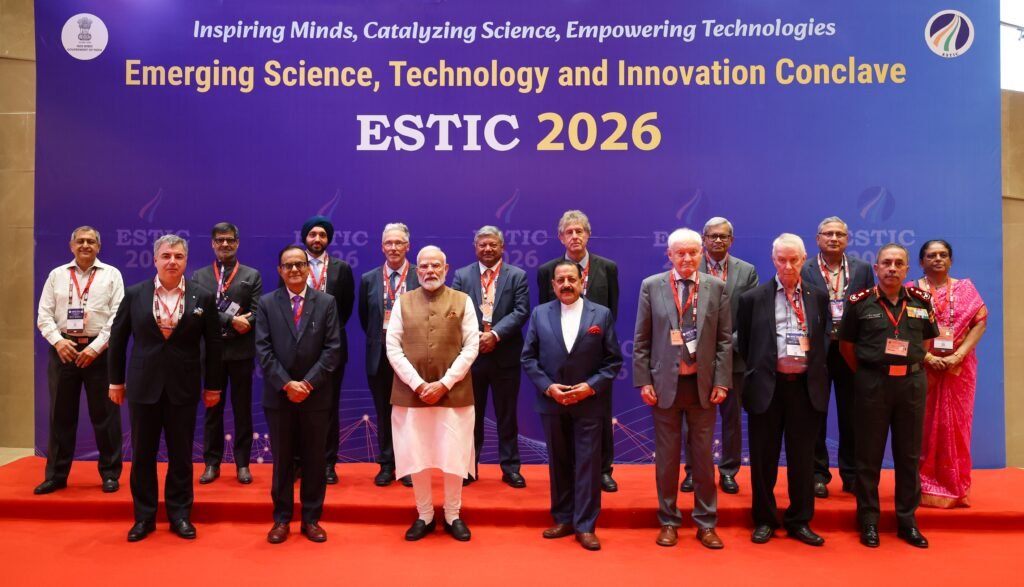
Prime Minister Narendra Modi inaugurated the Emerging Science, Technology and Innovation Conclave (ESTIC) 2026 at Bharat Mandapam in New Delhi on October 27, bringing together more than 5,000 delegates, including scientists, policymakers, industry representatives and deep-tech startups from India and abroad. The opening day featured addresses by leading science and technology officials, plenary lectures by two Nobel laureates, parallel technical sessions, a startup exhibition, research poster presentations and a panel discussion. The discussions centred on translating scientific research into practical applications, strengthening domestic technological capabilities and using innovation to address national and global challenges. Addressing the inaugural session, Modi urged scientists, researchers and young innovators to deliver measurable and scalable technological outcomes within a three-year timeframe. He stressed that scientific discoveries must move beyond laboratories to solve real-world problems, promote self-reliance under the Atmanirbhar Bharat vision and improve human welfare. He also highlighted India’s ambitions in emerging fields such as artificial intelligence (AI), quantum technology, advanced materials and biotechnology. Union Minister of State for Science and Technology and Earth Sciences, Dr. Jitendra Singh, said India was moving from being a technology consumer towards becoming a global contributor to frontier scientific innovation. He highlighted the expansion of the country’s startup ecosystem from around 400 startups in 2014 to more than 2.3 lakh currently. According to the minister, approximately 50–60 per cent of these ventures are located in Tier-2 and Tier-3 cities, reflecting the geographical expansion of entrepreneurship and innovation. Singh also emphasised the potential of India’s genetic and phenotypic diversity in advancing biotechnology. He called for stronger domestic capabilities in gene synthesis, systems biology and nuclear medicine, referring to legislative reforms, including the SHANTI Act, as part of the broader effort to accelerate scientific development. Principal Scientific Adviser to the Government of India, Prof. Ajay K. Sood, highlighted the importance of integrating fundamental research with industrial expansion and supportive regulatory policies. He outlined ESTIC’s 12 priority thematic areas, which include quantum communication, generative and autonomous AI, semiconductor fabrication, advanced manufacturing and the Deep Ocean Mission. He said building national capabilities would require closer collaboration among research institutions, industry and policymakers. Two Nobel laureates delivered keynote plenary lectures on developments in biological research and medical science. Prof. Joachim Frank of Columbia University, who received the 2017 Nobel Prize in Chemistry, discussed the role of cryo-electron microscopy (Cryo-EM) in identifying biological targets and supporting drug development. His presentation explored computational methods for producing high-resolution, three-dimensional images of molecular complexes and explained how these insights can contribute to rational drug design. Sir Richard J. Roberts, the 1993 Nobel laureate in Physiology or Medicine, spoke about split genes and emerging frontiers in life sciences. His lecture examined gene splicing, microbial genomics and restriction-modification enzymes, alongside biotechnology applications in sustainable agriculture, public health and diagnostics. The conclave also provided a platform for emerging companies and researchers to showcase innovations. Dr. Jitendra Singh inaugurated the startup exhibition and poster track, featuring deep-tech research, prototype demonstrations and interactive presentations. The initiative enabled exchanges among entrepreneurs, investors, academics, industry representatives and government stakeholders. Three technical sessions explored applications of advanced manufacturing, artificial intelligence and synthetic biology. The Advanced Manufacturing session, chaired by CSIR Director General Dr. (Mrs.) N. Kalaiselvi, featured a keynote address by former Defence Research and Development Organisation chairman Dr. G. Satheesh Reddy. Discussions covered digital twins, collaborative robotics, additive manufacturing and metrology, with particular attention to strengthening supply chains and expanding manufacturing capabilities among micro, small and medium enterprises (MSMEs). The Generative and Autonomous AI session, chaired by IndiaAI CEO Shri Saurabh Vijay, featured a keynote address by Prof. Mitesh M. Khapra of IIT Madras. Participants discussed the development of indigenous large language models, access to high-performance computing through IndiaAI, agentic AI and frameworks for safe deployment. The session focused on building domestic AI capabilities while ensuring that emerging technologies are developed and deployed responsibly. The System and Synthetic Biology session examined engineered biological systems and India’s BioE3 strategy. Using the “Understand, Design, Build, Test, Learn” framework, participants explored potential applications in precision biotherapeutics, metabolic pathway engineering, biofortified crops and waste-to-value biomanufacturing. The discussions highlighted the potential of synthetic biology to support innovation across healthcare, agriculture and industrial production. The day concluded with a panel discussion titled “Science and Disruptive Technologies for Atmanirbhar Bharat”, chaired by Prof. Ajay K. Sood. Panellists included Dr. Tessy Thomas, Gen. N. S. Raja Subramani, Prof. Bhanu P. Jena, Dr. Samir Saran and Prof. V. K. Singh. The discussion addressed defence technology self-reliance, commercialisation of intellectual property, financing for deep-tech ventures and mechanisms for transferring technologies from research institutions to industry. ESTIC 2026 brings together government, academia, industry and startups around 12 thematic priority areas. Discussions on the opening day also highlighted the ₹1 lakh crore Research, Development and Innovation Fund and mechanisms under the Anusandhan National Research Foundation (ANRF) as potential avenues for supporting deep-tech development across technology-readiness stages and facilitating commercialisation. The conclave aims to strengthen the connection between scientific discovery, industrial application and public welfare, with an emphasis on developing homegrown technologies that contribute to India’s long-term development and address wider global challenges. Source: PIB

PM Narendra Modi Inaugurates ESTIC 2026, Calls for Scalable Scientific Innovation Read More »
IIT Kanpur Launches $1 Billion Fundraising Drive, Announces ₹180-Crore Innovation School in Noida

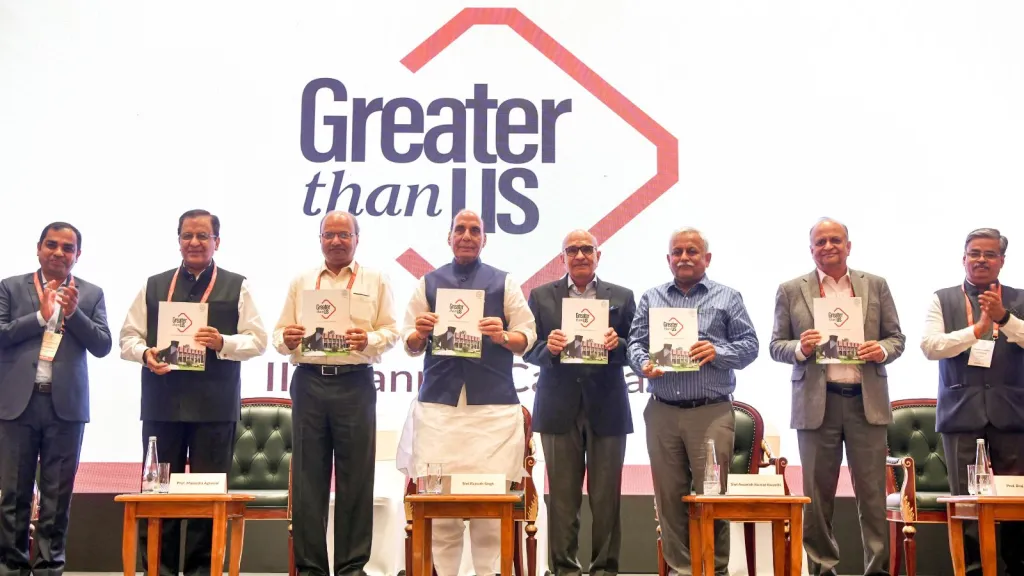
The Indian Institute of Technology (IIT) Kanpur has announced plans to establish a ₹180-crore school dedicated to innovation and entrepreneurship at its Noida campus, alongside a major fundraising campaign targeting $1 billion (approximately ₹9,000 crore) by March 2029. Named the Gautam School of Innovation & Entrepreneurship (G-SINE), the new institution aims to help students transform research and emerging technologies into commercially viable products and technology-driven startups. Its flagship MBA programme in Technology and Entrepreneurship is scheduled to commence in July 2027. The school forms part of IIT Kanpur’s ‘Greater Than Us’ campaign, which will support research and development across seven strategic technology domains: artificial intelligence, cybersecurity, drones, medical technology, sustainability, semiconductors and quantum technologies. Defence Minister Rajnath Singh launched the campaign in New Delhi on October 14. According to IIT Kanpur Director Manindra Agrawal, the institute has already secured commitments worth ₹4,155 crore from alumni, corporate donors, government bodies and other partners, representing nearly half of the overall fundraising target. G-SINE is being established with a ₹180-crore commitment from IIT Kanpur alumnus Rahul Gautam, with a memorandum of understanding signed during the campaign launch. Agrawal emphasised the importance of bridging the gap between laboratory research and commercial deployment. The school will focus on helping faculty members and students advance technologies towards market readiness, with entrepreneurship and startup development forming central elements of its approach. The institution will have dedicated full-time faculty members and degree programmes, covering areas such as AI, cybersecurity, digital health, biotechnology, drones and advanced manufacturing. It will also work alongside a proposed Deep Tech Hub at the Noida campus, providing students with access to product development and testing facilities. The institute’s Startup Incubation and Innovation Centre (SIIC), which has incubated 571 startups, will further support the initiative. The ₹9,000-crore fundraising campaign is structured around three pillars: Foundation, Talent and Frontier. Of the total target, ₹5,000 crore is earmarked for infrastructure, including research facilities, computing resources and student housing. Another ₹3,000 crore will support scholarships, doctoral fellowships and faculty recruitment, while ₹1,000 crore will be allocated to strategic technology initiatives. Agrawal said the campaign reflects IIT Kanpur’s commitment to strengthening India’s capabilities in strategically important technologies and reducing dependence on external technology ecosystems. The initiative builds on the institute’s existing specialised schools in medical sciences and technology, artificial intelligence and sustainability. IIT Kanpur also plans to establish dedicated funds to attract leading faculty members without financial constraints becoming a barrier to recruitment. Source: Indian Express  

IIT Kanpur Launches $1 Billion Fundraising Drive, Announces ₹180-Crore Innovation School in Noida Read More »

Indian Institute of Technology Bombay Partners with SBI Life Insurance to Launch AI-Driven Cyber Defence Innovation Hub for Insurance Sector

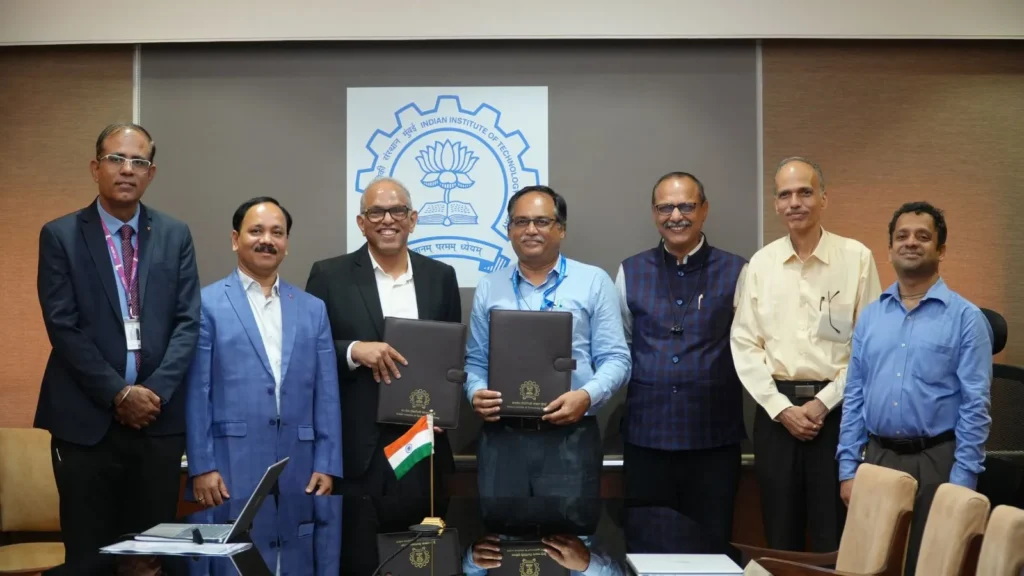
In a major step toward strengthening India’s digital security ecosystem, IIT Bombay has joined hands with SBI Life Insurance to establish the ‘Bharat AI & Cyber Innovation Hub for Insurance’, a dedicated research and innovation centre focused on advancing indigenous artificial intelligence and cybersecurity solutions for the country’s insurance industry. The initiative is designed to develop AI-powered cyber defence systems that are conceptualised, built, and owned within India, aligning with the government’s broader Atmanirbhar Bharat vision of technological self-reliance. With India’s insurance premium market expected to expand at an annual growth rate of 6.9% through 2030, ensuring stronger cyber security infrastructure and safeguarding customer data have become increasingly important priorities. The newly launched innovation hub will drive research and development across key emerging areas including artificial intelligence, cyber security, quantum technologies, and digital insurance ecosystems. Beyond technology development, the partnership will also focus on executive education programmes, talent development, innovation incubation, strategic consulting, and deeper collaboration between academia and industry stakeholders. One of the central goals of the collaboration is to create homegrown cyber defence capabilities, reducing India’s reliance on imported security technologies while enhancing the country’s preparedness against rapidly evolving digital threats in the financial services sector. The initiative will additionally help build a strong pipeline of skilled professionals in AI and cybersecurity, allowing students and researchers to engage directly with real-world industry challenges. According to IIT Bombay, the hub is expected to transform advanced research into deployable solutions while becoming a benchmark model for future partnerships between educational institutions and highly regulated industries, accelerating innovation-led growth in critical sectors. Source: Indian Express  

Indian Institute of Technology Bombay Partners with SBI Life Insurance to Launch AI-Driven Cyber Defence Innovation Hub for Insurance Sector Read More »

PM Modi Unveils ₹1 Lakh Crore R&D Fund, Calls for Ethical and Inclusive Innovation at ESTIC 2025

Prime Minister Narendra Modi addressed the Emerging Science, Technology and Innovation Conclave (ESTIC) 2025 at Bharat Mandapam on Nov 3, highlighting India’s growing leadership in science, technology, and innovation. Welcoming participants from India and abroad — including scientists, innovators, academics, and policymakers — the Prime Minister celebrated India’s landmark achievements in both sports and science. Opening his remarks, PM Modi congratulated the Indian women’s cricket team for their historic ICC Women’s World Cup victory, saying the nation was “immensely proud” of their achievement, which will inspire millions of young Indians. The Prime Minister also hailed India’s scientists for successfully launching the heaviest communication satellite, commending ISRO for its continued contribution to India’s space advancements. He noted that both achievements reflected India’s growing spirit of excellence and innovation. R&D Boost: ₹1 Lakh Crore RDI Scheme Announced Underscoring the government’s commitment to strengthening India’s research ecosystem, PM Modi formally launched the ₹1 lakh crore Research, Development and Innovation (RDI) Scheme Fund, designed to boost private sector–led R&D. He emphasized that, for the first time, capital will be made available for high-risk, high-impact research projects, and reaffirmed that the government is “building a modern innovation ecosystem” by easing financial rules, procurement norms, and regulatory frameworks to accelerate the journey from lab to market. He also referred to the establishment of the Anusandhan National Research Foundation (ANRF) to expand research and innovation across Indian universities. India’s Innovation Momentum PM Modi highlighted India’s transformation into a global innovation hub — noting that R&D spending has doubled in the past decade, patent registrations have risen 17-fold, and India now ranks as the world’s third-largest startup ecosystem. Over 6,000 deep-tech startups are driving progress in areas such as clean energy, materials science, and semiconductors, while India’s bio-economy has grown from $10 billion in 2014 to $140 billion today. He said, “India is no longer a consumer of technology — it is a driver of technological transformation,” citing the nation’s indigenous vaccine success during the COVID-19 pandemic and the reach of its Digital Public Infrastructure, which connects over two lakh gram panchayats with optical fibre. Empowering Women in Science Highlighting inclusive innovation, the Prime Minister celebrated the rising participation of women in STEM. He noted that women now make up 43% of STEM students in India — above the global average — and that annual patent filings by women have increased from fewer than 100 to over 5,000. He added that Indian women scientists are now at the forefront of space research and innovation. Encouraging the Next Generation PM Modi underscored the importance of nurturing scientific curiosity among youth. Recalling the public excitement around Chandrayaan and the recent Indian space station mission, he said these moments have inspired young minds to explore science. He announced plans to expand Atal Tinkering Labs from 10,000 to 25,000 labs, giving over one crore students a platform for hands-on innovation. The Prime Minister also shared that 10,000 new research fellowships will be awarded over the next five years under the Prime Minister’s Research Fellowship to further empower young scientists. India’s Vision for Ethical AI and Future Technologies Speaking about the future of emerging technologies, PM Modi stressed that science and technology must remain ethical, inclusive, and human-centric. He cited the India AI Mission, with an investment of ₹10,000 crore, aimed at making AI accessible and beneficial for all. He also announced that India will host the Global AI Summit in February 2026, focusing on inclusive and safe AI governance. Calling for innovation in critical areas such as nutrition security, biofortified crops, clean energy storage, bio-fertilisers, and genomic medicine, the Prime Minister urged scientists to work towards achieving self-reliance in key inputs and technologies. Concluding his address, PM Modi invoked the spirit of “Jai Vigyan, Jai Anusandhan”, reaffirming the government’s full support for researchers and innovators. He expressed confidence that the outcomes of ESTIC 2025 will chart a new roadmap for India’s scientific and technological future. Source: PIB

PM Modi Unveils ₹1 Lakh Crore R&D Fund, Calls for Ethical and Inclusive Innovation at ESTIC 2025 Read More »