


ArdorComm Media Group

Monday, November 23, 2026 8:39 AM

Rahul Singh

Mandeep K Bhandari Appointed New CBSE Chairperson
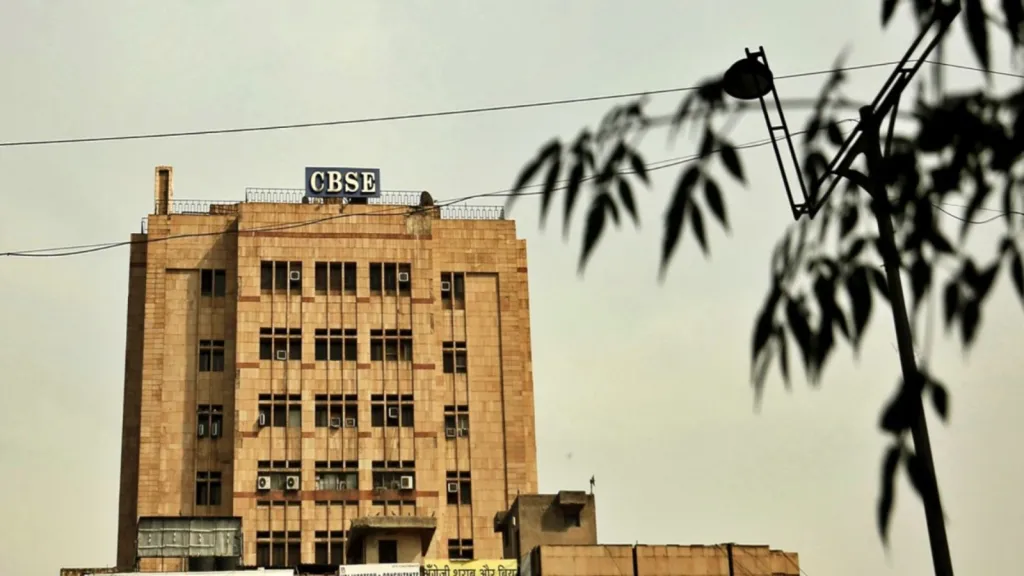
Senior IAS officer Mandeep K Bhandari, a 2001-batch officer of the AGMUT cadre, has been appointed as the new chairperson of the Central Board of Secondary Education (CBSE). Bhandari will succeed Lokhande Prashant Sitaram, who had been holding additional charge of the CBSE chairperson’s post following the transfer of Rahul Singh by the Centre on June 2. Singh’s transfer came amid controversy surrounding the board’s On-Screen Marking system. The Appointments Committee of the Cabinet has approved Bhandari’s appointment, according to an order issued by the Ministry of Personnel. Bhandari is currently serving as Principal Secretary to the Lieutenant Governor of Jammu and Kashmir. His appointment comes at a time when CBSE is undertaking several technology-driven reforms in examinations and assessment processes. In another senior-level appointment in the education ministry, 2001-batch AGMUT cadre IAS officer Ankita Mishra Bundela has been appointed as Additional Secretary in the Department of Higher Education, Ministry of Education. Bundela is currently serving as Additional Secretary in the Department of Agriculture and Farmers Welfare. She will take charge of her new role as part of the latest administrative changes approved by the Centre. Source: Indian Express

Mandeep K Bhandari Appointed New CBSE Chairperson Read More »
CBSE Mandates First Board Exam for Class 10; Introduces Optional Second Attempt in Select Subjects

Starting from the academic year 2026, the Central Board of Secondary Education (CBSE) will implement a dual-board exam system for Class 10 students, with the first exam being mandatory for all. The second exam will serve as an optional chance for students to improve their scores, but only in up to three subjects from science, mathematics, social science, and the two language papers. Previously, CBSE allowed students to reappear for improvement in just two subjects. Under the new framework, that number increases to three, offering more flexibility while still maintaining academic discipline. CBSE Chairman Rahul Singh explained that making the first exam compulsory and restricting the second exam to three subjects is meant to encourage students to treat the initial attempt seriously. He emphasized that the second exam is not an alternative, but an “additional opportunity” for enhancement. If a student skips three or more subjects in the first round, they will not be eligible for the second attempt and will have to reappear the following year under the ‘essential repeat’ category. However, exceptions will be made for students in winter-affected regions like Ladakh, parts of Arunachal Pradesh, Sikkim, and Himachal Pradesh. These students can opt to appear only for the second set of exams, as heavy snowfall may hinder participation in the February session. The timeline for the two exams is as follows: the first board exam will be conducted from mid-February, with results declared in April. Based on their performance, students can choose to take the second exam in May, and the best scores from either attempt will be considered final. The second round results are expected by June 30, a shift from the earlier system where improvement results were released in August. Students who fail to clear the first exam will be able to appear in the second round as ‘compartment’ candidates. This two-exam system may eventually be extended to Class 12 as well, with similar timelines to ensure college admission deadlines are met. Earlier this year, CBSE had released a draft proposal for this policy and sought public opinion. According to Singh, 64% of students expressed support for the new format. Notably, the initial draft had not made the first exam compulsory or set a cap on the number of subjects for the second attempt — both key changes in the final version. Source: Indian Express

CBSE Mandates First Board Exam for Class 10; Introduces Optional Second Attempt in Select Subjects Read More »