ArdorComm Media Group

Saturday, November 14, 2026 2:52 PM

Rajya Sabha

India’s Single-Teacher Schools Decline by 3,282, But Five States Record Sharp Rise
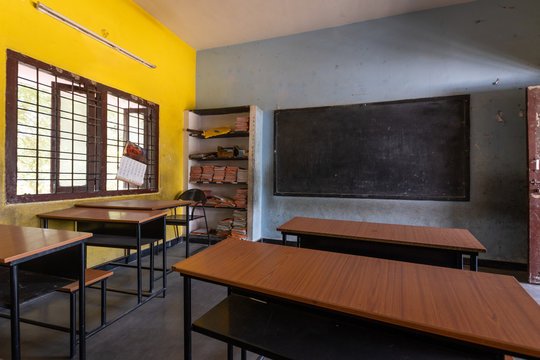
India recorded a net decline of 3,282 single-teacher schools in 2025-26, with their total number falling from 1,04,125 in 2024-25 to 1,00,843, according to data from the Unified District Information System for Education Plus (UDISE+). The figures were also presented in the Rajya Sabha in late July in response to a question concerning teacher vacancies. A single-teacher school is one where one teacher handles multiple classes and subjects, making it an important indicator of staffing shortages and resource constraints in school education. However, the national decline masks significant differences between states. Five states alone reported a combined reduction of more than 11,000 single-teacher schools, more than three times the overall national decline. This was offset by substantial increases in several other states, resulting in a net reduction of 3,282 schools nationally. Madhya Pradesh records biggest decline Madhya Pradesh reported the largest reduction, with its number of single-teacher schools dropping from 7,217 in 2024-25 to 2,269 in 2025-26 — a fall of 4,948 schools. Chhattisgarh recorded the second-largest decline, reducing its count by 3,512, from 5,973 to 2,461. Uttar Pradesh, which continues to have one of the highest numbers of such schools among major states, saw the figure fall from 9,508 to 7,874, a reduction of 1,634. Punjab and Gujarat also registered notable declines, with their single-teacher school numbers falling by 682 and 601 respectively. Andhra Pradesh sees largest increase In contrast, Andhra Pradesh recorded the biggest increase in the country. The state’s single-teacher schools rose from 12,912 in 2024-25 to 16,357 in 2025-26, an increase of 3,445. Maharashtra reported an addition of 1,117 such schools, while Rajasthan saw an increase of 1,083. Karnataka and Jharkhand recorded increases of 693 and 655 respectively. The contrasting trends indicate that the national improvement has not been evenly distributed across the country. Government response does not explain state-wise variation The Centre’s response in the Rajya Sabha did not provide a state-specific explanation for the sharp variations. It cited factors such as teacher retirements, resignations, creation of new posts, rationalisation of teacher deployment and changes in student enrolment as general reasons for teacher vacancies. The government also did not provide the state-wise sanctioned, working and vacant teacher positions sought in the original question. It said such information is maintained by individual state governments and Union Territory administrations. Instead, the response provided the number of teachers currently in position and the number of single-teacher schools based on UDISE+ 2025-26 data. This means the available figures alone cannot establish whether reductions in single-teacher schools were primarily due to new teacher appointments. Other factors, including school mergers, closures or changes in classification, could also have contributed. Pupil-teacher ratio indicates improvement The latest data also point towards relatively favourable pupil-teacher ratios, although the two years cannot be compared directly because the figures were presented differently. UDISE+ 2024-25 reported an overall national pupil-teacher ratio of 24 students per teacher. For 2025-26, the government provided level-wise ratios of 19 at the primary level, 17 at upper primary, 15 at secondary and 23 at higher secondary. All four ratios are below the 2024-25 composite figure. The government said these figures remain within the benchmarks outlined under the National Education Policy (NEP) 2020, which recommends a pupil-teacher ratio below 30 nationally and below 25 in areas with a high proportion of socio-economically disadvantaged students. While the figures suggest an improvement in teacher availability, the different methods of reporting mean they should not be treated as a direct year-on-year comparison. Source: Indian Express

India’s Single-Teacher Schools Decline by 3,282, But Five States Record Sharp Rise Read More »
UGC flags 32 fake universities, warns students against EdTech franchise-based online degree programmes

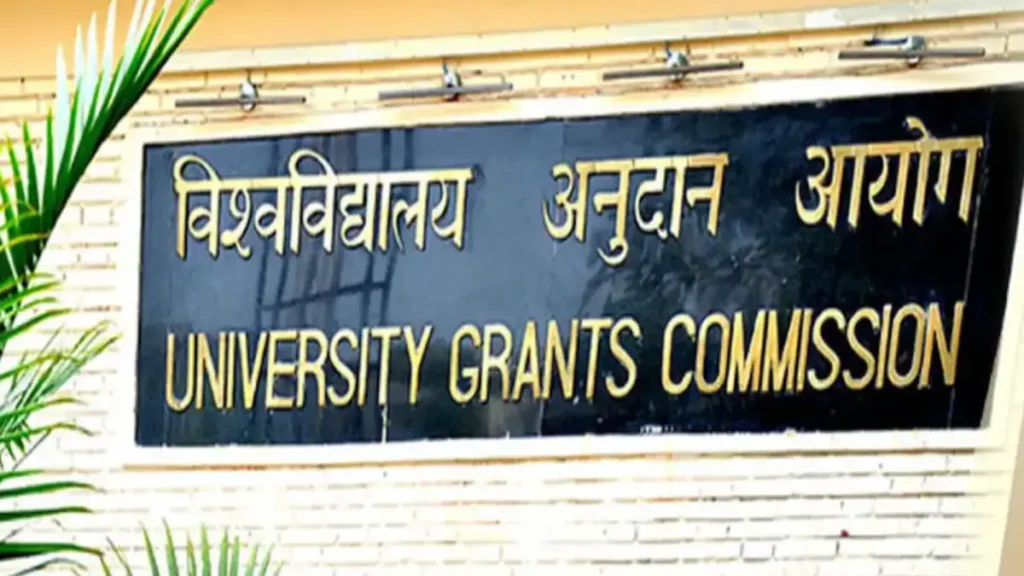
The University Grants Commission (UGC) has identified 32 institutions as fake universities in its latest list released in February 2026, the Ministry of Education informed the Rajya Sabha on Wednesday. The disclosure came in response to questions concerning misleading advertisements by EdTech platforms promoting 100% placement guarantees, lucrative job prospects, unauthorised institutional affiliations, fake universities, invalid degrees and unrecognised foreign collaborations. Minister of State for Education Dr. Sukanta Majumdar said the UGC has observed that several EdTech companies are advertising online and Open and Distance Learning (ODL) degree and diploma programmes in collaboration with universities and institutions recognised by the commission. He clarified that the UGC has issued a public notice stating that franchise arrangements for offering online or ODL programmes are not permitted. Degrees awarded through such unauthorised partnerships are not recognised by the UGC, and appropriate action will be taken against both defaulting EdTech firms and higher education institutions under existing laws and regulations. The commission has advised students and other stakeholders to verify the recognition or entitlement status of any online or distance education programme through the UGC Distance Education Bureau (DEB) portal before taking admission. According to the ministry, whenever the UGC receives complaints about unauthorised institutions awarding degrees, it issues notices seeking explanations. If the response is found unsatisfactory, the institution is subsequently included in the commission’s list of fake universities. To tackle such malpractice, the UGC established its Anti-Malpractice Cell (AMPC) on May 30, 1996, to address cases involving fake or unrecognised universities operating in violation of the UGC Act, 1956. The regulator also issues warning and show-cause notices, regularly publishes state-wise lists of fake universities, and conducts awareness campaigns through its website and social media channels. It has further urged state governments and Union Territories to initiate action, including filing FIRs where necessary, against fake institutions operating within their jurisdictions. The latest list includes fake institutions across Delhi, Haryana, Rajasthan, Uttar Pradesh, Jharkhand, Andhra Pradesh, Arunachal Pradesh, West Bengal, Maharashtra and Puducherry. Students have been urged to verify the authenticity and recognition status of higher education institutions through the official UGC website before seeking admission. Source: Indian Express

UGC flags 32 fake universities, warns students against EdTech franchise-based online degree programmes Read More »

Parliament Clears Bill to Expand Supreme Court Bench Strength to 37 Judges

Parliament has approved the Supreme Court (Number of Judges) Amendment Bill, 2026, paving the way for an increase in the sanctioned strength of Supreme Court judges from 33 to 37, excluding the Chief Justice of India. The Rajya Sabha passed the legislation after a discussion and returned it to the Lok Sabha, which had already cleared the Bill earlier this week. The legislation amends the Supreme Court (Number of Judges) Act, 1956 to accommodate the growing workload of the country’s highest court. Before the Bill was introduced, President Droupadi Murmu had promulgated an ordinance in May this year authorising the increase in the number of judges. Responding to the debate in the Rajya Sabha, Union Law and Justice Minister Arjun Ram Meghwal said the expansion of the apex court’s bench reflects the government’s broader judicial reform agenda under the vision of Sabka Saath, Sabka Vikas, Sabka Vishwas and Sabka Prayas. He stated that strengthening the Supreme Court’s capacity would improve judicial efficiency and help address the increasing complexity and volume of cases before the court. The minister noted that the government has been implementing several measures to accelerate the disposal of pending cases. He said the rise in litigation, evolving constitutional issues and growing legal challenges have made it necessary to enhance the court’s judicial strength. During the discussion, Congress MP Vivek Tankha questioned the government’s decision to first issue an ordinance for the move, pointing out that nearly 95,000 cases remain pending before the Supreme Court. Supporting the legislation, BJP MP Sangeeta Yadav described it as a landmark reform that would strengthen the justice delivery system and improve access to timely justice. She observed that many cases have remained unresolved for more than a decade, making the expansion of the bench essential. Several members from different political parties backed the Bill while raising broader concerns about judicial infrastructure and vacancies. TMC MP Dr Menaka Guruswamy highlighted that nearly 30 per cent of High Court posts remain vacant. DMK MP R Girirajan said the additional judges would help reduce the Supreme Court’s mounting backlog, while BJD MP Dr Sasmit Patra emphasised the need to improve infrastructure in both the Supreme Court and High Courts. YSRCP MP S. Niranjan Reddy pointed to the increasing number of cases handled by each judge. AIADMK MP I.S. Inbadurai welcomed the move, calling it a timely reform, and urged the Centre to fill vacant judicial posts in the Madras High Court, where only 52 judges are currently serving against a sanctioned strength of 75. Shiv Sena MP Dr Jyoti N. Waghmare said the legislation would strengthen public confidence in the judiciary and contribute to faster justice delivery. Members including Rajendra Jain (NCP), Sanjay Singh (AAP), Milind Deora (Shiv Sena), Vijay Chintakayala (TDP) and Mahua Maji (JMM) also participated in the debate. Following the passage of the Bill, the Rajya Sabha proceeded with Special Mentions, during which members raised issues of public importance, before adjourning for the day. Source: News on AIR

Parliament Clears Bill to Expand Supreme Court Bench Strength to 37 Judges Read More »

No TV Ratings Agency Registered Under New Policy, MIB Informs Parliament

Television audience ratings in India will remain suspended for the time being, as the Ministry of Information and Broadcasting (MIB) has informed Parliament that no audience measurement agency has been registered under the Television Ratings Policy, 2026. Responding to an unstarred question in the Rajya Sabha, Minister of State for Information and Broadcasting L. Murugan stated that the new policy requires all television audience measurement agencies to obtain registration before they can operate. He confirmed that no organisation has been registered under the new framework so far. The development means broadcasters, advertisers and media agencies continue to operate without official television audience ratings, as the industry has not yet transitioned to the new regulatory system. Although the ministry has been working with the Broadcast Audience Research Council (BARC) to implement the revised framework, it has not provided a timeline for the resumption of TV ratings. According to the government, the Television Ratings Policy, 2026 replaces the 2014 Guidelines for Television Rating Agencies and introduces updated rules governing the registration, operations, auditing and oversight of audience measurement agencies. The policy aims to improve transparency, accountability and independence in television audience measurement while encouraging greater competition in the sector. As part of these reforms, the minimum net worth requirement for television ratings agencies has been reduced from Rs 20 crore to Rs 5 crore, making it easier for new entrants to participate. The new framework also adopts a technology-neutral approach, allowing audience measurement across traditional linear television, Connected TVs (CTV) and television channels available through OTT platforms. Source: Economic Times  

No TV Ratings Agency Registered Under New Policy, MIB Informs Parliament Read More »

DGCA’s Tariff Monitoring Unit to be reinforced to curb high airfares, government says

The Union government has announced plans to further strengthen the Tariff Monitoring Unit under the Directorate General of Civil Aviation (DGCA) to keep a close watch on airfares, Civil Aviation Minister Ram Mohan Naidu informed the Rajya Sabha. Responding to supplementary questions during Question Hour, the Minister said that fare monitoring has been expanded beyond domestic routes and now includes international sectors as well. He added that the Ministry intervenes whenever there are indications of a sharp or unreasonable rise in ticket prices. Referring to the recent IndiGo disruption that led to widespread flight cancellations, Mr. Naidu said the government stepped in to cap fares to ensure prices remained reasonable and within reach of passengers. He also highlighted that passengers have been empowered through a tariff monitoring feature on the Air Sewa portal. If travellers believe fares are excessively high, they can upload screenshots of ticket prices on the portal, following which the Ministry will take up the matter with the concerned airline. The Minister noted that airfare surges are largely a result of the deregulated nature of the aviation sector, where prices tend to increase when demand significantly outstrips supply. Source: newsonair

DGCA’s Tariff Monitoring Unit to be reinforced to curb high airfares, government says Read More »

Over 4.7 Lakh Pirated NCERT Books Seized Since 2024, Says Education Ministry

In a significant crackdown on textbook piracy, the Ministry of Education revealed that over 4.7 lakh pirated NCERT textbooks have been confiscated across India since 2024. This update was shared in a written response by Union Minister of State for Education, Jayant Chaudhary, during a Rajya Sabha session on Wednesday. “Reports of NCERT textbook piracy have emerged from various parts of the country. From 2024 to 2025, enforcement teams seized around 4.71 lakh counterfeit books in multiple operations carried out in different states,” said Chaudhary. He emphasized that piracy is largely driven by the profit motives of unauthorized operators. NCERT’s mission, Chaudhary reiterated, is to provide high-quality educational resources at minimal cost to students across India, functioning on a no-profit, no-loss model. Highlighting recent efforts to combat the menace, he informed that in the past year alone, NCERT conducted raids on 29 locations linked to the production and distribution of pirated books. These included premises using unauthorized NCERT watermarked paper and illegal printing setups. Assets and equipment worth over ₹20 crore were seized during these raids. To address the root causes of piracy, several measures have been implemented, including a 20% price cut on textbooks, improved paper and print quality with advanced machinery, faster and timely textbook production, and expanded online availability through e-commerce channels. In a tech-driven approach, NCERT also tested an innovative anti-piracy mechanism—developed and patented by IIT Kanpur—on one million copies of a Class 6 textbook, aiming to deter counterfeit reproduction through secure tracking technology. Source: PTI Image Credit: iStock  

Over 4.7 Lakh Pirated NCERT Books Seized Since 2024, Says Education Ministry Read More »

Lok Sabha Passes Bill to Allow Government Expenditure for FY 2024-25

The Lok Sabha on Monday approved about ₹140 lakh crore in expenditure demands by different ministries of the Central Government, completing two-thirds of the legislative approvals needed for the full Budget of 2024–25. The lower house, which last week debated the Budget, approved demands for grants as well as the Appropriation (No 2) Bill 2024, which authorizes the government to use certain sums out of the Consolidated Fund of India for the services of the financial year 2024-25. This followed a guillotine being applied after a discussion on grants for four ministries — Railways, Education, Health, and Fisheries. The Lok Sabha will now discuss the Finance Bill (No 2), 2024, which essentially contains the tax proposals in Finance Minister Nirmala Sitharaman’s Budget for 2024–25. The Rajya Sabha is also simultaneously discussing demands for grants for four other ministries — Agriculture, New and Renewable Energy, Cooperation, Housing, and Urban Affairs. It will also discuss the Finance Bill, but as per the Constitution, it can only return such bills to the Lower House. The budgetary exercise will be complete after the passage of the Finance Bill (No 2), 2024, by the Lok Sabha. While the guillotine is literally a large, weighted blade used for executing a condemned person, in legislative parlance, it means to bunch together and fast-track the passage of financial business. It is a fairly common procedural exercise in the Lok Sabha during the Budget Session. Reference from Business Standard

Lok Sabha Passes Bill to Allow Government Expenditure for FY 2024-25 Read More »

Lok Sabha and Rajya Sabha Shift to New Parliament Building; Old Complex to Become Heritage Site

In a historic move, the Lok Sabha and Rajya Sabha are scheduled to meet at 1:15 PM and 2:15 PM, respectively, within the premises of the New Parliament Building. The transition from the Old Parliament Building to the new one took place on Monday, with both houses officially recognizing the new edifice as the Parliament House of India. Today, the Lok Sabha and Rajya Sabha will conduct their sessions in the modernized Parliament complex, marking a pivotal moment during the five-day Special Session of the Parliament initiated on Monday. The former iconic Parliament Complex, which has served as the ‘temple of democracy’ for over seven decades, will now be preserved as a heritage site, with the New Parliament Complex, inaugurated earlier this year by Prime Minister Modi, taking its place. The notification regarding this significant change was issued by the Lok Sabha Secretariat on September 18, designating the new Parliament building located in New Delhi, adjacent to the existing Parliament House with Raisina Road to the south and Red Cross Road to the north, as the Parliament House of India. The Central Hall program, scheduled for 11 AM today at the old Parliament building, will commemorate the rich legacy of the Indian Parliament and reaffirm the commitment to transform India into a developed nation by 2047. Security personnel at the Parliament building have also been outfitted in new uniforms, featuring khaki trousers, cream-colored jackets, cream shirts with pink lotus motifs (for men), and vibrant sarees with jackets (for women), along with turbans for marshals, signalling a distinct dress code. On Monday, both houses adjourned after discussing Parliamentary democracy’s evolution over the last 75 years. Presiding officers confirmed that proceedings would commence in the new Parliament building on Tuesday afternoon. Prior to the Lok Sabha and Rajya Sabha sessions at noon, all MPs from both houses will assemble for group photographs, symbolizing the shift to the New Parliament Complex.

Lok Sabha and Rajya Sabha Shift to New Parliament Building; Old Complex to Become Heritage Site Read More »