ArdorComm Media Group

Monday, November 23, 2026 9:35 PM

RTE Act

Delhi Govt to Conduct Social Audit of Schools Under Samagra Shiksha for 2025-26
ardorcomm news

The Delhi government has announced a comprehensive social audit of its government schools for the 2025–26 academic year under the Samagra Shiksha scheme. The initiative aims to ensure that all provisions and student entitlements guaranteed by the Right to Education (RTE) Act are delivered promptly and fairly. According to a circular issued by the Directorate of Education, around 60% of government schools across Delhi will be covered under this audit, which will be carried out in line with the revised guidelines of the Ministry of Education, Government of India. A total budget allocation of ₹3.73 crore has been approved for the exercise. The selected institution—preferably a university, college, or technical institute with a NAAC rating of B+ or higher—will be tasked with training social auditors, conducting on-site inspections, compiling reports, and uploading findings to the designated online platform. Preference will be given to Delhi’s State Administrative University for leading the process. The audit will examine whether schools are fulfilling the mandates of the RTE Act and Samagra Shiksha, focusing on areas such as classroom infrastructure, sanitation facilities, drinking water availability, electricity, and student safety—particularly that of girls. It will also assess enrolment, attendance, and retention rates, along with the inclusion of children with special needs. Parents, teachers, and community representatives will be actively involved in evaluating school performance to provide a grassroots-level perspective. Officials stated that the social audit will help uncover challenges not visible through routine monitoring and guide the government in taking corrective measures where needed. Launched in 2018, Samagra Shiksha is a centrally sponsored scheme that integrates three earlier programmes—Sarva Shiksha Abhiyan, Rashtriya Madhyamik Shiksha Abhiyan, and Teacher Education—and aligns them with the goals of the National Education Policy (NEP) 2020. The initiative also supports the Delhi government’s “zero-tolerance” approach toward lapses in student safety and aims to strengthen accountability in school administration. Source: PTI

Delhi Govt to Conduct Social Audit of Schools Under Samagra Shiksha for 2025-26 Read More »
Over 1 Lakh Single-Teacher Schools Educate 33 Lakh Students Across India: Education Ministry

ardorcomm news

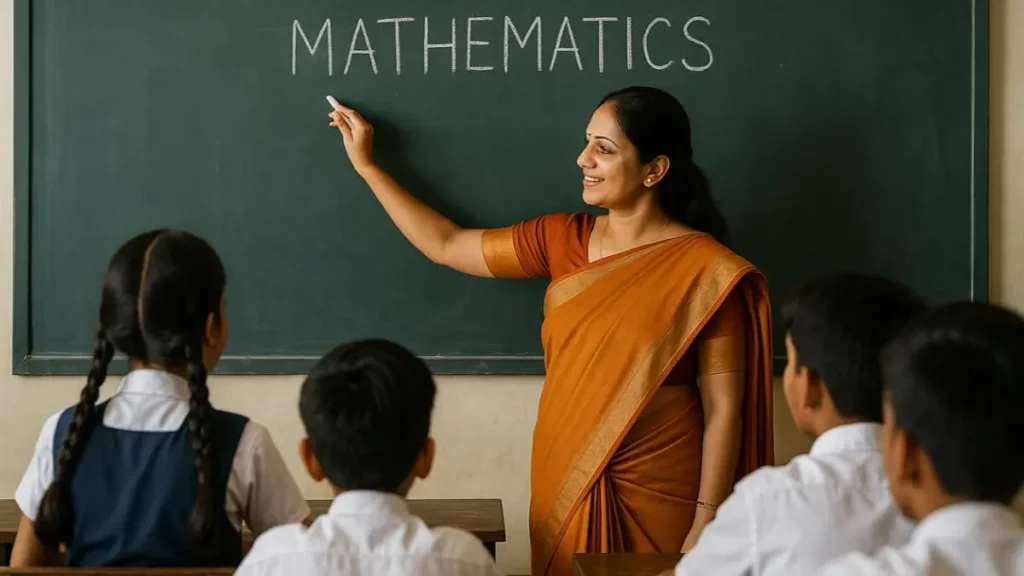
Over 33 lakh students in India are studying in more than one lakh schools run by a single teacher, according to the latest data from the Ministry of Education. Andhra Pradesh tops the list in terms of the number of such schools, while Uttar Pradesh records the highest student enrolment. As per statistics for the academic year 2024–25, India has 1,04,125 single-teacher schools catering to 33,76,769 students — averaging around 34 students per school. This figure highlights ongoing challenges in meeting the Right to Education (RTE) Act norms, which prescribe a pupil-teacher ratio (PTR) of 30:1 for primary grades (I–V) and 35:1 for upper primary levels (VI–VIII). Andhra Pradesh leads with 12,912 single-teacher schools, followed by Uttar Pradesh (9,508), Jharkhand (9,172), Maharashtra (8,152), Karnataka (7,349), and both Madhya Pradesh and Lakshadweep (7,217 each). States like West Bengal (6,482), Rajasthan (6,117), Chhattisgarh (5,973), and Telangana (5,001) also feature prominently on the list. In contrast, Delhi has only nine such schools, while Puducherry, Ladakh, Chandigarh, and Dadra & Nagar Haveli and Daman & Diu report none. The Andaman and Nicobar Islands have just four. In terms of student enrolment, Uttar Pradesh leads with 6,24,327 students studying in single-teacher schools, followed by Jharkhand (4,36,480), West Bengal (2,35,494), Madhya Pradesh (2,29,095), Karnataka (2,23,142), Andhra Pradesh (1,97,113), and Rajasthan (1,72,071). Interestingly, Delhi and Chandigarh, despite having very few such schools, record the highest average student strength per school — 808 and 1,222 respectively. On the other hand, regions like Ladakh (59), Mizoram (70), Meghalaya (73), and Himachal Pradesh (82) have some of the lowest averages. A senior official from the Ministry explained that the government is working to enhance learning outcomes and improve the efficiency of resource use by merging under-enrolled schools — a process known as “rationalisation.” “Single-teacher schools limit the scope of effective teaching and learning. The government is redeploying teachers from non-operational schools to ensure adequate staff availability in single-teacher schools,” the official said. The number of single-teacher schools has seen a steady decline, dropping from 1,18,190 in 2022–23 to 1,10,971 in 2023–24 — a reduction of nearly six percent. Source: PTI  

Over 1 Lakh Single-Teacher Schools Educate 33 Lakh Students Across India: Education Ministry Read More »

Chandigarh Education Department Holds Crucial Meeting with Schools on Mandatory EWS Admissions

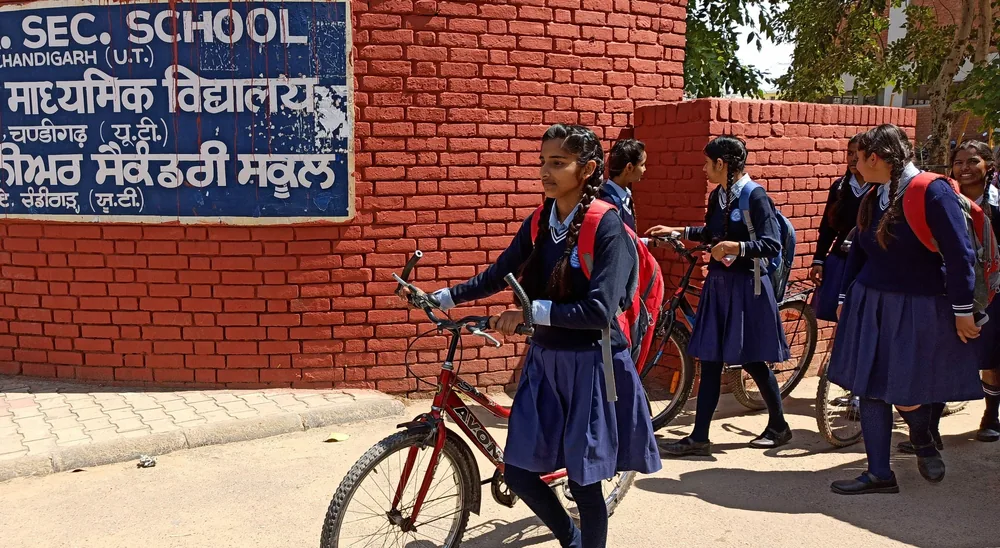
In order to strengthen compliance with the Right to Education (RTE) Act, the Chandigarh education department will convene a meeting with representatives from all private schools to discuss the necessity of admissions under the Economically Weaker Section (EWS) quota for the upcoming 2024-25 academic session. According to Harsuhinderpal Singh Brar, the director of school education in Chandigarh, the meeting aims to firmly demonstrate that all schools, with only a few exceptions, are covered by the RTE Act. Brar stressed that there will be no place for misunderstanding or departure regarding EWS admissions in the upcoming academic session. According to sources, the majority of schools, with the exception of ten, have already provided the UT education department with information about EWS admissions. These schools are expected to participate in the centralized admissions process, though it is unclear whether these are the same ten schools that did not participate in the previous academic year. While the schedule for general admissions has been released, the schedule for EWS admissions is expected to be delayed due to ongoing proceedings in the Punjab and Haryana high court. The court has ordered Chandigarh schools to provide audited accounts demonstrating fee collections, particularly from students aged six to fourteen, with the next hearing scheduled for December 7. The court’s directives stem from a plea filed by the Independent Schools’ Association (ISA), challenging UT’s instructions mandating EWS admissions. HS Mamik, the president of ISA, highlighted concerns that private schools were only being reimbursed for 10% of EWS seats instead of the stipulated 15%, adversely affecting the functioning of these institutions. The education department is also considering on punitive actions against schools that did not engage in the centralised EWS admissions for the 2023-24 session. Eight out of 20 minority schools reportedly abstained from the draw of lots, requiring personal hearings and ongoing efforts to resolve the situation. In the face of legal complications, the education department has taken attempts to enforce quota adherence, while private schools face financial and operational challenges as a result of reimbursement policy disparities. The upcoming meeting intends to clarify the EWS admission procedure and reinforce the RTE Act’s commitment to inclusive education.

Chandigarh Education Department Holds Crucial Meeting with Schools on Mandatory EWS Admissions Read More »