


ArdorComm Media Group

Friday, October 23, 2026 2:35 AM

smart classrooms

ArdorComm Digital Bharat Education Conclave 2026 held on 21st August 2026 in New Delhi
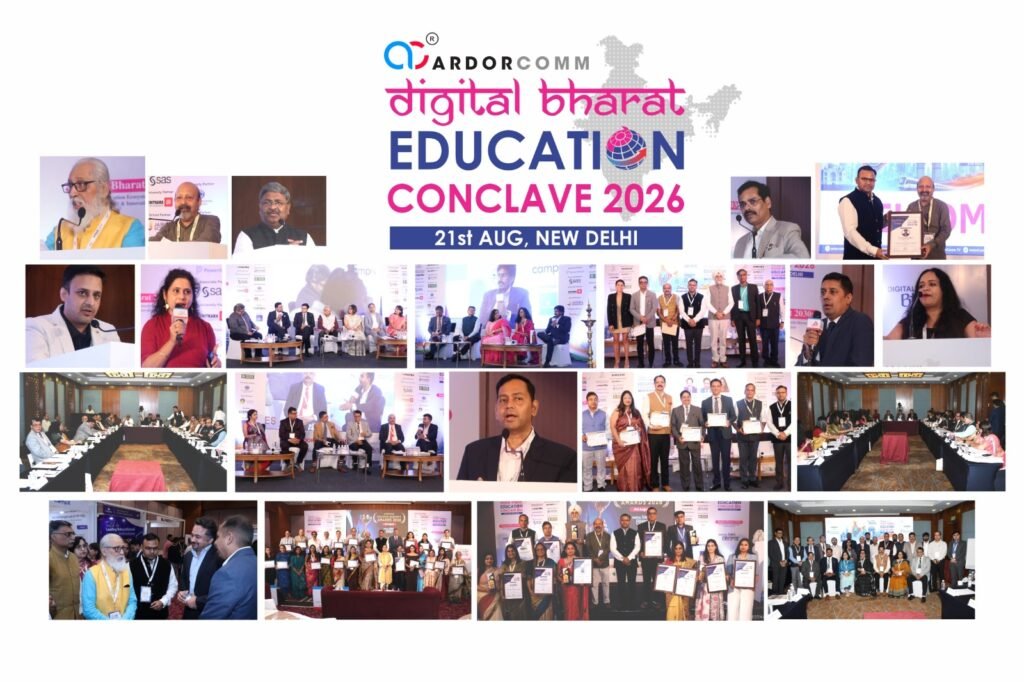
The ArdorComm Digital Bharat Education Conclave 2026, organised by ArdorComm Media Group, brought together leading educators, academicians, policymakers, government dignitaries, EdTech innovators, startups and industry experts to deliberate on the future of India’s education ecosystem in the age of artificial intelligence, digital transformation and emerging skills. Held under the theme “Digital Bharat 2030: Powering Education Ecosystem through AI, Skill & Innovation,” the conclave provided a platform for education leaders from across the country to exchange ideas, share successful practices and explore how technology and innovation can accelerate the transformation of Indian education. The event featured 5+ engaging panel discussions and 60+ speakers, with participation from leaders representing school education, higher education, government, EdTech, startups and the broader education ecosystem. With 150+ school education leaders and 150+ higher education leaders in attendance, the conclave created meaningful conversations around the opportunities and challenges shaping the next decade of learning. Reimagining Education for Digital Bharat 2030 The discussions at the conclave highlighted how India’s education system is moving beyond conventional technology adoption towards a more intelligent, personalised and outcome-driven ecosystem. Artificial Intelligence emerged as one of the central themes across conversations, with speakers examining its potential to transform teaching, learning, assessment, student engagement and institutional decision-making. At the same time, participants emphasised that technological advancement must be accompanied by responsible implementation, transparency, inclusivity and strong digital literacy. The conclave also explored the importance of developing future-ready skills as education increasingly intersects with rapidly evolving industry requirements. From employability and career readiness to curriculum transformation, the discussions underscored the need for stronger collaboration between educational institutions, policymakers and industry. Industry Leaders and Keynote Speakers The summit commenced with an inspiring Inaugural Session centered around the theme “Digital Bharat 2030: Powering Education Ecosystem through AI, Skill & Innovation.” The session featured a warm Welcome Address by Kumar Chandan Anand, Founder, CEO & Group Editor, ArdorComm Media Group, followed by insights from Guest of Honour Prof. Anil D. Sahasrabudhe, Chairman, National Educational Technology Forum (NETF) and National Board of Accreditation (NBA). The session also featured Guest Speakers Kunwar Shekhar Vijendra, Co-founder & Chancellor, Shobhit University and Chairman, ASSOCHAM National Council on Education, and Dr. S. K. Rathor, Founder, Chairman & MD, Sanfort Group of Schools, who shared their perspectives on the evolving education landscape and the role of technology, skills and innovation in shaping a future-ready India. The first panel discussion focused on “NEP2020 for Viksit Bharat: The Blueprint Aligning Policy, Process & Innovation for National Growth,” bringing together education leaders to deliberate on the implementation of NEP 2020 and its role in shaping a future-ready education ecosystem. The session was moderated by Dr. Sujeet Eric Masih, Principal, Apeejay School, Saket, New Delhi. The panel featured Prof. Basuthkar Jagadeeshwar Rao, Pro Chancellor & Vice-Chancellor, SGT University, Gurugram; Prof. (Dr.) Ajay Rana, Director General, AMITY University, Greater Noida, Uttar Pradesh; Tijay Gupta, Co-founder & COO, Bachpan & AHPS Group of Schools; Prof. Ankur Gill, Director of Operations, Swami Vivekanand Group of Institutions, Chandigarh; Mary Mahendri, Principal, GEMS Millennium School, Gurugram, Haryana; and Tripti Tiwari, Principal, Lawrence Academy, Gulaothi, Bulandshahr. The second panel discussion explored “Building Future-Ready Schools: From Smart Campuses to Intelligent Education Ecosystem,” bringing together school education leaders to discuss how technology, innovation and intelligent infrastructure can transform learning environments and prepare schools for the future. The session was moderated by Amol Arora, MD, Shemrock & Shemford Group of Schools. The panel featured Manish Rastogi, Group CEO & Director, Zee Learn Limited; Abhishek Rathor, COO, Sanfort Group of Schools; Bindu Sangwan, Founder Principal, The Gurukulam School, Jaipur; and Neha Singh, Director, St. Kabir’s School & Siddharth International School, Hisar. The third panel discussion focused on “Reshaping HEIs Beyond Degrees: Reimagining Employability, Skills & Career Readiness in the AI Age,” bringing together eminent higher education leaders to explore how institutions can move beyond traditional degrees and equip learners with the skills, competencies and adaptability required for an evolving world of work. The session was moderated by Dr. Amit Gupta, Chairman, Jagannath International Management School (JIMS), New Delhi. The panel featured Dr. Picheswar Gadde, Chancellor, Lingaya’s Vidyapeeth (Deemed to be University), Faridabad; Prof. (Dr.) Tankeshwar Kumar, Vice Chancellor, Central University of Haryana, Mahendergarh; Vinita Rohera, Managing Trustee, Gandhinagar University, Gandhinagar; Prof. (Dr.) VR Raghuveer, Vice-Chancellor, SRM University Delhi-NCR, Sonepat; and Prof. Buta Singh Sidhu, Vice Chancellor, Shobhit University, Gangoh. The fourth panel discussion addressed “Responsible AI for Student Enrollment: Balancing Innovation, Transparency and Trust in Higher Education,” examining how artificial intelligence can transform student enrollment and engagement while ensuring transparency, accountability and trust across higher education. The session was moderated by Abhay Gupta, Founder & Chairman, Luxury Connect Business School, Gurugram. The panel featured Prof. (Dr.) Shalya Raj, CEO, Swami Vivekanand Subharti University, Meerut; Dr. R. D. Patidar, Vice Chancellor, O. P. Jindal University, Raigarh; Siddhartth Singh, Director – Sales, Meritto; Dr. Manoj Manuja, Vice Chancellor, Geeta University, Panipat; and Prof. (Dr.) Arun Garg, Vice Chancellor, MVN University, Palwal. The fifth panel discussion focused on “Digital Divide Challenge: Ensuring Inclusive, Accessible & Equitable Education for Every Learner,” bringing together higher education leaders to examine the challenges of unequal access to digital infrastructure, technology and quality learning opportunities. The session was moderated by Prof. (Dr.) Satish Chander Sharma, Pro Vice Chancellor, Babu Banarasi Das University, Lucknow. The panel featured Prof. (Dr.) P.N. Hrisheekesha, Vice Chancellor, Dr. K. N. Modi University, Ghaziabad; Dr. Manju Gupta, Vice Chancellor, Glocal University, Saharanpur; Dr. Parma Nand, Vice Chancellor, Sharda University, Agra; Prof. (Dr.) Jayanand, Pro Vice Chancellor, Shobhit University, Meerut; and Prof. (Dr.) Pankaj Kumar Mishra, Pro Vice Chancellor, IIMT University, Greater Noida. The summit concluded with a thoughtful Valedictory Session, featuring Special Guest Dr. Anup Kumar Rajput, Department of Elementary Education, NCERT, Ministry of Education, Government of India. The session reflected on the key insights and discussions from across the conclave, highlighting the collective vision for a more inclusive, innovative and future-ready education ecosystem. The event concluded with a Thank You Note by Kumar Chandan Anand, Founder, CEO & Group Editor,

ArdorComm Digital Bharat Education Conclave 2026 held on 21st August 2026 in New Delhi Read More »
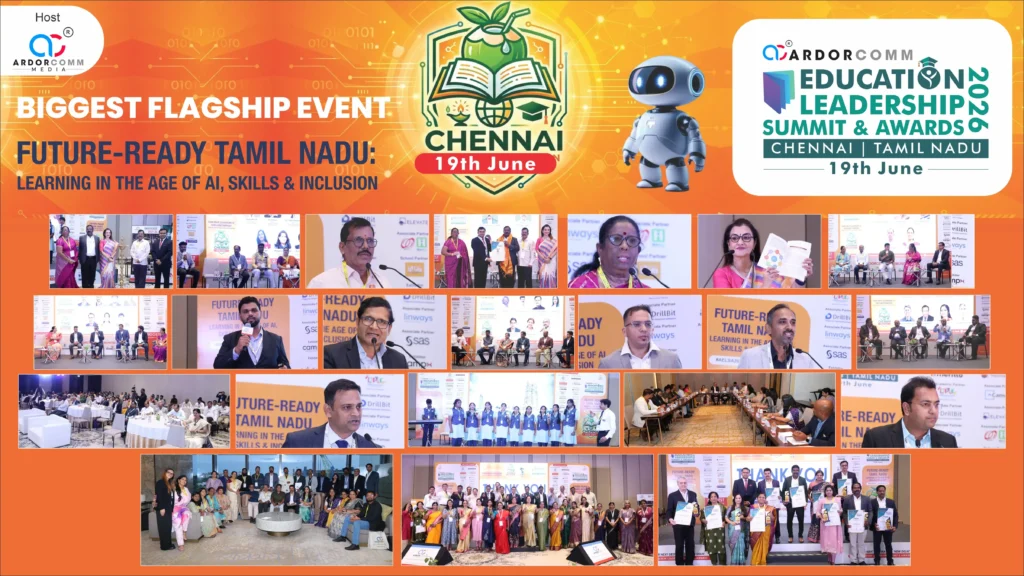
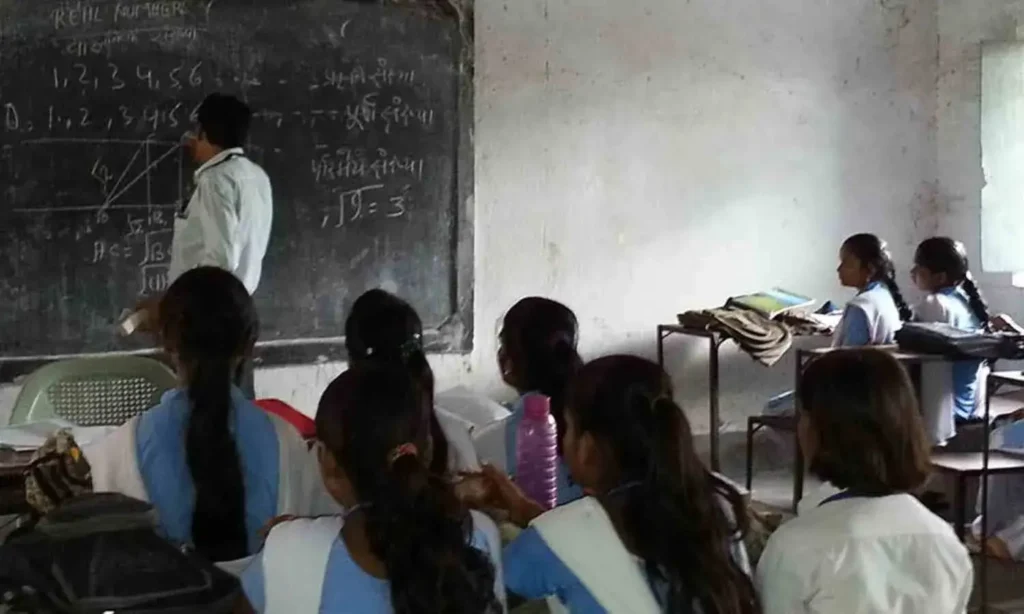
ArdorComm Education Leadership Summit & Awards 2026 held in Chennai, Tamil Nadu on 19th June, 2026

The ArdorComm – Education Leadership Summit & Awards 2026 in Chennai, Tamil Nadu concluded successfully on 19th June 2026, bringing together an extraordinary gathering of educators, policymakers, government dignitaries, industry leaders, EdTech innovators, and academic visionaries under one roof to deliberate on the future of education in India. Organized by ArdorComm Media Group, one of India’s growing media organizations focused on education, governance, technology, healthcare, and leadership communities, the summit revolved around the central theme: “Future-Ready Tamil Nadu: Learning in the Age of AI, Skills & Inclusion.” The event served as a dynamic knowledge-sharing platform that highlighted Tamil Nadu’s growing prominence as one of India’s strongest education and skilling ecosystems while addressing the evolving needs of a rapidly transforming digital world. Celebrating Tamil Nadu’s Educational Excellence Tamil Nadu has long been recognized as one of India’s leading states in literacy, academic excellence, industrial development, and workforce readiness. Cities such as Chennai, Coimbatore, Madurai, Salem, Vellore, Tiruchirappalli, and Thanjavur have established themselves as important centers for higher education, innovation, research, and industry growth. Against this backdrop, ArdorComm brought together influential stakeholders from across the education ecosystem to discuss how institutions can prepare students for a future shaped by artificial intelligence, automation, digital transformation, and evolving employment landscapes. Industry Leaders and Keynote Speakers The summit commenced with an inspiring Inaugural Session centered around the theme “Future-Ready Tamil Nadu: Learning in the Age of AI, Skills & Inclusion,” setting the tone for a day of meaningful dialogue on the future of education and skill development. The session began with a warm Welcome Address by Kumar Chandan Anand, Founder, CEO & Group Editor, ArdorComm Media Group, who highlighted the importance of collaborative efforts in transforming India’s education ecosystem for a rapidly evolving digital future. The event was further enriched by the presence of distinguished Special Guests, including Dr. M. Jayaprakasan, ISDS, Regional Director, RDSDE (Tamil Nadu), NSTI (Chennai & Trichy), Ministry of Skill Development & Entrepreneurship, Government of India, and Dr. S. Kannappan, Director, School Education, Directorate of School Education, Government of Tamil Nadu, who shared valuable perspectives on policy initiatives, skill development, and strengthening educational infrastructure. Adding further depth to the session, esteemed Guest Speakers Dr. Manjula Pooja Shroff, MD and CEO, Kalorex Group, and Dr. Smt. Uma Kannan, Founder Principal, Sri Venkateswara Group of Schools, delivered insightful thoughts on innovation in education, leadership, and preparing institutions to build inclusive and future-ready learning environments in the age of AI. Panel Discussion 1 focused on the crucial theme “Essential Skills for the 21st Century: Preparing Students for the Future of Work,” where education leaders explored the growing importance of equipping students with competencies required to thrive in an increasingly dynamic and technology-driven global workforce. The session was expertly moderated by Jagannathan D, Principal, Victoria School CBSE, Thoothukudi, who guided an engaging discussion on bridging the gap between traditional academic learning and industry expectations. Distinguished panelists including Dr. K. Maran, Director, Sri Sai Ram Institute of Management Studies, Chennai, Barath Silvester Raj, Principal, Sri Venkateswara Public Senior Secondary School, Chennai, and Dr. Nisha Nair, Principal, Jesus School for Excellence, Vadakkankulam, shared valuable insights on the need to foster critical thinking, communication skills, adaptability, leadership, creativity, and problem-solving abilities among students. The discussion emphasized that future-ready education must go beyond academics and focus on building well-rounded individuals capable of navigating the evolving demands of tomorrow’s workplace. Panel Discussion 2 centered on the important theme “Inclusive, Equitable & Accessible Education: Bridging Rural-Urban Learning Gaps,” highlighting the urgent need to create an education ecosystem that ensures equal learning opportunities for every student regardless of geography or socio-economic background. The session was thoughtfully moderated by Sivaprakasam Raman, Director, Hindu Global School, Erode & Salem, who steered the discussion around addressing disparities in access to quality education and building more inclusive learning environments. Esteemed panelists including Anand R, CEO – Preschool Division, Proelium Learning Solutions, Dr. Smt. Uma Kannan, Founder Principal, Sri Venkateswara Group of Schools, Ambattur, Dr. T. Arul Raj, Principal, International Delhi Public School, Kuppam, and D. Aida Emelensia, Director & Chairman, Trinity Group of Institution, Chennai, shared valuable perspectives on reducing educational inequalities through innovative teaching practices, stronger institutional support, improved infrastructure, and technology-driven accessibility. The discussion reinforced the collective responsibility of educators and policymakers in ensuring education remains inclusive, equitable, and accessible for learners across both rural and urban communities. Panel Discussion 3 explored the highly relevant theme “EdTech, Hybrid Learning & Digital Inclusion: Affordability, Accessibility & Digital Wellbeing,” focusing on how technology continues to transform modern education while ensuring learning remains inclusive and sustainable for all. The session was moderated by Venkatesh V, Associate Director, META-i Technologies Pvt. Ltd., who guided an engaging conversation around the opportunities and challenges of integrating digital solutions into education systems. The distinguished panel featured Prof. Godwin Tennyson, Director (I/C), IIM Tiruchirappalli, Prof. (Dr.) D. Viswanathan, Rector – Research and Development, Dr. M.G.R. Educational and Research Institute, Chennai, Dr. Shaleesha A. Stanley, Pro Chancellor, Jeppiaar University, Chennai, Bastin Thomas, Founder & CEO, Linways Technologies Pvt Ltd, and Dheepan Thangavelu, Vice Chairman, Sri Shakthi Group of Institutions, Tamil Nadu. The discussion highlighted the growing importance of hybrid learning models, affordable access to digital infrastructure, student wellbeing in technology-driven environments, and the role of EdTech innovation in creating scalable, future-focused learning experiences that can reach learners across diverse communities. Panel Discussion 4 focused on the transformative theme “Building Intelligent Education Ecosystems: AI, Automation & the Future of Student Experience,” highlighting how emerging technologies are redefining the education landscape and shaping the next generation of learning environments. The session was moderated by Dr. R. Hariprakash, Pro Vice Chancellor, Bharath Institute of Higher Education & Research (Deemed to be University), Chennai, who steered an insightful discussion on integrating artificial intelligence and automation into academic institutions to enhance learning outcomes and institutional efficiency. The esteemed panel featured Sameer Nazar, Deputy Manager, Meritto, Dr. M. A. Maluk Mohamed, Co-founder / VP (Research) / Head (India), Twin Health Inc & Chairman, MASTeR Group of Institutions (MAMCET

ArdorComm Education Leadership Summit & Awards 2026 held in Chennai, Tamil Nadu on 19th June, 2026 Read More »

Delhi Govt, SCERT to Train 100 Teachers in AI for Personalised Learning & Smart Assessments

ardorcomm news

In a step towards building future-ready classrooms, the Delhi government and the State Council of Educational Research and Training (SCERT) will train 100 school teachers in using Artificial Intelligence (AI) tools to personalise learning and enhance classroom assessments. The two-day hands-on training, scheduled for October 8 and 9, will be conducted under the ‘AI-Mediated Classroom Project’, a special initiative aimed at helping teachers integrate AI technologies into daily teaching and administrative tasks. According to SCERT, the project will be rolled out in two phases. In the first phase, 100 Computer Science teachers from 50 government schools will participate in capacity-building sessions. These teachers will later serve as master trainers, guiding their peers in effectively using AI in education. The second phase will extend the training to subject teachers of Mathematics, Science, English, Hindi, and Social Science for Classes 6 and 9. Each selected school will nominate three teachers from each subject—making 15 participants per school—to undergo the training. An SCERT official noted that the initiative is designed not only to enhance classroom learning but also to assist teachers in non-teaching tasks such as preparing PowerPoint presentations, generating ideas for extracurricular activities, and editing visuals. AI tools like ‘Napkin’ (for generating images from text) and ‘Gamma’ (for quickly creating presentations) are among the applications to be introduced during the sessions. The official added that follow-up sessions and feedback collection will ensure teachers effectively apply these tools in real classrooms. With over 1,075 government schools, 16,633 teachers, and 8.24 lakh students in Delhi, the project aims to make teaching more efficient, interactive, and digitally advanced. “This initiative aligns with our vision to empower educators with 21st-century skills and strengthen digital learning ecosystems across schools,” SCERT said in its circular. Source: PTI

Delhi Govt, SCERT to Train 100 Teachers in AI for Personalised Learning & Smart Assessments Read More »