ArdorComm Media Group

Wednesday, October 7, 2026 6:15 PM

Space Exploration

SpaceX Plans $100 Billion Louisiana Spaceport, Expected to Create 11,100 Jobs

ardorcomm news

SpaceX is planning a massive $100 billion investment to develop a new launch facility in Louisiana, with the project expected to generate more than 11,100 direct and indirect jobs over the next decade, according to Louisiana Economic Development. The facility, named Starbase Louisiana, will be developed in Vermilion Parish and is intended to serve as a high-frequency launch site for SpaceX’s Starship spacecraft. SpaceX CEO Elon Musk said on X that the facility could eventually feature more than a dozen launch towers, potentially supporting over 30 Starship launches a day. If achieved, the planned capacity would make it the largest launch site in the world. Louisiana Economic Development said the spaceport is being designed to accommodate thousands of launches annually and provide infrastructure to substantially increase launch frequency and expand access to space. The project is expected to create around 3,000 direct jobs over the next 10 years, with an average annual salary of approximately $92,600. This is about 192% higher than the average wage in Vermilion Parish. A further 8,100-plus indirect jobs are projected, taking the total employment impact in the Acadiana region beyond 11,100 positions. Louisiana Governor Jeff Landry welcomed the investment, calling it a significant milestone for the state and saying the project would strengthen its position as a major aerospace hub. The Louisiana facility is expected to play a key role in SpaceX’s plans to establish a high-cadence launch network for Starship and support the spacecraft’s future missions. Starship is being developed as a next-generation launch vehicle for large-scale space transportation and future exploration missions. Source: IANS

SpaceX Plans $100 Billion Louisiana Spaceport, Expected to Create 11,100 Jobs Read More »

ISRO’s Aditya-L1 Mission: India’s Solar Observatory Launches Successfully

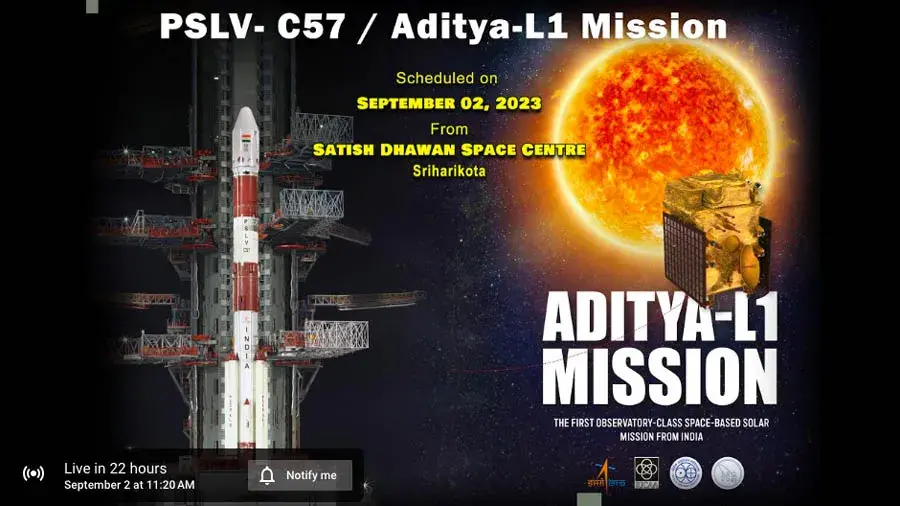
In a historic leap for India’s space exploration endeavours, the Indian Space Research Organisation (ISRO) has achieved a remarkable milestone with the successful launch of the Aditya-L1 solar observatory. This mission marks India’s inaugural foray into dedicated solar research, as the spacecraft embarks on a groundbreaking journey to the Sun-Earth L1 point. With precise placement into its intended orbit, Aditya-L1 now sets its sights on unravelling the enigmas of our nearest star, promising groundbreaking insights into solar dynamics and their influence on space weather. This mission not only positions ISRO at the forefront of solar science but also holds immense potential for advancing our understanding of the solar system’s intricate workings and their implications for life on Earth. PSLV-C57/Aditya-L1 Mission: The launch of Aditya-L1 by PSLV-C57 is accomplished successfully. The vehicle has placed the satellite precisely into its intended orbit. India’s first solar observatory has begun its journey to the destination of Sun-Earth L1 point. — ISRO (@isro) September 2, 2023 Prime Minister Narendra Modi congratulated the scientists and engineers at ISRO for the successful launch of India’s first Solar Mission, Aditya -L1. After the success of Chandrayaan-3, India continues its space journey. Congratulations to our scientists and engineers at @isro for the successful launch of India’s first Solar Mission, Aditya -L1. Our tireless scientific efforts will continue in order to develop better… — Narendra Modi (@narendramodi) September 2, 2023 Aditya-L1 will be India’s pioneering space-based mission focused on unravelling the mysteries of our nearest star, the Sun. This state-of-the-art spacecraft will be positioned in a halo orbit around the Lagrange point 1 (L1) of the Sun-Earth system, situated approximately 1.5 million kilometers from Earth. This unique orbit offers a significant advantage – uninterrupted views of the Sun, free from any eclipses or occultations. Consequently, Aditya-L1 will provide invaluable real-time observations of solar activities and their impact on space weather. The spacecraft is equipped with seven payloads designed to observe various layers of the Sun, including the photosphere, chromosphere, and the outermost layer, the corona. These payloads utilize electromagnetic, particle, and magnetic field detectors to gather data. Positioned at the Lagrange point L1, four of these payloads will directly observe the Sun, while the remaining three will conduct in-situ studies of particles and fields, offering crucial insights into the dynamics of solar activity within the interplanetary medium. The Aditya-L1 payloads are expected to deliver vital information on several key aspects, including the enigmatic problem of coronal heating, coronal mass ejections, pre-flare and flare activities, space weather dynamics, and the propagation of particles and fields in space. Science Objectives: The primary scientific objectives of the Aditya-L1 mission encompass: Solar Atmospheric Dynamics: Investigating the dynamics of the solar upper atmosphere, particularly the chromosphere and corona. Coronal Heating and Plasma Physics: Studying the mechanisms behind chromospheric and coronal heating, as well as the behavior of partially ionized plasma, initiation of coronal mass ejections, and solar flares. Particle Dynamics: Observing the in-situ particle and plasma environment to provide data for understanding particle dynamics originating from the Sun. Corona Heating Mechanism: Examining the physics of the solar corona and its heating mechanisms. Plasma Diagnostics: Providing diagnostics for coronal and coronal loop plasma, including temperature, velocity, and density measurements. Coronal Mass Ejections: Investigating the development, dynamics, and origins of coronal mass ejections (CMEs). Magnetic Field Studies: Studying magnetic field topology and measurements in the solar corona. Space Weather Drivers: Identifying the drivers for space weather, including the origin, composition, and dynamics of the solar wind. The launch of Aditya-L1 heralds a significant milestone in India’s space research efforts, positioning the country at the forefront of solar science and space weather forecasting. As Aditya-L1 embarks on its mission to unlock the secrets of the Sun, it promises to shed light on crucial aspects of our solar system, benefiting both scientific understanding and practical applications on Earth.


ISRO’s Aditya-L1 Mission: India’s Solar Observatory Launches Successfully Read More »

PM Modi Declares August 23 as ‘National Space Day’ After Chandrayaan-3’s Lunar Success

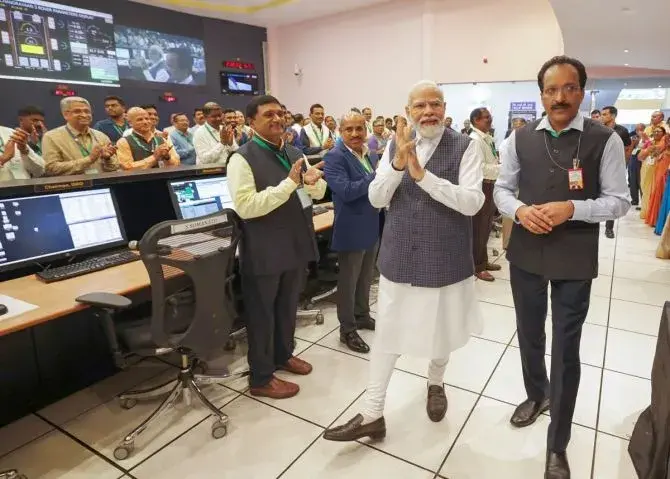
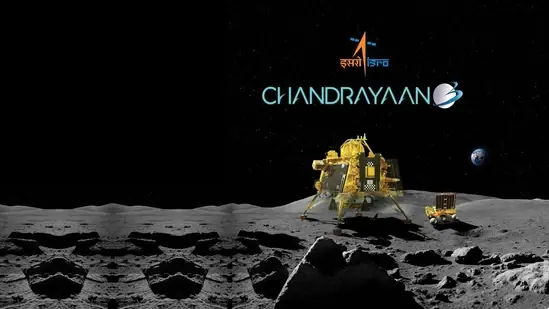
In a momentous announcement, Prime Minister Narendra Modi declared August 23rd as ‘National Space Day,’ during his address to the accomplished scientists at the Indian Space Research Organisation (ISRO) command centre in Bengaluru. The significance of this date stems from the successful soft landing of Chandrayaan-3 on the Moon’s south pole, a remarkable achievement celebrated as a milestone in India’s space exploration journey. Prime Minister Modi expressed his admiration for the Chandrayaan-3 team and particularly lauded the contributions of women scientists who played a pivotal role in the mission’s success. He revealed that the precise spot on the lunar surface where Chandrayaan-3 touched down would be named ‘Shivshakti,’ serving as an inspiration for future generations to utilize science for the betterment of humanity. He also designated the location where its predecessor, Chandrayaan-2, had landed as the ‘Tiranga’ point. Highlighting the importance of advancements in science, technology, and space exploration, PM Modi emphasized that nations leading in these fields are scripting history. To encourage the youth’s involvement in science, technology, and space endeavours, he proclaimed August 23rd, the day of Chandrayaan-3’s lunar landing, as National Space Day. Modi celebrated the fact that India’s national pride now resides on the Moon, marking an unprecedented achievement. He commended the scientists for taking the ‘Make In India’ initiative to the lunar surface, underscoring the boost to indigenous production resulting from Chandrayaan-3’s success. Despite not being physically present during the Chandrayaan-3 landing, PM Modi virtually attended the event, congratulating ISRO chairman S Somanath and the entire team for their historic achievement in the lunar south pole region. Chandrayaan-3, a follow-up mission to Chandrayaan-2, aims to accomplish three key objectives: a safe and soft landing on the lunar surface, rover mobility on the Moon, and in-situ scientific experiments. Following its successful landing on August 23rd, the lander (Vikram) and rover (Pragyan) will conduct a series of experiments on the lunar surface over the next two weeks. On a significant note, Pragyan rover has already made its debut on the Moon, covering a distance of 8 meters. While Chandrayaan-2’s soft-landing attempt didn’t succeed, ISRO’s orbiter from that mission continues to provide valuable data. ISRO’s historic achievement positions India among the world’s top four nations to achieve a soft landing on the Moon’s surface, and notably, it’s the first country to reach the unexplored southern polar region of the Moon.

PM Modi Declares August 23 as ‘National Space Day’ After Chandrayaan-3’s Lunar Success Read More »

India’s Chandrayaan-3 Moon Landing: A Bold Leap Towards Lunar Exploration

In just a few hours, India’s Chandrayaan-3 is set to attempt a historic soft landing on the moon’s southern pole. If successful, India will join an elite group of countries, including the US, China, and the former Soviet Union, in achieving this remarkable feat. The critical moment for the mission lies in the final 15 to 20 minutes, during which the Vikram lander, carrying the rover Pragyan, will gently touch down. The excitement surrounding this lunar touchdown is palpable, with celebrations and prayers being held in anticipation. The Indian Space Research Organisation (ISRO) will broadcast the landing live on its website, while DD National TV will begin its live coverage at 5:27 PM. The Chandrayaan-3 mission embarked on its journey from Sriharikota on July 14. The descent of the Vikram lander towards the lunar surface begins at a rapid velocity of 1.68 km per second. It then undergoes a deceleration process, but it’s still almost parallel to the moon’s surface. This phase, known as the rough braking phase, lasts for approximately 11 minutes. The critical transition to a vertical position relative to the moon’s surface marks the start of the fine braking phase. Any slight error in this delicate descent process could lead to a crash or damage to the spacecraft. A soft landing, in essence, involves a spacecraft descending and landing on the moon’s surface in a controlled manner without causing substantial harm to either the craft itself or its scientific instruments. However, there are significant challenges associated with achieving a soft landing, including overcoming high speeds and executing a precisely controlled descent. Chandrayaan-3 faces the daunting task of navigating these hurdles as it aims to make history on the lunar surface.

India’s Chandrayaan-3 Moon Landing: A Bold Leap Towards Lunar Exploration Read More »