ArdorComm Media Group

Saturday, September 26, 2026 12:38 PM

streaming

From Scrolling to Storytelling: Why India Is Falling for Microdramas and the Rise of the One-Minute Episode
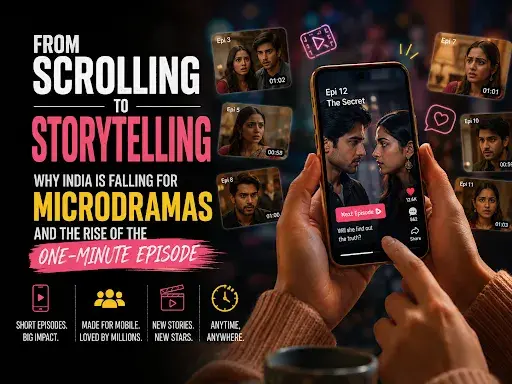
For years, the Indian entertainment industry operated on a familiar rhythm: television serials filled the evening, films dominated weekends and OTT platforms competed for hours of uninterrupted viewing. Then came the reel. What started as a quick way to consume comedy, music, fashion and creator content has gradually changed something deeper — the way Indians expect stories to be told. Today, audiences are increasingly moving from watching isolated short videos to following short, episodic stories designed specifically for the smartphone screen. Microdramas — usually vertical, fast-paced episodes that can run for just a few minutes — are emerging as one of the most interesting developments in India’s digital entertainment economy. And the appeal is surprisingly simple: viewers no longer need to find an hour for entertainment. Entertainment can now find them in the few minutes between meetings, during a commute, while waiting for food or before going to bed. The smartphone has become India’s television screen India’s enormous smartphone and internet ecosystem has created the perfect environment for short-form entertainment. By September 2025, India had nearly 1.02 billion internet users and around 750 million smartphones, while average monthly mobile-data consumption had climbed to about 24 GB per user. That infrastructure has changed the economics of attention. A viewer does not necessarily sit down and decide, “I am going to watch a show now.” Instead, entertainment increasingly appears inside the same feeds used for messaging, shopping, news and social interaction. Meta and Ormax’s 2026 research on India’s microdrama audience found that 89% of viewers discover microdramas through social feeds, while viewers spend a median of 3.5 hours a week watching them, often across multiple short sessions. The study surveyed 2,000 viewers aged 18-44 across 14 states. This is perhaps the biggest difference between microdramas and traditional television or OTT. The viewer doesn’t have to go looking for the programme. The programme finds the viewer. From “scroll” to “what happens next?” The evolution is particularly interesting because microdramas combine two seemingly different entertainment habits. The first is the infinite scroll. The second is the serialised story. Reels trained audiences to expect immediate gratification. Traditional television trained them to return tomorrow for the next episode. Microdramas bring those two behaviours together. An episode might establish a conflict in the first few seconds, introduce a dramatic twist and end precisely when the viewer wants an answer. Then comes the next episode. And the next. Instead of asking viewers to commit to a 45-minute episode, microdramas repeatedly ask for a much smaller commitment: just another two minutes. That seemingly insignificant decision can become a surprisingly powerful retention mechanism. The cliffhanger is the new hook Traditional television often used the commercial break to create suspense. OTT platforms use episode endings and season arcs to encourage binge-watching. Microdramas take the idea to an extreme. Almost every episode has to work as a miniature marketing device for the next one. A confrontation may begin in Episode 12 and be resolved only in Episode 13. A secret is revealed halfway through an episode and explained later. A character receives a message — and the episode ends before the audience sees the reply. The objective is not simply to tell a story. It is to create a reason to tap again. This makes microdrama storytelling fundamentally different from conventional short-form creator content. A reel can succeed because it is funny, informative or visually striking. A microdrama needs another ingredient: narrative momentum. Why younger audiences are responding The strongest concentration of microdrama viewers in India is among younger audiences, particularly those aged 18-34, although the format is also attracting students, working professionals, homemakers and viewers outside major metropolitan centres. That demographic profile makes sense. Younger viewers have grown up in an environment where entertainment is available continuously and where the smartphone is often the first screen of the day. But the appeal isn’t necessarily limited to Gen Z. A working professional may not have the time or patience to begin a full-length series after a long day. A student may want entertainment during a short break. Someone travelling on public transport can watch several episodes without needing to dedicate an entire evening. Microdramas effectively turn dead time into entertainment time. India is particularly suited to the format There is another reason microdramas could become much bigger in India: linguistic diversity. A traditional OTT series requires significant investment in production, marketing and distribution. Microdramas can potentially be produced and adapted for different languages and audience segments at a much faster pace. That opens the door to stories built specifically for Hindi, Tamil, Telugu, Bengali, Marathi and other regional audiences rather than treating India as one homogeneous market. The rise of Tamil microdramas, for example, illustrates how quickly the format can develop within a regional entertainment ecosystem. Short dramas lasting roughly one to five minutes are increasingly attracting younger audiences and creating opportunities for new actors, writers and creators. This could eventually produce an entertainment landscape where the next major digital star doesn’t necessarily emerge from television or cinema. They could emerge from a 90-second episode watched on a phone. Bollywood’s biggest competition may not be another film The rise of microdramas also raises an important question for the broader entertainment industry. What exactly are OTT platforms competing against? For years, the answer was Netflix versus Amazon Prime Video versus Disney+ Hotstar and other streaming services. But the competition is increasingly about attention rather than platforms. A viewer deciding whether to watch a 50-minute drama, scroll through Instagram, watch YouTube Shorts or follow a 20-episode microdrama is making an attention decision. That is why major streaming and entertainment companies are increasingly interested in the category. Industry reporting in 2026 has highlighted growing investment in microdramas from major players, as platforms look at short episodic content as both a discovery mechanism and a potential new entertainment business. In other words, the microdrama isn’t necessarily trying to replace the blockbuster series. It is fighting for the moments when the blockbuster series is simply too
From Scrolling to Storytelling: Why India Is Falling for Microdramas and the Rise of the One-Minute Episode Read More »

Netflix marks 10 years in India; CEO Ted Sarandos meets PM Modi, launches storytelling initiative

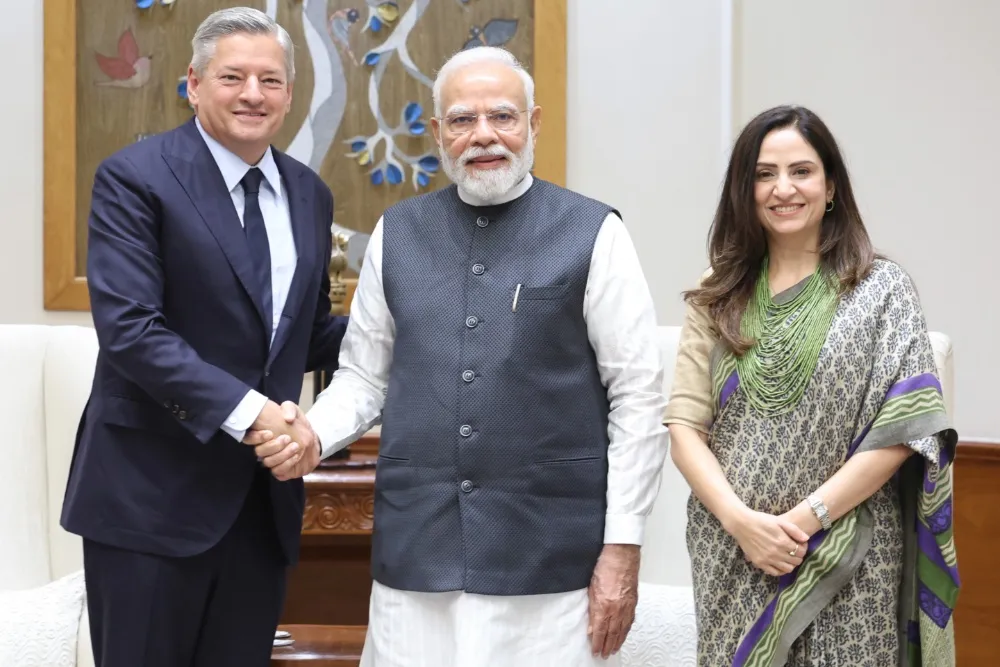
Netflix Co-CEO Ted Sarandos met Prime Minister Narendra Modi in New Delhi on Wednesday as the streaming giant celebrated a decade of operations in India and announced the Netflix India Storytelling Initiative, a long-term investment aimed at developing the country’s creative talent ecosystem. The multi-phase initiative seeks to strengthen India’s pipeline of creators in animation, visual effects (VFX), gaming and comics, building on Netflix’s collaboration with the Indian creative industry over the past 10 years. During this period, the platform has produced more than 200 original titles and filmed across 100+ locations in the country. According to Netflix, the initiative aligns with the government’s Viksit Bharat @ 2047 vision by enhancing skill development, industry partnerships and creator training to position India as a global storytelling hub. As part of the first phase, Netflix will collaborate with the Indian Institute of Creative Technologies (IICT) to jointly develop specialised courses in Visual Effects Mastery and Media Technology Workflows. The company will also sponsor 100 scholarships for Indian students enrolled in IICT’s in-person programmes, covering areas such as interactive comics, sequential art, virtual production, character animation, and e-sports and gaming management. In another key partnership, Netflix has joined hands with the National Film Development Corporation (NFDC) to train audio description writers and voice artists, making films and series more accessible to audiences with visual and hearing impairments while adhering to international accessibility standards. Sarandos said India has long been one of the world’s richest storytelling nations and reaffirmed Netflix’s commitment to investing in the next generation of Indian creators. He added that strengthening the country’s creative ecosystem would create more opportunities for emerging talent while taking Indian stories to global audiences. The visit also commemorated Netflix’s 10-year journey in India through an event organised in collaboration with the Ministry of Culture and the Ministry of Tourism. During the event, the Ministry of Tourism and Netflix India launched “As Seen on Netflix,” a dedicated section on the Incredible India website that allows viewers to explore real-life locations, cultural traditions and experiences featured in Netflix productions. Sarandos also participated in a fireside discussion with Union Minister for Culture and Tourism Gajendra Singh Shekhawat at the National Gallery of Modern Art, where they highlighted the role of authentic storytelling in promoting tourism, preserving cultural heritage and supporting India’s creative economy. The event also showcased two new promotional films celebrating India’s wildlife and cultural heritage. The collaboration builds upon a memorandum of understanding signed between the Ministry of Tourism and Netflix India last year to promote India’s tourism and cultural diplomacy through storytelling. Highlighting its decade-long journey in India, Netflix cited acclaimed productions such as The Elephant Whisperers, Amar Singh Chamkila, Heeramandi: The Diamond Bazaar, Musafir Café, Made in Korea and the upcoming patriotic series Operation Safed Sagar as examples of Indian stories resonating with audiences worldwide. As Netflix enters its second decade in India, the company said it will continue investing in India’s creative workforce while helping more local stories reach international audiences. Source: Variety

Netflix marks 10 years in India; CEO Ted Sarandos meets PM Modi, launches storytelling initiative Read More »

Disney Explores Unified ‘Super App’ to Merge Streaming, Parks and Cruise Services

The Walt Disney Company is reportedly considering the development of a unified “super app” that would bring together its various digital platforms, including Disney+, Disneyland Resort services, and the Disney Cruise Line Navigator app. According to reports, internal discussions are still in the early stages, with executives evaluating how to create a more connected ecosystem for Disney customers. The initiative aligns with the vision of Disney CEO Josh D’Amaro, who recently stressed the importance of making Disney+ the central touchpoint between the company and its audience. During Disney’s latest earnings call, he highlighted plans to create a seamless connection between streaming entertainment and real-world Disney experiences such as theme parks and cruises. If developed, the app could help Disney cross-promote its attractions and travel businesses to millions of Disney+ subscribers. However, analysts note that streaming users and theme park visitors may have different interests, which could make balancing content and promotions a challenge. Source: TechCrunch

Disney Explores Unified ‘Super App’ to Merge Streaming, Parks and Cruise Services Read More »

Vodafone Idea Launches Vi Movies and TV App for Comprehensive Entertainment

Vodafone Idea has unveiled a new all-in-one entertainment app, catering to the telco’s subscribers with a plethora of over-the-top (OTT) content and live TV. The app boasts access to more than 13 OTT platforms and over 400 live TV channels, complemented by complimentary access to various content libraries. Priced at Rs 202 for prepaid users and Rs 199 for postpaid users, the subscription to the app aims to streamline the viewing experience by offering one subscription for multiple platforms. Dubbed as Vi Movies and TV, the app provides access to leading OTT platforms like Disney+ Hotstar, SonyLiv, Manorama Max, NammaFlix, Klikk, Chaupal, and Playflix, among others. Additionally, users can enjoy access to TV channels such as Discovery, Aaj Tak, Republic Bharat, ABP, and India Today, along with complimentary content libraries from Shemaroo and Hungama. Accessible across smartphones, smart TVs, and the web, the app enables users to simultaneously stream two content feeds on all OTT platforms. Avneesh Khosla, Chief Marketing Officer at Vi, highlighted the significance of the app in today’s content landscape, stating, “India is watching content like never before – multiple formats, multiple subscriptions, and multiplying hours on the screen every day. However, this unlimited choice also brings fatigue and complexity. We take immense pride in announcing Vi Movies & TV – one app, one subscription with the best of OTTs and TV content. We are committed to providing an entertaining experience to our consumers by empowering them to access entertainment in a simple, affordable, and accessible way. We will soon add new partners and more curated options for ease of choice for our viewer.” With its comprehensive offering and user-friendly interface, Vi Movies and TV app aims to redefine the entertainment experience for its subscribers, providing them with a seamless and engaging platform to enjoy their favorite content.

Vodafone Idea Launches Vi Movies and TV App for Comprehensive Entertainment Read More »

Zee Entertainment Launches 18 South Asian Channels on YouTube TV for Diverse US Audience

Zee Entertainment has made a significant move in the digital space by launching 18 South Asian channels on YouTube TV, catering to the diverse audience in the United States. This collaboration aims to meet the evolving content preferences of the expanding South Asian population in the US. The ‘Zee Family’ package offers a selection of 18 premium channels on the YouTube TV platform, dedicated to captivating the diverse and vibrant South Asian community across the United States. This partnership between Asia TV USA and YouTube TV marks a milestone in catering to the diverse needs of the South Asian population in the USA, particularly regional language speakers such as Telugu, Tamil, Kannada, Marathi, etc. The lineup includes flagship channels like Zee TV along with 17 additional ZEE channels, covering a variety of languages such as Zee Cinema, &TV, Zee Bangla, Zee Tamil, Zee Telugu, Zee Kannada, Zee Keralam, Zee Marathi, Zee Punjabi, Zee World, and others. Punit Misra, president of content and international markets at Zee Entertainment Enterprises, highlights the significance of the U.S. market within ZEE’s global strategy. He emphasizes the commitment to fulfilling the evolving content preferences of the expanding demographic in the US, providing viewers with a vast repertoire of rich, multi-lingual content from India. Ashok Namboodiri, CBO for International Business at Zee Entertainment Enterprises, underscores the importance of the partnership with YouTube TV in realizing growth objectives in the U.S. market. The collaboration ensures the provision of a diverse range of entertainment options specifically curated for the South Asian audiences subscribing to YouTube TV. Overall, the launch of these 18 South Asian channels on YouTube TV signifies a strategic move by Zee Entertainment to cater to the diverse cultural and linguistic preferences of the South Asian diaspora in the United States, enriching the viewing experience for consumers nationwide.

Zee Entertainment Launches 18 South Asian Channels on YouTube TV for Diverse US Audience Read More »

Hotstar Breaks Records with 59 Million Concurrent Viewers for World Cup Final, Surpassing Previous Milestone

Disney’s Hotstar achieves a groundbreaking milestone with 59 million concurrent viewers during a highly anticipated World Cup final cricket match in India. This surpasses the previous record of 53 million viewers set just a week earlier. With no significant cricket events in the near future, Hotstar is poised to maintain this record for at least six months. The platform now holds a substantial lead in concurrent viewership over its competitor, JioCinema, which peaked at 32 million earlier this year. This achievement occurs against the backdrop of Disney facing challenges in the Indian market, including a decline in digital subscribers. Disney CEO Bob Iger expressed a commitment to the Indian market but acknowledged the need to evaluate options. Preliminary talks with potential partners, including Reliance and private equity firms, have taken place. However, the dynamics of Star India have evolved, with market conditions prompting a shift in focus to core businesses. Hotstar’s subscriber base has experienced a decline of more than 23 million in the past year, according to Disney. The platform faces competition, notably from Viacom18’s JioCinema, led by Mukesh Ambani, who has attracted top executives from Star India and invested $3 billion to stream the IPL cricket tournament for five years. Despite these challenges, Disney had high expectations for the ICC Cricket World Cup, projecting over 50 million concurrent viewers and aiming to reach 82% of India’s total annual video users during the 50-day series.

Hotstar Breaks Records with 59 Million Concurrent Viewers for World Cup Final, Surpassing Previous Milestone Read More »

Reliance JioCinema Secures Exclusive Deal with Pokemon for Extensive Children’s Content Offering in India

Reliance JioCinema, the entertainment division of India’s Reliance, has entered into an agreement with The Pokemon Company to feature children’s shows and movies on its platform, sources familiar with the deal revealed. This move is part of Reliance’s strategy to enhance its content library in the face of increasing competition from streaming rivals like Walt Disney Co in the domestic market. The recently signed deal designates JioCinema’s streaming app as the “exclusive” India platform partner for over 1,000 episodes and approximately 20 movies from the popular Japanese anime series Pokemon. Financial details of the agreement were not disclosed. To broaden the appeal of the content, the shows and movies will be dubbed into three Indian languages. Pokemon, a global multimedia franchise with a substantial market presence in trading cards, games, TV shows, and movies, is partnering with Viacom18, the entertainment joint-venture of Indian billionaire Mukesh Ambani that operates JioCinema. Despite requests for comments, Viacom18 and The Pokemon Company, owned by Nintendo and its affiliates, did not respond. This collaboration is part of Ambani’s broader effort to expand Reliance’s presence in the Indian streaming market, which is projected to reach a value of $7 billion by 2027 according to research firm Media Partners Asia. While JioCinema competes with streaming giants like Netflix and Amazon, its recent focus has been on challenging Disney’s Hotstar app, particularly by offering free streaming of cricket matches. As part of this content expansion, JioCinema is set to introduce approximately 3,000 hours of children’s content, including productions from Entertainment One, Animaccord, Cartoon Network Studios, and DreamWorks. These additions will be facilitated through Viacom18’s existing content agreements or integration with its other streaming platform, Voot Kids, which has been discontinued. Notably, although some Pokemon content was previously available on Voot, the new partnership with JioCinema represents a more extensive collaboration. In May, JioCinema announced a multi-year partnership with NBCUniversal, which confirmed that “kids and family programming,” including content from DreamWorks, was part of the agreement. Entertainment One, Animaccord, and Cartoon Network Studios did not respond to requests for comments. Additionally, in April, Viacom18 secured a deal with Warner Bros Discovery Inc. to bring more Hollywood and international content, such as popular series “Succession” and “Game of Thrones,” to JioCinema.

Reliance JioCinema Secures Exclusive Deal with Pokemon for Extensive Children’s Content Offering in India Read More »