


ArdorComm Media Group

Saturday, March 14, 2026 6:33 PM

Supreme Court

Delhi Government Moves Supreme Court Seeking Relief Amid Water Crisis During Heatwave
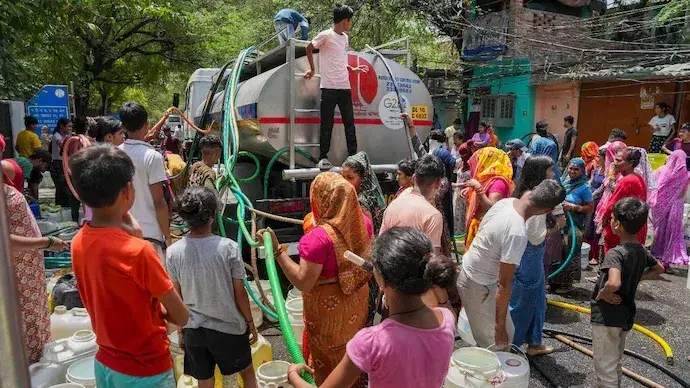
The Delhi government has taken the issue of the water crisis amidst scorching heatwave conditions in the national capital to the Supreme Court. In its plea, the AAP-led government has appealed for the release of additional water from neighboring states like Haryana, Uttar Pradesh, and Himachal Pradesh for a month to address the water shortage. The soaring temperatures in Delhi, with some areas reaching up to 50 degrees Celsius, have escalated the demand for water, prompting urgent action from the Delhi government. Emergency measures have been implemented, including banning the use of potable water for car washing and construction activities. The Delhi Jal Board (DJB) has announced stringent penalties, with fines of Rs 2,000 for wastage of water. Additionally, a war room has been established by the DJB to manage water tanker supply, with citizens urged to contact 1916 for assistance. Chief Minister Arvind Kejriwal has called for political cooperation, emphasizing the need to prioritize the welfare of Delhi’s residents over partisan interests. He stressed the importance of securing water resources from neighboring states and urged the BJP leaders to collaborate in resolving the crisis. Amid the heatwave, Delhi has also witnessed a record peak power demand, surpassing 8,300 MW for the first time in its history. Despite the unprecedented demand, the power situation in Delhi remains stable, distinguishing it from neighboring areas where residents are grappling with prolonged power cuts. As protests erupt in Noida and Ghaziabad over power outages, Kejriwal highlighted the nationwide challenge posed by the heatwave, emphasizing the need for collective action to mitigate its impact. He underscored Delhi’s relatively stable power supply amidst the crisis, attributing it to effective management by the government. The plea filed by the Delhi government underscores the severity of the situation and seeks urgent intervention to alleviate the water shortage, emphasizing the importance of collaborative efforts to ensure the well-being of Delhi’s residents during the ongoing heatwave.  

Delhi Government Moves Supreme Court Seeking Relief Amid Water Crisis During Heatwave Read More »
Supreme Court Advocates Leeway for Government Adjustments in Citizenship Act, Cites National Interest

news on government

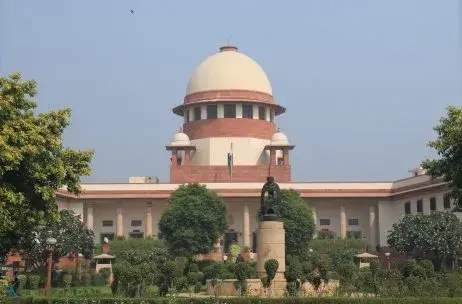
Supreme Court of India emphasized the need for the government to have the flexibility to make crucial adjustments for the nation’s well-being. The statement came during the hearing of 17 petitions challenging the constitutional validity of section 6A of the Citizenship Act, which is specific to Assam. A five-judge constitution bench, led by Chief Justice DY Chandrachud, highlighted the challenges faced by northeastern states, particularly those affected by insurgency and violence. Chief Justice Chandrachud stressed that governments must be granted “latitude and leeway” to make necessary adjustments, acknowledging the complexities and unique circumstances in various regions. Section 6A of the Citizenship Act, inserted as a special provision for individuals covered under the Assam Accord, outlines criteria for granting citizenship to those who migrated to Assam between January 1, 1966, and March 25, 1971. The provision sets March 25, 1971, as the cutoff date for citizenship, affecting individuals from specified territories, including Bangladesh. The bench, comprising Justices Surya Kant, M M Sundresh, J B Pardiwala, and Manoj Misra, is considering the constitutional validity of section 6A, particularly its impact on the rights of individuals and the homogeneous classification of states. Senior advocate Shyam Divan, representing the petitioners, argued that section 6A operates in a “blanket manner” and rewards illegal immigrants who continue to reside in Assam against the citizenship law. Divan called for a declaration of the provision as invalid and urged the government to formulate a policy for the settlement and rehabilitation of individuals who arrived in Assam after January 6, 1951. The court questioned whether Parliament could allow the continuation of strife in Assam due to discrimination among states. It raised concerns about the potential discrimination between states and the need for a balanced solution to address the complex issues faced by Assam. The hearing, which remained inconclusive, will resume on Thursday. The court had earlier sought data on the beneficiaries of section 6A to evaluate its impact on Assam’s demographic and cultural identity. As the legal battle unfolds, the Supreme Court’s stance reflects the delicate balance between national interest, security concerns, and the protection of individual rights.

Supreme Court Advocates Leeway for Government Adjustments in Citizenship Act, Cites National Interest Read More »

AICTE Extends Admission Deadlines for 2023-24 Academic Session

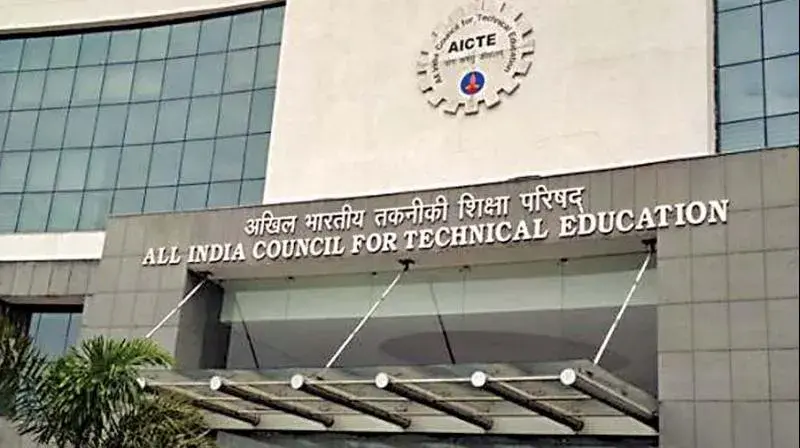
The All India Council for Technical Education (AICTE) has introduced a modified academic schedule for the 2023-24 academic session. As per the newly announced calendar for technical and professional education, the deadline for first-year student admissions into vacant seats at technical institutions has been extended to October 30. Additionally, the last date for lateral entry admissions into second-year courses for newly enrolled students is also October 30. Furthermore, the cutoff date for universities or boards to grant affiliation to technical institutes is also October 30. Nevertheless, institutions offering online and open-distance learning (ODL) programs will adhere to the University Grants Commission (UGC) guidelines for approval and course admissions in the first and second sessions. The updated academic calendar is available on the official AICTE website, aicte-india.org. The AICTE made these adjustments in response to a Supreme Court order dated October 13, 2023. Consequently, the deadline for admissions into all AICTE-approved institutions and affiliation with universities has been extended to October 30, 2023. Previously, the deadline for admitting first-year students to institutions was set for September 15, and the affiliation grant deadline was July 31. It’s important to note that these revisions do not apply to standalone PGDM and PGCM institutions.

AICTE Extends Admission Deadlines for 2023-24 Academic Session Read More »