
ArdorComm Media Group

Friday, January 23, 2026 2:02 PM

Union Health Ministry

India Nears Completion of Phase-3 Trials for Indigenous Dengue Vaccine: ICMR

India is on the cusp of a major public health milestone, with nearly 8,000 out of a targeted 10,000 participants already enrolled in Phase-3 clinical trials of the country’s first homegrown dengue vaccine, as per the Indian Council of Medical Research (ICMR). Dr. Manoj Murhekar, Director of ICMR’s National Institute of Epidemiology in Chennai, confirmed the progress in an interaction with The Hindu. The large-scale trials, which are being conducted at 20 different centres across the country, are testing the efficacy of DengiAll, a tetravalent vaccine developed by Panacea Biotec. This formulation aims to provide protection against all four known dengue virus serotypes that co-circulate in various parts of India. “An effective vaccine must be able to offer strong immunity against all four strains,” Dr. Murhekar emphasized. The ICMR is the primary funder of the project, with Panacea Biotec offering partial financial and technical support. Once vaccinated, participants will be monitored for a period of two years at locations including Delhi, Hyderabad, Pune, and Chennai. Currently, there is no approved vaccine or antiviral treatment for dengue in India, despite the disease being a recurring and widespread health issue. India remains among the top 30 countries most affected by dengue, according to the World Health Organization (WHO). By the end of 2023, over 129 countries had reported cases of dengue globally. The candidate vaccine, DengiAll, is derived from the TV003/TV005 tetravalent strain originally created by the U.S.-based National Institutes of Health. Panacea Biotec is one of three Indian firms granted access to the strain and has advanced furthest in the development process. The company completed early-stage (Phase-1 and 2) trials in 2018–19, which delivered encouraging results. It also holds a process patent for its unique formulation. The Union Health Ministry highlighted that the first participant in the Phase-3 trial received a dose at Pandit Bhagwat Dayal Sharma Post Graduate Institute of Medical Sciences in Rohtak last year. Dengue poses a significant health threat in India. Although 75–80% of infections are asymptomatic, individuals can still spread the virus via Aedes mosquito bites. Among symptomatic cases—comprising about 20–25%—children face an elevated risk of severe outcomes, including hospitalization and death. In adults, the disease can escalate into life-threatening conditions such as dengue hemorrhagic fever and dengue shock syndrome. The challenge of controlling the virus is compounded by the presence of four distinct serotypes, each offering limited cross-immunity, making repeated infections common. With the success of this trial, India could soon have its first domestically developed and licensed dengue vaccine, marking a crucial step forward in the country’s fight against vector-borne diseases. Source: The Hindu  

India Nears Completion of Phase-3 Trials for Indigenous Dengue Vaccine: ICMR Read More »

No Proven Link Between COVID-19 Vaccines and Sudden Deaths, Confirms Union Health Ministry

The Union Ministry of Health and Family Welfare has clarified that there is no scientific evidence connecting COVID-19 vaccination with sudden or unexplained deaths in India. This conclusion is backed by comprehensive studies conducted by the Indian Council of Medical Research (ICMR) and the National Centre for Disease Control (NCDC). In an official statement, the Ministry emphasized that extensive investigations were carried out across the country by multiple research agencies to examine reports of sudden deaths, particularly among seemingly healthy young adults. Findings from these studies have consistently shown no direct association between COVID-19 vaccines and such fatalities. Two key studies have been pivotal in reaching this conclusion. The first, undertaken by ICMR’s National Institute of Epidemiology (NIE), is a multicentric matched case-control study titled “Factors associated with unexplained sudden deaths among adults aged 18–45 years in India.” Conducted across 47 tertiary hospitals in 19 states and union territories from May to August 2023, the research analyzed cases between October 2021 and March 2023. The outcome was clear: COVID-19 vaccination does not increase the risk of sudden death in young, otherwise healthy adults. The second study, still in progress, is being led by AIIMS, New Delhi, with ICMR’s collaboration and support. This prospective research—“Establishing the cause in sudden unexplained deaths in young”—aims to pinpoint the most common reasons behind such fatalities. Preliminary data reveals that heart attacks (myocardial infarctions) remain the leading cause of sudden death in this demographic, with no significant shift in trends compared to previous years. In many cases, genetic factors have also emerged as likely contributors. These studies offer valuable insights into sudden deaths among young individuals and provide reassurance about the safety of COVID-19 vaccines. Researchers highlight that deaths may stem from a range of issues, including underlying health conditions, genetic predispositions, and unhealthy lifestyles, rather than vaccination. Public health experts have strongly criticized unverified claims linking vaccines to sudden deaths, calling them unscientific and dangerous. Such misinformation not only lacks factual basis but also poses a serious risk to public trust and could foster vaccine hesitancy, undermining one of the most effective tools used during the pandemic to save lives. The government reaffirmed its commitment to science-driven public health policies and continued research to safeguard the health and well-being of all citizens. Source: ANI

No Proven Link Between COVID-19 Vaccines and Sudden Deaths, Confirms Union Health Ministry Read More »

Union Health Ministry Issues Mpox Guidelines to States, Focuses on Screening and Testing Suspected Cases

Amid rising concerns about the spread of mpox, Union Health Secretary Apurva Chandra has issued new guidelines to all states, emphasizing the need for rigorous screening and testing of suspected cases. The health ministry’s directive comes after a suspected case was reported in Delhi, marking India’s first alert since the disease was classified as a Public Health Emergency of International Concern (PHEIC) by the World Health Organization (WHO). The guidelines focus on four key steps for states to follow: Surveillance Training: States are instructed to train state and district-level surveillance teams on identifying suspected, probable, and confirmed mpox cases. Contact tracing and enhanced surveillance activities are crucial for early detection and containment. Healthcare Worker Training: Healthcare workers in clinics treating skin and sexually transmitted infections, along with those involved in the government’s HIV control program, must be trained on the signs, symptoms, and clinical management of mpox, while strictly adhering to isolation protocols. Screening and Testing: States are urged to carry out screening and testing of suspected cases, particularly among vulnerable groups such as men who have sex with men and sex workers. Testing facilities should be integrated into hospitals and identified HIV control program sites. Clear Communication: Effective communication about the risks of mpox is critical. The guidelines stress informing healthcare workers, hospital areas, and communities about the modes of transmission, symptoms, and the importance of timely reporting without inciting panic. The ministry has also asked states to identify isolation facilities for treating suspected and confirmed mpox cases. With a significant proportion of global cases being reported among people with HIV, state AIDS control societies have been asked to remain vigilant and monitor any emerging cases. The health ministry’s letter highlights the atypical spread of the deadlier Clade Ib of mpox through sexual contact, a shift from traditional transmission methods. The virus is predominantly affecting young men aged 18-44 years and is primarily spread through sexual and non-sexual close contact. Common symptoms include rashes, particularly on the body or genital region, and fever. Although India has reported 30 cases of the older mpox strain since 2022, the risk of sustained transmission within the country remains low, according to experts. The government continues to stress that while the situation requires vigilance, public panic should be avoided, and the focus should remain on prevention, awareness, and timely medical intervention. Source: Indian Express

Union Health Ministry Issues Mpox Guidelines to States, Focuses on Screening and Testing Suspected Cases Read More »

Union Health Ministry Assesses Preparedness for Heat Wave Conditions with States/UTs
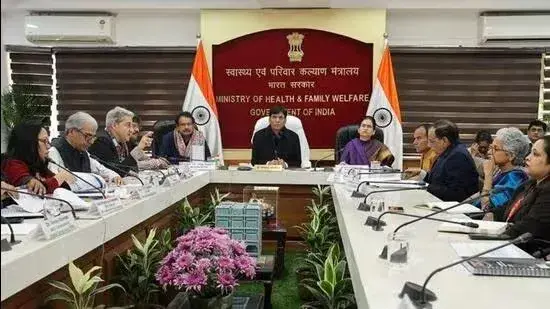
Atul Goel, Director General of Health Services (DGHS), led a virtual meeting with representatives from various States and Union Territories to evaluate the preparedness for heat wave conditions and the implementation of fire and electrical safety measures in healthcare facilities across India. This meeting comes in response to the long-range forecast by the India Meteorological Department (IMD), issued on May 27, 2024, predicting above-normal temperatures for most of India in June 2024. The forecast particularly highlights an increased likelihood of heat wave days in Northwest and Central India, while parts of southern peninsular India may experience normal to below-normal temperatures. Key Highlights from the Meeting Heat Wave Preparedness: The Union Health Ministry emphasized the need for robust heat wave action plans in healthcare facilities. States/UTs were instructed to ensure the availability of essential medical supplies and to implement measures to prevent heat-related illnesses. Fire and Electrical Safety: Discussions included the current status of fire safety measures and electrical systems in hospitals. The need for regular safety drills and compliance with fire safety norms was reiterated.  

Union Health Ministry Assesses Preparedness for Heat Wave Conditions with States/UTs Read More »