


ArdorComm Media Group

Friday, April 3, 2026 11:46 AM

University Grants Commission

Universities Can Now Take Admissions Twice A Year: UGC Chairman
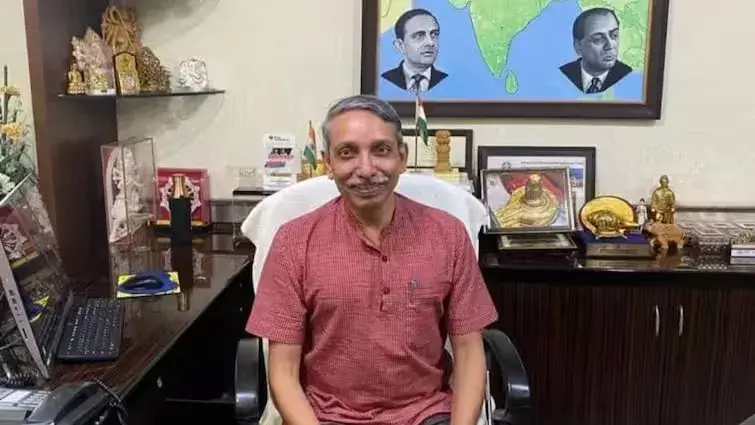
Indian universities and higher education institutions (HEIs) will now be allowed to conduct admissions twice a year, akin to foreign universities, announced UGC chief Jagadesh Kumar. The two admission cycles will be scheduled for July-August and January-February, starting from the 2024-25 academic session, according to a report by news agency PTI. “If Indian universities can offer admission twice a year, it will benefit many students such as those who missed admission to a university in the July-August session due to a delay in the announcement of board results, health issues, or personal reasons,” Kumar told PTI. “Biannual university admissions will help students maintain motivation since they do not have to wait one full year to be admitted if they miss admission in the current cycle. With biannual admissions in place, industries can also do their campus recruitment twice a year, improving employment opportunities for the graduates,” he added. The UGC chief elaborated that biannual admissions will facilitate higher education institutes (HEIs) in better planning their resource allocation, including faculty, labs, classrooms, and support services. This streamlined approach is expected to enhance the operational efficiency of universities. “Universities worldwide already follow a biannual admission system. If Indian HEIs adopt the biannual admission cycle, our HEIs can enhance their international collaborations and student exchanges. As a result, our global competitiveness will improve, and we will align with the global educational standards,” Kumar said. “If HEIs adopt biannual admissions, they need to work on administrative intricacies, good planning for increased use of available resources, and providing seamless support systems for the smooth transition of students admitted at dissimilar times of the year. HEIs can maximize the usefulness of biannual admissions only when they sufficiently prepare faculty members, staff, and students for the transition,” he added. Kumar, however, clarified that offering biannual admissions will not be mandatory for universities. HEIs with the necessary infrastructure and teaching faculty can choose to utilize this opportunity at their discretion. “Offering biannual admissions will not be mandatory for the HEIs, it is the flexibility that UGC provides to the HEIs which want to increase their student intake and offer new programs in emerging areas. To be able to admit students twice a year, HEIs must make suitable amendments to their institutional regulations,” he said.

Universities Can Now Take Admissions Twice A Year: UGC Chairman Read More »
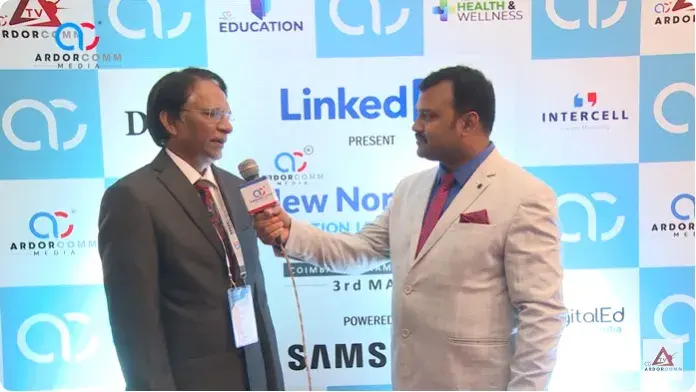
Dr. T. V. Christy, Vice Chancellor, Ponnaiyah Ramajayam Institute of Sc. & Tech. Vallam talked about four pillars of the New Education Policy (NEP)

“The New Normal is about being student-centric. Education should focus on where graduates go after graduation, anticipating their future needs. ” said  Dr. T. V. Christy Could you tell us more about your group of institutions? I am from The Ponnaiyah Ramajayam Institute of Science and Technology, famously known as PRIST deemed to be University, recognized by the University Grants Commission. It is located in Thanjavur, and we run programs in various disciplines, including engineering, arts and science, agriculture, pharmacy, and law. When we talk about sustainability in education, what special initiatives have been taken by your institution? We have empowered our students by first making them aware of the 17 Sustainable Development Goals (SDGs). We conduct various sessions to ensure that our students and faculty members understand the importance and significance of these SDGs. Our management is very particular about integrating these goals into our educational practices. Regarding education policy implementations, what initiatives or developments have you undertaken? The four pillars of the New Education Policy (NEP) can be summarized as AE AQ: Accessibility, Equity, Accountability, and Quality. We ensure that these principles form the basis of our NEP implementation in our campuses. If the first three (Accessibility, Equity, Accountability) are in place, Quality naturally follows. What are the leading roles of your institution in terms of the incubation center and industry engagement? One of our best practices is ensuring that every faculty member is in touch with a minimum of two industries. For example, in a department with 15 faculty members, we have connections with 30 industries. Faculty members develop relationships with industry professionals, bring them to address students, and ultimately establish memorandums of understanding. This approach brings industry-oriented skills meaningfully into our university. What does the term ‘New Normal’ mean to you in the context of education? The New Normal is about being student-centric. Education should focus on where graduates go after graduation, anticipating their future needs. The goal is to foresee the skills and knowledge they will require three to four years after graduating and adapt our educational practices accordingly. This forward-thinking approach is what I consider the New Normal. How do forums like this, which bring together representatives from schools, higher education, skill education, technical education, and tech companies, benefit the society at large? I’m really touched by the name “ARCOM.” It stands for Community, Aspiration, Reimagination, Digitalization, Opportunity, and Readiness. These are exactly what we need in today’s educational scenario. Such forums motivate students and ensure they serve the community. Bringing industry leaders and educational leaders together provides a platform for sharing best practices and learning from each other. It’s an excellent initiative that should continue. Any message for ArdorComm Media Group? Continue your efforts and gather feedback from participants. Learn from any challenges or difficulties faced in conducting this program and strive to improve in future events. Bringing together industry and educational institutions on one platform is a mammoth task, and you are doing an exceptional job. Congratulations! Any final thoughts? Thank you so much for inviting me to this forum. It was a pleasure and honor to participate. Your efforts in connecting different stakeholders in education are commendable. Thank you.

Dr. T. V. Christy, Vice Chancellor, Ponnaiyah Ramajayam Institute of Sc. & Tech. Vallam talked about four pillars of the New Education Policy (NEP) Read More »

Govt. is currently seeking to merge accreditation and ranking bodies after proposing the merger of JEE Main, NEET with CUET

Putting puzzle

The union government is now keen on combining the accreditation (NAAC) and ranking (NBA) bodies after making a strong argument for the merger of national level engineering and medical entrances with the Common University Entrance Test (CUET-UG). The National Board of Accreditation, or NBA, is entrusted with accrediting only institutions of technical education, whereas the National Assessment and Accreditation Council, or NAAC, is the only government agency authorised to accredit universities and colleges. NBA is also responsible for publishing the NIRF, an annual ranking of higher education institutions. A committee headed by Bhushan Patwardhan, chairman of the executive committee of the National Assessment and Accreditation Council (NAAC), has been established by the Ministry of Education (MoE) to begin the process of developing a single accreditation and ranking system, one of the recommendations of the National Education Policy 2020 (NEP). The move is significant since it follows the recent announcement by UGC chairman Jagadesh Kumar regarding merging the NEET, JEE Main with CUET-UG exams. The government is also planning to combine AICTE and UGC into the Higher Education Commission of India, or HECI, a single, all-encompassing higher education regulator. The National Accreditation Council (NAC) is a meta-accrediting body that should be established, according to the NEP 2020. Presently higher education institutions are accredited and ranked by a variety of organisations and systems that function independently of one another. Technical programmes are accredited by the National Board of Accreditation (NBA), whilst non-technical or general programmes are accredited by the NAAC. According to a source, the National Institute of Ranking Framework (NIRF) ranks all higher education institutions in India. The source also stated that the NEP envisions the formation of the National Advisory Council (NAC), a body that will ensure the coordinated operation of these bodies and align them with NEP goals. The committee is led by Patwardhan, a former vice-chairman of the University Grants Commission (UGC), and includes Dr. Surender Prasad, the former director of IIT Delhi, Indranil Manna, the vice chancellor of the Birla Institute of Technology in Ranchi, K. N. Ganesh, professor, Indian Institute of Science Education and Research, Tirupati, B. J. Rao the vice chancellor of the Central University of Hyderabad, and Dr. Manju Singh (joint secretary, UGC). Singh will serve as the committee’s coordinator. The six-member committee will study the NIRF ranking system, NBA’s process for accreditation, and NAAC’s methodology for accreditation. Along with developing a framework to align the three to create the proposed NAC, it will suggest a suitable mechanism to enable communication between the bodies. According to the NEP, “accreditation of institutions will be based primarily on basic norms, public self-disclosure, good governance, and outcomes, and it will be carried out by an independent ecosystem of accrediting institutions supervised and overseen by NAC.”

Govt. is currently seeking to merge accreditation and ranking bodies after proposing the merger of JEE Main, NEET with CUET Read More »