

ArdorComm Media Group

Thursday, March 19, 2026 11:59 PM

vocational education

Govt Makes 150 Hours of On-the-Job Training Mandatory for ITI Trainees Under Craftsmen Training Scheme

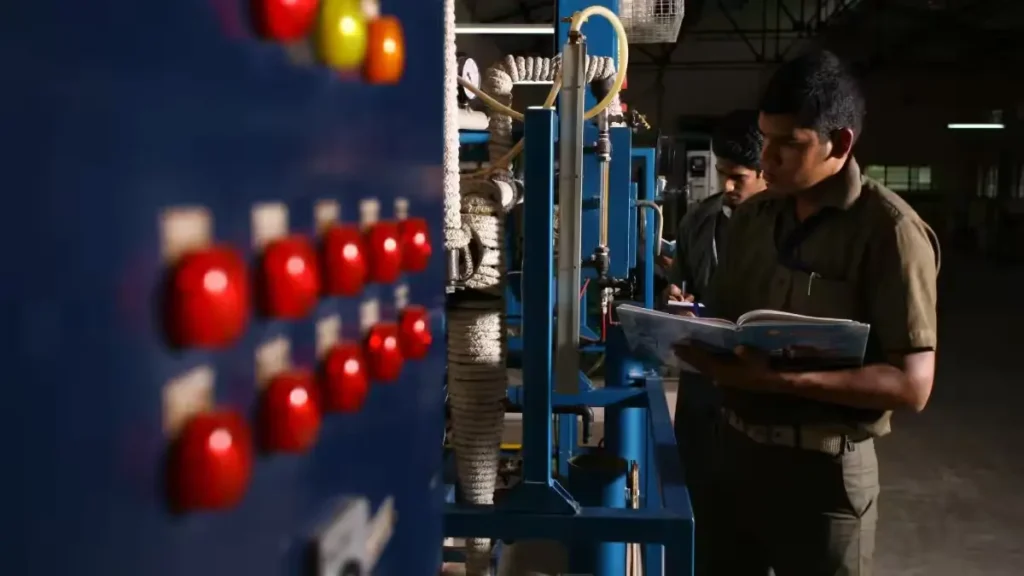
The Centre has made it compulsory for Industrial Training Institute (ITI) students enrolled under the Craftsmen Training Scheme (CTS) to complete 150 hours of structured on-the-job training (OJT) or a group project, as per fresh guidelines issued by the Directorate General of Training (DGT). The DGT operates under the Ministry of Skill Development and Entrepreneurship. Until now, ITI trainees primarily received practical instruction within campus workshops, working with tools and machinery available at their institutes. While this approach ensured foundational skills, it often limited exposure to modern industrial technologies and real-time workplace practices. Consequently, many trainees required additional hands-on training after entering the job market. To bridge this gap and align vocational education with industry demands, the DGT has restructured CTS qualifications in line with the National Education Policy (NEP) 2020. As part of the reforms, the annual training duration has been reduced from 1,600 hours to 1,200 hours. Additionally, a mandatory 150-hour OJT or group project component has been introduced to ensure practical industry exposure. Union Minister for Skill Development and Entrepreneurship Jayant Chaudhary termed the move a significant reform aimed at strengthening vocational education. He emphasised that classroom instruction alone is insufficient in a rapidly evolving industrial environment, and that real workplace experience is essential to build competence, confidence and professionalism among trainees. The initiative is also expected to deepen collaboration between industries and ITIs. Under the new guidelines, trainees will be eligible for OJT or project work only after completing at least three months of institutional training. The industry training will be conducted under the supervision of mentors, with regular performance assessments. The OJT component will also be integrated into a future data-driven grading framework. For students enrolled under the Dual System of Training (DST) mode, mandatory project work will replace OJT, as they already receive industry exposure during their course. Launched in 1950, the Craftsmen Training Scheme remains a key pillar of India’s vocational training ecosystem. The newly introduced OJT mandate aims to enhance employability, align skills with industry standards, and ensure smoother workforce integration for ITI graduates. Source: PTI

Govt Makes 150 Hours of On-the-Job Training Mandatory for ITI Trainees Under Craftsmen Training Scheme Read More »

UP Board to Make Vocational Education Mandatory for Classes 9 and 11 from 2026

The Uttar Pradesh Madhyamik Shiksha Parishad (UPMSP) has announced that vocational education will become a compulsory part of the curriculum for students of Classes 9 and 11 starting from the academic year 2026. The initiative is aimed at strengthening the link between school education and employability by introducing skill-based, job-oriented learning at an early stage. UP Board Secretary Bhagwati Singh said that subject committees have approved and submitted curricula for various vocational trades, including information technology and allied sectors, electronics, apparel, and beauty and wellness. These employment-focused courses were developed through multiple rounds of deliberations by subject experts, under the guidance of Additional Secretary Satyendra Kumar Singh and Skand Shukla. The approved curricula emphasize practical training, current technological requirements, and industry expectations to enhance students’ employability. By integrating hands-on and competency-based learning, the move aligns with the objectives of the National Education Policy and aims to promote skill development, self-reliance, and vocational proficiency among students. Singh added that work is underway to develop curricula for additional vocational trades. The Central Institute of Vocational Education, Bhopal, supported the course design process, with contributions from experts including Sanjeev Kumar Arya, Virendra Nath Shukla, Dr Aditi Goswami, Dr Dilip Singh, and Dr Avinash Pandey. Source: Indian Express

UP Board to Make Vocational Education Mandatory for Classes 9 and 11 from 2026 Read More »

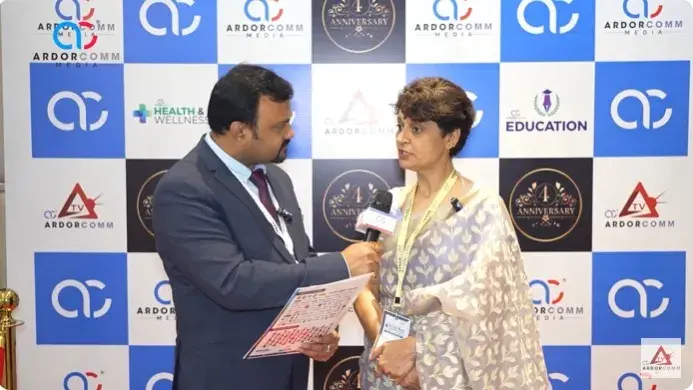
Commander Monika Pande, Principal, Doon Global School, Dehradun says Self-Discipline is the Foundation of True Learning, at ArdorComm Education Leadership Summit & Awards 2025 in Dehradun

Commander Monika Pande

Could you tell us more about your school? Doon Global School is located in Jhajra, Dehradun, and we have around 800 students, including 150 boarding students. The school is progressing well. We are aligned with the NEP and focus on inclusive education—welcoming differently-abled students as well. It’s important not just for them to learn from us, but also for us to learn from them. Empathy develops naturally in such an environment. We’re implementing innovative practices like bagless days, activity-based learning, and vocational courses from pre-primary up to Class 12. You also come from a defence background. How does your school approach discipline and sports? Discipline, to me, begins with self-discipline. As educators, we can guide and mentor, but a child must take responsibility for their own education. That’s where real learning begins. When leaders show self-discipline, others follow. Regarding sports, our school has excellent facilities—futsal, box cricket, obstacle courses, outdoor gyms, table tennis, basketball, and more. We believe in balancing academics with physical activity because a healthy mind resides in a healthy body. You’ve seen the event’s mix of school and higher education leaders, corporates, and government representatives. How do you see this platform benefiting the education community? A big thank you for creating this kind of platform. It may seem small, but it sparks ideas and conversations that can lead to larger changes. Meeting like-minded people, sharing perspectives—it gives us immense joy and learning. So truly, salute to you and your team. ArdorComm Media just completed 4 years as a media startup. Any message or good wishes you’d like to share? My heartfelt blessings and good wishes. May you grow manifold in the coming years and continue strengthening this incredible journey. It’s been a pleasure to be part of this event. Looking forward to many more.

Commander Monika Pande, Principal, Doon Global School, Dehradun says Self-Discipline is the Foundation of True Learning, at ArdorComm Education Leadership Summit & Awards 2025 in Dehradun Read More »

Centre, NIOS, and NCERT Join Hands to Advance Inclusive Education for Children with Disabilities

In a significant move to promote inclusive education, the Department of Empowerment of Persons with Disabilities (DEPwD) has entered into a tripartite agreement with the National Institute of Open Schooling (NIOS) and the National Council of Educational Research and Training (NCERT). The agreement, signed in the presence of Union Ministers Virendra Kumar and Dharmendra Pradhan, aims to create an enabling educational environment for children with disabilities by aligning with the principles of the National Education Policy (NEP) 2020. This strategic collaboration will focus on revamping curriculum and learning materials to ensure they are accessible, inclusive, and tailored to the needs of learners with disabilities. NCERT will play a key role in modifying textbooks and curricular content to reflect these values. As part of the agreement, NIOS will grant recognition to special schools operated by NGOs under the Deendayal Disabled Rehabilitation Scheme (DDRS), designating them as Special Accredited Institutions for Education of the Disabled (SAIEDs). These institutions will offer a broad spectrum of academic and vocational education—from foundational levels to senior secondary—supported by NIOS in terms of admissions, exams, study materials, and necessary accommodations during assessments. Union Minister Virendra Kumar highlighted the initiative as a step toward realising Prime Minister Narendra Modi’s vision of inclusive growth, emphasizing that every child, regardless of ability, should have the opportunity to receive quality education. “This MoU affirms that inclusive education is not a luxury but a fundamental right,” he said. Education Minister Dharmendra Pradhan underscored the broader societal impact of inclusive education. “Creating a just and empathetic society begins with our schools. NEP 2020 is a progressive framework guiding us, and in the coming year, we are also prioritising infrastructure like accessible toilets to help reduce dropout rates,” he noted. DEPwD Secretary Rajesh Aggarwal reiterated the commitment to widen access for students with disabilities, including facilitating their entry into premier institutions such as IITs and IIMs. He also praised NIOS for its innovative step of introducing Indian Sign Language as a subject at the secondary level. Echoing the vision, Sanjay Kumar, Secretary of the Department of School Education and Literacy, stated that the ultimate mission is to ensure every child with a disability is able to complete their schooling and access equal opportunities in higher education and beyond. Source: PTI

Centre, NIOS, and NCERT Join Hands to Advance Inclusive Education for Children with Disabilities Read More »

Education Minister Dharmendra Pradhan Highlights Partnership with Singapore for Holistic Education Strategy

ArdorComm news

India’s Education Minister Dharmendra Pradhan emphasized the need to strengthen the educational partnership with Singapore, describing it as a key pillar in India’s all-encompassing education strategy. During his visit to Singapore, Pradhan referred to the country as India’s “trusted knowledge partner” and laid out a strategy to enhance collaboration through three key pillars: talent, resources, and market. In his meetings with Singapore’s Prime Minister Lawrence Wong and Education Minister Chan Chun Sing, Pradhan explored various initiatives aimed at expanding educational ties. These include overseas internship programs for Indian students to gain hands-on experience in Singaporean companies, as well as opportunities for twinning schools and universities across both countries. Joint research efforts in areas such as deep tech, advanced materials, and medicine were also highlighted as potential areas of collaboration. Additionally, the two nations discussed forging stronger academic and research links, including cooperation between Singapore’s National Institute of Education and India’s NCERT to enhance curriculum development, pedagogy, and capacity-building for educators. This growing partnership aims to not only strengthen the education system but also provide Indian students with global exposure and opportunities for growth in key industries.

Education Minister Dharmendra Pradhan Highlights Partnership with Singapore for Holistic Education Strategy Read More »

IGNOU Launches BA in Micro Small & Medium Enterprises Programme

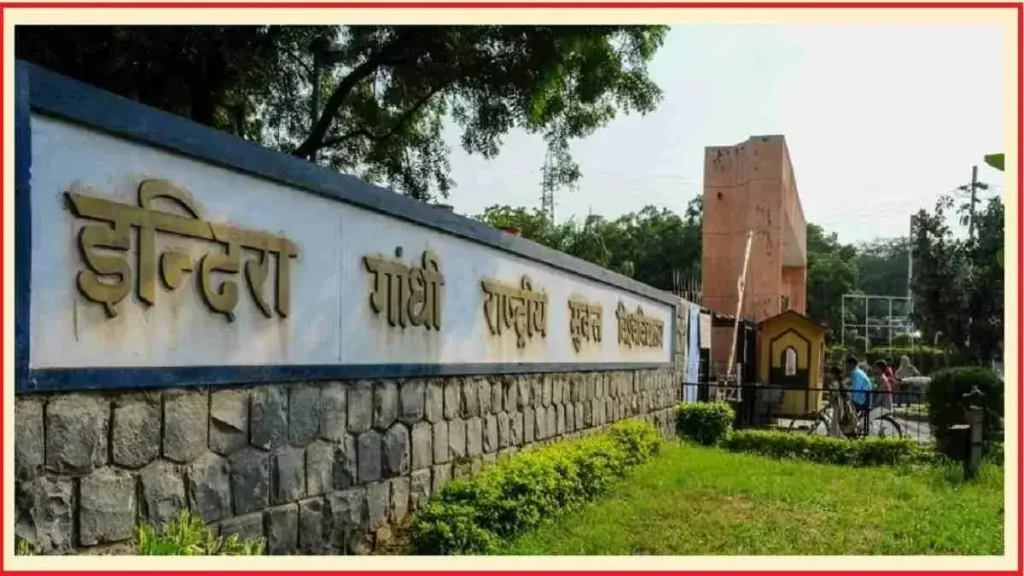
The Indira Gandhi National Open University (IGNOU) has announced the introduction of a new Bachelor of Arts in Micro Small and Medium Enterprises (BAMSME) programme. This programme, offered through the School of Vocational Education and Training (SOVET), is now open for applications for the July 2024 session. Interested candidates can apply through the official IGNOU website at ignouadmission.samarth.edu.in. The BAMSME programme is designed for individuals who have completed their 10+2 education. It aims to equip aspiring entrepreneurs with the essential skills and knowledge required to start and manage new business ventures. Offered via open and distance learning (ODL), the programme is accessible to a wide audience. It is structured to provide flexibility, with a minimum duration of three years, divided into six semesters, and a maximum duration of six years. Students are required to complete a total of 120 credits, earning 20 credits per semester. The medium of instruction is English, and the programme fee is set at Rs 5,100 per year, totaling Rs. 15,300 for the entire three-year course. According to an IGNOU statement, the primary objectives of the BAMSME programme are to facilitate the successful and profitable operation of business enterprises, enhance managerial skills, and offer an innovative, competency-based approach to entrepreneurship education. The curriculum covers crucial aspects of business operations, including finance and marketing, and aims to develop leadership qualities essential for both self-empowerment and the empowerment of others.

IGNOU Launches BA in Micro Small & Medium Enterprises Programme Read More »

Punjab Government Proposes ₹3,000 Crore Action Plan for Samagra Shiksha Program

The Punjab government has presented a comprehensive ₹3,000-crore action plan under the Samagra Shiksha program. This flagship centrally sponsored initiative for school education aims to address various facets, including quality education, access and retention, and vocational education. The proposed budget spans the financial years 2024-25 and 2025-26, with an annual allocation of ₹1,476 crore for each year. This marks a commendable 14% increase compared to the current year’s budget. The Samagra Shiksha program operates on a joint funding model, with the central and state governments contributing on a 60:40 sharing basis, emphasizing their commitment to transforming the education landscape. Outlined in the action plan are specific allocations for key areas of focus. An earmarked ₹503 crore is dedicated to initiatives and interventions related to quality education, emphasizing the importance of an enriched learning experience. Additionally, ₹225 crore has been allocated for measures addressing access and retention, ensuring that more students can benefit from an inclusive education system. Another significant chunk of ₹188 crore is set aside for the promotion and implementation of vocational education, equipping students with practical skills for the future. The proposed initiatives include the construction of new classrooms and toilets, improved drinking water facilities, the promotion of commerce and science education, teacher training, digital initiatives, strengthening school libraries, and the installation of solar panels. Furthermore, the plan envisions introducing vocational education in all high and senior secondary schools, reflecting a forward-looking approach to skill development. The Samagra Shiksha Project Approval Board, led by Union school education and literacy secretary Sanjay Kumar, will review the budget proposals in the upcoming month. The central government’s share of ₹886 crore, coupled with the state government’s commitment of ₹590 crore, underscores the collaborative effort to create a robust educational framework.

Punjab Government Proposes ₹3,000 Crore Action Plan for Samagra Shiksha Program Read More »

Uttar Pradesh Government Issues Guidelines for Education Service Selection Commission

The recruitment process for teachers and instructors in the state, the Uttar Pradesh government, under the leadership of Chief Minister Yogi Adityanath, has issued a comprehensive notification outlining the rules for the Uttar Pradesh Education Service Selection Commission (UPESSC). According to an official release, the guidelines stipulate that candidates invited for interviews, following the written examination, must be awarded a minimum of 40% marks. However, the maximum marks permissible for the interview stage are capped at 90%. The UPESSC will oversee the recruitment of instructors in basic, secondary, and higher education, as well as vocational education, and teachers in aided minority colleges across the state. The Examination Committee will determine the number of candidates to be interviewed in a day and the overall number of boards to be conducted daily, based on the needs of the recruitment process. Moreover, the number of candidates called for interviews will range from 3 to 5 times the number of vacancies, as deemed appropriate by the Commission. For positions requiring interviews, a merit list will be released by combining the marks obtained in the written examination and the interview. In cases where only a written exam is conducted, a merit list will be prepared based on the written exam marks alone. In instances where candidates have equal merits, preference will be given to the marks obtained in the written exam, followed by interview scores. If parity persists, eligibility percentages such as JRF, NET, PhD, and postgraduate scores will be considered. Additionally, in the event of identical scores across all criteria, priority will be given to the candidate with higher age. The release also outlines a meticulous process for candidate replacements, should the initially selected candidate be unable to assume the post. The selected candidate, upon explaining the reasons for non-acceptance, will submit their application to the Director, who will then recommend an adjustment to the Commission. The Commission will subsequently hold the institution or appointing authority accountable for any discrepancies in the requisition process. This move by the Uttar Pradesh government is anticipated to bring transparency and efficiency to the teacher and instructor recruitment process, ensuring that the most qualified and suitable candidates are selected for these crucial roles in the education sector.

Uttar Pradesh Government Issues Guidelines for Education Service Selection Commission Read More »