






ArdorComm Media News Network
January 30, 2026
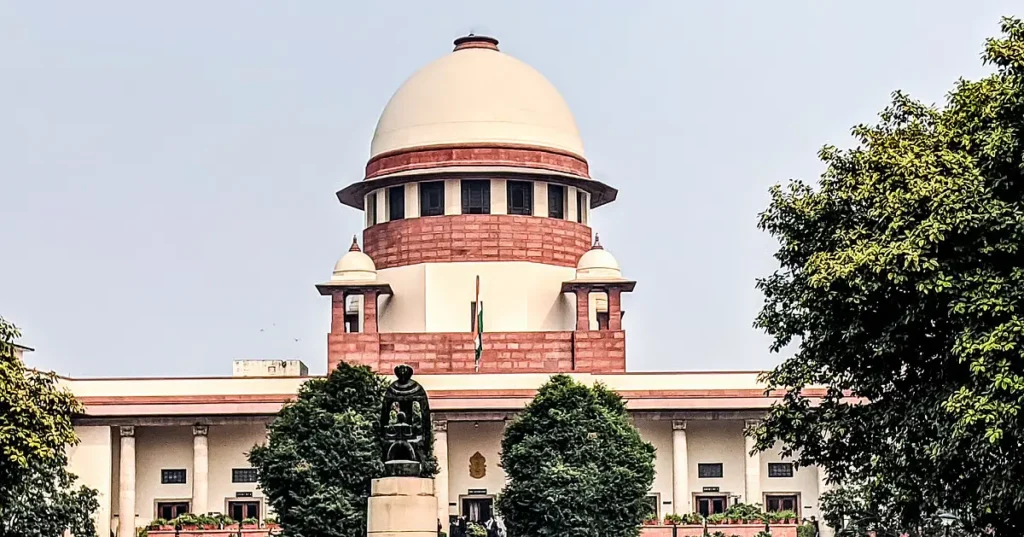
The Supreme Court on Tuesday declined to interfere with a Kerala High Court order that permitted the Competition Commission of India (CCI) to continue its investigation into allegations of unfair trade practices in Kerala’s cable television market, dealing a setback to broadcaster JioStar India.
JioStar, which holds over 34% share of India’s TV network market, had challenged the high court’s ruling that upheld the CCI’s decision to probe allegations of abuse of dominant position raised by Asianet Digital Network (ADN). The Kerala High Court bench hearing the matter comprised Justices Sushrut Arvind Dharmadhikari and Syam Kumar VM.
Before the Supreme Court, JioStar was represented by senior advocate Mukul Rohatgi, while the CCI was defended by additional solicitor general N. Venkataraman. Dismissing the plea, a bench of Justices JB Pardiwala and Sandeep Mehta said it found “no good ground” to interfere with the high court’s order after examining the submissions and the record.
The case has wider corporate linkages, as Viren and Akshay Raheja—promoter shareholders in Reliance-controlled Hathway Cable—along with their family investment firm, Hathway Investments, also hold stakes in Asianet Satellite Communications, the parent company of ADN.
The dispute traces back to February 2022, when the CCI ordered an investigation into Star India, then owned by Walt Disney, following a complaint by ADN. Since then, Star India has merged with Reliance Industries-owned Viacom18 to form JioStar, which is now under Reliance’s control.
ADN has accused JioStar of abusing its dominant position and denying market access, allegedly in violation of Sections 4(2)(a)(ii) and 4(2)(c) of the Competition Act, 2002. The complaint centres on alleged “sham” marketing and advertising agreements between Star and Kerala Communicators Cable Limited (KCCL).
Under the Telecom Regulatory Authority of India’s (TRAI) New Tariff Order, broadcasters are allowed to offer a maximum discount of 35% on the maximum retail price (MRP) to distributors and must adhere to transparent and non-discriminatory pricing. ADN alleged that Star circumvented these norms by offering KCCL discounts of up to 50% through separate marketing and advertising arrangements.
According to ADN, these agreements were purportedly aimed at promoting Star’s flagship Malayalam channel—popularly known as Asianet—which commands more than 60% viewership share in Kerala. However, the advertisements were allegedly aired on a low-visibility ‘Test’ channel with negligible audience reach, raising questions over the genuineness of the promotional activity.
ADN claimed that these practices resulted in discriminatory discounts, restricted market access for competitors, and gave KCCL an unfair competitive edge.
While upholding a single-judge order dated May 28, 2025, the Kerala High Court had dismissed JioStar’s challenge and directed the CCI to hear all stakeholders before issuing a reasoned order. The court also instructed the regulator to first decide, as a preliminary issue, whether it has jurisdiction in light of the TRAI Regulations, 2017. If necessary, the CCI may pause its proceedings until TRAI examines the matter.
The high court directed that the entire exercise be completed within eight weeks from December 3, 2025, while allowing the parties to seek an extension if required.
Source: Economic Times