





ArdorComm Media News Network
April 6, 2026
In a major step toward embedding future skills in school education, the Ministry of Education has unveiled a new Artificial Intelligence (AI) and Computational Thinking (CT) curriculum for students from Classes 3 to 8 under the Central Board of Secondary Education.
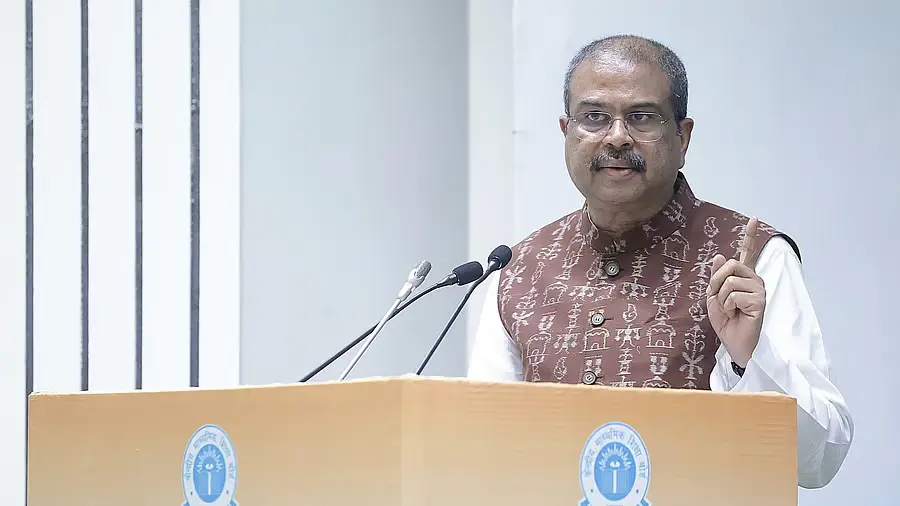
Announced on April 1, the initiative marks the first structured integration of AI concepts at the foundational and middle school levels. Union Education Minister Dharmendra Pradhan described the move as a “transformative step” aimed at preparing students for a technology-driven future.
According to the Minister, the curriculum is supported by well-designed modules, detailed teacher handbooks, and a strong assessment framework. These components are intended to provide students with early exposure to emerging technologies while ensuring a systematic learning approach.
This development aligns with the vision of the National Education Policy 2020, which emphasizes digital literacy, coding, and the development of 21st-century competencies from an early stage. While AI was previously offered as an elective subject for Classes 9 to 12, this initiative expands its reach to younger learners.
The curriculum has been developed by an expert panel led by a professor from Indian Institute of Technology Madras, with participation from key institutions such as CBSE, NCERT, Navodaya Vidyalaya Samiti, and Kendriya Vidyalaya Sangathan.
The rollout will begin in the academic session 2026–27 in a phased manner. Schools affiliated with CBSE will receive necessary guidelines, resources, and teacher training support to ensure consistent implementation across both urban and rural regions.
The curriculum is designed to be age-appropriate, introducing younger students to core computational thinking skills like pattern recognition, logical reasoning, and problem-solving. As students progress, they will gradually explore foundational AI concepts.
Rather than being taught as a separate subject in early grades, AI and CT will be integrated into existing subjects and classroom activities. The approach prioritizes experiential learning through projects, digital tools, and hands-on exercises.
To address challenges in implementation, teachers will undergo dedicated training programs supported by structured handbooks. Additionally, assessments will focus on conceptual clarity and practical application instead of rote memorization.
Overall, the initiative aims to build a strong technological foundation among students, equipping them with critical thinking and problem-solving skills necessary for the evolving digital landscape.
Source: Deccan Herald