





ArdorComm Media News Network
May 11, 2026
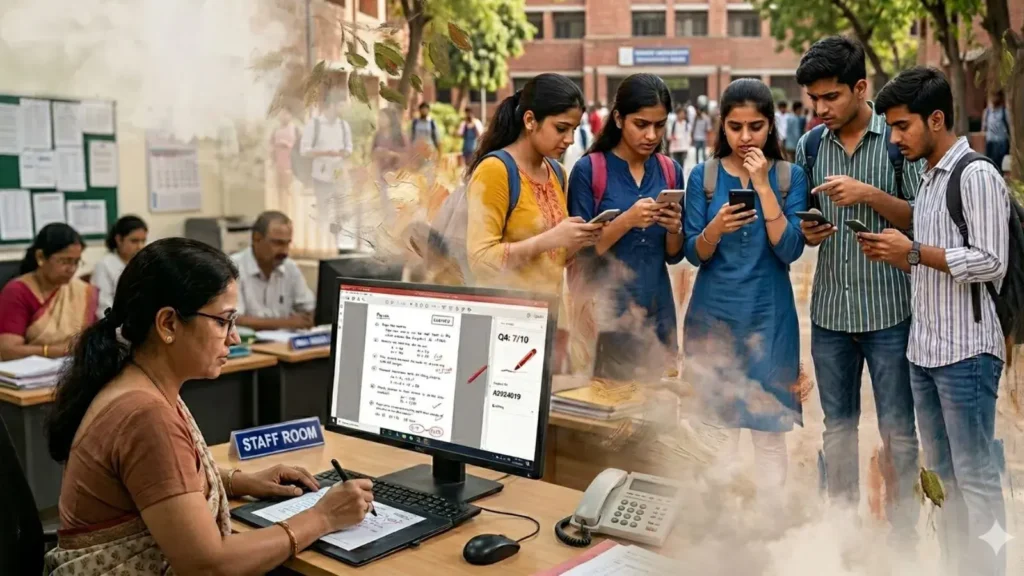
As lakhs of students wait for the Central Board of Secondary Education Class 12 Results 2026, the board’s newly launched On-Screen Marking (OSM) system has emerged as a major talking point. Introduced in February this year, the digital evaluation process replaces the traditional physical answer sheet checking model with a technology-driven system aimed at faster, cleaner and more accurate assessments.
During initial discussions with educators from nearly 31,000 schools, CBSE officials described the new process as a “no touch, no dust” method, highlighting the move away from manual handling of paper scripts. Under the OSM model, scanned answer sheets are assigned digitally to evaluators, who assess them through the board’s dedicated portal.
Many educators admitted there was hesitation in the beginning, as teachers adapted to screen-based marking. However, after orientation sessions and training, most evaluators gradually adjusted to the new workflow.
The biggest expectation from the digital shift is quicker result processing. According to CBSE officials, the new system compresses evaluation timelines significantly. Earlier, the checking process often stretched close to two months, but this year regional centres were expected to complete evaluations in nearly nine days, compared to the earlier twelve-day cycle.
The portal also brings several accuracy-focused features. It does not allow submission unless every question has been checked or marked not applicable. It automatically removes totalling errors, keeps track of marking history, and can even flag answers written in unusual sequences.
Still, the first year of implementation has not been without challenges. Some teachers reported blurred scanned copies, slow-loading answer sheets, and occasional server issues. Others said revised marking instructions during the process required already checked scripts to be reopened, slowing progress in some cases.
Educators also noted that daily workloads remained similar, with teachers checking up to 25 answer sheets between 8 am and 4 pm. However, unlike the old system, answer sheets cannot be redistributed among evaluators, making the allocation process more rigid.
Infrastructure gaps remain another concern. While some schools had strong internet connectivity and adequate computer labs, others may struggle with digital readiness. Teachers also pointed out increased screen exposure, leading to eye strain during long correction hours.
Despite these hurdles, many school leaders believe the OSM rollout is a positive step. They feel the system will become more efficient in the coming years as teachers gain familiarity with digital correction methods.
Although the board has not yet confirmed the Class 12 result date, many believe the removal of physical transport delays and automated processing could help speed up declaration timelines, even if this year’s announcement window remains close to previous years.
Source: Indian Express