






ArdorComm Media News Network
June 26, 2026
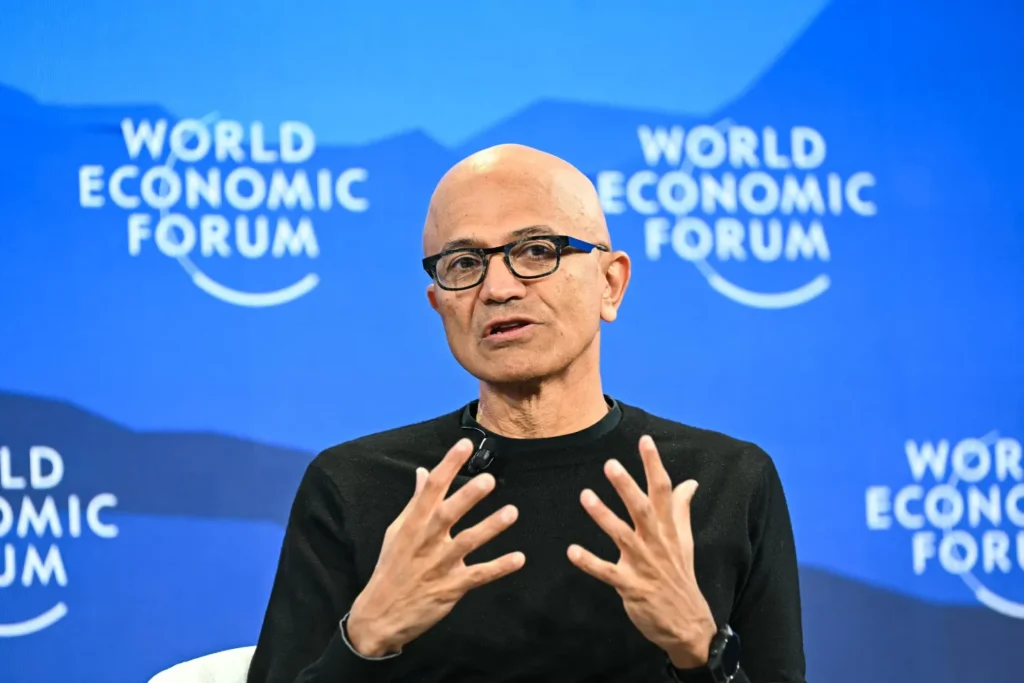
Satya Nadella, Chief Executive Officer of Microsoft, has voiced serious concerns about the increasing concentration of power within the artificial intelligence sector, cautioning against a future where only a few major companies control the rapidly evolving technology.
In a recent interview with The Wall Street Journal, Nadella shared his perspective on the future of AI, emphasizing the importance of affordability, accessibility, and giving users greater control over how the technology develops and is deployed.
He warned against a scenario where a small group of companies dominates AI development while simultaneously claiming that white-collar jobs could disappear and using those fears to justify massive investments in infrastructure such as large-scale data centres.
According to Nadella, society is unlikely to accept a future where the benefits, learning, and deployment of AI remain concentrated in the hands of a select few organizations. Instead, he stressed the need for the industry to build public trust and earn what he referred to as “social permission” to continue advancing the technology responsibly.
His comments come amid growing global debate over the direction of the AI race. Although he did not directly mention competitors, Nadella criticized business models where only a handful of firms capture most of the economic value generated by AI while also raising concerns about safety risks, employment disruption, and the enormous computing resources required for development.
A key strategic question for Microsoft is whether it should host models from DeepSeek, a Chinese AI company that has recently gained attention worldwide for offering highly cost-effective AI models. Such a decision could intensify competition in the AI market and challenge established industry leaders by driving down costs.
Nadella also pushed back against the idea that AI should replace human jobs entirely. Instead, he argued that businesses should focus on redesigning and restructuring work roles so employees can adapt alongside technological progress rather than being displaced permanently.
While acknowledging that AI-driven transformation will inevitably bring disruption, he said companies must actively create pathways that help workers adjust to these changes and remain relevant in the evolving workforce.
Describing AI as a “knowledge engine,” Nadella said the future should involve organizations leveraging multiple AI models with varying capabilities and price points rather than depending on a single dominant provider.
He further emphasized that rebuilding public confidence in AI will require more than promises or carefully crafted narratives. According to Nadella, the technology industry must demonstrate through concrete action that AI development can be both responsible and beneficial for society.
The remarks come at a time when competition around AI is accelerating globally, with major technology firms investing billions of dollars into infrastructure, advanced computing systems, and data centres. Microsoft continues to remain one of the leading forces shaping the future of the AI ecosystem through its partnerships and investments across the sector.
Source: IANS