






ArdorComm Media News Network
August 17, 2026
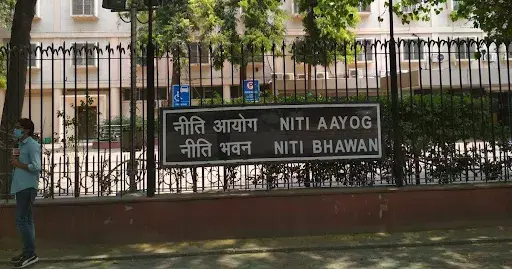
The NITI Aayog has proposed a series of reforms that could bring significant changes to how professionals qualify, obtain licences and operate across sectors such as law, accounting, architecture, engineering and healthcare.
The recommendations focus on areas including professional licensing, recognition of qualifications, interstate mobility, business structures and mutual recognition agreements with other countries. While the proposals are not binding, they are intended to serve as a framework for further discussion and policy development.
According to NITI Aayog, the services sector contributed around 55% of India’s GDP in 2023-24, while India accounted for 4.3% of global services exports. Professional and management consulting services alone represented nearly one-fifth of the country’s services exports in 2024-25.
Key Regulatory Gaps Under Review
The report highlights several challenges surrounding market entry, professional recognition, licensing, business structures, mobility and overlapping regulatory systems.
In the legal sector, the proposals examine recognition of different categories of legal professionals, rules governing foreign lawyers and law firms, advertising restrictions and the structures through which legal professionals can operate.
For accounting, auditing and bookkeeping, the report considers the role of bodies such as ICAI and NFRA, restrictions affecting foreign professionals and the need to strengthen the regulatory framework for bookkeeping services.
The review also covers architecture, engineering, healthcare and allied healthcare, with sector-specific regulatory gaps identified in each area.
Healthcare, for instance, faces multiple layers of regulation and does not yet have a unified mechanism for professionals to transfer licences between states. The issue becomes more complex in the case of foreign medical graduates.
For engineering, NITI Aayog has pointed to the absence of a comprehensive statutory framework governing professional engineering practice.
Greater Focus on Professional Mobility
Recognition of qualifications and the ability of professionals to work across jurisdictions are another major focus of the report.
NITI Aayog has examined India’s framework against practices followed in other countries, particularly regarding market access, licensing, business structures and recognition of professional qualifications.
In architecture, for example, professionals in India primarily operate through sole proprietorships and partnerships, while countries such as the UK, New Zealand and Singapore permit broader structures, including LLPs and incorporated companies.
The report suggests that improving mutual recognition arrangements could help Indian professionals gain greater international mobility while also creating clearer pathways for qualified foreign professionals to enter the Indian market.
Four Broad Priorities Identified
The report outlines four key areas for strengthening professional services: continuous professional development, adoption of global best practices, moving professional services towards higher-value segments of the services economy, and responding to emerging trends.
For the legal profession, recommendations include broader statutory recognition, clearer rules for foreign law firms, mutual recognition agreements, reconsideration of advertising restrictions and the possibility of multidisciplinary practices with appropriate safeguards.
For accounting and auditing, the report recommends expanding mutual recognition agreements, strengthening regulatory supervision, improving bookkeeper training and introducing phased accreditation routes for qualified foreign professionals.
For architecture, suggested measures include a professional licensing examination, simplified registration procedures, broader permissible business structures and mutual recognition agreements.
For engineering, NITI Aayog has proposed a central statutory framework covering engineers involved in construction and infrastructure, along with clearly defined scopes of professional practice.
In healthcare and allied healthcare, the recommendations include timely implementation of the National Exit Test (NExT), greater regulatory clarity, portability of professional licences across states, full implementation of the National Commission for Allied and Healthcare Professions Act and stronger international recognition mechanisms.
AI and the Shift Towards Higher-Value Work
The proposed reforms come as professional services undergo rapid transformation due to technology and changing global demand.
The report identifies areas such as research and development, engineering design, strategic technology operations and consulting as increasingly important parts of the move towards knowledge-intensive, higher-value services.
Artificial intelligence, automation, the green transition and geopolitical changes are expected to further influence the professional services landscape. While technology is altering how several services are delivered, it is also generating demand for capabilities in advanced analytics, strategic consulting and technology-driven decision-making.
For students and existing professionals, the proposed reforms could eventually have implications for licensing, accreditation, qualification recognition, continuing professional development and mobility.
However, NITI Aayog has emphasised that the recommendations are reference points for further deliberation rather than mandatory policy measures at this stage.
Source: Indian Express