ArdorComm Media Group

Wednesday, February 25, 2026 1:33 PM

Author name: admin

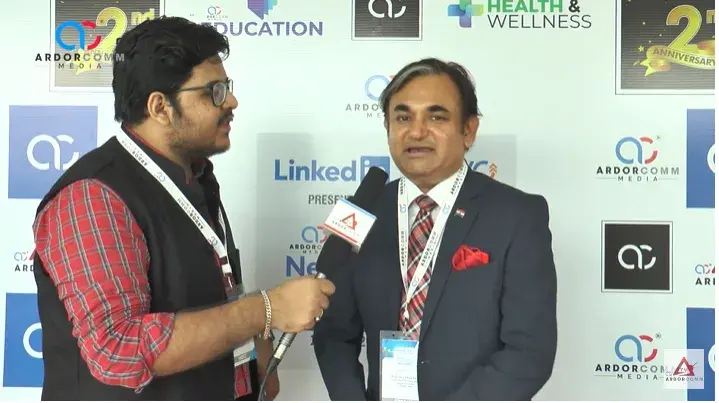
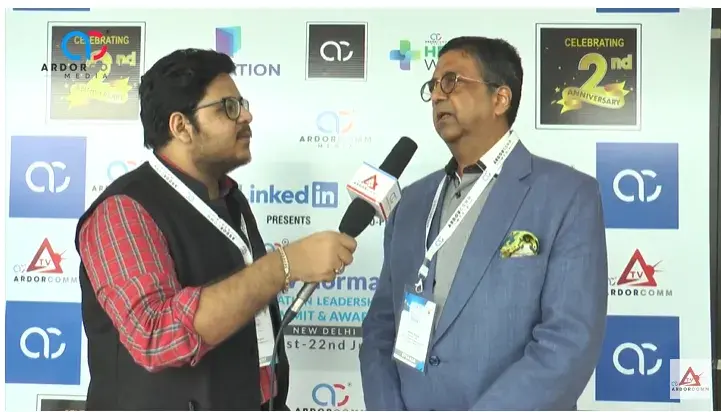
Prof. (Dr.) Vikas Madhukar, Pro Vice Chancellor, Amity University, Gurgaon, Highlights on Technology Implementation in Education

“Our University is on the concept of a smart campus where technology is integrated deeply into all processes,” says Prof. (Dr.) Vikas Madhukar, Pro Vice Chancellor, Amity University, Gurgaon, in an Interview with Pratik Ghosh, Content Writer, ArdorComm Media Group at the ‘New Normal – Education Leadership Summit & Awards 2023’ #ELSANewDelhi #ELSAGurugram How are you feeling to witness the New Normal Education Leadership Summit and Awards in Delhi? I think it was a wonderful idea to host this event, especially at this point of time when we have crossed the COVID restrictions. From last more than one year, we are operating as we were operating before COVID. It’s very important now to deliberate what we have learned during COVID and how those learnings can be integrated into the new education policy. We need to work out on the theme and decide on some good practices that can benefit all. How are you implementing technology in Amity University? Amity is a technology-driven University. In fact, our University is on the concept of a smart campus where technology is integrated deeply into all processes. We have our in-house built ERP software, which takes care of all operations from admission to graduation. We’ve integrated the Learning Management System (LMS) with Amazon. Our classrooms are well-equipped with multimedia projectors, smart boards, and other technology-enabled resources. I would say that Amity is quite proactive in implementing technology and perhaps this is a reason when in 2020 the government announced lockdown we took only two days to shift from offline to online learning. In forums like this, where education leaders, EdTech players, and government representatives come together, how does it benefit the education sector? It is very important that different stakeholders should come forward on a one single platform because otherwise hardly there is any opportunity where you are having academicians, industry and people from government coming out at one place. So, I think this is a great platform for sharing the learning and the challenges which each one of us are facing and of course a platform to express our expectations from industry and governments so that the suitable action can be taken. Any message for ArdorComm Media on its 2nd Anniversary? I’ve was going through the previous events organized by ArdorComm Media, and the quality of the events, initiatives, and speakers you’ve brought to this platform is impressive. ArdorComm Media is doing a great job, and I wish you all the best.

Prof. (Dr.) Vikas Madhukar, Pro Vice Chancellor, Amity University, Gurgaon, Highlights on Technology Implementation in Education Read More »

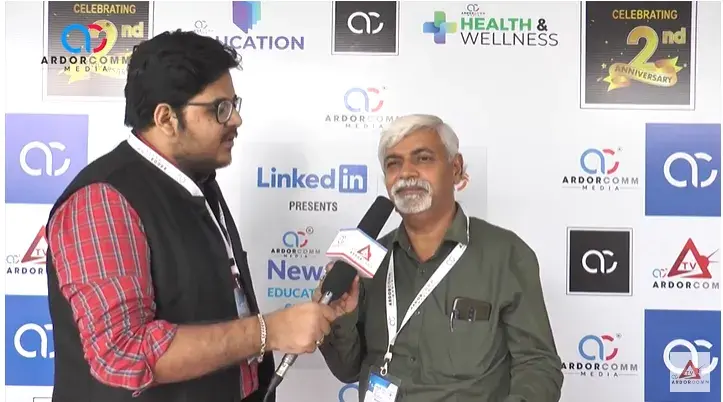
Prof. Ambarish S. Vidyarthi, Vice Chancellor, Bikaner Technical University, Rajasthan, Emphasises on the Importance of Skill Development

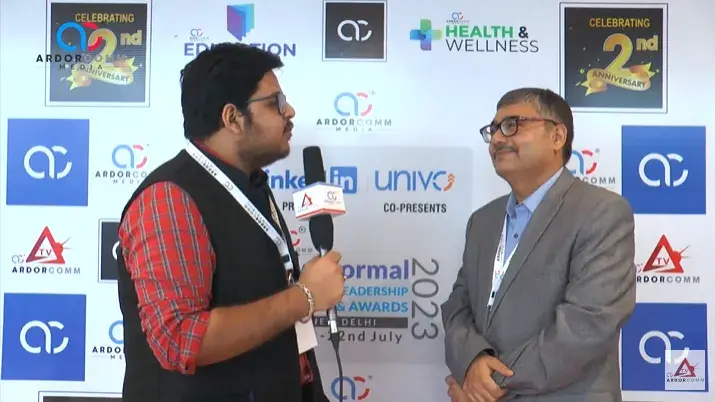
 “You should go for the ethnic literacy because the workforce is very diverse,” says Prof. Ambarish S. Vidyarthi, Vice Chancellor, Bikaner Technical University, Rajasthan, in an Interview with Pratik Ghosh, Content Writer, ArdorComm Media Group at the ‘New Normal – Education Leadership Summit & Awards 2023’ #ELSANewDelhi #ELSAGurugram How are you feeling to witness the New Normal Education Leadership Summit and Awards in Delhi? It’s great, last time I was also the panellist and that was after the covid but this time the people are in a good mood and really working and the dynamism has been a little bit changed. So, in these new normal activities, we are discussing on improvising the Indian teaching learning and entire education how it could be a meaningful impact on society and societal development. So, I think this is a great effort and I am really grateful to ArdorComm Media and especially to Chandan Anand for taking this initiative. As you know, the theme of our event is India Vision 2030. According to you, what should be the vision for the education sector? I have a different approach. I am saying that the Indian education system, though it is Indian, it is made up of foreign culture. For example, we are doing agriculture, we are an agriculture-dominated state, but starting from ploughing to harvesting, we are not at all using our Indian traditional agriculture. So, there is a difference that whether we want to Indianize our own activities which we have been doing in earlier days where the people were not so much educated like the rishis and munis. They were doing it, for example, we were ploughing with the ‘hull’, especially, you know, that was basically not damaging the vermic cultures. Now what we are doing, we are using the tractors and other things which are devastating the field, and that’s why most of the land is going to be barren. So definitely, we have to think of this. People are saying that this is an education industry. What is about the industry? Whether our traditional system was saying like this? No, the teacher was testing a lot before accepting people. But now you can clear one exam and then come and you have not designed and that’s why the output is not coming. So, this is my view. What according to you is the importance of skill development in this 21st-century workspace? If you look at from the traditional or even the World Economic Forum, the half-life of technology has been reduced. Initially, it was 10 years, then it became six years, now it is two and a half years. So, it means that the advancement of technology would come into the place, then you require specific skills. So, there is a lot of pressure in the skill development and people have to acquire, irrespective of specialized ones, they should have basic, the foundation, like they should have literacy, financial literacy, numerical methods or statistics, then you have to have cultural literacy and then you should go for the ethnic literacy because the workforce is very diverse. And what happens, we are very good technocrats, but we fail to implement because we are working with different cultural and ethnic groups. And without understanding their viewpoint, their working style, you cannot take up the work very efficiently. So, that’s why these skills are essential. Then definitely, AI, blockchain, data security, data science, AR, VR, so those kinds of technologies are coming up and we have to judiciously use those ones. So, that’s the point. Any message for ArdorComm Media on its 2nd Anniversary? Definitely, all the best to this Media Group, and we hope that more vibrant and frequent activities have to be conducted by your group. And you are really making an impact on the education system. So, thank you very much and all the best.

Prof. Ambarish S. Vidyarthi, Vice Chancellor, Bikaner Technical University, Rajasthan, Emphasises on the Importance of Skill Development Read More »

Prof. (Dr.) Vikas Singh, Founder Vice Chancellor, Geeta University, Panipat, Delhi, Highlights on Implementation of NEP

 “We’ve introduced the concept of “design your own degree,” giving students autonomy in choosing their mix of courses,” says Prof. (Dr.) Vikas Singh, Founder Vice Chancellor, Geeta University, Panipat, Delhi, in an Interview with Pratik Ghosh, Content Writer, ArdorComm Media Group at the ‘New Normal – Education Leadership Summit & Awards 2023’ #ELSANewDelhi #ELSAGurugram How are you feeling to witness the New Normal Education Leadership Summit and Awards in Delhi? It is really a pleasure to be attending this Summit here, and thanks to Chandan and his team for inviting me to participate in this event. I can see a lot of senior academicians and industry people are here, providing a great opportunity to interact, network, and reconnect with old friends and colleagues. It’s truly a wonderful experience. The theme of our event is “India Vision 2030.” According to you, what should be the vision for the education sector moving forward? The upcoming years are crucial as the Indian economy is set to grow significantly. For this growth to happen, skilled manpower is essential. As the economy expands, new job opportunities will emerge, and we need to ensure that young students are adequately trained and skilled to take up these roles. This presents both an opportunity and a challenge for the education sector. We need to prepare our students to be the driving force behind the economic growth, which requires a concerted effort from the education community. How are you implementing NEP in your University? At our University, we have taken several steps aligned with the new education policy. We’ve introduced the concept of “design your own degree,” giving students autonomy in choosing their mix of courses. This policy encourages students to follow their passions and interests. We’ve also incorporated vocational baskets, offering courses in data visualization, digital marketing, and entrepreneurship. Moreover, we’re encouraging students to create profiles on platforms like LinkedIn, Upwork, and Freelancer, enabling them to work on external projects and build their skills and profiles. Forums like this bring together education leaders, government officials, and industry representatives. How does such a platform benefit the education sector? These forums are essential because they bring together key stakeholders in the education sector. Academicians, policy makers, government bodies, regulatory bodies, and industry representatives can collectively brainstorm and find solutions to various challenges. It’s a unique opportunity to share ideas, insights, and experiences, leading to better strategies and collaborations. Any message for ArdorComm Media on its 2nd Anniversary? I’m very happy to share that I was there in the first event also and I have seen the efforts that Chandan is putting in this venture and I wish him all the very best and I’m very confident that with the kind of efforts he is putting and the kind of team that he has created I’m sure ArdorComm is going to become a big name in this media sector. All the best to the team of ArdorComm Media.

Prof. (Dr.) Vikas Singh, Founder Vice Chancellor, Geeta University, Panipat, Delhi, Highlights on Implementation of NEP Read More »

Tamil Nadu CM Urges President’s Approval for NEET Exemption Bill, Citing Urgent Need After Tragic Incident

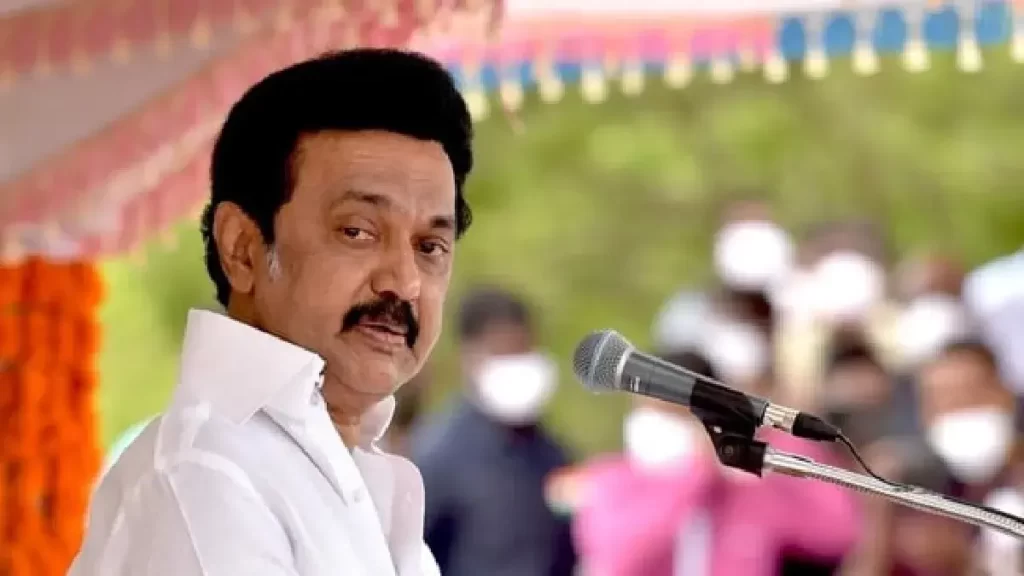
 Tamil Nadu’s Chief Minister, MK Stalin, has penned an open letter to President Droupadi Murmu, urging her to grant approval for the NEET Exemption Bill. The bill, aimed at exempting the state from the centralized medical entrance exam, has faced strong opposition from the Tamil Nadu government. Despite being reintroduced in the state assembly and securing its passage, the bill still awaits the governor’s endorsement. #NEET எனும் கொடிய துயரத்தை ஒழிக்க நாம் மேற்கொள்ளும் பல்வேறு முயற்சிகளில் மாண்புமிகு குடியரசுத் தலைவர் திருமதி. திரவுபதி முர்மு அவர்களுக்கு எழுதியுள்ள இந்தக் கடிதமும் ஒன்று!#NEET-ஐ ஒழிக்கும் வரை நாம் ஓயமாட்டோம்! This letter to Hon'ble President Tmt. Droupadi Murmu is one among… pic.twitter.com/8A8VK7cT3g — M.K.Stalin (@mkstalin) August 14, 2023 The catalyst for this letter was the tragic incident involving a NEET aspirant and his father in Chennai, who reportedly took their own lives. In his correspondence, the Chief Minister underlined, “Every day of delay in implementing this bill not only deprives deserving candidates of valuable medical seats but also costs our society irreplaceable human lives.” Stalin appealed to the President for swift assent to the bill. He also emphasized the need to place all matters directly affecting people under the ambit of the state list in the Constitution, particularly the realm of education. He expressed that only by transferring education to the state list could methods like the National Eligibility cum Entrance Test (NEET) be completely scrapped.

Tamil Nadu CM Urges President’s Approval for NEET Exemption Bill, Citing Urgent Need After Tragic Incident Read More »

PM Modi Commends India’s Leadership in Climate Change Battle

 During his address on the 77th Independence Day, Prime Minister Narendra Modi proudly declared that India has exceeded its green targets well ahead of schedule, setting an example for the global fight against climate change. He highlighted India’s innovative initiatives, including the “Life Mission,” which seeks to curtail reckless resource consumption. Notably, India has formed influential international alliances such as the International Solar Alliance (ISA), Coalition for Disaster Resilient Infrastructure (CDRI), and International Big Cat Alliance. Amid the worldwide struggle with climate change, PM Modi underscored India’s proactive approach in addressing the issue. He announced that India accomplished its renewable energy goal a remarkable nine years before the intended timeline. Furthermore, the “One Sun, One World, One Grid” vision, introduced at the ISA assembly in 2018, has gained global traction, aiming to unite 140 nations through a shared solar power transmission network. Looking forward, India’s ambition of generating 500 gigawatts of clean energy by 2030, incorporating hydro and nuclear sources, stands as a testament to its dedication. The nation’s solar energy capacity has soared by 26-fold in the last nine years, reaching 70 GW by June 2023. ISA, initiated by PM Modi and former French President Francois Hollande in 2015, fosters cooperation among solar-abundant countries for mutual solar energy utilization. Additionally, the CDRI initiative, focusing on bolstering infrastructure resilience against natural and human-induced disasters, attracts governments, experts, and organizations. The International Big Cat Alliance, targeting the safeguarding of seven major big cat species, has global conservation at its core – encompassing tigers, lions, leopards, snow leopards, pumas, jaguars, and cheetahs.

PM Modi Commends India’s Leadership in Climate Change Battle Read More »

CBFC Film Certifications Hit Record Low at 8,299 in Covid-Affected Year

Amidst the challenges posed by the Covid-19 pandemic, a notable decline in film certifications has been observed. The Central Board of Film Certification (CBFC) reported a decrease from the usual count of around 20,000 films per year to a mere 8,299 during the pandemic-ridden year of 2020-21. This is in stark contrast to the peak of 22,570 certifications granted in the year 2018-19, prior to the pandemic’s impact. During this pandemic-hit phase, the CBFC had a significant role to play. Approximately 17.77 percent of the films submitted for certification during 2020-21 required modifications or edits, as advised by the CBFC. In normal circumstances, the CBFC typically covers a wide spectrum of films including Indian and foreign features of both short and long lengths, issuing certifications across various categories. The recent insights were shared with the Parliamentary Standing Committee on Communications and Information Technology, which assessed the performance of the CBFC. Over the past years, there has been a fluctuating pattern in the number of certified films: 22,570 in 2018-19, 20,593 in 2019-20, 8,299 in the pandemic year 2020-21, and a recovery to 12,719 in 2021-22. The year 2022-23 displayed a sign of the film industry’s resurgence, with CBFC certifying 18,070 films. This hints at the gradual bounce-back from the pandemic’s impact on film production and certification. The decline in certification numbers was attributed to the pandemic by the Ministry, a reason highlighted in the report presented during the recent monsoon session of the Parliament. Throughout these years, filmmakers have often been directed to make necessary changes before being granted certification. In 2019-20, 13.52 percent of the films (2,785 out of 20,593) required alterations as per CBFC’s suggestions. This trend continued into the following years. In 2020-21, 17.77 percent of the 8,299 films certified underwent modifications, while in 2021-22, the number stood at 15.02 percent of the 12,719 films certified. The period between April 1 and September 30, 2022, showcased a total of 9,484 films certified by CBFC in 2022-23. Out of these, 11.13 percent (1,056 films) were advised to undergo alterations before receiving certification, reinforcing the CBFC’s role in ensuring film content aligns with appropriate standards.

CBFC Film Certifications Hit Record Low at 8,299 in Covid-Affected Year Read More »

50 School Teachers to Be Honoured as Special Guests at Independence Day Ceremony

The Ministry of Education has extended a special invitation to a distinguished group of 50 school teachers to participate as honoured guests in the 77th Independence Day celebration at the historic Red Fort. These teachers have been carefully chosen for their exceptional dedication and unwavering commitment to shaping and nurturing students in their respective fields. The Department of School Education and Literacy has taken the initiative to invite these educators, all of whom come from schools affiliated with the Central Board of Secondary Education (CBSE) and Kendriya Vidyalaya Sanghathan (KVS) across the nation. Over a span of two days, starting from today (August 14) until tomorrow (August 15), the teachers will be engaged in a variety of activities. These include visits to notable sites such as India Gate, War Memorial, and Pradhanmantri Sangrahalaya, where they will pay tribute to soldiers at the Kartavya Path. Additionally, they are scheduled to partake in an interactive session with Union Minister of State, Rajkumar Ranjan Singh. The government’s invitation serves as a recognition of the invaluable contributions made by teachers, who play an indispensable role in moulding the future of the country through their resolute commitment. The invitation eloquently conveys the nation’s gratitude for their role in imparting knowledge, values, and skills to the younger generation.

50 School Teachers to Be Honoured as Special Guests at Independence Day Ceremony Read More »

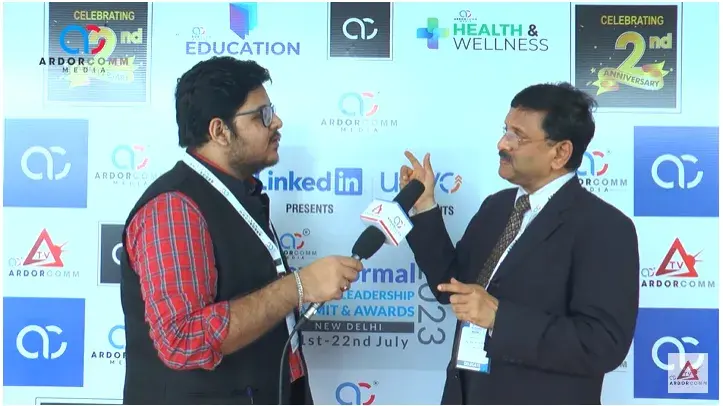
Prof. (Dr.) B.S. Satyanarayana, Vice Chancellor of G.D. Goenka University, Sohna, Shares Insights on Future of Education in the New Normal

“The academic institutions can, for once, become financially viable if they can adapt and deliver quality education, link experiential learning to not just employability, but research innovation, product process, to enable local MSMEs to startups,” says Prof. (Dr.) B.S. Satyanarayana, Vice Chancellor of G.D. Goenka University, Sohna in an Interview with Pratik Ghosh, Content Writer, ArdorComm Media Group at the ‘New Normal – Education Leadership Summit & Awards 2023’ #ELSANewDelhi #ELSAGurugram How are you feeling to witness the New Normal Education Leadership Summit and Awards in Delhi? I think it’s been a wonderful experience so far. First of all, I’d like to congratulate ArdorComm for their second anniversary and also that we could be here. I am also moderating a panel and will also be speaking in one more. I think the whole country is transforming and India took 75 years to reach about 3.5 trillion. In the next seven years, we are going to be 7 trillion or 7.5, and that’s where this new normal of adapting technology, adapting dynamically changing with experiential learning, leveraging NEP becomes very critical. So, it’s wonderful to see that we have industry leaders coming and showcasing their products here, we have academics discussing what they are doing, their case studies, best case studies. I think we all need to seriously work together to be sure that we will be able to achieve, because the last 75 years of our education was literally rote education. It was by learning and repeating. But we don’t have any more time, nor do we have the learning time to generically grow. We not only need to maybe leapfrog but truly pole vault to deliver, as I said, a 3.5 trillion economy in spite of the education because education was irrelevant. But in the next seven years, if we have to become that 7.5 in this knowledge-driven era, skill-required era, the knowledge and the skill have to be seamlessly linked with experiential learning, leveraging technology. Both the teacher and the taught have to learn very fast, adapt. Without technology, it will not happen, but at the same time, it’s a huge lever. So, I think it’s an excellent platform for all of us to come together, discuss here about this new normal and truly say that education has always been about technology and learning. Linking the two, but then now we have to do it at a very great dynamic pace, adapt and change. Because I think the latest studies clearly show even the learning cycle or the knowledge life cycle is getting as short as three years or 36 months. Products are becoming three months. So, if we are seriously not adapting to this thought process, getting on board, working collaboratively, because nowhere can we do it on our own, I think we will be literally doomed. But it’s a unique opportunity for all of us to move forward and enable the students. The academic institutions can, for once, become financially viable if they can adapt and deliver quality education, link experiential learning to not just employability, but research innovation, product process, to enable local MSMEs to startups. And therefore, the whole ecosystem then grows with pilot production to scale the production and going global. And when the whole world is looking at India and the global value chain as a key player, I think it’s an exceptional opportunity. So, very happy that we have this opportunity to come and discuss, also learn from experts. Is your university taking some initiatives to help the students who are planning to be startup founders or entrepreneurs? Absolutely. See, to first of all bring in that mindset of multi-disciplinary experiential learning, we offer the first course we offer as a value-added course to any program, whether it’s BBA, English, Engineering, Management, Economics, Agriculture, Law, Allied Health Science, Physiotherapy, Nursing, whatever. We offer a course in design thinking in the very first semester, and in the next semester, we have a course on innovation, entrepreneurship, and sustainability. Because we think entrepreneurship, sustainability, innovation, all have to go together. Because I have to choose sustainable material. I have to look at the sustainability of ROI. Look at the sustainability of human resource, skill-based training. All of them have to come in. So, we keep it as an integrated process and they do a project-based activity in the very first year of their education. And they even get a skill certification as per NEP on digital multimedia communication as a part. So that if you even leave, you would have actually carried out an entrepreneurial pursuit. That tomorrow when you go to a company, you can be a manager from day one and be entrepreneurial in your job. So, I think what you said is very true, because that is where the opportunity is. We cannot depend on multinationals. Even if they put up a company and scale it up, they can. We want the student to set up a local startup, build the ecosystem, and a local startup can grow up with more ecosystem and pilot production to scale up global product process solution with quality. That is where employment will happen, the whole value chain, the growth of the ecosystem will happen. So, all the best-developed countries, whether you look at Scandinavian countries, Israel, Ireland, South Korea, Taiwan, the local universities work with startups, they scale up, and then the multinationals acquire, and the whole ecosystem grows. Everybody’s win-win growth. So, if we are as far as we simply blindly import multinational and they set it up, it will only be lesser jobs. So, I think the NEP gives this platform. That’s going to be the new normal, and we are quite excited about being a part of this and trying to see how do we proactively create solutions which could be a role model for even others in an economical way. They don’t have to go overboard with investment. They can move forward is how we are looking at


Prof. (Dr.) B.S. Satyanarayana, Vice Chancellor of G.D. Goenka University, Sohna, Shares Insights on Future of Education in the New Normal Read More »

Abhay Gupta, Founder & CEO of Luxury Connect Business School, Gurugram, Shares Insights on Education and Skilling

“I would say that skilling has now come into the forefront, and no educational body can survive or do justice without that,” says Abhay Gupta, Founder & CEO of Luxury Connect Business School, Gurugram in an Interview with Pratik Ghosh, Content Writer, ArdorComm Media Group at the ‘New Normal – Education Leadership Summit & Awards 2023’ #ELSANewDelhi #ELSAGurugram How are you feeling to witness the New Normal Education Leadership Summit and Awards in Delhi? In a very short span of time, you guys have grown and it’s getting organized better and better. You have probably the entire education industry being represented, and you have a lot of good sponsors on board as well. So, I think it’s shaping up very well. The theme of our event is “India Vision 2030.” So, what according to you should be the vision of the education sector? I think the vision of the education sector has already been defined by the NEP, and now it’s a phase of when somebody on the panel said that before COVID, during COVID, and post-COVID. So, when we are in the post-COVID era, it’s a question of implementing the policy. And while initially, there was a lot of confusion or inhibition about the policy, but now as time has passed, more and more education institutions have realized the importance and the fulcrum of the NEP. So, I would say going forward, traditional universities are moving towards skilling, and the government has also created new skill universities. So, I would say that skilling has now come into the forefront, and no educational body can survive or do justice without that. So, I think that is where the focus needs to be. What is the vision of Luxury Connect Business School? The vision behind Luxury Connect Business School was that most people focus only on very generic education, in the sense that you do a normal MBA, which is marketing or HR or B Tech, etc. But I have been a part of the luxury industry’s evolution in India, and I firmly believe that the shortage for servicing the luxury industry is a huge opportunity area which is being overlooked by the normal academicians because they have not witnessed the growth of that particular space. I also firmly believe that the luxury industry services the rich and the famous or the HNI (High Net Worth Individual) population of India. Unless the rich are made to spend within India, the money will not flow down to the economy. So, till now, more and more rich have been going overseas and spending the money. The endeavour is to make them spend within India by giving them services and products at par with the global platform. So, that is where we are creating a unique talent pool which is working across brands. Like our Rolls-Royce downwards into fashion or watches or hospitality or travel, but servicing the HNI community. That’s where our core focus is. As you can see in this kind of forums where we bring in the education leaders, the industry experts, as well as the government, how does this kind of forum benefit the education sector at large? I think it really benefits with respect to networking and understanding what is really going on in the education space at large. And then you get the opportunity to network and also collaborate. Academic-industry collaboration is also equally important because every university has its own core strength area. By collaborating with other strength areas, I think we are creating a more diversified talent pool. And when programs can be co-branded, can be co-delivered, and specialty can be passed on from one sector to another, because once you are back into your university, you are too busy with your own operations. You don’t really have the time to understand what’s going outside. So, these kinds of events, I think, are very encourageable. Any message for ArdorComm Media on its 2nd anniversary? I would say, continue the good work, you’ve done a good job in a short span of time. You started post-COVID, and this is the second physical event that I’ve attended here. It was in the same hotel last time also. I was a speaker. So, I think it’s a very good and very encouraging journey for a young group like yours. So, all the best and God bless.

Abhay Gupta, Founder & CEO of Luxury Connect Business School, Gurugram, Shares Insights on Education and Skilling Read More »

Dr. Indranil Bose, Vice President-Academics & Head of the Department, Adamas University, Emphasises on Skill-based Education

“As part of NEP, we are focusing on skill-based education, we are focusing on the core components of education, we are focusing on minor subjects,” says Dr. Indranil Bose, Vice President-Academics & Head of the Department, Adamas University in an Interview with Pratik Ghosh, Content Writer, ArdorComm Media Group at the ‘New Normal – Education Leadership Summit & Awards 2023’ #ELSANewDelhi #ELSAGurugram How did you experience witnessing the New Normal Education Leadership Summit and Award in Delhi? It’s fine, so many people from different backgrounds, they came and they spoke about their different experiences. I shared my experience here; it had my current workplace and my previous workplaces also. So, it was nice, I mean, I met a lot of old friends also here, so they are working in different universities and institutions. So overall, it’s fine. As the theme of our event is “India Vision 2030”. So, according to you, what should be the vision for the education sector going down the line? It’s something which is a little bit of a point of debate and discussion always. Yes, the new education policy has been declared, and many of the states have planned to implement this, including my state where I’m currently staying in West Bengal. So definitely, we are focusing on a few things like skill enhancement to improve the employability of the students, not only from my discipline, Management, but from all other disciplines as well, like liberal arts and other places, also basic applied sciences and other things. So definitely, there is an important component. Somebody was speaking from Amity here; I heard that human values and all things are there. Yes, even values, ethics, Indian culture, Indian value systems, all these things are very important. Many of those components are now made compulsory as per the new education policy. So many universities are doing it. India has many traditional universities and education institutions. Like, I’m telling the name of a few, like Ramakrishna Mission and other places. They’ve always made it mandatory for students to study all these things as part of the curriculum. Now, many new universities have come up, like Sri Sri University and other universities, who are offering these kinds of programs along with the regular programs. So, we are doing it. Definitely, combining skill-based education plus value-based education, most of these things are very important. So, definitely, more and more things will be going in the right direction. What’s your take on skill development, and how is Adamas University emphasizing on this? In Adamas University, we are redesigning our curriculum as per the NEP, because I am part of that particular team, I know it very well. So, as part of NEP, we are focusing on skill-based education, we are focusing on the core components of education, we are focusing on minor subjects. Based on that, they’re definitely focusing on that. And apart from that, we have a Career Development Center. They actually work for placement and other supports, and our students are working in different companies. And definitely, future places of employment will require new kinds of skills because technology is changing, workplace environment is changing, workplace requirements are changing. So, definitely, new things will be added to our curriculum. Already, in the Management department where I am working, we are changing our curriculum to a great extent. So, definitely, something positive will be happening. Any message for ArdorComm Media Group on its 2nd anniversary? This kind of program will be brought into the horizon. I have attended this kind of workshops, or this kind of forums, or panel discussions earlier in India and outside India as well. Technology in education is the future. We may like it or not, whatever, I like it very much because it enhances individual, student-specific education is possible. We can expand the reach of education. I worked with foreign universities earlier. So, we had students from different countries, and it was possible only because of technology. So, I taught students from almost 40 countries. They were from different continents. So, without technology, we could not do it but this is actually possible now. So, definitely, in this particular domain, many companies are coming. Your company is also coming. When you are doing this kind of events and activities, surely something good will be waiting for us.

Dr. Indranil Bose, Vice President-Academics & Head of the Department, Adamas University, Emphasises on Skill-based Education Read More »