ArdorComm Media Group

Sunday, April 12, 2026 8:10 AM

Governance Community

Global Leaders Convene in New Delhi for 18th G20 Summit
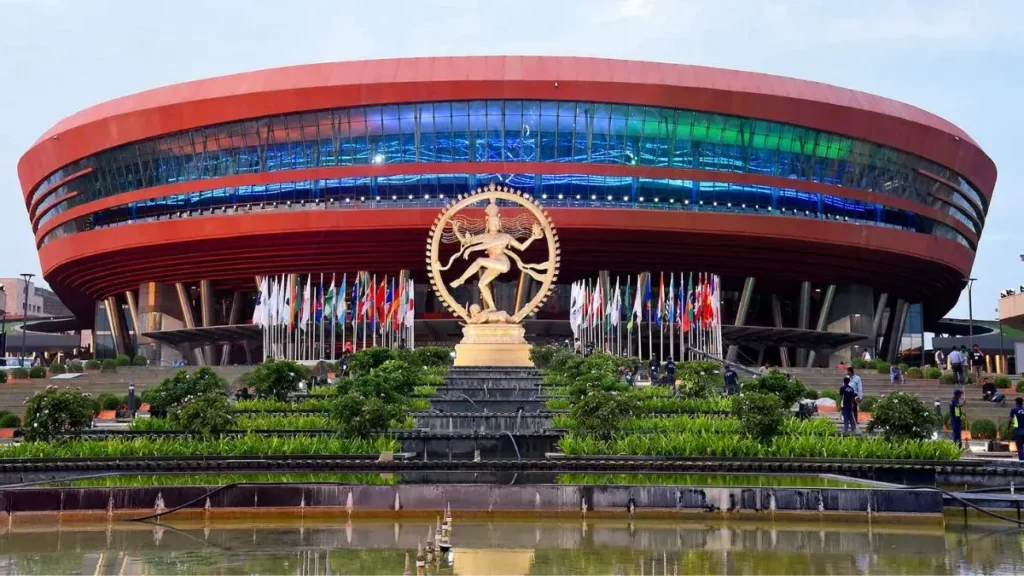
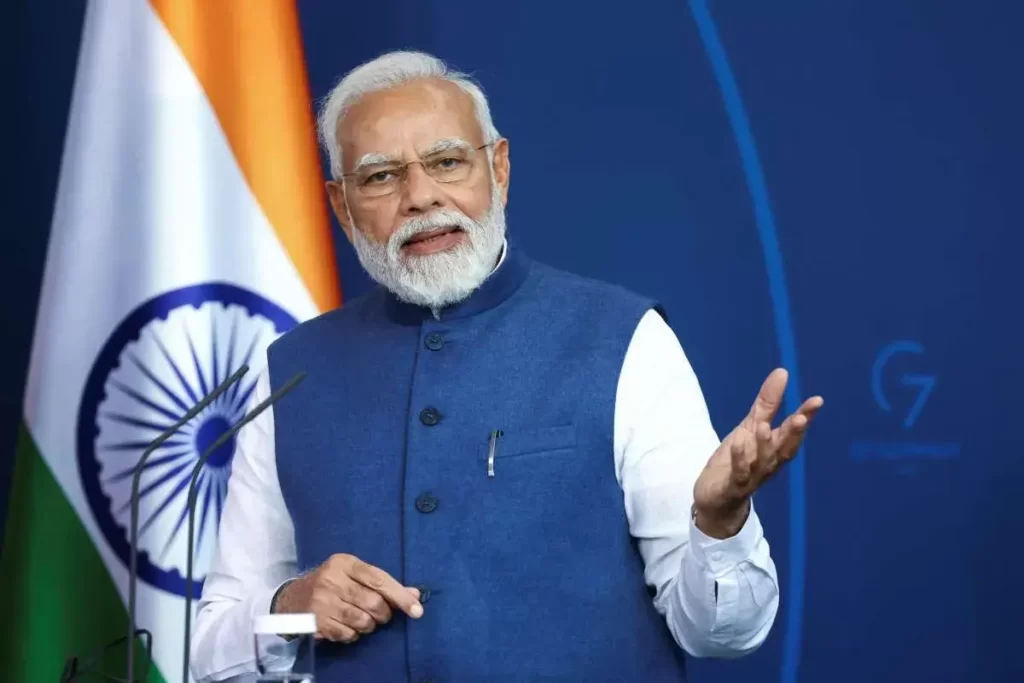
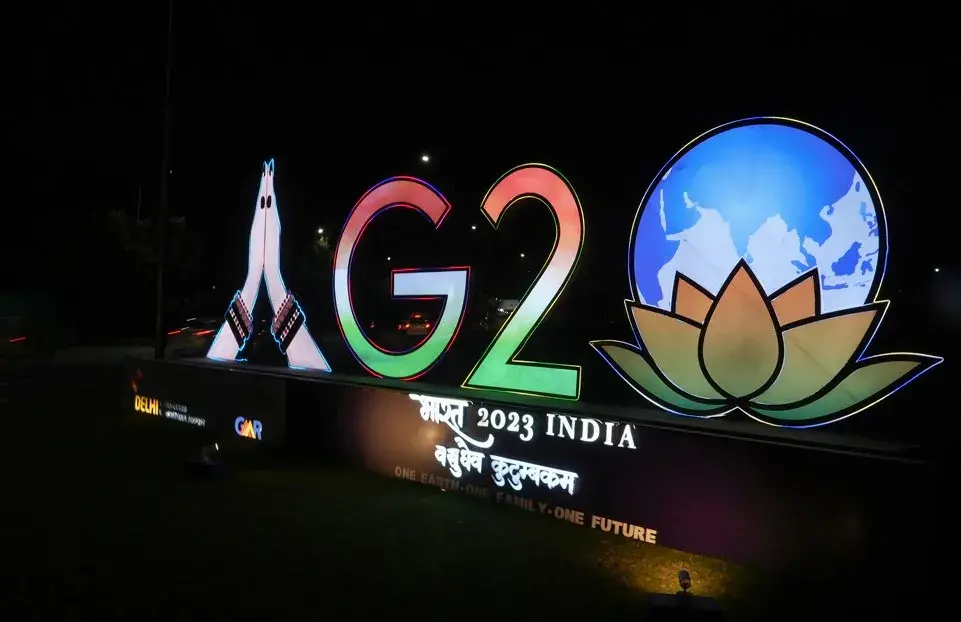
The 18th G20 Summit, hosted by India, kicked off today in the national capital, New Delhi, with more than 30 heads of state, top officials from the European Union, and invited guest countries in attendance. The two-day summit is being held at the newly inaugurated Bharat Mandapam, and it promises to address critical global challenges under the theme “Vasudhaiva Kutumbakam” or “One Earth · One Family · One Future.” The summit commenced with world leaders arriving at the venue, Bharat Mandapam, from 9.30 am onwards. The first session of the G20 Summit, titled ‘One Earth,’ took place at around 10.30 am. This session is dedicated to accelerating climate action, focusing on increased mitigation efforts and strengthening the global net zero emission agenda as soon as possible. The theme underscores the interconnectedness of all life forms on Earth, emphasizing the value of human, animal, plant, and microorganism life. In the evening, a dinner hosted by the President of India, Droupadi Murmu, was scheduled to bring together foreign delegates, parliamentarians, and ministers, along with former senior leaders of the nation. Key leaders attending the event include US President Joe Biden, British Prime Minister Rishi Sunak, Saudi Crown Prince Mohammed Bin Salman, Canadian Prime Minister Justin Trudeau, and Japanese Prime Minister Fumio Kishida. However, notably absent from the summit are Chinese President Xi Jinping and Russian President Vladimir Putin. China will be represented by Chinese Premier Li Qiang, while Russian Foreign Minister Sergey Lavrov will represent Russia. This marks India’s first time hosting the G20 Summit, with extensive preparations showcasing India’s tradition and strength. During its presidency, India has focused on various critical issues, including inclusive growth, digital innovation, climate resilience, and equitable global health access. India seeks to achieve the dual objectives of adding the African Union as a member of the G20 and resolving disagreements related to a joint statement concerning the conflict in Ukraine. The participating countries in the G20 Summit include Nigeria, Argentina, Italy, the African Union (represented by Comros), South Africa, Bangladesh, the United Kingdom, Japan, Saudi Arabia, the Republic of Korea, Egypt, Australia, the United States, Canada, China, the United Arab Emirates, Brazil, Indonesia, Turkey, Spain, Germany, France, Mauritius, the European Union, and Singapore. A warm welcome was extended to world leaders upon their arrival in Delhi, with Prime Minister Narendra Modi expressing confidence that the summit would chart a new path toward human-centric and inclusive development. Leaders who have arrived in the national capital for the G20 Summit include US President Joe Biden, UK Prime Minister Rishi Sunak, Bangladesh Prime Minister Sheikh Hasina, Italian Prime Minister Giorgia Meloni, Argentina President Alberto Fernandez, and Japan Prime Minister Fumio Kishida. The leaders were welcomed with traditional dance performances. Other distinguished attendees include Chinese Premier Li Qiang, UN Secretary-General Antonio Guterres, Oman Deputy Prime Minister Asaad bin Tariq bin Taimur, Russian Foreign Minister Sergey Lavrov, South Korean President Yoon Suk Yeol, Egypt President El-Sisi, UAE President Mohammed bin Zayed Al Nahyan, Australian Prime Minister Anthony Albanese, Canadian Prime Minister Justin Trudeau, Turkish President Recep Tayyip Erdogan, Indonesian President Joko Widodo, Singapore Prime Minister Lee Hsien Loong, and Brazilian President Luiz Inacio Lula da Silva. Additionally, African Union Chairperson Azali Assoumani, United Nations Secretary-General Antonio Guterres, International Monetary Fund (IMF) Managing Director Kristalina Georgieva, Mauritius Prime Minister Pravind Kumar Jugnauth, Organisation for Economic Cooperation and Development (OECD) Secretary-General Mathias Cormann, World Trade Organization (WTO) Director-General Ngozi Okonjo-Iweala, and European Commission President Ursula von der Leyen have also arrived in Delhi to participate in the summit. The 18th G20 Summit holds the promise of fostering collaborative solutions for the benefit of the global population and contributing to overall global well-being in a rapidly changing world.

Global Leaders Convene in New Delhi for 18th G20 Summit Read More »
RBI to Showcase Digital Payments and CBDC Focus at G20 Summit

The Reserve Bank of India (RBI) is set to showcase its digital payment infrastructure during the upcoming G20 summit, with a particular focus on central bank digital currency (CBDC) and public technology platforms. RBI insiders have revealed that the RBI’s exhibition pavilion at the G20 summit will feature five main exhibits, including the Public Tech Platform (PTP) designed to streamline credit processes. Delegates will have access to an interactive experience centre where they can observe the entire digital process, from customer onboarding to the approval and disbursement of Kisan Credit Cards (KCCs) and dairy loans in just minutes, transforming rural credit practices. Furthermore, the pavilion will present an informative video detailing the RBI’s digital rupee and its developmental journey. Select banks involved in the pilot program will demonstrate live digital rupee transactions. In addition, the exhibition will spotlight various digital payment initiatives, such as UPI One World, which allows visitors to use UPI for payments even without an Indian bank account, providing them with a firsthand experience of seamless UPI transactions. Another segment, RuPay On-The-Go, will demonstrate how customers can make contactless payments using everyday accessories like watches, rings, or keychains, showcasing the adaptability of domestic card schemes to global standards. Lastly, the RBI will emphasize the versatility of the Bharat Bill Payment System (BBPS) platform, which can integrate with both FinTech firms and traditional financial institutions to facilitate domestic and cross-border payment transactions, according to sources within the RBI.

RBI to Showcase Digital Payments and CBDC Focus at G20 Summit Read More »

PM Modi Highlights India’s Inclusive Tech Initiatives and Global Impact

In an interview with a news agency, Prime Minister Modi discussed how India’s digital public infrastructure is promoting social inclusion and democratizing technology. He emphasized that India’s efforts have gained global recognition and are paving the way for a broader global movement. Prime Minister Modi highlighted the success of the CoWIN initiative, which facilitated the world’s largest vaccine drive, providing over 200 crore free doses. The platform, CoWIN, was even made open source for other countries to adopt. Referring to the UPI initiative, Modi noted that digital transactions are empowering businesses of all sizes, from street vendors to major banks, and contributing to financial inclusion. He praised India’s Digital Public Infrastructure for its role in delivering public services during the pandemic, citing the Jan Dhan-Aadhar-Mobile (JAM) Trinity’s effectiveness in ensuring financial inclusion and benefit transfers. Modi also mentioned the ONDC e-commerce initiative, which is seen as a significant step in democratizing digital platforms and creating a level playing field. He discussed the adoption of India’s digital public infrastructure by the G20 forum, which has established principles for a secure digital economy and laid the foundation for the One Future Alliance to coordinate global efforts in this regard. Prime Minister Modi highlighted the Ayushman Bharat Digital Mission’s impact on healthcare service delivery and India’s commitment to global health through the G20’s Global Digital Health Initiative. He stressed India’s approach of using technology to promote inclusion and equality, turning it into a force for good. Modi also addressed the government’s efforts to enhance cybersecurity, acknowledging the challenges posed by technology in combating illicit financial activities and terrorism. The Prime Minister celebrated India’s achievements across various domains, including the space sector, startups, sports, and education, expressing optimism about India’s economic prospects in the near future. This interview provides valuable insights into India’s efforts to leverage technology for social inclusion and global cooperation. Interview link: https://www.pmindia.gov.in/en/news_updates/ptis-exclusive-interview-with-prime-minister-narendra-modi/

PM Modi Highlights India’s Inclusive Tech Initiatives and Global Impact Read More »

ISRO’s Aditya-L1 Mission: India’s Solar Observatory Launches Successfully

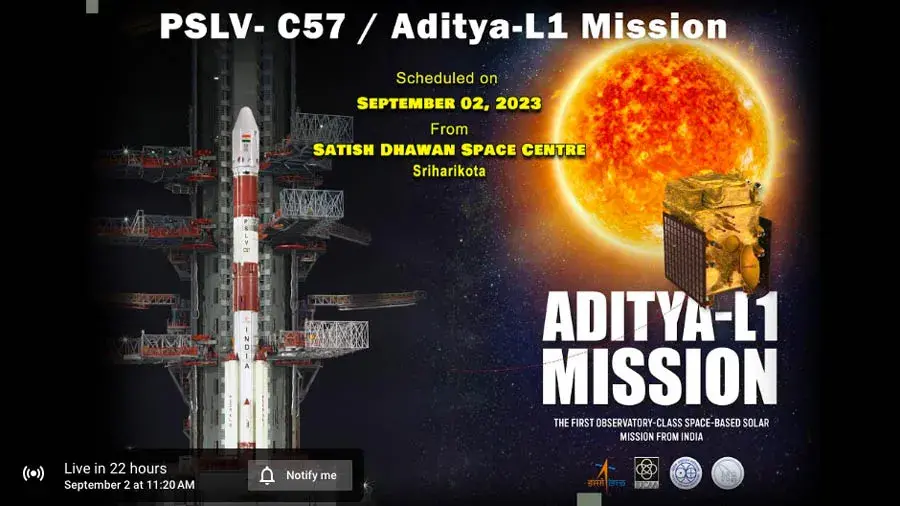
In a historic leap for India’s space exploration endeavours, the Indian Space Research Organisation (ISRO) has achieved a remarkable milestone with the successful launch of the Aditya-L1 solar observatory. This mission marks India’s inaugural foray into dedicated solar research, as the spacecraft embarks on a groundbreaking journey to the Sun-Earth L1 point. With precise placement into its intended orbit, Aditya-L1 now sets its sights on unravelling the enigmas of our nearest star, promising groundbreaking insights into solar dynamics and their influence on space weather. This mission not only positions ISRO at the forefront of solar science but also holds immense potential for advancing our understanding of the solar system’s intricate workings and their implications for life on Earth. PSLV-C57/Aditya-L1 Mission: The launch of Aditya-L1 by PSLV-C57 is accomplished successfully. The vehicle has placed the satellite precisely into its intended orbit. India’s first solar observatory has begun its journey to the destination of Sun-Earth L1 point. — ISRO (@isro) September 2, 2023 Prime Minister Narendra Modi congratulated the scientists and engineers at ISRO for the successful launch of India’s first Solar Mission, Aditya -L1. After the success of Chandrayaan-3, India continues its space journey. Congratulations to our scientists and engineers at @isro for the successful launch of India’s first Solar Mission, Aditya -L1. Our tireless scientific efforts will continue in order to develop better… — Narendra Modi (@narendramodi) September 2, 2023 Aditya-L1 will be India’s pioneering space-based mission focused on unravelling the mysteries of our nearest star, the Sun. This state-of-the-art spacecraft will be positioned in a halo orbit around the Lagrange point 1 (L1) of the Sun-Earth system, situated approximately 1.5 million kilometers from Earth. This unique orbit offers a significant advantage – uninterrupted views of the Sun, free from any eclipses or occultations. Consequently, Aditya-L1 will provide invaluable real-time observations of solar activities and their impact on space weather. The spacecraft is equipped with seven payloads designed to observe various layers of the Sun, including the photosphere, chromosphere, and the outermost layer, the corona. These payloads utilize electromagnetic, particle, and magnetic field detectors to gather data. Positioned at the Lagrange point L1, four of these payloads will directly observe the Sun, while the remaining three will conduct in-situ studies of particles and fields, offering crucial insights into the dynamics of solar activity within the interplanetary medium. The Aditya-L1 payloads are expected to deliver vital information on several key aspects, including the enigmatic problem of coronal heating, coronal mass ejections, pre-flare and flare activities, space weather dynamics, and the propagation of particles and fields in space. Science Objectives: The primary scientific objectives of the Aditya-L1 mission encompass: Solar Atmospheric Dynamics: Investigating the dynamics of the solar upper atmosphere, particularly the chromosphere and corona. Coronal Heating and Plasma Physics: Studying the mechanisms behind chromospheric and coronal heating, as well as the behavior of partially ionized plasma, initiation of coronal mass ejections, and solar flares. Particle Dynamics: Observing the in-situ particle and plasma environment to provide data for understanding particle dynamics originating from the Sun. Corona Heating Mechanism: Examining the physics of the solar corona and its heating mechanisms. Plasma Diagnostics: Providing diagnostics for coronal and coronal loop plasma, including temperature, velocity, and density measurements. Coronal Mass Ejections: Investigating the development, dynamics, and origins of coronal mass ejections (CMEs). Magnetic Field Studies: Studying magnetic field topology and measurements in the solar corona. Space Weather Drivers: Identifying the drivers for space weather, including the origin, composition, and dynamics of the solar wind. The launch of Aditya-L1 heralds a significant milestone in India’s space research efforts, positioning the country at the forefront of solar science and space weather forecasting. As Aditya-L1 embarks on its mission to unlock the secrets of the Sun, it promises to shed light on crucial aspects of our solar system, benefiting both scientific understanding and practical applications on Earth.

ISRO’s Aditya-L1 Mission: India’s Solar Observatory Launches Successfully Read More »

Government Calls Special Parliament Session, Sept 18-22, Agendas Awaited

The Central Government has summoned a “special session of Parliament” scheduled to run from September 18 to 22, with five sittings in total, as confirmed by Union Minister Pralhad Joshi on a social media platform. Joshi expressed optimism for productive discussions and debates during this session, known as the 13th Session of the 17th Lok Sabha and the 261st Session of the Rajya Sabha, during what he referred to as the “Amrit Kaal.” The government has not yet disclosed specific agendas for this session, although some reports speculate that it might involve the transition from the old Parliament building to the new one. It’s possible that this session could commence in the old building and conclude in the new facility. Additionally, discussions about a roadmap for the nation’s next 25 years are anticipated during the session. Notably, the inauguration of the new Parliament building took place while there was significant unrest due to the wrestlers’ agitation. In a previous Monsoon session of Parliament held between July 20 and August 11, tensions ran high between the ruling coalition and the opposition, primarily due to the issue of ethnic violence in Manipur. During that session, a vote of no confidence against the Modi government was introduced by I.N.D.I.A but was easily defeated on the final day, marked by the opposition’s walkout during the Prime Minister’s address.

Government Calls Special Parliament Session, Sept 18-22, Agendas Awaited Read More »

PM Modi Declares August 23 as ‘National Space Day’ After Chandrayaan-3’s Lunar Success

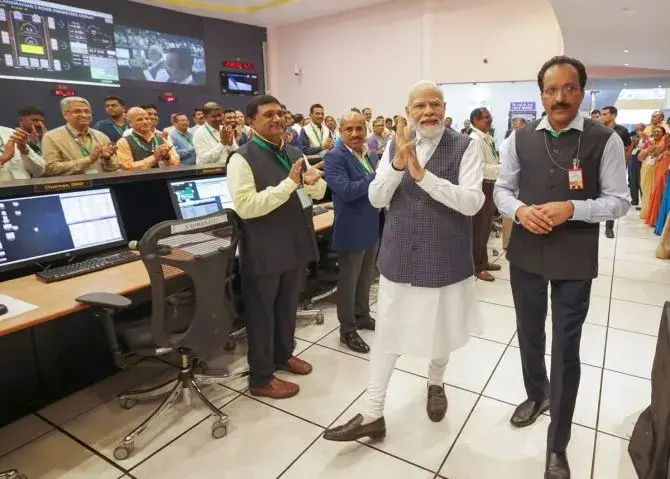
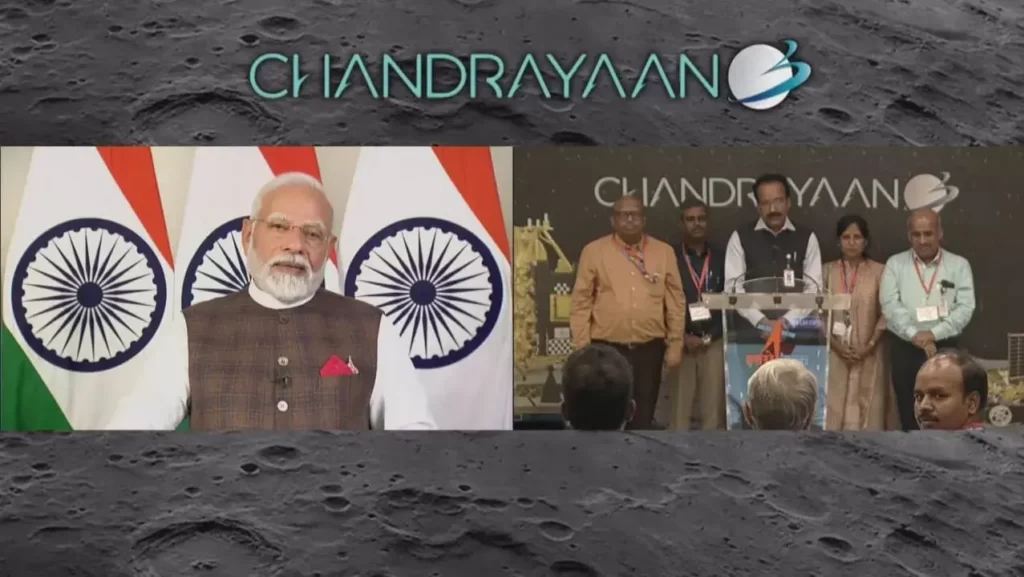
In a momentous announcement, Prime Minister Narendra Modi declared August 23rd as ‘National Space Day,’ during his address to the accomplished scientists at the Indian Space Research Organisation (ISRO) command centre in Bengaluru. The significance of this date stems from the successful soft landing of Chandrayaan-3 on the Moon’s south pole, a remarkable achievement celebrated as a milestone in India’s space exploration journey. Prime Minister Modi expressed his admiration for the Chandrayaan-3 team and particularly lauded the contributions of women scientists who played a pivotal role in the mission’s success. He revealed that the precise spot on the lunar surface where Chandrayaan-3 touched down would be named ‘Shivshakti,’ serving as an inspiration for future generations to utilize science for the betterment of humanity. He also designated the location where its predecessor, Chandrayaan-2, had landed as the ‘Tiranga’ point. Highlighting the importance of advancements in science, technology, and space exploration, PM Modi emphasized that nations leading in these fields are scripting history. To encourage the youth’s involvement in science, technology, and space endeavours, he proclaimed August 23rd, the day of Chandrayaan-3’s lunar landing, as National Space Day. Modi celebrated the fact that India’s national pride now resides on the Moon, marking an unprecedented achievement. He commended the scientists for taking the ‘Make In India’ initiative to the lunar surface, underscoring the boost to indigenous production resulting from Chandrayaan-3’s success. Despite not being physically present during the Chandrayaan-3 landing, PM Modi virtually attended the event, congratulating ISRO chairman S Somanath and the entire team for their historic achievement in the lunar south pole region. Chandrayaan-3, a follow-up mission to Chandrayaan-2, aims to accomplish three key objectives: a safe and soft landing on the lunar surface, rover mobility on the Moon, and in-situ scientific experiments. Following its successful landing on August 23rd, the lander (Vikram) and rover (Pragyan) will conduct a series of experiments on the lunar surface over the next two weeks. On a significant note, Pragyan rover has already made its debut on the Moon, covering a distance of 8 meters. While Chandrayaan-2’s soft-landing attempt didn’t succeed, ISRO’s orbiter from that mission continues to provide valuable data. ISRO’s historic achievement positions India among the world’s top four nations to achieve a soft landing on the Moon’s surface, and notably, it’s the first country to reach the unexplored southern polar region of the Moon.

PM Modi Declares August 23 as ‘National Space Day’ After Chandrayaan-3’s Lunar Success Read More »

India Rejoices as Chandrayaan-3 Successfully Lands on Moon’s South Pole

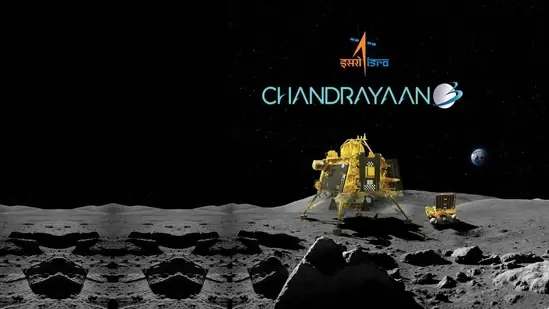
In a monumental achievement for India’s space exploration endeavours, Chandrayaan-3, the third lunar mission by the Indian Space Research Organisation (ISRO), successfully executed a soft landing on the Moon’s south pole today at 6:04 PM local time. The world watched in awe as India became the first country to reach this challenging region of the lunar surface. Chandrayaan-3 Mission:'India🇮🇳,I reached my destinationand you too!': Chandrayaan-3 Chandrayaan-3 has successfullysoft-landed on the moon 🌖!. Congratulations, India🇮🇳!#Chandrayaan_3#Ch3 — ISRO (@isro) August 23, 2023 The historic event was accompanied by live telecasts and updates, building anticipation across the nation and around the globe. Prime Minister Narendra Modi, addressing the nation following the successful landing, stated, “No country has reached there (the South Pole of the moon) before. With the hard work of our scientists, we have reached there.” He hailed the achievement as a symbol of India’s progress and innovation. Leaders from various sectors and regions joined in congratulating ISRO and the nation on this remarkable feat. Uttar Pradesh Chief Minister Yogi Adityanath celebrated the momentous occasion, and sweets were distributed at the Embassy of India in the United States in honor of the Chandrayaan-3’s success. PM Modi, who was in South Africa for the BRICS Summit, connected to ISRO via video conferencing to witness the historic moment firsthand. The mood at ISRO’s Mission Operation Complex in Bengaluru was one of jubilation as the nation’s pride soared high. Chandrayaan-3’s journey to this point was marked by meticulous planning and unwavering dedication from the ISRO team. The spacecraft underwent rigorous checks, and the mission was on schedule as the lander, named Vikram, began its descent. The mission’s success was not without its challenges. Chandrayaan-3’s landing was a complex process that involved reducing its speed from over 6,000 km/hr to nearly zero, transitioning from horizontal to vertical orientation, and finally achieving a soft landing on the lunar surface. Dr. Anand, a senior scientific officer at Nehru Planetarium in Bengaluru, assured the public that all instruments on the lander were functioning as expected. He praised ISRO’s preparedness for the mission. Chandrayaan-3’s success reflects India’s commitment to space exploration and engineering technology. The mission opens new horizons for lunar research and cements India’s position in the elite group of nations capable of reaching the Moon’s surface. The achievement comes after lessons learned from Chandrayaan-2, where the lander’s connection was lost above 2 kilometers. ISRO’s dedication to improvement and determination to succeed have now borne fruit with Chandrayaan-3. As the nation celebrates this historic milestone, it marks the dawn of a new era in India’s space exploration endeavors, inspiring the world with its commitment to scientific progress and innovation.

India Rejoices as Chandrayaan-3 Successfully Lands on Moon’s South Pole Read More »

India’s Chandrayaan-3 Moon Landing: A Bold Leap Towards Lunar Exploration

In just a few hours, India’s Chandrayaan-3 is set to attempt a historic soft landing on the moon’s southern pole. If successful, India will join an elite group of countries, including the US, China, and the former Soviet Union, in achieving this remarkable feat. The critical moment for the mission lies in the final 15 to 20 minutes, during which the Vikram lander, carrying the rover Pragyan, will gently touch down. The excitement surrounding this lunar touchdown is palpable, with celebrations and prayers being held in anticipation. The Indian Space Research Organisation (ISRO) will broadcast the landing live on its website, while DD National TV will begin its live coverage at 5:27 PM. The Chandrayaan-3 mission embarked on its journey from Sriharikota on July 14. The descent of the Vikram lander towards the lunar surface begins at a rapid velocity of 1.68 km per second. It then undergoes a deceleration process, but it’s still almost parallel to the moon’s surface. This phase, known as the rough braking phase, lasts for approximately 11 minutes. The critical transition to a vertical position relative to the moon’s surface marks the start of the fine braking phase. Any slight error in this delicate descent process could lead to a crash or damage to the spacecraft. A soft landing, in essence, involves a spacecraft descending and landing on the moon’s surface in a controlled manner without causing substantial harm to either the craft itself or its scientific instruments. However, there are significant challenges associated with achieving a soft landing, including overcoming high speeds and executing a precisely controlled descent. Chandrayaan-3 faces the daunting task of navigating these hurdles as it aims to make history on the lunar surface.

India’s Chandrayaan-3 Moon Landing: A Bold Leap Towards Lunar Exploration Read More »

Chandrayaan-3 Marks Success with Final Lunar Orbital Manoeuvre, Gearing Up for Moon Landing on 23rd Aug

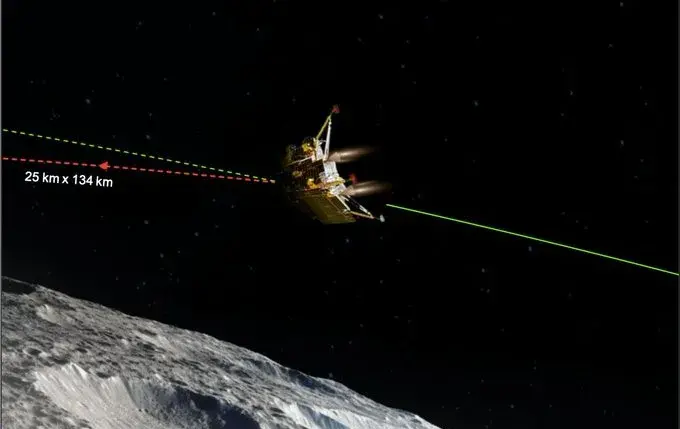
 Chandrayaan-3 has completed its crucial final lunar orbital adjustment, marking a significant step in India’s moon exploration mission. The Indian Space Research Organisation (ISRO) closely monitored this key operation as they prepare for the spacecraft’s upcoming landing on the lunar surface, scheduled for Wednesday. The lander, Vikram, has positioned itself in an orbit with the closest point to the Moon at 25 kilometers and the farthest at 134 kilometers. This orbit sets the stage for an attempt at a soft landing in the uncharted south polar region of the Moon, a daring endeavour ISRO is eagerly pursuing. ISRO announced, “The second and final deboosting operation has successfully reduced the LM orbit to 25 km x 134 km. The module would undergo internal checks and await the sunrise at the designated landing site. The powered descent is expected to commence on August 23, 2023, around 1745 Hrs. IST,” through their official communication channel. Vikram, the lander, has been navigating its lunar orbit autonomously, making decisions on its functions as it descends. ISRO’s former chief, K Sivan, affirmed that the lander’s design remains unchanged from the Chandrayaan-2 mission, with all issues identified in the previous mission addressed. If the landing on Wednesday proves successful, India will join the exclusive group of countries that have accomplished this remarkable lunar feat. Earlier in the mission, the lander module separated from the propulsion module, which will continue orbiting Earth for an extended period to study Earth’s atmosphere and gather data on polarized light from clouds. This separation marked a crucial milestone. Upon reaching the lunar surface, Vikram will capture images of the Pragyaan rover, tasked with analyzing the Moon’s surface composition and searching for water. The rover’s operational lifespan on the lunar surface is equivalent to one lunar day, or approximately 14 Earth days. Chandrayaan-3 was launched into space aboard the LVM3 rocket on July 14 and entered lunar orbit on August 5, marking significant progress in India’s lunar exploration efforts. Meanwhile, Russia’s Luna-25 probe, on its way to the Moon, faced an “emergency” during a manoeuvre, potentially affecting its scheduled landing on the lunar south pole. The incident occurred as the probe was being transitioned to the pre-landing orbit, though it remains unclear whether this will impact the planned landing, slated for Monday, near the Boguslawsky crater. In a space endeavour that has been nearly 50 years in the making, Russia is closely monitoring the situation, hoping for a successful outcome for its historic lunar mission.

Chandrayaan-3 Marks Success with Final Lunar Orbital Manoeuvre, Gearing Up for Moon Landing on 23rd Aug Read More »

Bharatiya Nyaya Sanhita Bill, 2023: Sedition Clause to be Repealed, Focus on Unity and Integrity

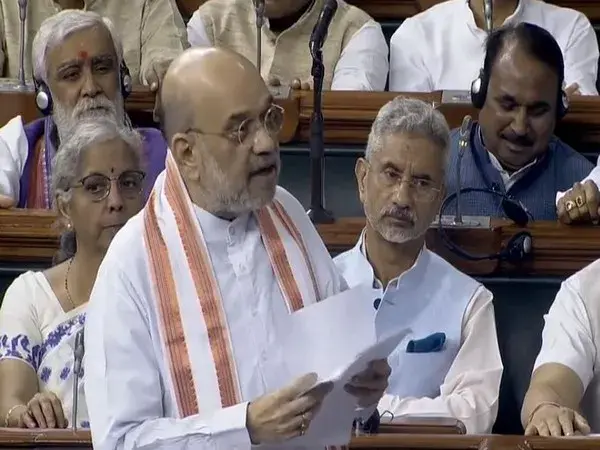
A significant legislative shift is underway as Union Minister Amit Shah introduced the Bharatiya Nyaya Sanhita, 2023, in the Lok Sabha. This transformative bill seeks to replace the existing Indian Penal Code (IPC) and notably abolishes the contentious Section 124A, commonly known as the sedition clause. Instead, the new bill introduces Section 150, redefining the approach towards actions that endanger India’s sovereignty, unity, and integrity. Section 124A, the sedition provision in the IPC, criminalizes efforts to foster hatred or disaffection towards the lawful government using words, signs, or other means. The revamped Section 150 addresses acts that intentionally incite secession, armed rebellion, subversive activities, or separatist sentiments. It also encompasses electronic communication and financial involvement, underscoring the gravity of such actions. Under Section 151 of the bill, engagement in warfare against a foreign state at peace with India, or abetting such warfare, is penalized with imprisonment for life or a term up to seven years, accompanied by fines. Amit Shah’s legislative agenda encompasses not only the Bharatiya Nyaya Sanhita but also replacements for the Code of Criminal Procedure (CrPC) and the Indian Evidence Act. Speaking in the Lok Sabha, he emphasized that these reforms mark a departure from laws established during British colonial rule, ushering in a new era for the country’s criminal justice system. The comprehensive bills address critical issues, including mob lynching through a new penal code, stringent measures against child rape, expedited prosecution of civil servants, and the ability to try fugitives like Dawood Ibrahim in absentia. As the bills proceed, they will undergo thorough examination by a Parliamentary panel, signifying a significant stride towards modernizing India’s legal framework.

Bharatiya Nyaya Sanhita Bill, 2023: Sedition Clause to be Repealed, Focus on Unity and Integrity Read More »