

ArdorComm Media Group

Friday, February 20, 2026 11:31 AM

Health & Wellness Community

AI Algorithm with High Accuracy Boosts Lung Cancer Detection on Chest X-Rays, Study Finds

A recent study published in the Radiology journal of the Radiological Society of North America (RSNA) has revealed that the assistance of a highly accurate artificial intelligence (AI) algorithm significantly improves the detection of lung cancers in chest X-rays. Moreover, the study found that the integration of AI suggestions also enhances human acceptance of AI in the diagnostic process. While AI-based image diagnosis has made significant progress in medicine, there has been limited exploration of the factors influencing radiologists’ diagnostic decisions when utilizing AI-assisted image reading. Researchers from Seoul National University conducted a retrospective study involving 30 readers, including 20 experienced thoracic radiologists and 10 radiology residents. The readers assessed 120 chest X-rays without the aid of AI. Among the X-rays, 60 were from lung cancer patients, and 60 were controls. In a subsequent session, each group re-evaluated the X-rays with the assistance of either a high-accuracy or low-accuracy AI, without knowledge of the use of different AIs. The study found that the use of high-accuracy AI significantly improved the readers’ detection performance compared to low-accuracy AI. Additionally, the implementation of high-accuracy AI resulted in more frequent changes in the readers’ determinations, indicating their susceptibility to AI recommendations. Dr. Chang Min Park, the lead author of the study, suggested that the substantial sample size might have contributed to the readers’ confidence in the AI’s suggestions. The researchers observed that human trust in AI played a crucial role in their susceptibility to AI recommendations. Compared to the initial reading session, readers supported by the high-accuracy AI during the second session exhibited higher sensitivity and specificity in detecting lesions. However, there was no improvement in these measurements when readers were assisted by the low-accuracy AI. Dr. Park emphasized that AI can assist radiologists effectively only when the AI’s diagnostic performance equals or surpasses that of human readers. The study highlights the importance of utilizing high-performance AI in clinical practice. Nevertheless, Dr. Park acknowledged that the definition of “high diagnostic performance AI” may vary depending on the task and clinical context. The study underscores the need for the development of high-performance AI models tailored to specific tasks and the corresponding clinical settings. The researchers plan to expand their investigation of human-AI collaboration to detect other abnormalities in chest X-rays and CT images in the future.

AI Algorithm with High Accuracy Boosts Lung Cancer Detection on Chest X-Rays, Study Finds Read More »

Compulsory Biometric Attendance Introduced in Government Hospitals

Concerned about the issue of doctors and staff arriving late to government hospitals, state health authorities have implemented a solution. The health department has issued a directive making biometric attendance mandatory in all government hospitals. This follows similar orders recently issued by the medical education department, which made biometric attendance compulsory for faculty members. On Monday, Shubhra Singh, Additional Chief Secretary (Health), Govt. of Rajasthan issued the orders. Referring to previous orders from 2017, Singh instructed hospitals and office administrators to ensure that not only doctors but also nursing staff, paramedics, and other hospital personnel mark their attendance using the biometric system. Authorities have been given one week to install the necessary machines on hospital and office premises. The 2017 orders were implemented across district hospitals, sub-division hospitals, satellite hospitals, TB clinics, community health centres, primary health centres, and dispensaries. Although similar directives were issued in 2017, their implementation gradually weakened over the years. Now, the health department has prioritized the enforcement of this measure. Five days ago, SMS Medical College made biometric attendance mandatory for its faculty members.

Compulsory Biometric Attendance Introduced in Government Hospitals Read More »

WHO Prepares for Increased Spread of Viral Diseases Due to El Nino Phenomenon

The Director-General of the World Health Organization (WHO), Tedros Adhanom Ghebreyesus, announced on Wednesday that the organization is getting ready for a rise in the spread of viral diseases such as dengue, Zika, and chikungunya, which are associated with the El Nino weather phenomenon. El Nino, characterized by higher water surface temperatures in the eastern and central Pacific Ocean, has recently returned after three years of the La Nina climate pattern. This resurgence is expected to bring extreme weather conditions later this year, including tropical cyclones heading towards vulnerable Pacific islands, heavy rainfall in South America, and drought in parts of Australia and Asia. Ghebreyesus stated that the WHO is preparing for a high probability of an El Nino event in 2023 and 2024, which could lead to increased transmission of dengue and other arboviruses such as Zika and chikungunya. He also warned about the impact of climate change on mosquito breeding and highlighted the significant rise in dengue cases, particularly in the Americas, over the past few decades. This year, Peru has declared a state of emergency in most regions due to a surge in dengue cases, leading to the resignation of its health minister, Rosa Gutierrez. Dengue is transmitted through mosquito bites from the Aedes aegypti species and manifests symptoms such as fever, headache, muscle and joint pain, nausea, vomiting, and fatigue.

WHO Prepares for Increased Spread of Viral Diseases Due to El Nino Phenomenon Read More »

Government Mobilizes Team to Combat Rising Heatwave Hospitalizations in Affected States

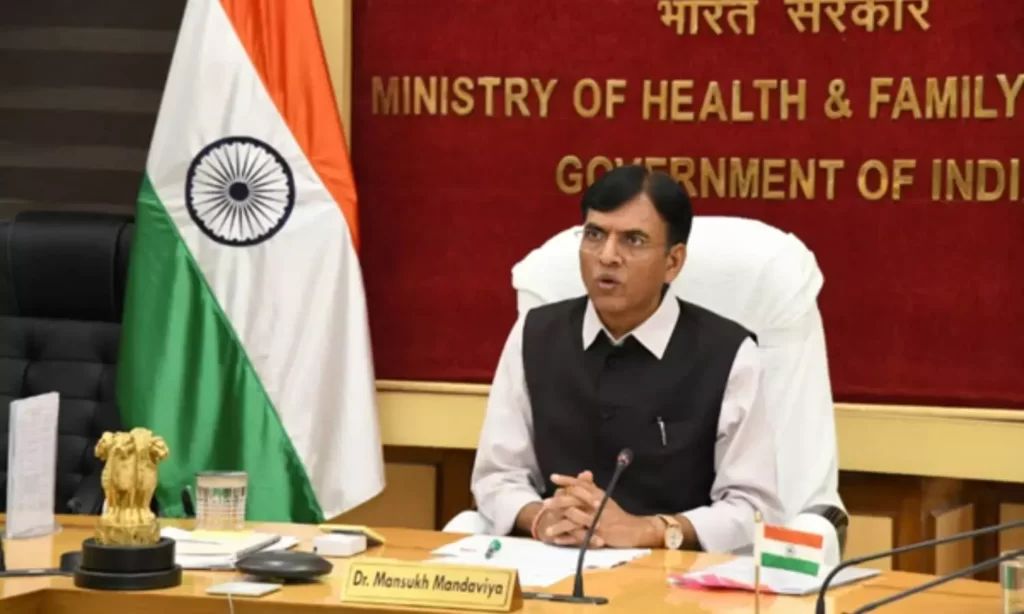
In response to the alarming rise in heatwave-related hospitalizations across several states, Health Minister Mansukh Mandaviya led a high-level meeting to assess the country’s preparedness. Mandaviya announced the deployment of a five-member team comprising senior officials from the Health Ministry and the Indian Meteorological Department (IMD) to visit the states most severely affected by the scorching heatwave. The Indian Council of Medical Research (ICMR) has also been instructed to propose measures to mitigate the adverse impact of the heatwave. Mandaviya emphasized the need for comprehensive arrangements at all levels to safeguard lives and prevent heatstroke fatalities. A virtual meeting with the health ministers of the affected states will also be conducted to address the soaring temperatures and its health implications. The Indian Meteorological Department has forecasted severe to very severe heatwave conditions in various regions, including Uttar Pradesh, Bihar, Haryana, Tamil Nadu, Madhya Pradesh, Jharkhand, Vidarbha, Odisha, West Bengal, Andhra Pradesh, and Telangana, among others. A heatwave is characterized by unusually high temperatures exceeding the normal maximum temperature during the summer season, as defined by the National Disaster Management Authority. Typically occurring between March and June, heatwaves can occasionally extend into July.

Government Mobilizes Team to Combat Rising Heatwave Hospitalizations in Affected States Read More »

India Earns $7.4 Billion from Medical Tourism in the Last Decade, Expects $43.5 Billion in Next 10 Years: Officials

According to officials, India has generated approximately $7.4 billion in revenue through medical tourism in the past decade. This figure is projected to reach $43.5 billion over the next ten years. The health sector in India has experienced significant private investments in the last five years, as highlighted during the BIMSTEC Health Forum organized by the Indian Chamber of Commerce. The forum addressed various topics, including the integration of mental health into overall healthcare, emphasis on universal health coverage, telemedicine, information sharing, exchange of human capital, and collaborative opportunities. Given the BIMSTEC nations’ concern for climate change, the officials stressed the importance of coordination between the commercial and public healthcare sectors, as well as the government, to implement positive changes while considering environmental factors. Medical tourism is recognized as an export for two BIMSTEC members, India and Thailand. Additionally, there have been discussions about partnering with the Thai government to adopt West Bengal government’s healthcare scheme, ‘Swastha Sathi,’ and develop a progressive medical insurance plan. BIMSTEC, established in 1997, is a regional organization comprising a combined population of over 1.68 billion people and a GDP of around $2.88 trillion.

India Earns $7.4 Billion from Medical Tourism in the Last Decade, Expects $43.5 Billion in Next 10 Years: Officials Read More »

AIIMS Delhi Inaugurates AMRIT Pharmacy, Offering Affordable Medications and Round-the-Clock Service

An AMRIT pharmacy was recently opened at AIIMS Delhi with the aim of providing affordable medications. The pharmacy, known as the Affordable Medicines and Reliable Implants for Treatment (AMRIT) pharmacy, has 13 dedicated counters and operates 24/7. This extended working hour facility will be beneficial for individuals in need of urgent medical attention or immediate access to essential medicines. Presently, the pharmacy offers a wide range of around 1,500 drug formulations, covering various medical conditions. Moreover, the pharmacy is committed to expanding its inventory to meet the evolving demands of patients, ensuring that they can always find the medications they require. The director of AIIMS, M Srinivas, expressed pride in offering affordable medicines of high quality and stated that efforts would continue to expand the pharmacy’s offerings based on patient needs. Additionally, AIIMS is working towards establishing an MoU with AMRIT Pharmacy to provide stents and implants at reasonable rates.

AIIMS Delhi Inaugurates AMRIT Pharmacy, Offering Affordable Medications and Round-the-Clock Service Read More »

AstraZeneca Partners with Quell for $2 Billion Cell Therapy Development Agreement

AstraZeneca and Quell Therapeutics have entered into a significant agreement, valued at over $2 billion, to collaborate on the development of cell therapies for the treatment of autoimmune diseases. This partnership aims to create innovative treatments that could potentially provide a cure for conditions such as type 1 diabetes and inflammatory bowel disease. Under the terms of the agreement, AstraZeneca will provide an upfront payment of $85 million to Quell, with the potential for additional payments exceeding $2 billion based on the achievement of development and commercialization milestones.

AstraZeneca Partners with Quell for $2 Billion Cell Therapy Development Agreement Read More »

Pharmacies in Government Hospitals to Provide Medication Instructions in Vernacular Language

Pharmacists working in government hospitals will now be required to provide medications in envelopes with dosage instructions written in the local language. The objective of this measure is to enhance patient safety, ensure quality assurance, and prevent medication errors. The new policy applies to all patients seeking treatment at government hospitals. Due to the high patient volume, doctors in these hospitals may not always have sufficient time to explain dosage instructions and timings to each patient individually. Additionally, medical prescriptions are typically written in English, which many patients receiving care at government hospitals may not understand. As per the new directive, pharmacists from the hospital’s dispensary will be responsible for writing the names of the medicines, along with their dosages and timings, in the local language on a stamped format that includes the hospital’s name. A health official stated that this initiative aims to promote the safe and appropriate use of medications.

Pharmacies in Government Hospitals to Provide Medication Instructions in Vernacular Language Read More »

AIIMS Implements ABHA-Based App to Reduce OPD Waiting Times

AIIMS in New Delhi has successfully implemented a new app called ABHA, which stands for Ayushman Bharat Health Account, aimed at reducing waiting times and long queues for Outpatient Department (OPD) patients. The implementation of this app has yielded impressive results, with AIIMS issuing a total of 73,700 ABHA-based scan and share OPD tokens to date, securing the hospital’s position as a leader in providing efficient and patient-centric healthcare services. The ABHA mobile application has significantly improved the patient experience by streamlining the registration process and reducing waiting times. Previously, patients had to endure long queues at OPD registration counters, causing discomfort and inconvenience. However, with the introduction of the ABHA-based scan and share facility, patients can now easily bypass these queues by scanning a designated QR code and receiving a unique token number. When their token is displayed, they can directly approach the counter without waiting in line. By embracing this advanced technology, AIIMS New Delhi demonstrates its commitment to utilizing digital solutions for the benefit of its patients. Dr. M Srinivas, the Director of AIIMS New Delhi, expressed his enthusiasm for the positive impact of this technology on patient care, emphasizing the institution’s goal of continuously improving the patient experience. The introduction of the ABHA-based Scan and Share facility is part of AIIMS New Delhi’s ongoing commitment to innovation and excellence in healthcare delivery, as they strive to provide a world-class healthcare experience.

AIIMS Implements ABHA-Based App to Reduce OPD Waiting Times Read More »

FDA Approves Pfizer’s RSV Vaccine for Older Adults, Expanding Protection Against Respiratory Illness

Pfizer’s respiratory syncytial virus (RSV) vaccine for older adults has been approved by the US Food and Drug Administration (FDA), becoming the second vaccine against this common respiratory disease to receive approval. The FDA’s decision closely follows the approval of a similar vaccine by GSK Plc. Pfizer’s vaccine, named Abrysvo, is authorized for individuals aged 60 and older, matching the age group for GSK’s vaccine. According to a late-stage study, Pfizer’s vaccine demonstrated 67% effectiveness among adults aged 60 and older with two or more RSV symptoms and 85.7% efficacy against severe illness characterized by three or more symptoms. Both Pfizer and GSK anticipate a lucrative market for RSV vaccines. Pfizer aims to make its vaccine available in the third quarter before the next RSV season, pending approval from the US Centers for Disease Control and Prevention (CDC). The CDC’s advisory committee is scheduled to convene in June to discuss various aspects, including the target recipients and dosing intervals for the vaccines. Pfizer has not disclosed the price of the vaccine but has stated that it will be value-based to support routine vaccination within the recommended age group. If the CDC recommends routine use, the vaccine will likely be widely accessible at no cost for most older Americans covered by the Medicare health plan. Although RSV typically causes mild cold-like symptoms, it can lead to severe illness and hospitalization, particularly among individuals aged 65 and older, resulting in approximately 14,000 deaths annually in the United States. Furthermore, Pfizer is pursuing FDA approval for its RSV vaccine to protect infants by vaccinating pregnant women. If approved, it would be the first RSV vaccine available for safeguarding babies, who face a high risk of severe illness. The vaccine has received support from the FDA’s external expert panel for use in pregnant women. Pfizer plans to launch its RSV vaccine for older adults and pregnant women in the United States and Europe this year. Moderna Inc also intends to seek approval for its RSV vaccine targeting individuals aged 60 and older later this quarter. In November, Sanofi and AstraZeneca gained European marketing authorization for their antibody treatment nirsevimab, designed to prevent RSV in newborns and infants, and it is currently undergoing FDA review.

FDA Approves Pfizer’s RSV Vaccine for Older Adults, Expanding Protection Against Respiratory Illness Read More »