

ArdorComm Media Group

Monday, March 16, 2026 8:35 AM

Education Community

EU Initiates Complaints Against Microsoft’s 365 Education Suite Over Privacy Concern

Microsoft is currently facing two complaints in the European Union (EU) regarding its online education software, 365 Education. According to a report by Reuters, the latest charges against the US-based tech giant have been brought to the Austrian privacy watchdog by the privacy advocacy group NOYB. The group has urged the Austrian Data Protection Authority to investigate these complaints and potentially impose a fine on Microsoft. What is Microsoft 365 Education Suite? During the COVID-19 pandemic, online educational programs gained popularity as schools transitioned to remote teaching. Microsoft’s 365 Education suite offers various tools for students, including Word, Excel, Microsoft Teams, PowerPoint, and Outlook. Complaints Against Microsoft’s 365 Education Suite First Complaint: The advocacy group NOYB alleged that Microsoft shifted the burden of complying with EU data privacy laws (GDPR) onto schools. According to NOYB, schools cannot adequately manage student data under these regulations. NOYB lawyer Maartje de Graaf stated: “Under the current system that Microsoft is imposing on schools, your school would have to audit Microsoft or give them instructions on how to process pupils’ data. Everyone knows that such contractual arrangements are out of touch with reality. This is nothing more but an attempt to shift the responsibility for children’s data as far away from Microsoft as possible.” Second Complaint: The second complaint centers around cookies installed in Microsoft’s 365 Education suite that advertisers use to track consumers. NOYB lawyer Felix Mikolasch expressed concerns: “Our analysis of the data flows is very worrying. Microsoft 365 Education appears to track users regardless of their age. This practice is likely to affect hundreds of thousands of pupils and students in the EU and EEA (European Economic Area).” EU’s Previous Warnings to Microsoft Last month, the EU warned Microsoft that it could impose a fine of up to 1% of its global annual revenue if it fails to provide requested information about the risks associated with its generative AI tools in the Bing search engine. In March, the EU asked tech giants, including Microsoft, to provide details on how they manage risks from AI tools. Microsoft has been accused of dodging questions about its “Copilot in Bing” and “Image Creator” features, which the EU fears may violate new laws by spreading misinformation and manipulating voters.  

EU Initiates Complaints Against Microsoft’s 365 Education Suite Over Privacy Concern Read More »

NEET-UG 2024 Results Controversy: Normalization Process and Cut-Off Scores Under Scrutiny

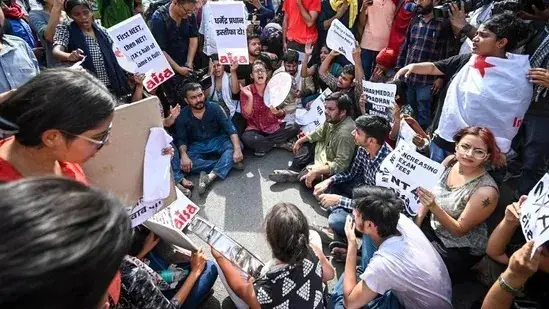
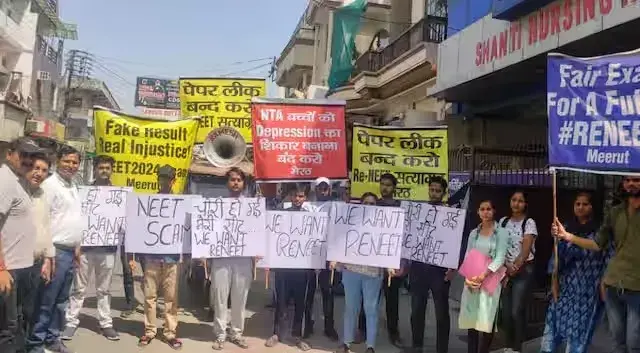
The NEET-UG 2024 results, announced on Tuesday, have stirred significant controversy and concern among students and parents. Objections have been raised regarding the normalization process, the unprecedented number of perfect scores, and the overall admission chances to government medical colleges. Controversial Results Students and parents have expressed shock over the announcement that 67 students achieved a perfect score of 720 out of 720. Notably, six of these students have consecutive seat numbers and are from Haryana, suggesting they may have taken the exam at the same center. This anomaly has led to demands for an investigation into potential discrepancies in the results. Demands for Investigation Parents have written to the National Testing Agency (NTA) seeking a thorough investigation into these alleged discrepancies before the commencement of counseling. Additionally, scorecards of students scoring 718 and 719 have circulated on social media, raising further questions. Parents argue that such scores are technically impossible under the exam’s marking scheme, which awards four marks per correct answer and deducts one mark for incorrect answers. NTA’s Response In response, the NTA stated that it received representations and court cases from candidates concerning lost time during the exam held on May 5. To address this, the NTA applied a normalization formula based on a 2018 Supreme Court judgment, which compensates for lost time with grace marks. This adjustment led to some candidates receiving scores of 718 or 719. Concerns Over High Scores Parent representative Ruiee Kapoor found the NTA’s explanation unsatisfactory, arguing that a score of 718 or 719 is improbable. Kapoor also highlighted the unusual number of perfect scores and the significant increase in cut-off marks, which rose from 137 to 164. This increase has made it more challenging for even top scorers to secure seats in prestigious institutions like AIIMS Delhi. Easier Exam Sections An NTA official explained that more students scored higher marks due to the normalization process and relatively easier physics and chemistry sections aligned with NCERT books. This approach aimed to ensure equity and discourage reliance on coaching institutes. Specific Concerns Some parents questioned the fairness of grace marks for lost time, suggesting this provision should have been specified in the exam brochure. Sachin Bangad, a parent representative, claimed the exam was “managed,” pointing to the unusual concentration of perfect scores at a single exam center in Faridabad, Haryana. The NTA acknowledged that an incorrect distribution of papers at this center led to a 45-minute delay, which was compensated using a court-mandated formula. Calls for Transparency Experts, including faculty doctors, have demanded clarity on the normalization criteria and its application across exam centers. Parents argue that the significantly higher cut-off scores have diminished the chances of many candidates aspiring to join government medical colleges. According to Bangad, students scoring below 660 marks now face slim chances of securing admission to government medical colleges, compared to previous years when students with 600 marks could secure seats. The controversy surrounding the NEET-UG 2024 results underscores the need for transparency and fairness in the exam’s normalization process and scoring criteria. As stakeholders continue to demand explanations and investigations, the NTA faces increasing pressure to address these concerns and ensure a fair admissions process for all candidates.  

NEET-UG 2024 Results Controversy: Normalization Process and Cut-Off Scores Under Scrutiny Read More »

Haryana Announces Early Summer Vacation for All Schools Amid Heatwave

The Haryana government has announced an early start to summer vacation for all schools, including government, government-aided, and private institutions. Effective from May 28, all schools will remain closed until June 30 due to the rising temperatures and severe heatwave conditions. This change in the vacation schedule was communicated by the Directorate of Education, Haryana, in a notice released on May 27. Schools will resume operations on July 1. Initially, the summer vacation was scheduled from June 1 to 30, but the decision to preponed the dates was made considering the current weather conditions, with temperatures soaring to 46 degrees Celsius. The official notice states, “In continuation of the department’s letter number 2/2-2023 ACD (12) dated 17.05.2024, you are informed that in all the schools (government and private) of the state summer vacation is declared from 28.05.2024 to 30.06.2024. All schools will remain closed during the said time period. Apart from this, all the teachers will also ensure to give holiday homework to the students today on 27.05.2024.” In addition to the statewide closure, the government had already shut down all schools in Gurugram from May 27 to 31 due to the extreme heatwave. Summer vacations in Gurugram will start from June 1 and end on June 30, with academic activities resuming on July 1. The heatwave has affected several northern states, including Himachal Pradesh, with warnings and red alerts issued for Rajasthan, Punjab, Haryana, Chandigarh, Delhi, West Uttar Pradesh, and Gujarat. These alerts indicate a high risk of heat-related illnesses and heat strokes across all age groups. Consequently, schools in states like Delhi, Madhya Pradesh, Punjab, and Rajasthan are also closed to protect students from the extreme heat.  

Haryana Announces Early Summer Vacation for All Schools Amid Heatwave Read More »

ISB Ranks Number One in India, 26 Globally in FT Executive Education Custom Ranking 2024

The Indian School of Business (ISB) has been ranked first in India and 26th globally in the Financial Times (FT) Executive Education Custom Ranking 2024. The institution also secured the second spot in Asia. Among the other institutions featured in the ranking are EMLyon Business School, York University, IIM Bangalore, IIM Ahmedabad, and IIM Indore. These institutions were evaluated based on parameters such as Program Design, Value for Money, Future Use, and Preparation. ISB particularly excelled in the Future Use parameter, achieving the top spot globally. Indian Institutions in FT Executive Education Custom Ranking 2024: Name Program Design Value For Money Future Use Preparation Indian School of Business 28 15 1 27 EMLyon Business School 33 40 75 36 York University: Schulich 38 38 42 39 IIM Bangalore 44 37 29 41 IIM Ahmedabad 74 58 34 71 IIM Indore 86 86 80 73 ISB issued a press release celebrating this achievement, highlighting its extensive range of programs for enterprises and public sector organizations across various domains and leadership levels. ISB’s association with central and state government entities involves capacity-building measures, customized learning solutions, skill development at scale, and research and impact assessments that inform policymaking. Deepa Mani, Deputy Dean and Professor of Information Systems at ISB, remarked that the FT Ranking reflects ISB Executive Education’s dedication to equipping learners with essential knowledge and behaviors for transformative change in global businesses and society. Mani emphasized ISB’s commitment to integrating advanced learning pedagogies, leveraging world-class faculty expertise, and utilizing cutting-edge research and comprehensive market insights to achieve learner-focused outcomes. Sujatha Kumaraswamy, Executive Director of Executive Education and Digital Learning at ISB, noted that over 60,000 learners globally have benefited from ISB’s 1,300+ programs in 260 Indian and global entities. Kumaraswamy stated that ISB aims to create a broader impact by continuing to provide innovative offerings backed by cutting-edge research and industry-relevant outcomes for India and other emerging economies.  

ISB Ranks Number One in India, 26 Globally in FT Executive Education Custom Ranking 2024 Read More »

Haryana Revises School Timings Amid Heatwave Alert; Announces Summer Vacation

In response to a heatwave alert issued for several states, the Haryana government has announced revised school timings. Starting immediately, the first shift in all schools will run from 7 am to 12 pm, while the second shift will commence at 12:45 pm. This change applies to both government and private schools across the state. Additionally, the Haryana government has declared summer vacation for all schools, starting June 1 and lasting until June 30, 2024. This decision, based on a press release, aims to protect students from the extreme heat predicted by the Meteorological Department. According to weather forecasts, Haryana will experience intense heat waves in the coming days, with temperatures potentially reaching up to 46 degrees Celsius. In light of these conditions, weather experts have issued yellow and orange alerts for various districts. The revised school timings are expected to provide some relief to students during this period of extreme heat. By adjusting the hours of operation, the government aims to reduce the exposure of children to the harshest parts of the day. Similar measures are being taken in neighboring regions. All government schools in Delhi were closed on May 11, while summer vacations in private schools are expected to start in May. In Uttar Pradesh, summer vacations are set to begin by May 25, 2024, across most schools. Additionally, schools in areas where Lok Sabha voting will take place will also be closed to facilitate the electoral process. These steps reflect a broader effort to ensure the safety and well-being of students amid extreme weather conditions. As temperatures continue to rise, the proactive measures taken by the Haryana government and other states aim to mitigate the risks associated with the heatwave.    

Haryana Revises School Timings Amid Heatwave Alert; Announces Summer Vacation Read More »

Tamil Nadu Government Set to Release Draft of State Education Policy After Model Code of Conduct is Lifted

The Tamil Nadu government is poised to release the draft of the State Education Policy after the Model Code of Conduct (MCC) is lifted, according to sources. The MCC is expected to be lifted after the announcement of Lok Sabha election results on June 4. In 2021, the Tamil Nadu government announced its intention to introduce an exclusive State Education Policy during the Assembly session. A panel, headed by retired High Court judge Justice D Murugesan, was constituted in May 2022 to oversee this initiative, comprising educationists and experts from various fields. Sources within the Tamil Nadu Education Department revealed that the draft of the State Education Policy was already prepared in November 2023. However, the process faced delays due to unforeseen circumstances, including the resignation of the state minister for higher education, K Ponmudi, following a conviction in a legal case. Although the minister was reinstated following a favorable court order, the implementation of the Model Code of Conduct ahead of Lok Sabha polls halted the release of the draft. Officials from the school education department indicated that after the release of the draft policy, the final document would take over three months to be finalized and implemented. Dr. Mohammed Rashid, a retired professor from Madras University, emphasized the urgency of releasing the State Education Policy, particularly after the announcement of the National Education Policy. Educational institutions’ management has been anticipating the new policy for some time, he noted, underlining the importance of expediting its release to address evolving educational needs effectively.  

Tamil Nadu Government Set to Release Draft of State Education Policy After Model Code of Conduct is Lifted Read More »

Delhi Govt Schools Achieve Remarkable Record with 96.99% Pass Percentage in Class 12

Delhi government schools have outperformed the national average with a remarkable 96.99% pass percentage in the Class 12 CBSE examinations, according to the results released. Similarly, in Class 10, these schools achieved a pass percentage of 94.2%, showing a significant improvement of 8.36 percentage points over the previous year and surpassing the national average of 86.7%. Delhi Chief Minister Arvind Kejriwal extended his congratulations to the students and the education department staff for this outstanding performance. This year, 151,429 students from government schools appeared for the Class 12 board exams, with 146,885 students clearing the exam. The pass percentage of 96.99% is notably higher than last year’s 91.59% and exceeds the pass percentage of 94.18% recorded by private schools in the capital. Furthermore, 307 government schools in Delhi achieved a 100% pass result in the Class 12 exams, more than doubling the previous year’s figure of 118 schools. Additionally, 863 schools recorded more than a 90% pass rate, an increase from 647 schools last year. Education Minister Atishi applauded the efforts of students, teachers, and parents for this remarkable achievement, emphasizing that Delhi’s education model sets an example for the nation. While the pass percentage for Class 10 in government schools improved to 94.2%, up from 85.84% last year, it was slightly lower than the 95.68% pass percentage recorded by private schools in the capital. Atishi encouraged students who did not clear the main exam not to lose hope and urged them to strive for improvement. However, Delhi BJP president Virendra Sachdeva dismissed the AAP’s claims of improved performance, citing alleged failures of underperforming students in Class 11. Overall, the results reflect the continued commitment of the Delhi government to provide quality education and maintain the trust of parents in government schools under the leadership of CM Arvind Kejriwal.  

Delhi Govt Schools Achieve Remarkable Record with 96.99% Pass Percentage in Class 12 Read More »

CBSE Results 2024 (OUT) Live Updates: CBSE Class 12 Records 87.98% Pass Percentage, Class 10 Secures 93.60%; PM Modi Congratulates Students

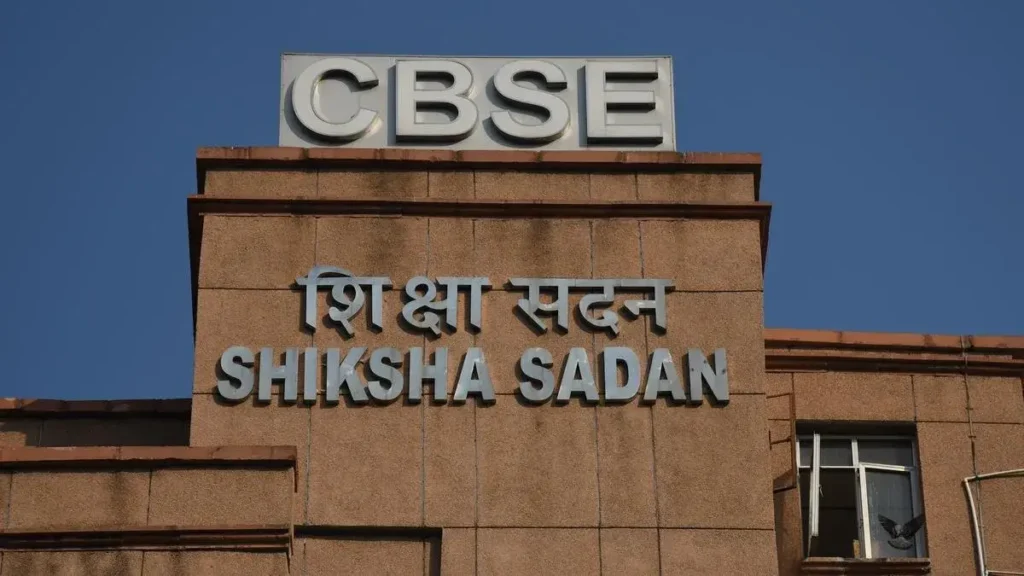
CBSE has announced the results for the Class 10 and Class 12 exams for the year 2024. The pass percentage for Class 12 stands at 87.98%, while for Class 10, it is 93.60%. Students can check their results on the official websites — results.cbse.nic.in, cbse.gov.in, or cbseresults.nic.in. The Class 10 exams took place from February 15 to March 13, while the Class 12 exams were held from February 15 to April 2, 2024. Both exams were conducted in a single shift, from 10:30 AM to 01:30 PM, across various examination centers. A total of 39 lakh students from 26 different countries appeared for the exams, with 5.80 lakh students from the national capital alone. The CBSE has decided to discontinue the tradition of announcing merit lists for the top-performing students in both Class 10th and 12th exams to reduce unhealthy competition among students. Prime Minister Modi has extended his congratulations to the students on their performance in the CBSE exams. Students can access their results online and check their marks and overall performance.

CBSE Results 2024 (OUT) Live Updates: CBSE Class 12 Records 87.98% Pass Percentage, Class 10 Secures 93.60%; PM Modi Congratulates Students Read More »

CBSE Class 10th Supplementary Exam Date Sheet and Reevaluation Dates Released

The Central Board of Secondary Education (CBSE) has announced the date sheet for the supplementary exams and reevaluation dates for the Class 10th board exam 2024. Students can access this information on the official website, cbse.gov.in. The supplementary exams for Class 10 will commence from July 15, with the verification of marks starting from May 17 and lasting for 5 days. The window for applying for reevaluation of answer sheets will open on June 6 and will be available for two days only. CBSE has emphasized that no applications will be accepted after the deadline, and all applications must be submitted online. This year, the overall pass percentage for Class 10th 2024 stands at 93.60%, showing a slight increase from the previous year’s 93.12%. The number of students placed in compartments (full subjects) has decreased from 6.22% in 2023 to 5.91% this year. Here’s how to access the CBSE Class 10th Supplementary Exam Date Sheet and apply for reevaluation: CBSE Board Class 10th Supplementary Exams Date Sheet: Visit the official website, cbse.gov.in. Click on “Important Notices” on the homepage. Find and click on the supplementary date sheet link. Save and download the date sheet for future reference. CBSE Board Class 10th Result 2024 Reevaluation Process: Go to the official website – cbse.gov.in. Navigate to the revaluation application link on the homepage. Log in using your necessary credentials. Fill up the application form and complete your registration, including fee payment. Download the form and payment confirmation slip for future reference. Additionally, CBSE has announced that no overall division, distinction, or aggregate will be awarded to students appearing for the Class 10 and Class 12 exams in 2024. The decision to determine the best five subjects for candidates taking more than five subjects will be made by admitting institutes or employers recruiting CBSE board students.

CBSE Class 10th Supplementary Exam Date Sheet and Reevaluation Dates Released Read More »

Tripura Government to Implement E-Attendance System in Government Schools

In an effort to enhance the quality of education and monitor the performance of teachers and students, the Tripura government has announced plans to introduce an e-attendance system in all 4,912 government schools. The move, to be implemented under the Vidya Samiksha Kendra initiative, aims to bring transparency to the academic system and improve the overall functioning of schools. The digital attendance system will cover both teachers and students, with the entire process expected to be completed within a two-year timeframe. Initially launched by Prime Minister Narendra Modi in Gujarat in 2022, the Vidya Samiksha Kendra initiative is designed to enhance educational outcomes by leveraging technology and providing real-time monitoring of educational initiatives. Following the implementation of the e-attendance system, a geo-tagging feature will also be introduced to facilitate online access to essential school-related information. Once the e-attendance system is fully operational, monitoring of teacher and school performance will be conducted by the Chief Minister, relevant ministers, and senior officials. Training sessions for headmasters and other stakeholders are already underway to familiarize them with the new digital system. Tripura Chief Minister Manik Saha, who oversees the Education Department, recently inaugurated the state’s first Vidya Samiksha Kendra in Agartala. This center aims to digitize educational data, provide real-time visibility into educational initiatives, and support decision-making through data analysis and AI. With over 37,000 teachers and nearly 700,000 students enrolled across various levels of school education, the introduction of the e-attendance system is expected to significantly improve accountability and transparency in Tripura’s education sector.  

Tripura Government to Implement E-Attendance System in Government Schools Read More »