ArdorComm Media Group

Thursday, January 1, 2026 11:15 PM

Education Community

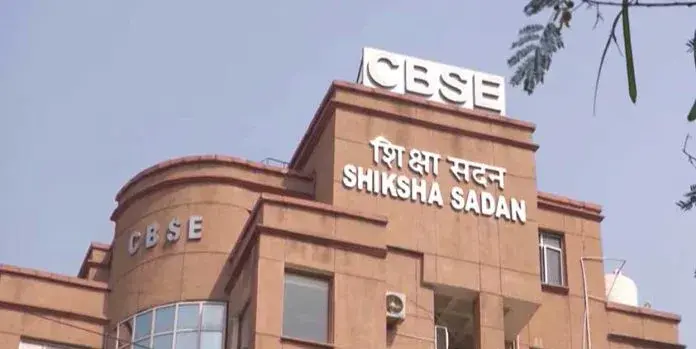
CBSE Board Exam Results 2023 Released: Girls Outshine Boys, Trivandrum Tops Class 12 Results

CBSE Board

The Class 10 and Class 12 board exams were taken in February, March, and April, and the results have been released by the Central Board of Secondary Education (CBSE). Students can now check their marks at resuts.cbse.nic.in or cbseresuts.nic.in. As login information, they must enter their roll number, school number, and admission card ID. The overall pass percentage for Class 10 results is 93.12%, while for Class 12 results it is 87.33%. Students can access board exam results through DigiLocker and UMANG platforms in addition to the CBSE result website. Both in Class 10 and Class 12, girls outperformed boys in academic performance. For Class 10, the overall pass percentage for girls is 94.25 percent, compared to 92.72 percent for boys. The overall percentage of female candidates who passed Class 12 was 90.68, which is greater than the boys’ 84.67%. With a pass percentage of 99.91%, Trivandrum leads all regions in the CBSE Class 12 results, while Prayagraj comes at the bottom with a pass percentage of 78.05%. To avoid unhealthy student competition, the CBSE has decided not to publish the Class 10, Class 12 merit lists. Additionally, first, second, and third divisions were not awarded by CBSE. In accordance with the board’s announcement, merit certificates will be given to the 0.1% of students who received the highest grades across all disciplines. PM Modi congratulated the students by tweeting: I would like to tell those bright youngsters who feel they could have done better in the Class XII exams – you have so much more to look forward to in the coming times. One set of exams doesn’t define you. Harness your talents in areas you are passionate about. You will shine! — Narendra Modi (@narendramodi) May 12, 2023 Congratulations to all #ExamWarriors who have passed in the Class X CBSE exams. Wishing them the very best for their upcoming endeavours. May they have a bright academic career and also pursue their other passions beyond the classroom. — Narendra Modi (@narendramodi) May 12, 2023

CBSE Board Exam Results 2023 Released: Girls Outshine Boys, Trivandrum Tops Class 12 Results Read More »

India’s first AI professor is launched by Amity University Online

Amity University

Professor AMI, an Artificial Intelligence (AI) Professor for online higher education, has been launched by Amity University Online. According to a press release, Professor AMI, which is powered by Chat-GPT-4 and Open AI-driven technology, is intended to give every Amity Online student a cutting-edge, customised learning experience based on their strengths, areas for improvement, and learning preferences. According to the release, the virtual professor may offer lectures that have been captured on video and is set up to react to most questions about academics and learning management systems. It also claims to provide students with 24/7 chat assistance. According to the release, Professor AMI helps everyone involved, from the institution to the learner, by enhancing student satisfaction, improved learning outcomes, raising completion rates, and enhancing efficiencies. Amity’s launch is a step towards addressing issues with higher education’s affordability, accessibility, and flexibility through online degree programmes. “We have rolled out the first-ever virtual AI professor in the online higher education space. Professor AMI will facilitate a focused, on-demand, and real-time learning experience. When it comes to online learning, personalisation is the key. We believe that each learner is unique and has different learning needs, and Professor AMI will be attuned to these diverse requirements. We look forward to transforming online higher education with this innovation and novel teaching methods it will inspire in the future,” Ajit Chauhan, Chairman, Amity University Online, said.  

India’s first AI professor is launched by Amity University Online Read More »

IIT Indore launches new course: BTech in Chemical Engineering

For the academic year 2023–2024, the Indian Institute of Technology (IIT) Indore introduced the BTech in Chemical Engineering degree. The program’s goal is to give the students a comprehensive viewpoint while emphasising an interdisciplinary and practical approach. There are 16 other IITs that also offer the course, including IIT Bombay, IIT Delhi, and IIT Kharagpur. Leading academic specialists from India and around the world created the course structure and curriculum, which covers both conventional and cutting-edge chemical engineering topics. It is available with a variety of specialisations, including processing, petrochemical, biochemical, energy, and pharmaceutical. Eight semesters make up the four-year, full-time undergraduate programme. Candidates will be required to study 6 to 7 subjects per semester, in addition to elective options. JEE Advanced 2023 score will be considered to determine admission to the curriculum. Candidates must also have passed the class 12 (or equivalent) exam from a state or central board that is recognised. There is a growing need for chemical engineers in the petrochemical, biofuel, energy, food processing, and other industries. Chemical engineering is one of the core engineering disciplines.

IIT Indore launches new course: BTech in Chemical Engineering Read More »

DU invites applications for the Vice-Chancellor Internship Scheme

Applications are being accepted at the University of Delhi for the Vice Chancellor Internship Scheme summer internship 2023. The application period for the internship closes on May 17. A stipend of Rs 10,000 is provided for the 15 to 20 hours of work per week that make up the internship. The internship this year is not open to those who have already enrolled in VCIS 2022. The internship will last for two months, possibly in June and July. Except for first-year students and students in semester 2, all regular, bona fide Delhi University students enrolled in undergraduate or graduate programmes in any stream are eligible to apply for the internship. At the end of the internship term, students who successfully complete the internship will receive a certificate from the Dean of Student Welfare.

DU invites applications for the Vice-Chancellor Internship Scheme Read More »

UGC has launched the ‘CU-Chayan’ portal for faculty recruitment in Central universities

  Jagadesh Kumar, the chairman of the University Grant Commission, introduced the Central University Faculty recruiting portal known as CU-Chayan on Tuesday. He stated that the portal is totally user-friendly and meets the needs of all parties involved in the hiring process. UGC Chairman M. Jagadesh Kumar told ANI that the CU-Chayan platform is completely user-friendly and meets the needs of everyone involved in the hiring process. With universities controlling each stage of the recruiting process on their own, UGC has built this portal to foster an environment that is favourable to both universities and applicants. It is a centralized recruitment portal created with the intention of hiring faculty for Central Universities. “The portal provides a common platform for listing vacancies/advertisements/jobs across all Central Universities. The portal makes the recruitment process completely online starting from application to screening with alerts to all the users of the portal,” he added. The UGC Chairman further said that the portal has a personalized dashboard that can be used to manage the application process. The platform provides a number of features for the advantage of candidates, such as a consolidated list of job openings across all participating universities, a single login for applying to any of the universities, and customized dashboards to assist with application management. According to him, a job seeker can also look for positions using a variety of filters, including university name, location, designation, category, subject, and type of employment. Real-time application tracking, personalized admin dashboards, and programmable advertising rules are all features of the platform that are available to universities. It also provides a fully online application and screening procedure, packed with payment pathways, built-in email communication tools, and online feedback and reference choices for referees. The platform also offers in-depth research and insights into the application process in real-time. The University’s screening committee has access to applicant information, point and research scores from the system, and the ability to cross-reference uploaded documents with each entry. The portal itself can also be used to record the points and remarks of the screening committee, according to him. He added that the portal won’t have an impact on Central Universities’ recruitment autonomy. “This portal will not affect the autonomy of CUs in filling up faculty positions. Using this portal, Central Universities will continue to advertise the positions, collect online applications, shortlist the applicants, conduct the interviews and appoint the faculty members as they were doing earlier. All the above activities will be carried out through the Admin dashboard for each University on this portal,” he said. “UGC will be maintaining this portal for the benefit of all the CUs and is not a centralized recruitment process for all CUs. All CUs will continue to have their autonomy in the recruitment process and all the recruitments will be done by the respective CUs,” he added. He added that all of the Vice Chancellors of Central Universities were consulted in the development of the platform. The VCs of all CUs provided input into the creation of the CU-Chayan portal. Their suggestions and inputs have been taken into account. The portal can be modified with the addition of the adjustments to meet the unique requirements of any CU. Additionally, UGC will train CUs on how to use this portal. Candidates must now submit their applications exclusively through the CU-Chayan portal for all recruitments. He said that each CU needed to de-activate its recruitment portal. The current reservation system will not be impacted, he assured ANI when asked if it would have an effect on the recruitment process. Every university will continue to adhere to the Government of India’s reservation policy and compile its own rosters in accordance with DOPT rules. Source: ANI

UGC has launched the ‘CU-Chayan’ portal for faculty recruitment in Central universities Read More »

West Bengal government introduced a centralized online system for UG course admission

The West Bengal government has launched a centralized online admission system for all state-run, aided, or affiliated colleges and universities. The official notification stated that it would be operational beginning with the current academic year, or 2023–24. Through the single-window platform, students will be able to select the colleges of their choice without having to repeatedly pay admission fees to different institutions to block seats. The West Bengal State Council of Higher Education will maintain and run the online admission system, according to the announcement released on Monday by Principal Secretary Manish Jain. The council will also have a dedicated bank account where admission fees can be deposited. According to the statement, the council would transfer the admission fees to the appropriate educational institution within a month of the admissions process’ conclusion. However, the notification stated that the Higher Education Department may, at its discretion, exclude any course or institution from the purview of the centralized admission site. The government said that the centralized admission system was put in place in response to the difficulties faced by students who were required to apply to several colleges and universities by registering on individual institutions’ web portals and paying separate application fees. “A student had to take admission in a particular college within a specific time-frame, block the seat and apply in other institutions where admissions began later. As a result, the student had to pay multiple admission fees in various colleges and faced problems in getting a refund from institutions he or she did not take admission finally,” the notice stated. According to the notification, the Higher Education Department wanted to give every student the opportunity to choose the course they wanted to take, considering the need for consistency and transparency in the admissions system of colleges and universities that fall under its administrative control.

West Bengal government introduced a centralized online system for UG course admission Read More »

IIM Bodh Gaya introduces a corporate law executive certificate programme

An executive certificate programme in corporate law has been introduced by the Indian Institute of Management (IIM), Bodh Gaya. The programme, which lasts for 10 months, is intended for professionals. The programme will end on February 1st, 2024. Candidates interested in applying may visit the official website at iimbg.ac.in. The purpose of this certificate programme is to instruct professionals about corporate laws and how they relate to various business-related challenges. Corporate governance, regulatory concerns, and developing and carrying out sensible financial strategies under the influence of the law will all be covered. The program’s directors, Professors Sabyasachi Mohapatra, an Associate Professor of Finance and Accounting, and Professor Soumya Prakash Patra, an Assistant Professor of law and public policy, attended the program’s launch together with Professor Vinita S. Sahay, Director of IIM Bodh Gaya. Attendees at the inauguration ceremony included candidates who have taken up the course. Professor Patra said at the ceremony that “the batch profile is dynamic in nature, which has participants of 30 years of experience to 1.8 years of experience.” Participants who have met all of the course’s criteria (attendance and evaluation) will receive a “Certificate of Completion” at the end of the programme.  

IIM Bodh Gaya introduces a corporate law executive certificate programme Read More »

IITs to adopt the National Credit Framework 

The National Credit Framework (NCrF) will be adopted by all 23 Indian Institute of Technology (IITs). This decision was made at an IIT Council meeting held on April 18 at IIT Bhubaneswar. The National Education Policy 2020 envisions making education more comprehensive and effective and emphasises the convergence of general (academic) education and vocational education, the UGC chairman said during his presentation on NCrF to the council. To realise this objective, a national credit accumulation and transfer system is required. A High-Level Committee was established by the Indian government, with representatives from the UGC, AICTE, NCVET, NIOS, CBSE, NCERT, DGT, Ministry of Education, and Ministry of Skill Development. The directors of all 23 IITs as well as Chairman UGC Mamidala Jagadesh Kumar attended this meeting, which was presided over by Education Minister Shri Dharmendra Pradhan. Following the UGC Chairman’s presentation, the IIT Council unanimously resolved to adopt and implement the National Credit Framework for all IITs. Additionally, Kumar asserted that the IITs had held awareness workshops for each region. The North Zone workshop was held on November 21, 2022 at IIT Delhi, the East Zone workshop was held on November 24, 2022 at IIT Bhubaneswar, the North East Zone workshop was held on November 26, 2022 at IIT Guwahati, the West Zone workshop was held on November 28, 2022 at IIT Bombay, and the South Zone workshop was held on November 29, 2022 at IIT Madras.

IITs to adopt the National Credit Framework  Read More »

UGC asks universities to allow students to write exams in regional languages even if course is in English medium

The University Grants Commission (UGC) Chairperson, M Jagadesh Kumar has written a letter to all central universities urging them to promote the use of regional and local languages in teaching and learning in order to encourage the use of regional languages in higher education. The letter also urged that students be allowed to write exams in regional languages even if the subject is taught in English. It also encouraged the varieties to develop original writing translation into local languages. Student engagement will gradually rise, increasing the success rate, once teaching, learning, and assessment are conducted in the local languages. The target of raising the GER in higher education from 27% to 50% by 2035 will be greatly strengthened as a result, the letter says. The UGC has also asked the universities for information on the list of books recommended for teaching in regional languages, the availability of faculty who can understand and teach in regional languages, whether or not students are able to write answers in regional languages, as well as an action plan to encourage the use of regional languages, among other things.

UGC asks universities to allow students to write exams in regional languages even if course is in English medium Read More »

NCERT and SCERT textbooks are the only ones to be followed in schools: NCPCR writes to states

In a letter to all states, the National Commission for the Protection of Child Rights (NCPCR), an autonomous body of the central government that oversees rights of all children, asked that only the curriculum and textbooks recommended by the National Council of Educational Research and Training (NCERT) and the State Council of Educational Research and Training (SCERT) be followed in classrooms. Under the Education Ministry, the autonomous body, NCERT provides the union government with recommendations on school education and assessment. Each state has a SCERT, created along the lines of NCERT, that serves as the top authority in the state’s academic concerns. The NCPCR’s letter is important because it was released after the new NCERT textbooks with revised material were published. As part of the rationalisation process, NCERT has eliminated from school textbooks information on the Mughals, Mahatma Gandhi, his assassin Nathuram Godse, references to Hindu extremists, and the 2002 Gujarat riots. Political parties and academicians have both expressed their strong opinions in response to these changes. The NCPCR reminded the states in a letter dated April 13 and addressed to all state education secretaries that, in accordance with section 29(1) of the Right to Education (RTE) Act, 2009, schools should only follow the curriculum and evaluation procedures established by the notified academic authority, in this case NCERT and SCERT. According to Section 29(1) of the RTE Act and the National Curriculum Framework (NCF) 2005, NCERT and SCERT are the nodal bodies for textbook writing. Hence, any State or Central Board that uses an elementary school curriculum, syllabus, textbooks, or evaluation process other than those advised by NCERT or the appropriate SCERT is in violation of the RTE Act of 2009. The Commission also used CBSE as an example of how it adhered to the RTE Act’s provisions. In September 2017, the Commission ordered CBSE to either obtain NCERT’s approval and validation of its new uniform system of evaluation or immediately revoke it due to a violation of the RTE Act’s guidelines. As a result, the CBSE revoked the system for classes VI to VIII by notification on January 22, 2018. As a result, the NCERT-recommended curriculum will be used by all schools associated with the CBSE, including private schools and institutions run by the Central Government like KVs and NVs.

NCERT and SCERT textbooks are the only ones to be followed in schools: NCPCR writes to states Read More »