ArdorComm Media Group

Tuesday, April 7, 2026 8:38 AM

Education Community

IIM Bodh Gaya introduces a corporate law executive certificate programme
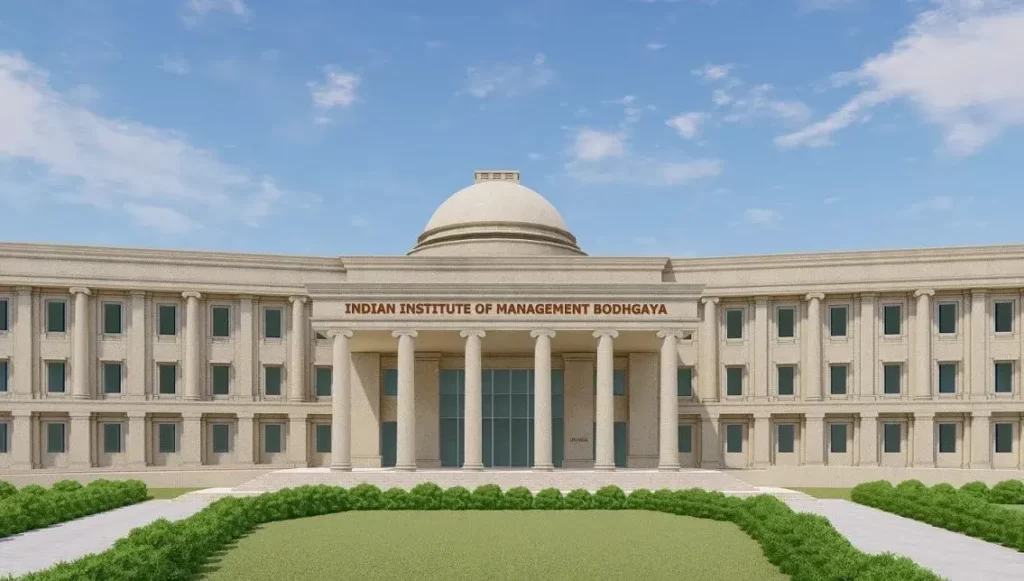
An executive certificate programme in corporate law has been introduced by the Indian Institute of Management (IIM), Bodh Gaya. The programme, which lasts for 10 months, is intended for professionals. The programme will end on February 1st, 2024. Candidates interested in applying may visit the official website at iimbg.ac.in. The purpose of this certificate programme is to instruct professionals about corporate laws and how they relate to various business-related challenges. Corporate governance, regulatory concerns, and developing and carrying out sensible financial strategies under the influence of the law will all be covered. The program’s directors, Professors Sabyasachi Mohapatra, an Associate Professor of Finance and Accounting, and Professor Soumya Prakash Patra, an Assistant Professor of law and public policy, attended the program’s launch together with Professor Vinita S. Sahay, Director of IIM Bodh Gaya. Attendees at the inauguration ceremony included candidates who have taken up the course. Professor Patra said at the ceremony that “the batch profile is dynamic in nature, which has participants of 30 years of experience to 1.8 years of experience.” Participants who have met all of the course’s criteria (attendance and evaluation) will receive a “Certificate of Completion” at the end of the programme.  

IIM Bodh Gaya introduces a corporate law executive certificate programme Read More »
IITs to adopt the National Credit Framework 

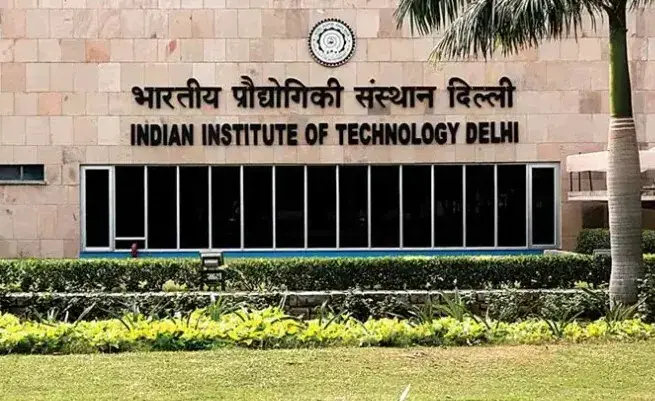
The National Credit Framework (NCrF) will be adopted by all 23 Indian Institute of Technology (IITs). This decision was made at an IIT Council meeting held on April 18 at IIT Bhubaneswar. The National Education Policy 2020 envisions making education more comprehensive and effective and emphasises the convergence of general (academic) education and vocational education, the UGC chairman said during his presentation on NCrF to the council. To realise this objective, a national credit accumulation and transfer system is required. A High-Level Committee was established by the Indian government, with representatives from the UGC, AICTE, NCVET, NIOS, CBSE, NCERT, DGT, Ministry of Education, and Ministry of Skill Development. The directors of all 23 IITs as well as Chairman UGC Mamidala Jagadesh Kumar attended this meeting, which was presided over by Education Minister Shri Dharmendra Pradhan. Following the UGC Chairman’s presentation, the IIT Council unanimously resolved to adopt and implement the National Credit Framework for all IITs. Additionally, Kumar asserted that the IITs had held awareness workshops for each region. The North Zone workshop was held on November 21, 2022 at IIT Delhi, the East Zone workshop was held on November 24, 2022 at IIT Bhubaneswar, the North East Zone workshop was held on November 26, 2022 at IIT Guwahati, the West Zone workshop was held on November 28, 2022 at IIT Bombay, and the South Zone workshop was held on November 29, 2022 at IIT Madras.

IITs to adopt the National Credit Framework  Read More »

UGC asks universities to allow students to write exams in regional languages even if course is in English medium

The University Grants Commission (UGC) Chairperson, M Jagadesh Kumar has written a letter to all central universities urging them to promote the use of regional and local languages in teaching and learning in order to encourage the use of regional languages in higher education. The letter also urged that students be allowed to write exams in regional languages even if the subject is taught in English. It also encouraged the varieties to develop original writing translation into local languages. Student engagement will gradually rise, increasing the success rate, once teaching, learning, and assessment are conducted in the local languages. The target of raising the GER in higher education from 27% to 50% by 2035 will be greatly strengthened as a result, the letter says. The UGC has also asked the universities for information on the list of books recommended for teaching in regional languages, the availability of faculty who can understand and teach in regional languages, whether or not students are able to write answers in regional languages, as well as an action plan to encourage the use of regional languages, among other things.

UGC asks universities to allow students to write exams in regional languages even if course is in English medium Read More »

NCERT and SCERT textbooks are the only ones to be followed in schools: NCPCR writes to states

In a letter to all states, the National Commission for the Protection of Child Rights (NCPCR), an autonomous body of the central government that oversees rights of all children, asked that only the curriculum and textbooks recommended by the National Council of Educational Research and Training (NCERT) and the State Council of Educational Research and Training (SCERT) be followed in classrooms. Under the Education Ministry, the autonomous body, NCERT provides the union government with recommendations on school education and assessment. Each state has a SCERT, created along the lines of NCERT, that serves as the top authority in the state’s academic concerns. The NCPCR’s letter is important because it was released after the new NCERT textbooks with revised material were published. As part of the rationalisation process, NCERT has eliminated from school textbooks information on the Mughals, Mahatma Gandhi, his assassin Nathuram Godse, references to Hindu extremists, and the 2002 Gujarat riots. Political parties and academicians have both expressed their strong opinions in response to these changes. The NCPCR reminded the states in a letter dated April 13 and addressed to all state education secretaries that, in accordance with section 29(1) of the Right to Education (RTE) Act, 2009, schools should only follow the curriculum and evaluation procedures established by the notified academic authority, in this case NCERT and SCERT. According to Section 29(1) of the RTE Act and the National Curriculum Framework (NCF) 2005, NCERT and SCERT are the nodal bodies for textbook writing. Hence, any State or Central Board that uses an elementary school curriculum, syllabus, textbooks, or evaluation process other than those advised by NCERT or the appropriate SCERT is in violation of the RTE Act of 2009. The Commission also used CBSE as an example of how it adhered to the RTE Act’s provisions. In September 2017, the Commission ordered CBSE to either obtain NCERT’s approval and validation of its new uniform system of evaluation or immediately revoke it due to a violation of the RTE Act’s guidelines. As a result, the CBSE revoked the system for classes VI to VIII by notification on January 22, 2018. As a result, the NCERT-recommended curriculum will be used by all schools associated with the CBSE, including private schools and institutions run by the Central Government like KVs and NVs.

NCERT and SCERT textbooks are the only ones to be followed in schools: NCPCR writes to states Read More »

IIT Delhi organizes two-day annual career fest 

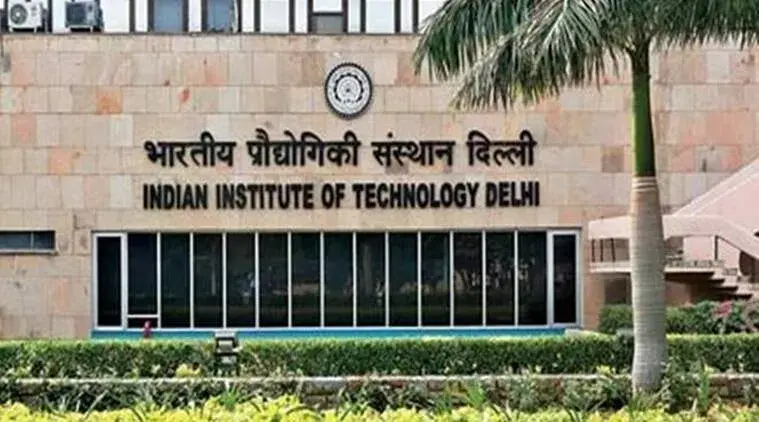
The annual Pravritti 2023 career festival, with the theme “Expanding Horizons,” is taking place on April 14 and 15 at IIT Delhi. This year’s festival seeks to give students a place to explore new employment prospects and gain perspectives and insightful information on a variety of career paths from industry leaders in a wide range of industries. With the help of this programme, students will be able to interact with and comprehend the cultures of local, national, and multinational organisations. It makes an effort to give students the ability to perceive and compare various recruiters from various industries, as well as to learn and develop their capabilities through competitions and workshops. In order to attract IIT Delhi students during the festival, the university reports that some 50 organisations have expressed interest and would visit the campus in person or digitally. As of March 2023, pre-fest activities have already begun to get students ready for the event. To further assist students in maximising their career options, webinars, mock interviews, and other competitions were also held. Events following the fest are also being planned to give the students further help and guidance.

IIT Delhi organizes two-day annual career fest  Read More »

Bihar government to shortly hire 1.5 lakh teachers

As per the new rules that the cabinet passed on Monday, the Bihar government will now establish a Commission for hiring teachers in government schools. At the Cabinet meeting, which was presided over by Chief Minister Nitish Kumar, it was also resolved that the government will raise the dearness allowance (DA) of state employees and pensioners by 4%. “Earlier, the recruitment of teachers was held at panchayat, block and district levels… Under the new rule, the government will appoint teachers through a Commission,” S Siddharth, Additional Chief Secretary (Cabinet Secretariat), told reporters after the Cabinet meeting. A senior education department official stated that the revised guidelines will now be used to appoint roughly 1.5 lakh teachers from primary to senior secondary stages. There is a severe teacher shortage in the state’s 9,350 upgraded higher secondary schools. Appointments won’t be made on a contractual basis under the new rule. After passing entrance exams held by the Commission, those teachers who had been hired on a contract might now work as regular government teachers, he said. According to Siddharth, the state Cabinet agreed a 4% rise in the dearness allowance (DA) for government employees and pensioners. With effect from January 1, 2023, the pensioners and state government employees will now receive 42% DA, he stated.

Bihar government to shortly hire 1.5 lakh teachers Read More »

IIM Kozhikode confers 1166 titles and degrees during convocation

IIM Kozhikode

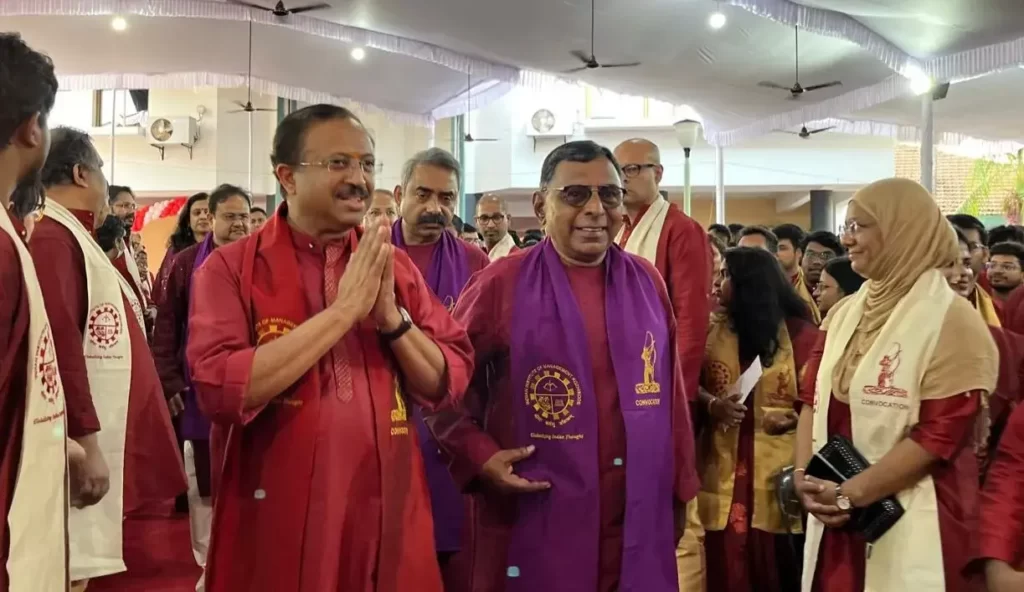
At the 25th Annual Convocation held at the Indian Institute of Management, Kozhikode (IIMK), 1166 students received titles and degrees. From the Silver Jubilee batch of the IIMK’s flagship Post Graduate Programme in Management (PGP-25), 470 students received an MBA. Ten students from the Doctoral Programme in Management (Ph.D.) at IIM Kozhikode, 64 students from the the one-year full-time Post Graduate Programme in Business Leadership (PGP-BL 03), 38 students from the Post Graduate Programme in Finance (PGP-Finance 02), and 51 students from the Post Graduate Programme in Liberal Studies (PGP-LSM 02) and Management were also among the graduating students. Instead of donning the traditional convocation gowns, the graduates this year opted to wear ethnic attire. To commemorate the Annual Convocation’s Silver Jubilee, this change was implemented. In honour of IIMK’s mission and vision for 2047, “Globalizing Indian Thoughts,” all 1166 students were dressed in traditional Indian attire in matching maroon hues. Male students wore kurta pyjamas and mundus, and female students wore kurta pyjamas and sarees. With this, the graduating batch made history by being the first in the history of all IIMs to forgo convocation gowns in favour of formal attire for the graduation ceremony. Shri V Muraleedharan, Union Minister for External Affairs and Parliamentary Affairs, was the chief guest at the 25th Annual Convocation. The Guest of Honour was Dr. Praveer Sinha, CEO and MD of Tata Power Company Ltd. On this solemn occasion, the dignitaries were accompanied by Prof. Debashis Chatterjee, Director IIMK, Shri A Vellayan, Chairman IIMK Board of Governors (BoG), members of the IIMK BoG, faculty, staff, students, and their families.

IIM Kozhikode confers 1166 titles and degrees during convocation Read More »

Jamia Millia Islamia extends the CUET course registration deadline

The Common University Entrance Test (CUET) 2023 registration date has been extended by the Jamia Millia Islamia for the BTech, BArch, and PG programmes. At jmicoe.in, the official JMI examinations website, interested candidates can register. Candidates now have until April 20 to complete the Jamia application forms, according to the official notification. According to the official notification, “The Vice-Chancellor, JMI has very kindly approved extension in the last date of registration to BTech, BArch, and PG Programmes of the University whose tests will be conducted by CUET for the Academic Session 2023-24 from 05.04.2023 to 20.04.2023.” For admission to 20 courses this year, Jamia Millia Islamia will only recognise CUET UG scores. Candidates have to fill out both the CUET and Jamia application forms for this. The UG courses in which admission would be taken through the CUET are: BA (Hons) (Turkish Lang and Literature)* (Hons) Sanskrit, BA (Hons) French and Francophone Studies, BA (Hons) Spanish and Latin American Studies, BA (Hons) History, BA (Hons) Hindi, BA (Hons) Urdu, B.A. (Hons) Korean Language, BA (Hons) Persian, BSc Biotechnology, BVoc (Solar Energy), BSc (Hons) Physics, BSc (Hons) Chemistry, BSc (Hons) Applied Mathematics and BA (Hons) Economics. With CUET, Jamia received 1,44,134 applications in 2022, placing it seventh among central universities in terms of applications received.

Jamia Millia Islamia extends the CUET course registration deadline Read More »

NCERT Director says chapters are removed to reduce work and content load on students

The National Council for Education Research and Training (NCERT) has faced criticism for removing a number of chapters from textbooks for classes 11 and 12, particularly the chapters dealing with the Mughal Empire. The director of NCERT says that the chapters were removed to lessen the amount of work and content that students must learn. Top NCERT officials have defended their decision, saying that it was made to reduce the workload for students. They have removed some chapters and revised the syllabus. Director of NCERT Dinesh Prasad Saklani told reporters that this textbook revision was carried out as a “professional exercise” to lighten the load for students who have been adversely affected by the COVID-19 pandemic. The decision by NCERT to omit some chapters, including Kings and Chronicles, Mughal Courts, US Hegemony in World Politics, Cold War Period, and other chapters of a similar nature, has drawn a lot of criticism. Many people have claimed that this choice was motivated by a hidden political agenda. The NCERT Director has clarified that the removal of these chapters was done as part of a professional exercise and that there was no ulterior political objective. The NCERT director stated that the COVID 19 pandemic has caused significant trauma for students. In order to lessen the stress on students and prevent learning loss, the chapters have been removed, and the syllabus has been revised. “To help stressed students, and as a responsibility to society and the nation, it was felt that the content load in textbooks should be reduced,” stated Saklani.

NCERT Director says chapters are removed to reduce work and content load on students Read More »

IIT Indore launches a new course, BTech in Space Science and Engineering

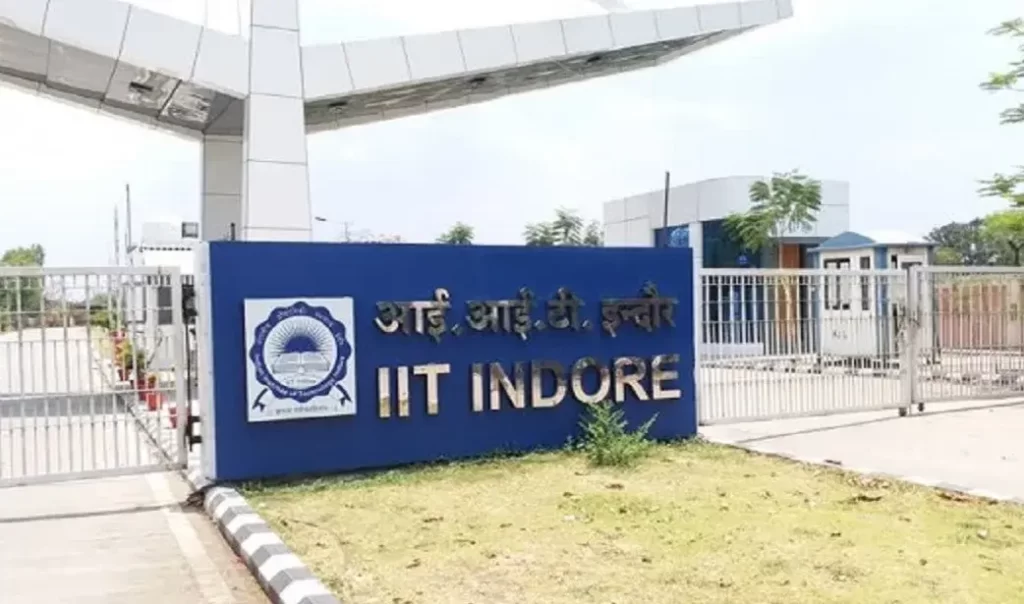
A new BTech course in space science and engineering has just been launched at the Indian Institute of Technology (IIT Indore). Students will be able to learn about and make predictions about astronomy, agriculture, environment, ecology, and climate change as well as communication, navigation, defence, and security. This course may be ideal for you if you find astronomy and space fascinating. An overview of the curriculum, eligibility requirements, and course format is provided below. Students will be exposed to cutting-edge research and technological advancements in the fields of payloads, small satellites, and detector design, data analytics, imaging, and high-end numerical simulations, with applications focused on astronomy, earth observation, climate change, and sustainable development. With carefully selected elective courses and a semester-long research project, students in this course can specialise in one of the following areas: space instrumentation, including detectors and payloads, imaging and data analytics, remote sensing and atmospheric engineering, astronomy and astrophysics. There are 20 seats available for BTech students studying space science and engineering. There are eight semesters in the four-year, full-time undergraduate programme. Candidates must take 6 to 7 required subjects each semester in addition to their choice of electives. JEE Advanced score will be used to determine admission to all three programmes. Candidates must also have passed the class 12 (or equivalent) exam from a recognised state or central board. By enrolling in higher studies, students who take the course can contribute to the research and development of space technology. They can collaborate on projects to advance space technology both with the public and private sectors.

IIT Indore launches a new course, BTech in Space Science and Engineering Read More »