ArdorComm Media Group

Tuesday, December 2, 2025 8:54 PM

Governance Community

Congress Reaches Out to Naidu, Nitish as NDA Attempts to Form Alliance Government

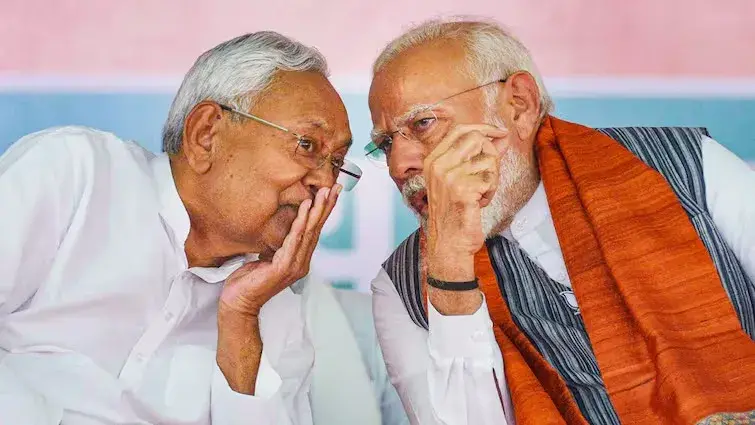
In a strategic move to counter the Bharatiya Janata Party (BJP) from forming a coalition government, the Congress party has reached out to Telugu Desam Party (TDP) chief Chandrababu Naidu and Janata Dal United (JDU) chief Nitish Kumar. Sources indicate that the outreach has been conducted through multiple channels, including Telangana Chief Minister Revanth Reddy, a former TDP member. While immediate action from the TDP or JDU is not anticipated, Congress views maintaining communication lines as crucial, given the potential for these NDA allies to reconsider their positions in the coming months. A Congress leader mentioned that if a move happens, Nitish and Naidu would likely act together as a ‘package’ within a few months. This development comes as the BJP, under Prime Minister Narendra Modi’s leadership, faces an unexpected challenge. With the BJP securing 240 seats, significantly short of their anticipated 400, Modi now navigates the complex path of coalition politics for the first time in his 23-year political career. Political analysts question Modi’s ability to manage allies like Nitish and Naidu, both of whom have previously exited the BJP-led National Democratic Alliance (NDA). Sources suggest that Naidu may leverage this opportunity to demand a special financial package for Andhra Pradesh. Meanwhile, the INDIA bloc, a coalition of opposition parties led by Congress, plans to engage with Nitish and Naidu either immediately or within the next six months, potentially leading to a significant political shift. Modi’s post-election speech highlighted the BJP’s historic win in Odisha and notable gains in Telangana. The NDA also made inroads into Andhra Pradesh with the help of its allies TDP and Jana Sena. The BJP celebrated opening its account in Kerala for the first time with actor-turned-politician Suresh Gopi’s win in Thrissur. However, setbacks in key states like Uttar Pradesh, West Bengal, and Rajasthan loom large. In Uttar Pradesh, the BJP’s dominance waned as the Samajwadi Party claimed 37 out of 80 seats, a stark contrast to the BJP’s previous tally. West Bengal also delivered a blow, with the Trinamool Congress retaining 29 out of 42 seats, reducing BJP’s count to 12 from 18. Similarly, in Rajasthan and Karnataka, Congress made significant inroads, capturing several seats from the BJP.

Congress Reaches Out to Naidu, Nitish as NDA Attempts to Form Alliance Government Read More »

Andhra Pradesh Assembly Election Results 2024: Key Insights and Analysis

The counting of votes for the Assembly elections in Andhra Pradesh and Odisha, along with the counting of the Lok Sabha Elections 2024, is taking place today (June 4). The Assembly elections in Andhra Pradesh were held on May 13. There are 175 Assembly constituencies in the Andhra Pradesh Assembly with 29 seats reserved for Scheduled Castes (SCs) and another 7 for Scheduled Tribes (STs). The term of the present Andhra Pradesh Assembly is from June 12, 2019 to June 11, 2024. The Telugu Desam Party (TDP) of Chandrababu Naidu and the Yuvajana Sramika Rythu Congress Party (YSRCP) of Chief Minister Jagan Mohan Reddy are the two main political parties in Andhra Pradesh. Pawan Kalyan-led Jana Sena Party (JSP), the Bharatiya Janata Party (BJP), and the Congress are the other important parties in the state.Key candidates in Andhra Pradesh include Andhra Pradesh Chief Minister YS Jagan Mohan Reddy (YSRCP), N Chandrababu Naidu (TDP), Pawan Kalyan (JSP), Killi Kruparani (Congress), Dharmana Prasada Rao (YSRCP), and others.Key constituencies in Andhra Pradesh include Pulivendula, Kuppam, Pithapuram, Mangalagiri, Hindupur, Vijayawada West, Narasannapeta, Srikakulam, Tekkali, Gajuwaka, Undi, Gannavaram (Krishna), Atmakur, Proddatur, and Jammalamadugu. Andhra Pradesh recorded 80.66 per cent of voting in the Assembly Election 2024, which was 80.39 per cent in the Assembly Election 2019.In the 2019 Andhra Pradesh Assembly Election, the YSRCP emerged victorious with a massive 151 seats and YS Jagan Mohan Reddy became the Chief Minister. The incumbent TDP managed to win just 23 seats. The JSP won a single seat while neither the BJP nor the Congress couldn’t open their account. To form the government in Andhra Pradesh, every party or coalition must reach the majority mark in the Legislative Assembly. The majority mark in each state Assembly depends upon the total number of seats in the Legislative Assembly of a particular state. The majority mark in any state is half of the number of total Assembly seats plus one more seat. The Andhra Pradesh Assembly has 175 seats and the majority mark is 88.

Andhra Pradesh Assembly Election Results 2024: Key Insights and Analysis Read More »

Delhi Government Moves Supreme Court Seeking Relief Amid Water Crisis During Heatwave

The Delhi government has taken the issue of the water crisis amidst scorching heatwave conditions in the national capital to the Supreme Court. In its plea, the AAP-led government has appealed for the release of additional water from neighboring states like Haryana, Uttar Pradesh, and Himachal Pradesh for a month to address the water shortage. The soaring temperatures in Delhi, with some areas reaching up to 50 degrees Celsius, have escalated the demand for water, prompting urgent action from the Delhi government. Emergency measures have been implemented, including banning the use of potable water for car washing and construction activities. The Delhi Jal Board (DJB) has announced stringent penalties, with fines of Rs 2,000 for wastage of water. Additionally, a war room has been established by the DJB to manage water tanker supply, with citizens urged to contact 1916 for assistance. Chief Minister Arvind Kejriwal has called for political cooperation, emphasizing the need to prioritize the welfare of Delhi’s residents over partisan interests. He stressed the importance of securing water resources from neighboring states and urged the BJP leaders to collaborate in resolving the crisis. Amid the heatwave, Delhi has also witnessed a record peak power demand, surpassing 8,300 MW for the first time in its history. Despite the unprecedented demand, the power situation in Delhi remains stable, distinguishing it from neighboring areas where residents are grappling with prolonged power cuts. As protests erupt in Noida and Ghaziabad over power outages, Kejriwal highlighted the nationwide challenge posed by the heatwave, emphasizing the need for collective action to mitigate its impact. He underscored Delhi’s relatively stable power supply amidst the crisis, attributing it to effective management by the government. The plea filed by the Delhi government underscores the severity of the situation and seeks urgent intervention to alleviate the water shortage, emphasizing the importance of collaborative efforts to ensure the well-being of Delhi’s residents during the ongoing heatwave.  

Delhi Government Moves Supreme Court Seeking Relief Amid Water Crisis During Heatwave Read More »

Karnataka Government Funds Diverted: FIR Filed Against Union Bank of India Officials

The managing director of the Karnataka Maharshi Valmiki Scheduled Tribe Development Corporation has filed a case against Union Bank of India officials, alleging fraudulent diversion of approximately Rs 94.73 crore of the corporation’s funds. This development follows the suicide of an official who cited irregularities involving substantial sums of money. Incident Details Allegation: The MD, A Rajashekar, claims that Union Bank officials fraudulently diverted Rs 94.73 crore of the corporation’s funds to other accounts. Timeline: On February 26, bank officials moved the corporation’s primary account from the Vasanthnagar branch to the MG Road branch with auditors’ and MD’s permission. Between March 4 and May 21, Rs 187.33 crore was deposited in the corporation’s account from the state treasury. Discovery: The MD discovered the fraudulent transactions on May 22 when informed by the bank that documents were allegedly sent by post, which the corporation never received. Signatures were reportedly forged to transfer funds, and no transaction alerts were sent via SMS or email. Follow-Up Actions Immediate Action: The chief manager of the MG Road branch returned Rs 5 crore to the corporation on May 23. Suicide Incident: On May 26, Chandrashekaran P, involved in auditing and coordinating with the bank, committed suicide, leaving a note implicating senior officials and mentioning instructions from a minister. Complaint and FIR: On May 28, Rajashekar filed a complaint at the High Grounds police station in Bengaluru, accusing six bank officials of the fraud. The police have registered a case under various sections of the Indian Penal Code related to criminal breach of trust, cheating, and forgery. Investigation and Political Reactions Investigation: Home Minister G Parameshwara confirmed the detection of irregularities and mentioned that the funds were diverted to 8-10 bank accounts. The CID is investigating the case. Minister’s Denial: Youth Empowerment, Sports, and Tribal Welfare Minister B Nagendra has denied any involvement, stating that no such instructions were given from his end. Opposition Demand: The BJP has demanded the resignation of Minister B Nagendra, with state president B Y Vijayendra calling for a judicial probe by a sitting high court judge into the incident. The case has drawn significant attention due to the scale of the alleged fraud and the tragic suicide of an official, highlighting serious concerns about financial governance and accountability within both the bank and the government corporation.

Karnataka Government Funds Diverted: FIR Filed Against Union Bank of India Officials Read More »

Assam Government Compensates Families Affected by Bulldozer Justice with Rs 30 Lakh

The Assam government has provided compensation of Rs 30 lakh to five families whose homes were bulldozed two years ago in Nagaon district. This action followed their alleged involvement in torching a police station, an incident triggered by the death of Safikul Islam, a fish-seller, while in police custody. Additionally, the government sanctioned Rs 2.5 lakh for Islam’s family. However, the payment is pending until the family provides a next-of-kin certificate, as per the statement submitted by the Assam government’s counsel to the Gauhati High Court. The compensation disbursement marks a significant development in a case that garnered attention after a mob from Salonabari village torched part of the Batadrava police station following Islam’s death. The subsequent demolition of homes belonging to alleged participants of the incident was deemed “illegal” by the court. Last year, the High Court had criticized the police superintendent for the demolitions and urged the state government to compensate those affected. The recent compensation, totaling Rs 30 lakh, covers the demolition of two pucca houses and four kutcha houses. Moreover, the court has requested information on actions taken against the responsible officers. The affidavit submitted by the current Nagaon SP highlights that the demolitions were part of search operations for concealed weapons and narcotics. Despite initial searches yielding no contraband, the affidavit claimed the use of excavators was necessary, leading to the seizure of a revolver and tablets. The compensation and ongoing legal proceedings underscore efforts to address past injustices and uphold the rule of law in Assam.  

Assam Government Compensates Families Affected by Bulldozer Justice with Rs 30 Lakh Read More »

RBI Approves ₹2.11 Lakh Crore Dividend Payout to Government for 2023-24

The Reserve Bank of India (RBI) has approved a substantial ₹2.11 lakh crore dividend payout to the central government for the financial year 2023-24. This amount is more than double the ₹87,416 crore paid for the previous financial year, 2022-23. The decision was made during the 608th meeting of the Central Board of Directors of the RBI, chaired by Governor Shaktikanta Das on May 22. In a statement, the RBI announced, “The Board…approved the transfer of ₹2,10,874 crore as surplus to the Central Government for the accounting year 2023-24.” This significant dividend payout surpasses analysts’ expectations, who had anticipated a surplus transfer between 750 billion rupees to 1.2 trillion rupees, driven by strong foreign exchange earnings. Additionally, the RBI has increased the Contingent Risk Buffer (CRB) to 6.5% for FY 2023-24, up from 6% in the previous financial year. The CRB is a financial safeguard against potential risks, and its increase reflects the RBI’s confidence in the economy’s resilience and robustness. The large dividend payout is expected to provide a substantial boost to the central government’s finances, aiding in fiscal management and potentially funding various public expenditure programs. This move by the RBI underscores its strong financial performance and the positive outlook for India’s economic growth. The enhanced dividend payout comes at a critical time, supporting the government’s efforts to manage its fiscal deficit and fund developmental initiatives. The decision reflects the RBI’s commitment to maintaining a robust financial position while supporting the government’s economic agenda.  

RBI Approves ₹2.11 Lakh Crore Dividend Payout to Government for 2023-24 Read More »

Indian Students Facing Deportation in Canada Protest Against Government Over Sudden Policy Change

Hundreds of Indian students in Canada’s Prince Edward Island (PEI) are protesting against the government for a sudden policy change that denies them work permits and threatens deportation. The students, who graduated and have been in Canada for over a year, allege that the government changed the policy overnight, leaving them in a precarious situation. They have threatened to go on a hunger strike if their demands are not met. Protest leader Rupender Singh expressed frustration to the CBC, stating, “They called us here, now they want us to leave. Our province gave us false hopes.” Singh, who came to Canada in 2019, accused the province of providing misleading information, calling the situation “total exploitation.” Video footage shows large groups of Indian students marching through the streets of Charlottetown, chanting for fairness and protesting the sudden policy changes. One protestor noted the broader impact, suggesting that without international graduates, locals might face delays in services such as coffee at Tim Hortons. “We only get a once-in-a-lifetime chance. We came to PEI because they made these rules that we can apply for PR after six months, one year. Yes, they will be affected, but the people of PEI will also be affected because now they’ll have to wait 20 minutes for a cup of coffee.” What Does Canada’s PEI Law State? Last July, PEI passed a law restricting postgraduate work permits to students with specific qualifications, allowing only those with construction/home-building and healthcare qualifications to obtain permits. This change has left many international students unable to continue working in Canada. Similar restrictions were imposed in Manitoba earlier this year, but after protests, the Trudeau government extended postgraduate work permits by two years. Now, students in PEI are demanding similar treatment. What Are the Protesting Indian Students Demanding? The students are demanding an extension of work permits and a review of the recent immigration policy changes. They seek to be “grandfathered” in, allowing them to be exempt from the new regulations based on their previous status or circumstances. This would enable them to proceed under the previous, less stringent criteria, ensuring stability and fairness in the immigration system. They have set a deadline for action, threatening a hunger strike if their demands are not met by mid-May. As tensions rise, the protests are growing, with hundreds joining in and gaining support from various communities. Employers and minority groups have backed the cause, highlighting the broader impact of these policy changes on the community as a whole.Top of Form

Indian Students Facing Deportation in Canada Protest Against Government Over Sudden Policy Change Read More »

Singapore Airlines Highlights Strategic Benefits of Pending Air India-Vistara Merger

Blog on HR

Singapore Airlines Group announced on Wednesday that the proposed merger between Air India and Vistara is still awaiting foreign direct investment (FDI) and other regulatory approvals. The group emphasized that this merger will significantly enhance its multi-hub strategy and allow it to maintain a strong presence in the rapidly expanding Indian aviation market. Vistara is a joint venture between Singapore Airlines and the Tata Group, which also owns Air India. The merger, initially announced in November 2022, received approval from the Competition and Consumer Commission of Singapore in March and from the Competition Commission of India (CCI) in September 2023, albeit with some conditions. However, the completion of the merger still hinges on securing FDI and additional regulatory clearances. Once finalized, Singapore Airlines will acquire a 25.1% stake in an enlarged Air India Group. This merger is set to create a significant presence across all key segments of the Indian airline market, including domestic and international flights, as well as full-service and low-cost operations. According to the group, this strategic move will bolster Singapore Airlines’ multi-hub strategy and enable continued direct participation in India’s burgeoning aviation sector. The merger is poised to enhance Singapore Airlines’ competitive edge in the aviation market. In the fiscal year 2023-24, the group reported a 24% rise in net profit, amounting to 2,675 million Singapore dollars. This substantial increase in profitability is attributed to robust air travel demand, which drove record passenger revenue and load factors. The group also achieved the highest full-year operating and net profits in its history. Despite the positive outlook, Singapore Airlines noted several challenges facing the global aviation industry. Rising geopolitical tensions, an uncertain macroeconomic environment, supply chain constraints, and high inflation in many regions pose significant hurdles. Nonetheless, the demand for air travel remains strong in the first quarter of FY2024/25, with forward bookings to North Asia and Southeast Asia showing a marked increase. The anticipated merger between Air India and Vistara is expected to redefine the competitive landscape of the Indian aviation market. By consolidating their operations, the merged entity will be better positioned to leverage the strengths of both airlines, offering a more comprehensive and integrated service portfolio. This move is seen as a strategic effort to capture a larger share of the rapidly growing Indian aviation market, which has been one of the fastest-growing aviation markets in the world. Singapore Airlines’ strategy to maintain a significant stake in the merged entity underscores its commitment to expanding its footprint in India. The partnership with the Tata Group, a major player in the Indian business ecosystem, provides a robust foundation for this expansion. The merger is anticipated to create synergies that will benefit both airlines, enhancing operational efficiency and expanding their market reach. As the aviation industry continues to recover from the impacts of the COVID-19 pandemic, strategic mergers and acquisitions like this one are crucial for airlines looking to strengthen their market positions. For Singapore Airlines and Vistara, the merger represents an opportunity to consolidate resources, optimize operations, and offer a more competitive service to their customers. The pending merger between Air India and Vistara, while awaiting final regulatory approvals, is poised to significantly enhance Singapore Airlines’ strategic positioning in the Indian aviation market. The merger will create a stronger, more competitive airline group capable of capturing a larger share of the market and driving long-term growth. Despite the challenges facing the aviation industry, the outlook remains positive, with strong demand for air travel and strategic initiatives like this merger paving the way for future success.

Singapore Airlines Highlights Strategic Benefits of Pending Air India-Vistara Merger Read More »

Indian Telecom Companies and VoICE Group Push for Government Action Against Chinese Imports

Indian telecom companies, along with the Voice of Indian Communication Technology Enterprises (VoICE) group, are urging the government to take action against imports from China in the telecom equipment sector. This initiative aligns with the goal of promoting self-reliance in India and supporting domestic manufacturers like TCS, Tejas Networks, and STL. Key Points: Lobbying for Curbing Chinese Imports: Indian telecom equipment manufacturers argue that imports from China contradict the spirit of the “Atmanirbhar Bharat” initiative and hinder their growth. VoICE highlights that despite government guidelines, Chinese imports persist, raising concerns for domestic manufacturers. Import Volume and Concerns: Chinese imports account for nearly 40% of India’s total telecom sector imports, including crucial components like optical fiber cables. VoICE emphasizes that Indian companies have the capacity to fulfill India’s telecom equipment needs entirely. Companies Importing from China: VoICE identifies top companies importing equipment from China, including Cisco, D-Link, TP-Link, Hikvision, Netgear, Hewlett Packard, and Juniper. These imports cover access points, switches, and radio equipment. Call for Stricter Enforcement: VoICE advocates for stricter enforcement of border policies and action against officials overlooking violations. They propose a review of the Government e-Marketplace (GeM) procurement process to prevent Chinese products from entering government orders. Measures Against Shell Companies: VoICE suggests implementing stricter controls on traders who import or reroute equipment through shell companies to evade customs checks. They propose a centralized system to blacklist such companies across all government departments. By implementing these measures, the Indian government can support domestic manufacturers and promote self-reliance in the critical telecom sector.

Indian Telecom Companies and VoICE Group Push for Government Action Against Chinese Imports Read More »

Government Notifies Tri-Service Act, Paving the Way for Unified Theatre Commands

The government has taken a significant step towards military integration and efficiency by enforcing the Inter-Services Organisations (Command, Control and Discipline) Act, paving the way for the creation of unified theatre commands. This landmark move aims to streamline command and control structures, leading to better operational synergy and effectiveness. The enforcement of the ISO Act, which received presidential assent on August 15 last year and was passed by Parliament during the monsoon session, marks a crucial milestone in the most radical military reorganization since Independence. This development comes in line with the BJP manifesto’s commitment to establish military theatre commands for more efficient operations, following the creation of the chief of defence staff (CDS) post in December 2019. CDS General Anil Chauhan chaired a “Parivartan Chintan” recently, during which sub-committees made presentations on various domains and aspects towards jointness and integration, signaling the impending establishment of integrated theatre commands (ITCs). The momentum for ITCs had stalled after the unfortunate demise of the first CDS Gen Bipin Rawat in December 2021, amidst inter-service turf conflicts. India’s transition to a cost-effective war-fighting machinery through ITCs is imperative, considering the inefficiencies of the existing 17 single-service commands. The ISO Act empowers military commanders of tri-service organizations with administrative and disciplinary powers over personnel from the Army, Navy, and IAF, without compromising the unique service conditions of each service. The ISO Act is instrumental in enabling requisite command and control structures for proposed ITCs. The current plan includes two adversary-specific ITCs—one for the northern borders with China at Lucknow and another for the western front with Pakistan at Jaipur. Additionally, the Maritime Theatre Command at Karwar in coastal Karnataka will cover the Indian Ocean Region and the larger Indo-Pacific. The Ministry of Defence stated that the Act will empower the heads of ISOs, expedite case disposal, avoid multiple proceedings, and foster greater integration and jointness among the armed forces. This move underscores the government’s commitment to modernizing India’s defence infrastructure and enhancing its strategic capabilities.    

Government Notifies Tri-Service Act, Paving the Way for Unified Theatre Commands Read More »