ArdorComm Media Group

Thursday, January 1, 2026 4:05 AM

Governance Community

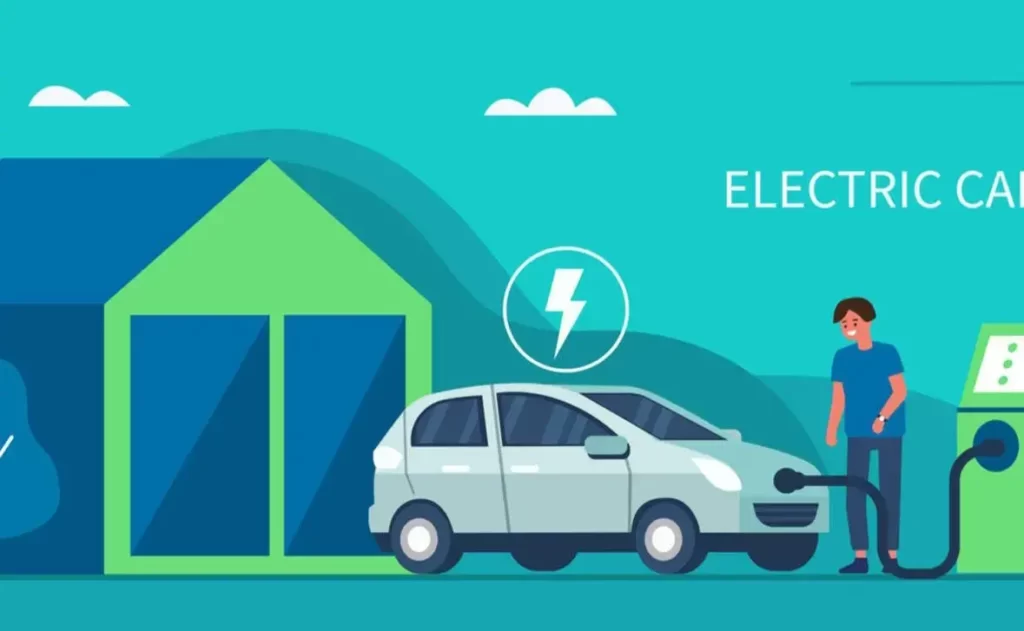
Rajasthan approves an EV Purchase Grant of Rs. 40 crores

A new electric vehicle policy that offers financial advantages to EV owners in the state has been enacted by the Rajasthan government. The government has granted a total contribution of Rs 40 crore towards the purchase of electric vehicles under the new Rajasthan Electric Vehicle Policy (REVP). The five-year-long policy’s objective is to promote the use of electric vehicles throughout the state. The pollution that diesel and petrol vehicles produce in the state will decrease as the number of electric vehicles rises. The policy was unveiled by Chief Minister Ashok Gehlot in the 2019–20 budget. Later, in May of this year, the draft policy was approved. The government agreed to the suggested one-time payment for the purchase of electric vehicles as well as an additional budgetary provision of Rs 40 crore for the reimbursement of State Goods and Services Tax (SGST). For two-wheelers, the state government would pay compensation in the range of Rs 5,000 to Rs 10,000 for SGST. Depending on the vehicle’s battery capacity, a reimbursement of Rs 10,000 to Rs 20,000 will be given for the purchase of three-wheelers. A sum of Rs 40 crore has also been given to the transport department to settle any outstanding grants for the purchase of electric vehicles. A grant of Rs 5 crore from the total amount of Rs 40 crore will shortly be given to 3,000 vehicle owners in the state who bought their automobiles during the current fiscal year.

Rajasthan approves an EV Purchase Grant of Rs. 40 crores Read More »

Government to achieve $300 billion in electronic production by 2026

Rajeev Chandrasekhar, Minister of State for Electronics and Information Technology, stated that the government is committed to boosting domestic manufacturing to make India more robust to supply chain disruptions in order to meet the aim of $300 billion in electronic production by 2026. He added that it is very timely and will assist the government in determining the obstacles to be addressed and the approaches to take in order to meet this goal. He stated that the goal of the government is to become a reliable and trusted partner in global value chains. According to the minister, India has been successful in methodically constructing a structure and plan that clearly define the objectives of a $300 billion electronics manufacturing ecosystem with $120 billion in exports by 2026. He claimed that this report’s description of the government’s strategy for the upcoming years is both very significant and fascinating. Chandrasekhar went on to say that the analysis implies that in order for India to compete in the electronics manufacturing industry, it will need to export aggressively.

Government to achieve $300 billion in electronic production by 2026 Read More »

Justice UU Lalit, the 49th Chief Justice of India, takes the oath of office

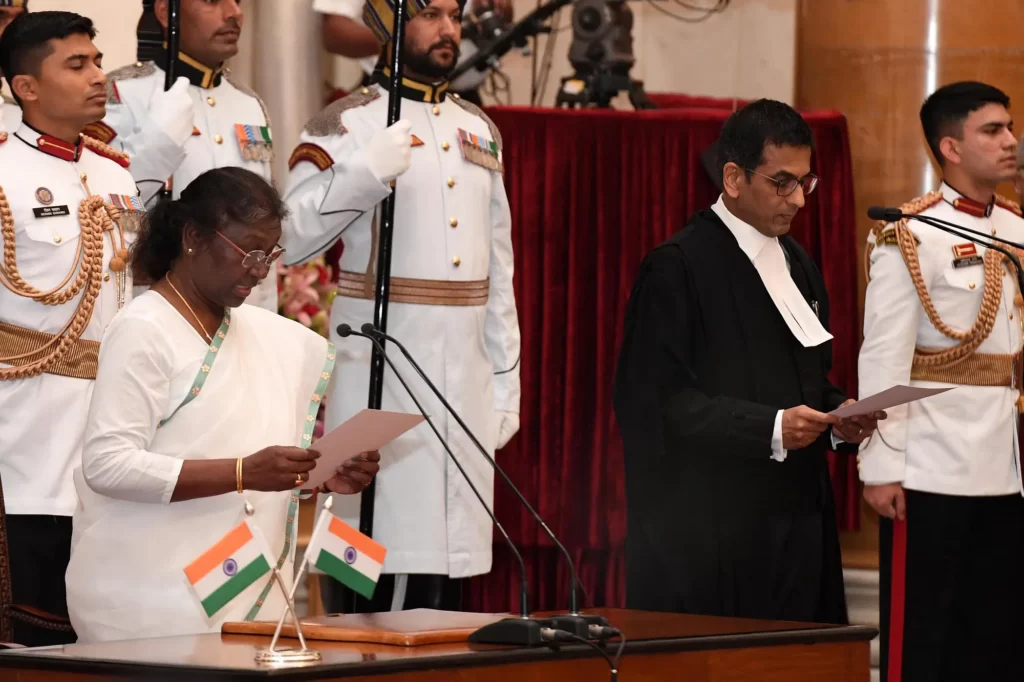
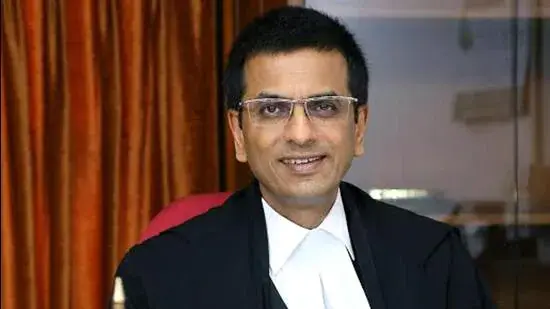
Justice Uday Umesh Lalit was sworn in as the 49th Chief Justice of India on Saturday, one day after Justice NV Ramana announced his retirement. Justice Lalit was sworn in as Chief Justice of India by President Droupadi Murmu in the early hours of the day at Rashtrapati Bhavan. Justice NV Ramana, who retired on August 26, is succeeded by him. As per tradition and seniority rules, Justice Ramana had recommended Justice Lalit as his replacement. Justice Lalit’s appointment as the next CJI was subsequently confirmed by the President. As the head of India’s judiciary, Justice Lalit will hold office for just 74 days, leaving on November 8. At Justice Ramana’s farewell celebration yesterday, Justice Lalit stated that during his roughly three-month term, he will concentrate on three main areas, with the making of listing of cases simple, clear and as transparent as possible being one of his top priorities. In addition, Justice Lalit has vowed to uphold a transparent structure that allows any urgent issues to be raised openly before the appropriate benches of the top court. He pledged that the Supreme Court would have at least one Constitution Bench operating throughout the year. Justice Lalit said, “I have always believed that the role of the Supreme Court is to lay down law with clarity, consistency, and the best possible way to do it is to have larger benches as early as possible, wherever the matters are referred to such benches so that the issues get clarified immediately, the matter has consistency and the people are well aware of what exactly are the contours of the peculiar positions in law.” On his last day of work, outgoing CJI Ramana apologised for not being able to name every case that was still pending and stated that the court had been dealing with a backlog of cases that had significantly risen during the months prior. Justice Lalit was a well-known senior advocate before being chosen to serve as a Supreme Court justice. He was selected to serve as a Supreme Court justice on August 13, 2014. Justice Lalit will be the second Chief Justice of India to be elevated from the Supreme Court bench straight from the bar. Justice SM Sikri, who became the 13th Chief Justice of India in January 1971, was the first lawyer to be promoted directly to the top court bench. On November 9, 1957, in Solapur, Maharashtra, Justice Lalit was born. His father, UR Lalit, served as a prominent Supreme Court advocate as well as an additional judge at the Bombay High Court’s Nagpur bench. In June 1983, Justice Lalit applied to become an advocate. From 1983 to 1985, he worked as a criminal law specialist in the Bombay High Court. In January 1986, he shifted his practise to Delhi, and the Supreme Court designated him a senior advocate in April 2004. Later, he was chosen by the CBI to serve as a special public prosecutor for the case involving the allotment of 2G spectrum. On November 8, Justice Lalit will retire, and it is anticipated that Justice DY Chandrachud will be named the 50th Chief Justice of India. Source: ANI

Justice UU Lalit, the 49th Chief Justice of India, takes the oath of office Read More »

Government extends the Ayushman Bharat health scheme to include trans people

The Ayushman Bharat-PMJAY will now provide comprehensive healthcare services to trans individuals. Mansukh Mandaviya, the Union Minister for Health, stated on Wednesday that the action will guarantee transgender persons a “rightful and respectable” status. According to Mandaviya, an MoU that will make this possible will enable all healthcare benefits to be provided to transgender people nationwide who possess a transgender certificate from the National Portal for Transgender Persons. “We have the registry. This is to give the members of the community the respect they deserve,” he added. He added that a comprehensive package, including the existing AB PM-JAY packages as well as particular packages like Sex Reassignment Surgery (SRS) and treatment for transgenders, is being prepared for the transgender category. He also added that individual members will be treated as “family” to qualify for the Rs 5 lakh cover under the scheme. The ministry has also chosen to issue unified Ayushman cards that will feature both the centre and state logos. According to the minister, this will benefit both the beneficiaries and the States. Few States, including Tamil Nadu and Telangana, have not yet endorsed this concept, according to ministry officials.

Government extends the Ayushman Bharat health scheme to include trans people Read More »

Cabinet approves to make the Traditional Knowledge Digital Library database more widely accessible

The Traditional Knowledge Digital Library (TKDL) database will now be accessible to users and patent offices, enabling more R&D and innovation based on India’s cultural legacy. This move has been approved by the cabinet. Bharatiya Gnana Parampara is anticipated to be incorporated into the endeavour to expand the TKDL under the auspices of the New Education Policy (NEP) 2020. The TKDL database will only be accessible with a paid subscription. According to a statement from the cabinet, “Indian traditional knowledge (TK) offers immense potential to serve national and global needs, therewith providing societal benefits as well as economic growth.” The TKDL will be a significant repository for Indian traditional knowledge that will advance the boundaries of knowledge and technology, according to the cabinet led by Prime Minister Narendra Modi. Ayurveda, Siddha, Unani, Sowa Rigpa, and Yoga are some of the Indian traditional treatments that the TKDL content now seeks to promote. It also attempts to encourage new manufacturers and innovators to contribute to India’s knowledge base. According to the cabinet, TKDL will provide services for organisations, corporations, personal care products, academic and research institutes, and others. The cabinet also disclosed that the TKDL database will eventually include more data on Indian traditional knowledge from other fields. According to the cabinet, the TKDL database will put an emphasis on creativity, practical solutions, and technology in addition to its primary goal, which is to stop the wrong patents on Indian traditional knowledge from being granted.

Cabinet approves to make the Traditional Knowledge Digital Library database more widely accessible Read More »

IRDAI organizes a hackathon and invites innovative tech solutions for the insurance sector

To safeguard policyholder interests, the insurance industry’s regulatory body, IRDAI, has issued an invitation to companies to provide technologically advanced new solutions for automated death claim settlement, reducing miss-selling, and other components of the insurance ecosystem. The Insurance Regulatory and Development Authority of India (IRDAI) is accepting applications for Bima Manthan 2022, its first hackathon, with the topic “Innovation in Insurance.” The regulator stated in a statement that the hackathon “invites participants to explore and develop ideas that have the potential to make insurance available to every individual in a seamless and quick way with the use of technology and protecting the interests of the policyholders. In order to stop the miss-selling of insurance products, IRDAI has looked for creative ideas and tech-based solutions for automating death claim settlement. The regulator is also seeking technologically enabled solutions to identify uninsured motor vehicles, assure the issuing of necessary motor third party insurance, and technology-based distribution of insurance products, including microinsurance in “difficult terrains and less penetrable areas.” Another area chosen for Bima Manthan 2022 is the use of technology to reduce or prevent fraud in motor insurance. Participants in Bima Manthan 2022 will get the chance to showcase their creative solutions in front of a distinguished jury and compete for enticing rewards, according to IRDAI. In addition, Bima Manthan offers the winner the chance to work with an insurer (or insurers) on the winning project/platform, demo-day in front of insurers/intermediaries and other stakeholders, or direct entry into the IRDAI Regulatory Sandbox regime. The regulator said that registration for the hackathon begins on Tuesday.

IRDAI organizes a hackathon and invites innovative tech solutions for the insurance sector Read More »

Microsoft partners with ONDC to accelerate the adoption of e-commerce across India

Microsoft joined the government’s Open Network for Digital Commerce (ONDC) on Tuesday in an effort to provide social e-commerce via its app in the Indian market. The internet giant plans to develop a shopping app for Indian consumers as well as their social network to get the best pricing among stores and sellers. According to T Koshy, MD and CEO of ONDC, Microsoft can quickly deploy its cutting-edge concepts, including social commerce, by using the strength of its open network users. By 2030, it is anticipated that the Indian e-commerce market would be worth $400 billion, expanding at a 19% compound annual growth rate (CAGR). “Initiatives like ONDC can be a game changer amid this boom. Their UPI-like network for digital commerce is a win-win for both buyers and sellers as it will enable them to connect without dependency on any eCommerce solution,” said a Microsoft spokesperson. By bringing online micro, small, and medium-sized businesses as well as small traders, the government is attempting to build the largest interoperable open platform with ONDC, a project similar to the Unified Payments Interface (UPI) of the Ministry of Commerce and Industry to support open networks. This is done in an effort to break up e-commerce monopolies and create a more democratic digital marketplace. Businesses like Dunzo for Business (D4B), Go Frugal, Paytm, Digit, PhonePe, and Loadshare are now part of the ONDC network. This month, the e-commerce site Snapdeal will make its ONDC debut.

Microsoft partners with ONDC to accelerate the adoption of e-commerce across India Read More »

IT ministry to audit social media companies’ compliance on a quarterly basis

Quarterly compliance audits of social media companies will be carried out by the Ministry of Electronics and IT (Meity). Presently, each month, social media firms report on their compliance with IT guidelines 2021. Here, they disclose the actions they took in response to various complaints. “Meity has now put in place a mechanism to audit compliance of social media intermediaries under IT rules every quarter. As part of the audit, the ministry will verify if social media companies are reporting about grievances raised to them correctly and if their action taken is in sync with the laid-out rules,” the source told the news agency. The government has proposed creating an appellate panel with the authority to overrule decisions made by social media companies regarding any grievance in order to tighten the noose around these platforms. The IT ministry has concluded the public comment process about the proposed rule.

IT ministry to audit social media companies’ compliance on a quarterly basis Read More »

5G Telecom Services to be rolled out from October this year

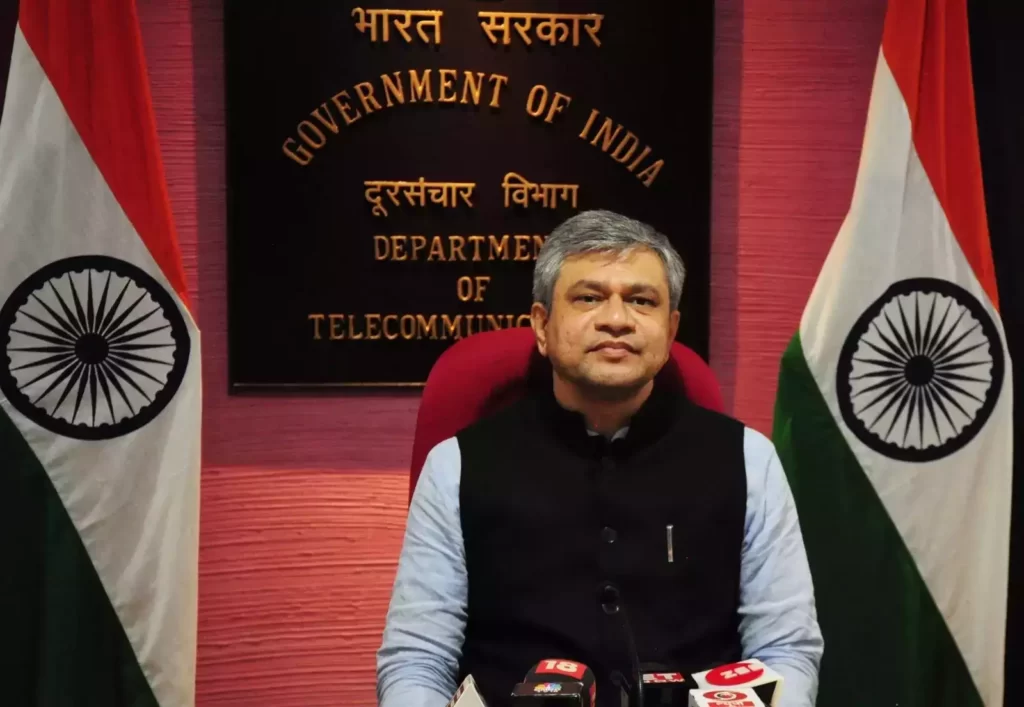
From October 2022 onward, 5G telecom services will be made available in India. According to Union Communications Minister Ashwini Vaishnaw. Soon after the 5G auction concludes, the government will distribute the spectrum, which will result in the launch of services in October. Speaking at a press conference in Mumbai, Vaishnaw stated. He noted that the global rollout of 5G had been uneven and predicted that India would implement 5G considerably more quickly than many other countries. He said that if 5G service prices get too high, the government will step in and state-owned BSNL will function as a market balancer. We anticipate that we will likely defy the trend and have a considerably faster rollout of 5G compared to many other regions, he said, adding that the global implementation of 5G has been slow. This is because our other costs are significantly under control. Vaishnaw stated that as of Saturday, the government has received 1.49 lakh crore rupees from the sale of 5G spectrum and expressed optimism that this figure will surpass 1.5 lakh crore rupees. Regarding the cost of 5G services, the average cost of telecom services worldwide is $2,400 [per month], compared to about $200 in India. “Data cost is lowest in India in the world,” he stated without specifying a number. The success of the 5G spectrum auction indicates that the sector is booming, and the results are very good, he says.

5G Telecom Services to be rolled out from October this year Read More »

Droupadi Murmu takes the oath as India’s 15th President

Droupadi Murmu takes the oath of office as India’s 15th president on 25th July. She is not just the nation’s first tribal woman to hold the highest constitutional position, but also the country’s second female President and the first to be born in independent India. “While Standing in the Parliament – the symbol of expectations, aspirations, and rights of all Indians – I humbly express my gratitude to all of you,” Droupadi Murmu stated in her first speech as President at the Central Hall of Parliament. “Your trust and support will be a major strength for me to carry out this new responsibility.” “I am fortunate to have got this opportunity to serve during the 75th year of independence.” she said. She continued by saying that becoming President of India was not a personal accomplishment but rather a victory for all of India’s underprivileged citizens. “My nomination is evidence that the poor in India can not only dream but also fulfill those dreams,” she said. “It is the power of India’s democracy that a girl born in a poor tribal home could reach the topmost constitutional post,” she added. “I am the first President of the country who was born in independent India,” President Droupadi Murmu said. The Parliament’s Central Hall served as the site of the swearing-in ceremony. The oath of office was administered by Chief Justice of India NV Ramana. President Murmu visited Rashtrapati Bhavan and paid homage to Mahatma Gandhi, father of the nation, earlier in the day. She was greeted by former President Ram Nath Kovind and his wife Savita Kovind. On July 22, the former governor of Jharkhand defeated opposition candidate Yashwant Sinha in a historic presidential election. On Thursday, the results of the presidential election were announced, showing that Murmu had received 2,824 votes, whereas Yashwant Sinha had only secured 1,877. The voting took place on July 18 with a total of 4,809 MPs and MLAs participating. President-elect Droupadi Murmu was presented with the certificate at her residence in the nation’s capital by PC Mody, the Returning Officer for the 2022 presidential election and Secretary General of the Rajya Sabha. Murmu started her political career in 1997 by joining the BJP. She was initially chosen to serve as a Rairangpur Nagar Panchayat councilor. In 2000, she was elected to be the chairperson of the same panchayat, and a year later she was named vice president of the BJP’s Scheduled Tribe Morcha. She received the Nilkhantha Award in 2007 for being the best MLA in the Odisha Assembly, and in 2015, she was appointed Jharkhand’s first woman governor.

Droupadi Murmu takes the oath as India’s 15th President Read More »