ArdorComm Media Group

Friday, September 11, 2026 10:31 PM

Governance Community

Govt. plans to approve two new microchip factories this year

Rajeev Chandrasekhar, the minister of state for electronics and IT, stated that the government expects approving up to two applications this year to begin building electronic chip manufacturing facilities in the country. According to the minister, the current slowdown in the electronic chip industry won’t have any effect on India’s semiconductor programme because it is cyclical in nature and was designed with a long-term view. “The year 2023 will be an important milestone. We will cross Rs 1 lakh crore in mobile phone exports this year. We will be certainly announcing one to two fabs in India to be commencing construction,” Chandrasekhar stated. Five companies have submitted plans to the government for the establishment of production facilities for electronic chips and displays with investments totalling Rs. 1.53 lakh crore. Vedanta Foxconn JV, IGSS Ventures, and ISMC seek to establish electronic chip manufacturing plants with a USD 13.6 billion investment under the Rs 76,000 crore Semicon India Plan. They have sought USD 5.6 billion in support from the Center.

Govt. plans to approve two new microchip factories this year Read More »

Madhya Pradesh Govt to present paperless ‘e-Budget’ on March 1

On March 1, the Madhya Pradesh government will introduce an electronic budget for the first time in the state assembly. MLAs will receive tabs to read the proposals and department schemes rather than hard copies of the budget. The copies of the 2019 budget were given to MLAs along with pen drives. The state budget’s planning is almost finished, and authorities are working to give it its final form. Authorities stated that in addition to the departmental budget books being published, the e-budget will also be presented in the House for regular reference throughout the year. While the state budget for the previous year was over Rs 2.79 lakh crore, this year’s budget is anticipated to be in the range of Rs 3 lakh crore. Officials expected a ten percent increase. There would be announcements regarding farmers and women in the budget because it is an election year. The state government would also be concentrating on capital expenditures along the lines of the Union budget. At an expert presentation on the Union Budget 2023–24 for the state budget on February 6, the CM had stated that more than Rs 48,000 crore would be spent on infrastructure development. In the previous budget, a total of about Rs 44,000 crore was allocated to this category. Similarly, on February 3, the government had introduced the Ladli Bahna Yojana. A total of Rs 12,000 crore will be spent annually and Rs 60,000 crore in 5 years under the scheme. The budget would include funding for the programme because it would be a significant new programme this year. Announcements for farmers will be made in the budget, and it is expected that the state government will grant interest-free loans to provide relief. Fisheries have been given importance by the Indian government, and the state budget is likely to take this in mind as it details its proposals to the House.

Madhya Pradesh Govt to present paperless ‘e-Budget’ on March 1 Read More »

BVR Subrahmanyam is appointed as the new CEO of NITI Aayog

Former Commerce Secretary BVR Subrahmanyam has been named the new chief executive officer (CEO) of NITI Aayog for a two-year term by the government. As Parameswaran Iyer joins the World Bank as an executive director in Washington, DC, Subrahmanyam will succeed him as CEO. In September 2022, Subrahmanyam—a Chhattisgarh cadre IAS from the 1987 batch—retired from the position as secretary of commerce. As the economy struggled to recover from the post-Covid slump last year, Subrahmanyam played a critical role in developing the strategy that resulted to record $422 billion in merchandise exports during his one-year tenure at the department of commerce. Also, he oversaw at least six free trade agreement (FTA) negotiations. India signed two trade agreements with the United Arab Emirates and Australia while he was working in the commerce department. Subrahmanyam, who is regarded as an expert on internal security, formerly served as Jammu and Kashmir’s chief secretary. The Appointments Committee of the Government announced Subrahmanyam’s appointment as CEO of NITI Aayog. Iyer was appointed CEO of NITI Aayog for three years in 2022. He is an IAS officer from the Uttar Pradesh cadre and is from the 1981 batch. He was there for only around six months. Iyer had worked for the Ministry of Drinking Water and Sanitation from 2016 to 20 as secretary. Prior to joining the World Bank in 2009 as the global lead for strategic initiatives in the water and sanitation sector, Iyer had taken a voluntary retirement from the Indian Administrative Service. In 2016, he came back to lead the Swachh Bharat Mission as secretary for sanitation and drinking water. After receiving a one-year extension, Iyer had resigned that position in July 2020, citing personal reasons.

BVR Subrahmanyam is appointed as the new CEO of NITI Aayog Read More »

PM Modi hails the milestone of 10 crore teleconsultations on the eSanjeevani app

The milestone of 10 crore teleconsultations on the eSanjeevani app has been lauded by Prime Minister Narendra Modi. The Prime Minister tweeted in response to a tweet from Dr. Mansukh Mandaviya, Union Minister for Health and Family Welfare: ““10,00,00,000 tele-consultations is a remarkable feat. I laud all those doctors who are at the forefront of building a strong digital health eco-system in India.” 10,00,00,000 tele-consultations is a remarkable feat. I laud all those doctors who are at the forefront of building a strong digital health eco-system in India. https://t.co/jQaXERtLI9 — Narendra Modi (@narendramodi) February 17, 2023 The Government of India’s leading technology, eSanjeevani, was created by the Center for Development of Advanced Computing (Mohali). In 155,000 health and wellness facilities nationwide, the telemedicine system eSanjeevani, which connects doctors and patients, has been put into use. The online OPD service made available to the public intends to deliver medical treatment to patients in their homes. The system provides safe, structured video-based clinical consultations between a hospital-based doctor and a patient at home.

PM Modi hails the milestone of 10 crore teleconsultations on the eSanjeevani app Read More »

PM Modi joins France President in a video call to announce the launch of a new partnership between Air India and Airbus

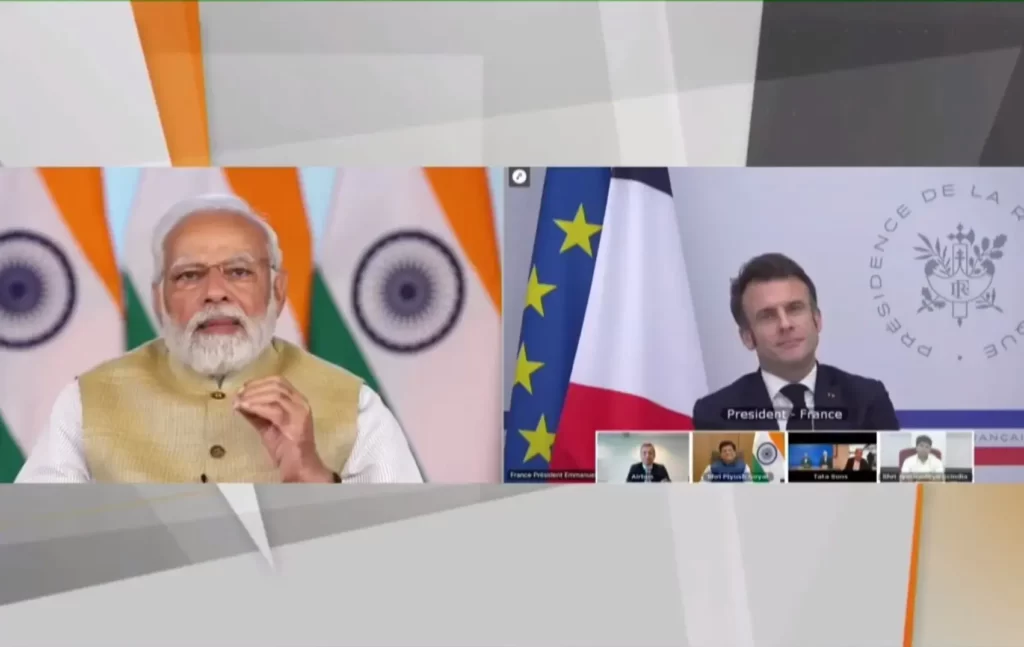
Emmanuel Macron, the President of France, Ratan Tata, the Chairman Emeritus of Tata Sons, N. Chandrasekaran, the Chairman of the Board of Tata Sons, Campbell Wilson, the CEO of Air India, and Guillaume Faury, the CEO of Airbus joined Prime Minister Narendra Modi in a video conference on Tuesday to mark the launch of a partnership between Air India and Airbus. A contract between Air India and Airbus calls for the delivery of 250 aircraft, including 40 widebody A350s and 210 single-aisle A320neos to Air India. According to a press release from the PMO, this commercial partnership between these two aviation industry leaders demonstrates the strength of the India-France Strategic Partnership, which is celebrating its 25th anniversary this year. In his address, the PM Modi emphasised how India’s civil aviation market is rapidly expanding and growing. This will boost connection between India and the rest of the world, which would in turn promote tourism and business in the country. In addition to praising the significant presence of French companies in India, the Prime Minister brought up the recent decision by SAFRAN, a French aerospace engine manufacturer, to establish its largest MRO facility there in order to service aircraft engines for both Indian and foreign carriers. The Prime Minister thanked President Macron for helping to advance the relationship between France and India and expressed excitement about working with him during India’s G20 Presidency.

PM Modi joins France President in a video call to announce the launch of a new partnership between Air India and Airbus Read More »

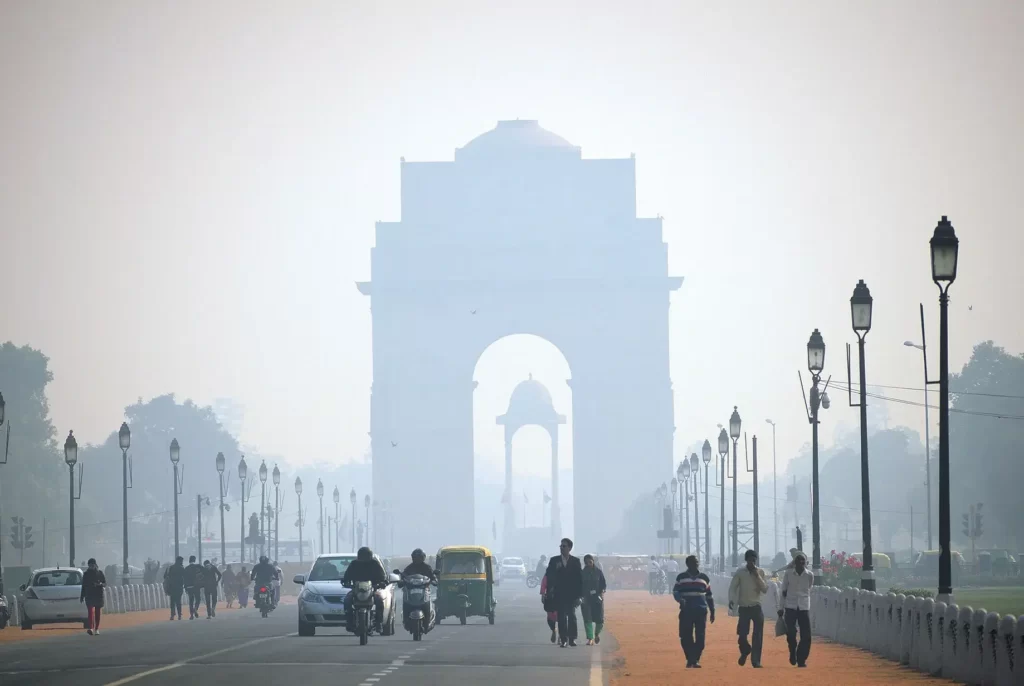
Delhi government is successful in identifying sources of air pollution in real time

Attempts by the Delhi government to track down air pollution sources in real time, according to Chief Minister Arvind Kejriwal, have begun to yield results. Kejriwal referenced a media report stating that the environment department’s efforts in November 2022 resulted in a considerable decrease in pollution levels in Delhi’s Anand Vihar and stated that the Delhi government has been utilising the “best technology” and “best brains” for this. He tweeted, “Our latest attempt to identify sources of pollution on a realtime basis has started showing results. Such an exercise is happening for the first time in India. We are using the best technology and the best brains.” The number of good, satisfactory, and moderate days grew to 197 in 2021 as compared to 108 in 2016, according to the Economic Survey for 2022–23, which was presented to Parliament on January 31. Additionally, it stated that there were 168 poor, very poor, and severe days in 2021 as opposed to 246 in 2016. An AQI of 0 to 50 is regarded as “good,” 51 to 100 as “satisfactory,” 101 to 200 as “moderate,” 201 to 300 as “poor,” 301 to 400 as “very poor,” and 401 to 500 as “severe.”

Delhi government is successful in identifying sources of air pollution in real time Read More »

Rajeev Chandrasekhar says IT rules ensure citizens an open, trusted, and accountable internet

The Union Minister of State for Information Technology dispelled rumours about how social media networks operate in India. The Center, according to Rajeev Chandrasekhar, has no plans to regulate social media intermediaries. New IT rules, in Chandrasekhar’s opinion, guarantee that citizens have access to a free, trustworthy, and accountable internet. The IT Rules, 2021, according to the Union minister in a written response to the Lok Sabha, define specific obligations on the intermediaries, including that no intermediary will be permitted to violate the rights accorded to citizens under the constitution. Government never interferes with nor exercises control over social media intermediaries, nor does it impose any restrictions on users’ freedom of expression. The IT Rules, 2021 place particular requirements on intermediaries, including a prohibition on violating the rights guaranteed to citizens by the Constitution. The statements in the lower house of the Parliament follow a query on whether the government intends to appoint an officer to oversee social media accountability. According to the Union minister, the Information Technology (Intermediary Guidelines and Digital Media Ethics Code) Rules, 2021, also known as the IT Rules, 2021, place specific requirements on intermediaries regarding the types of information that may be hosted, displayed, uploaded, published, transmitted, stored, or shared. According to the new IT rules, intermediaries must delete any content that violates any presently in force laws as soon as it comes to their attention, either by a court order or a warning from the relevant government or its authorised agency. The minister stated, “In case of failure to follow diligence as provided in the IT Rules, 2021, by intermediaries, they shall lose their exemption from liability under section 79 of the IT Act and shall be liable for consequential action as provided in such law.” The Union government issued orders to block 6,775 URLs (Uniform Resource Locators) for webpages, websites, content, and accounts on social media platforms in the year 2022.

Rajeev Chandrasekhar says IT rules ensure citizens an open, trusted, and accountable internet Read More »

Indian Railways introduces a new online food ordering service using WhatsApp

Indian Railway Catering and Tourism Corporation Ltd. (IRCTC), a PSU of Indian Railways, began offering e-catering services via its e-catering app Food on Track and a specially created website www.catering.irctc.co.in. Indian Railways unveiled its new WhatsApp communication for the railway passengers to order food through e-catering services, taking a step further towards making its e-catering services more customer-centric. There is a dedicated business WhatsApp number for this: +91-8750001323. E-catering services were initially to be implemented in two stages via WhatsApp Communication. First, a message from a business WhatsApp number will ask a customer who has purchased an e-ticket to choose e-catering services by visiting the website www.ecatering.irctc.co.in. Customers will be able to book meals of their choice from restaurants of their choice that are located at stations along the route using this option, all without having to download an app. A chatbot powered by artificial intelligence (AI) will answer any inquiries from passengers about e-catering services and will even make meal bookings for them as part of the next phase of the services. This would enable their WhatsApp number to transform into an interactive two-way communication platform. Starting with a few trains and passengers, WhatsApp communication has been deployed for e-catering services. Based on customer feedback and suggestions, Railways will thereafter enable the same on other trains. Currently, the IRCTC’s e-catering services, available through its website and app, offer about 50000 meals to consumers per day.

Indian Railways introduces a new online food ordering service using WhatsApp Read More »

Amidst Adani-Hindenburg tussle, FM Nirmala Sitharaman says Indian banking system is in a sound position

Finance Minister Nirmala Sitharaman stated on Friday that the Indian banking system and lenders are not at risk as a result of the ongoing dispute between Indian business tycoon Gautam Adani’s Adani Group and US-based short-seller Hindenburg. They are not overexposed, according to the SBI and LIC. “They have very clearly said that their exposure (to Adani Group stocks) is very well within the permitted limits and with valuation falling as well, they are still over profit. That is the word from the horse’s mouth,” FM Sitharaman stated in a CNBC-TV18 interview. After overcoming the twin balance sheet problem, she added, the Indian banking system is now at a comfortable level, with NPAs coming to low levels, recoveries, and a sound position. “The entire macroeconomic analysis which any expert would do also reflects the Indian banks are placed, that cannot be so if they are at risk,” she added.  In an attempt to assuage investor concerns, SBI, the largest lender in the nation, stated that its exposure to the Adani Group is fully secured by cash-generating assets. Bank of Baroda, another public sector lender, reported having a total exposure of Rs 7,000 crore to the embattled group, all of which are totally secured.  Life Insurance Corporation (LIC) has reported that it has less than 1% of its entire investments—a sum totalling Rs 36,474.78 crore—to the debt and equity of the Adani Group. After a research by Hindenburg Research questioned the conglomerate’s levels of debt and use of tax havens, seven listed Adani group companies lost more than half of their market capitalization, which fell to less than $100 billion. Adani, whose fortunes had just seen a sharp surge, unexpectedly announced the withdrawal of its Rs 20,000 crore follow-on public offer (FPO), which had been completed successfully the day before. After the share sale was called off, investors’ moods were further jarred. The Adani Group has dismissed the claim of stock manipulation, saying it has “no basis” and is the result of an ignorance of Indian law. The group companies have “consistently de-levered” over the past decade, according to the company. The stock market crash also marks a drastic turn of events for Adani, who has recently established partnerships with and drawn investment from foreign giants. Adani lost his position of Asia’s richest man as well, falling to 17th place in Forbes’ ranking of the world’s richest people. Adani was previously ranked in 3rd position, behind Elon Musk and Bernard Arnault.  

Amidst Adani-Hindenburg tussle, FM Nirmala Sitharaman says Indian banking system is in a sound position Read More »

Budget Highlights 2023: Significant changes to the income tax; Railways and Capex get massive boost

Nirmala Sitharaman, the finance minister, began the presentation of the last full budget of the Modi government with the statement “This is the first Budget of Amrit Kaal.” According to the FM, the Indian economy is recognized as a bright spot worldwide. India’s growth in the current fiscal year was the highest among major economies at 7%. Sitharaman stated in her budget address that the Indian economy is on the right track and is poised for a bright future. She said that the Budget adopts the following seven priorities. They complement each other and act as the ‘Saptarishi’ guiding us through the Amrit Kaal. 1) Inclusive Development 2) Reaching the Last Mile 3) Infrastructure and Investment 4) Unleashing the Potential 5) Green Growth 6) Youth Power 7) Financial Sector The per capita income has climbed to Rs 1.97 lakh. During the same period, India’s GDP increased from 10th to 5th largest in the world, according to Sitharaman’s speech during the Union Budget. The introduction of Budget 2023 coincides with the crippling slowdown and potential recession that affect the world’s major advanced economies. For the first time ever, Indian Railways has received a capital outlay of Rs. 2.40 lakh crore. According to Sitharaman, this is the railways’ highest capital outlay. Nirmala Sitharaman, disclosed a significant increase in capital expenditure. The amount allocated for capital expenditures has increased by 33% to Rs 10 lakh crore in the Union Budget. This equates to 3.3% of the GDP. The FM also disclosed a significant expansion of the PM Awaas Yojana. Sithraman mentioned the continuance of the food security programme for another year in her statement on the budget. She also announced actions for agri startups, fisheries, and launched a programme for primitive, vulnerable tribal groups. Major announcements for Income Tax payers: No changes in the old tax regime New tax regime to become the default tax regime No tax on income up to Rs 7.5 lakh a year in new tax regime Govt proposes to reduce highest surcharge rate from 37% to 25% in new tax regime New slabs under new tax regimes Rs 0-3 lakhs: Nil Rs 3-6 lakhs: 5% Rs 6-9 lakhs: 10% Rs 9-12 lakhs: 15% Rs 12-15 lakhs: 20% Rs Over 15 lakhs: 30% Govt proposes to cap deductions from capital gains on investments in residential houses to Rs 10 crore An individual with annual income of Rs 9 lakh will have to pay only Rs 45,000 in taxes: FM Sitharaman Income of Rs 15 lakh will fetch Rs 1.5 lakh tax, down from Rs 1.87 lakh A Rs 50,000 standard deduction to taxpayers has been introduced under the new regime Payment received from Agniveer Corpus Fund by Agniveers to be exempted For online games, govt proposes to provide for TDS and taxability on net winnings at the time of withdrawal or at the end of fiscal Fully imported luxury cars and EVs to cost more as govt raises custom duty from 60% to 70% in Budget. Tax exemption on leave encashment on retirement of non-government salaried employees hiked to Rs 25 lakh from Rs 3 lakh  

Budget Highlights 2023: Significant changes to the income tax; Railways and Capex get massive boost Read More »