ArdorComm Media Group

Wednesday, September 2, 2026 11:21 AM

Interviews

Prof. (Dr.) Ginlianlal Buhril, Vice Chancellor, ICFAI University, Mizoram, Emphasizes Corporate-Driven Academic Reforms and Global Placement Vision

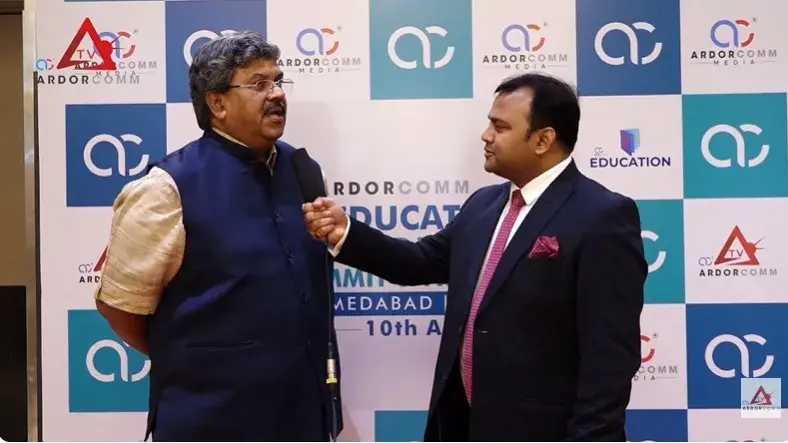
We would like to understand more about the initiatives taken under your leadership at your institute, sir. I joined ICFAI University, Mizoram, on 1st August 2025. My background is from Jawaharlal Nehru University, Delhi — Class of 1984. I spent more than 14 years in the corporate world, and overall about 25 years in Mumbai. My last assignment was as Vice President for a group of investment companies. Initially, I joined as a direct recruit officer with The New India Assurance Company back in 1990. So my approach is not purely as an academician or educationist. I use more of a corporate model — results first, need-based planning. One of the first things I did was start the PhD programme. There are many faculty members working as Assistant Professors in Mizoram and Manipur who, despite working in colleges and universities, do not have a PhD. So this initiative was propelled by that need. The response has been good. For the first batch, we made the written examination and interview very tough. After filtering, seven candidates were selected. They have completed their coursework and have been certified. For the second batch, we received 62 applications, mostly from Mizoram and Manipur. Thankfully, we are covering two states. You will also be surprised to know that, unlike many other private universities, we have 30 foreign students this year. That number is likely to increase to 60+, as we have strong connections with Myanmar, particularly the Chinland region. Our philosophy is simple — if we touch lives, let us touch them meaningfully. We strive to be very strong on the curriculum side. Anyone who enrols with us, we aim for them to pass with distinction — 80% plus — and at least a first division of 75% plus. At the same time, we are equally strong in co-curricular activities. Mizoram has a very strong cultural background, especially in music. Our students participate in pop and music contests. In fact, some celebrities are products of our university, and two of our newly registered PhD scholars are celebrities in their own right. We also celebrate real achievers in society. For example, on 11th February, we are celebrating a lady who was imprisoned in Tezpur Jail from 1975 to 1981 during the Mizo National Front movement. She later married a returnee from the Mizo National Army. Cultural identity is a strong component of our institution. Recently, we have also started focusing on sports. We participated in the Association of Indian Universities tournament, where 41 teams competed. It was a knockout tournament, and we reached the fourth round in our very first attempt. Next year, we aim to go further. We are also planning to create a fund to support talented students in sports who are financially weak, giving them space to grow and excel. Another major reform I am planning is to change the placement model. There are over 10,000 Mizos working abroad. With their support, our placements will increasingly be international. For example, 22 young Mizos are currently serving in the British Army, and 24 footballers are playing in separate football leagues abroad. So the myth that Mizos are not keen to go outside is incorrect. Currently, six of our students from Hospitality and Tourism are interning at JW Marriott Goa. After their internships, we will encourage international placements — better money and greater exposure. I believe this is a very interesting model, and in a few years, many institutions may start copying it. In forums like this, where academicians, government representatives, EdTech corporates, and startups are present, how do such platforms help the larger community? I think this is a very good initiative and can be expanded. India has North, South, East, and West — you can rotate such forums regionally, like a football tournament or a zonal competition. We often talk about academia and corporate collaboration, but there is a third segment — the government. They must also be brought in meaningfully. You have started engaging bureaucrats, which is a good move. They have connections and influence — that should be tapped strategically. Another important point is that you have involved Vice Chancellors. If more VCs participate collectively, they can take decisions on the spot. Corporate representation will always be there. Strategically, I think this is a very strong move. ArdorComm Media has just completed its fourth year of existence. Any message or good wishes you would like to share? I believe that with more discipline and a more strategic approach, much more can be achieved. Rather than depending only on the government, you can also tap into corporates and the financial sector, especially through well-laid-out CSR processes. You have different segments — schools up to Class 10, colleges, and universities. Working across these three layers or degrees of operation can create a strong ecosystem. I believe you have already started that journey. Continue with discipline and strategic clarity, and you will grow further.  

Prof. (Dr.) Ginlianlal Buhril, Vice Chancellor, ICFAI University, Mizoram, Emphasizes Corporate-Driven Academic Reforms and Global Placement Vision Read More »

Maj. Gen. B. D. Wadhwa, AVSM, Pro-Chancellor (Emeritus), IILM University, Greater Noida, UP Emphasizes on Skilling, AI Integration, and Industry-Academia Alignment

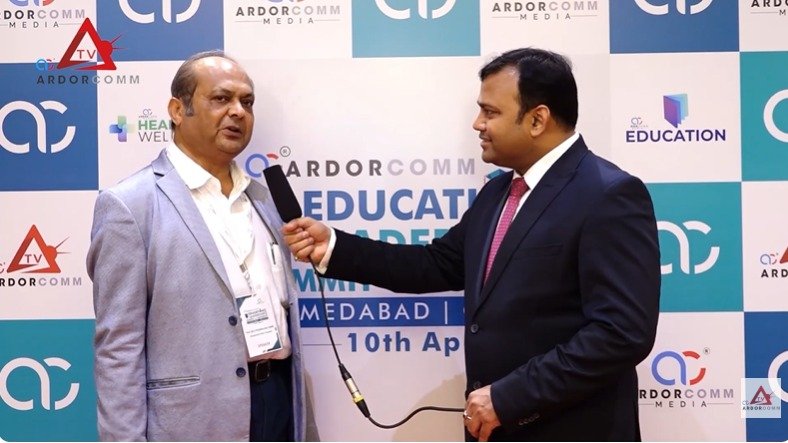
We have a very senior academician and a defence personnel, Major General B. D. Wadhwa, AVSM, Pro-Chancellor (Emeritus), IILM University, Greater Noida. We welcome you to today’s event. Thank you so much. I’m happy to be here for two reasons. Firstly, because I have served here for long, long years, so I was looking forward to coming here. Secondly, from the academic point of view, Assam means a lot to us. And of course, your platforms have always been a source of learning. That’s why I thought I must attend this platform. A person of your stature — from defence to academia — what was the thought process behind this transition, and how has the journey been so far? You see, I was always bent more towards academics. I left home at the age of 15 years and 10 months when I had just passed Class 11. After four years of training, somehow I did well. Thanks to the Government of India and the people of India — I’ll put it that way — I did my B.Tech in Mechanical Engineering, my M.Tech in Mechanical Engineering, another M.Tech in Instrumentation Technology, and my Master’s in Management. I was also a faculty member for a good 11 years while serving in the Army. Therefore, I always wanted to come into the academic sector. If you ask me what the difference is — well, there is a lot of difference. The way we teach and the way we impart knowledge to our students differs. Outside, at least in the private sector of higher education in India, there is, in my thinking, some laxity. In my university, therefore, I have tried to remove that laxity. Everybody is talking about digitalisation and skilling. What initiatives is your institute taking under your leadership? That is moving towards Artificial Intelligence. You spoke about robotics. The days have come when, in my College of Engineering, we have removed the traditional streams of Mechanical Engineering, Chemical Engineering, Automobile Engineering, and Electrical Engineering. There are hardly any students in those streams. If you have 1,000 admissions, out of those, 920 want to go into Computer Science alone. So that is the thought process in the environment, and we are tuning ourselves and changing ourselves by inducting more and more technology into our curriculum. Now, you asked me about skilling. Today, there is no other way. The way the Indian corporate sector has changed — until you are perfect in your soft skills, your hard skills, and your personality is above standard and above average — you are nowhere. Gone are those days when a CGPA of 9 or 90% marks could help you get a job. No. I may have 70%, but if my personality is better than yours, I could get a job and even a higher salary than you. I have seen these changes over the last 20 years. Accordingly, we have brought in a lot of training infrastructure focused on skills and personality building for our students. That is important. How is the participation in terms of admissions happening, sir? Is it from Central India, South India, or the Northeast? As far as Greater Noida is concerned, there are about six universities and around two dozen standalone institutions. Nobody comes from New Delhi to Greater Noida. Nobody comes from Mumbai, the South, or Ahmedabad. Why would they come to Greater Noida? So where are the crowds coming from? There are about 60,000 students in Greater Noida. The bulk — 90% to 95% — come from West Bengal, distant places of Uttar Pradesh, distant places of Madhya Pradesh, Odisha, and Assam. I have tried to go beyond Odisha and Assam. The efforts I have put in have brought some results, but we are still lacking a little. It will take time to bring about that kind of awakening — more so among the parents and faculty. The Northeast is going to take time to come up to the level of the corporate sector that we have elsewhere. So these are the places that are feeding students to Greater Noida. In forums like the ArdorComm Education Leadership Summit and Awards, where we see academicians, corporate leaders, and government representation — how does this help the larger community? It is very important for corporate people to tell the students and academicians what exactly they are looking for. This hasn’t yet been fully brought out. I’m sure in the subsequent panels it will be. It is equally important for academicians to understand what corporates are looking for, go back, and train their students accordingly. Like I said, those days of relying only on high percentages are over. What are your takeaways from today’s event since morning? So far, a lot has come out. I’m glad many people spoke to me during the tea break. They spoke to the other panellists and to you as well. I’m happy that some awakening has already begun. Now, they have to carry this awakening and the lessons from here back to their tribes, villages, and locations. Only then will there be real benefit from such hard work and from the kind of dedicated platforms you are providing.  

Maj. Gen. B. D. Wadhwa, AVSM, Pro-Chancellor (Emeritus), IILM University, Greater Noida, UP Emphasizes on Skilling, AI Integration, and Industry-Academia Alignment Read More »

Dr. Alicia Gatphoh, Vice Chancellor, The ICFAI University Meghalaya, Shares Insights on Reimagining Higher Education in the Digital Era

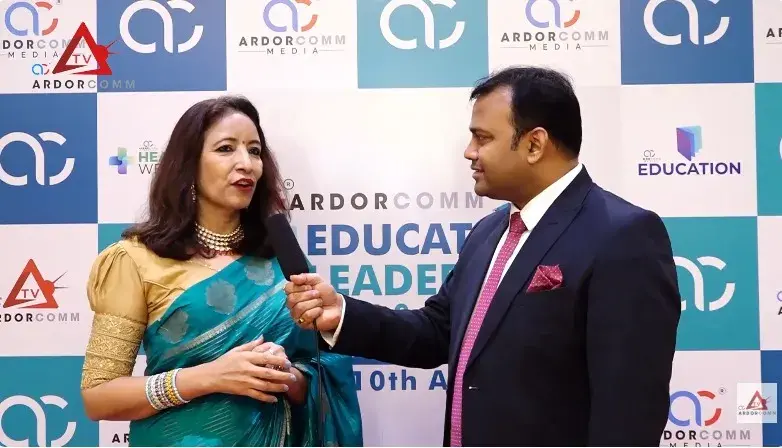
We would like to know more about your organisation. What are the different streams in your university, and how are students engaging with them? We are a university that is part of a larger group of institutions. The group has 11 universities across India, and The ICFAI University Meghalaya is one of them. Of course, we are based in Tura, with a constituent unit here in Shillong as well. At this point in time, as you know, ICFAI is well known for management. So, we offer management programmes in business as well as tourism. We also offer Computer Science and Humanities. These are mainly the streams we are offering as of now. From which parts of the country do you see admissions and traction for your institution? Mostly, we have students from our own state. However, in our Shillong unit, we do have students from outside the state — not only from other Northeastern sister states but also from other parts of the country. We also have some international students. For example, we have had quite a number from Myanmar. We have had graduating students from Thailand and Bangladesh as well. However, this year, students from Bangladesh who had shown interest could not join due to a hiccup in the paperwork. So yes, that is mainly the demographic of our students. We would like to know your key highlights or pointers on reimagining higher education in the digital era. If you talk about reimagining higher education in the digital era, it is a transformation — a transformation from the traditional model to a digital model. This transformation had already started even before we formally acknowledged it. It took place during the COVID period, when it was thrust upon us and everybody rushed to digitise course content. Some used WhatsApp, some used other platforms, because not everyone — particularly students in rural areas — was familiar with emails and other digital tools. Yes, economically we went through a very bad patch, but if you look at it educationally, we did make a leap. That was the time when we jumped from a purely offline mode of teaching to a blended mode of teaching. And we are now moving towards that digital era. When we imagine the digital era, what do we see? It may look as though the four walls of our classrooms will disappear. But I do not think they should. Today, we hear about robots as teachers. Yes, they will deliver what you feed them. But what about the academic connectivity between the teacher and the thought process? A robot may deliver content, but what about the human aspect — the analysis that a teacher brings? A teacher knows students inside and out, as we say. A teacher can understand the student. But will a robot or a humanoid be able to do that? It will only deliver what it is fed. So, what I feel is that AI tools and data should be used as tools — not as masters. I do not agree that they should become masters. They should remain tools. Otherwise, where do we go as human beings? If we move into a digital era in higher education, we must also talk about ethics. Robots cannot teach ethics — only human beings can. AI is important, but it should remain a tool. Higher education must not become merely a place for the consumption of knowledge. Universities now have to become places for the creation of knowledge. What are your takeaways from today’s event? We have been witnessing this event since morning. Please share your experience. The takeaway is that we learn from each other. Everyone has a different approach. We came to know what one university is doing and what another is not doing. Collaborations can happen — among universities as well as with other organisations present here. I had discussions with several of them. The takeaway is that we are moving into an era — in the near future — of collaboration and working together. This brings us together as human beings, irrespective of religion, caste, location, or place of stay. We come together as one united human mankind. That is my takeaway today.  

Dr. Alicia Gatphoh, Vice Chancellor, The ICFAI University Meghalaya, Shares Insights on Reimagining Higher Education in the Digital Era Read More »

Ikkz Ikbal, Principal, Maryam Memorial Institute Pandithpara Qaziabad, Srinagar shares insights on Integrating Technology and Skills for the Future

Can you please introduce yourself and tell us a little about your institution. Yeah, my name is Ikkz Iqbal. I am the Principal and the Academic Head of Maryam Memorial Institute, Pandithpara. This institute is situated in a rural area of Baramulla, Jammu and Kashmir. Despite many challenges, we are trying to integrate technology into the school curriculum and school management so that our students are prepared for the future—the AI storm and the digital storm that are coming. Students should be ready for that. For this, we have taken many initiatives which I believe are unique. We have a Samarth Prayer Programme initiative, where we give students something new to learn every day. That is a unique program we are running. Another initiative is titled Way to Destination, where we inculcate competition-based training in students right from Class 6, so that they become competitive and competent enough for the competitive examinations across the nation. We are also providing vocational and skill-based training to our students so that they do not remain dependent after completing their studies, because job opportunities are getting limited. Skilled people do not need to look for jobs—the jobs will find them. That is what we are trying to achieve in our institution, and we hope the institute succeeds in this. Thank you. You were a panel speaker today. How was your experience interacting with panelists from both school and higher education backgrounds? It was a very good blended panel, where we had panelists from schools as well as higher education. The experience was very enriching. I got to understand the problems we are facing in the Himalayan regions and the possible solutions to them. I believe that if these discussions do not remain only at the discussion level but are taken to the practical level, we will get real solutions. I also believe that school education and higher education will achieve equity, because equity begins with access—access to students, access to teachers, access to trainers, access to parents, and access to society as a whole. That is how we can achieve results and move towards digital empowerment. That is what Digital India is all about. You have attended multiple panels and industry sessions today. How has your experience been so far? First of all, the hospitality in this part of the nation—Jammu and Kashmir—is remarkable. We are very hospitable people, and thank you for appreciating that. Secondly, ArdorComm Media Group is doing a wonderful job by blending and integrating what is happening in education with technology. Thank you for giving us this opportunity and bringing these important discussions into the limelight. I believe ArdorComm will conduct such events in Kashmir as well. We are ready to welcome you there, because we need such programs and such initiatives more than anyone else. I truly hope you will come, and we will warmly welcome you. Thank you so much. Could you share a few lines about ArdorComm Media and give your wishes? ArdorComm Media is doing a great job. As rightly said in the speech by the founder, there is no fixed office setup, yet the organization is working across the nation, throughout India, and that itself is a great initiative. I hope ArdorComm Media rises day by day. The initiatives you are taking are remarkable, and you must continue with these efforts. I hope you reach the zenith, Inshallah. That is my wish. Thank you.  

Ikkz Ikbal, Principal, Maryam Memorial Institute Pandithpara Qaziabad, Srinagar shares insights on Integrating Technology and Skills for the Future Read More »

Prof. (Dr.) Rani Mughal, Principal, Govt. Degree College Surankote, Poonch shares her experience at AELSA Jammu 2025

We welcome you to today’s event, how was your experience? My name is Dr. Rani Mughal. I am the Principal of Government Degree College Surankote, District Poonch, Jammu & Kashmir. I am thankful to ArdorComm Media for inviting me as an academic delegate to participate in this education summit. Additionally, I would like to make a point here. There are many summits happening in today’s era. When I was listening to the CEO, Kumar Chandan Anand ji, I was really inspired by his story. You mentioned that you do not have any physical office anywhere in India, yet you are doing a wonderful job and organizing such kinds of events. These events are not only promoting entrepreneurial skills but are also creating awareness that we are living in an age where technology is at the forefront. I thank ArdorComm Media for coming to remote regions like ours. It gives delegates a chance to express themselves and come to a platform where there is diversity. There are so many academicians here, and you have also invited civil servants. Today’s event is even more special because our Deputy Chief Minister, who is also from Jammu & Kashmir, will be the chief guest. I would like to give my best wishes and request that you organize more and more events in Jammu & Kashmir, especially in rural regions. If such events are organized here, it will be very beneficial for us.  

Prof. (Dr.) Rani Mughal, Principal, Govt. Degree College Surankote, Poonch shares her experience at AELSA Jammu 2025 Read More »

Ritesh Kapoor, Director- Principal, A.S.N. Hr. Secondary School, Channi Himmat, Jammu shares insights on Skill Development, Digital Learning, and Holistic Education

We would like to know more about your institution. ASN Higher Secondary School stands for Adarsh Shiksha Niketan. The school was established in 1969, so we have a very strong historical background. It has 56 years of excellence. What role does skill development play at your institution? No school can run without skills and will. Skill development programs have been introduced at our school for the last decade. With government involvement, there is a special program called the INSPIRE Awards, where students’ skills are judged. They are asked to make projects and present their ideas and concepts in video format, project form, and written form, which are uploaded, and the government felicitates them. Our school has been part of the INSPIRE Awards category for more than 10 years. From which grade is skilling implemented in your institution? We have skill-based programs from Class 8 to Class 12. Before implementing any digital technology or innovation, what parameters do you follow? Our school is a fully smart campus with Wi-Fi. Every classroom is digital, equipped with tablets, smart TVs, and smart books. We definitely welcome new concepts, ideas, and technologies. AI and robotics are doing wonderful work in the market, and we will give them a warm welcome for sure. What are the key pointers before enrolling any tech partner? It needs to be user-friendly and pocket-friendly. Parents already face financial burdens related to uniforms, books, fees, and tuition. So before adding anything new to the curriculum or fee structure, we ensure it is genuine, economical, and budget-friendly. How important is sports in today’s curriculum, especially with increasing digitalization? To some extent, sports were lagging behind, but now parents, students, and schools have understood its importance. They are encouraging students toward sports and allied activities, and we actively push our students to participate. What weightage do you give to extracurricular activities? Two days ago, we held our inter-school annual day function where we felicitated merit holders, staff performers, and achievers in academics, extracurricular activities, co-curricular activities, and sports. We encourage students strongly, and teachers feel very proud when students participate and succeed. I am happy to share that our school stood first in inter-school cricket, hockey, debate, quiz (senior and junior categories), and painting competitions. Are you promoting entrepreneurship at the school level? Yes. I run a newspaper and a coffee house as well. We encourage students to start writing and improve their skills. Good writers are given opportunities to publish, and some are even paid. Around 100 students have received nominal payments for their writing skills. On special occasions, students also make cookies, chocolates, and cakes, which we sell at the coffee house. The earnings go directly to the students. How do forums like this help the education community? Education is always a joint venture. Schools cannot function alone without government support and corporate participation. For any event to be purposeful and successful, companies and stakeholders must come forward.  This forum includes everyone—from KG to PG, principals, owners, vice chancellors, and even bureaucrats. Have you attended a forum like this before? No, this is the first time. I congratulated the team during my panel discussion because this is the first platform where I saw discussions on skills, values, technology, involving teachers, principals, directors, vice chancellors, and bureaucrats together. Any key takeaways from today’s event? There are only takeaways—lots of learning and things to implement. This is the fourth anniversary of ArdorComm Media Group. Any message or wishes? ArdorComm is doing a wonderful job. Having representatives from 50 different cities is truly commendable. Keep doing your best, and you will definitely receive blessings and continued success.

Ritesh Kapoor, Director- Principal, A.S.N. Hr. Secondary School, Channi Himmat, Jammu shares insights on Skill Development, Digital Learning, and Holistic Education Read More »

Dr. Balbinder Singh Pathania, Executive Director, Dronacharya PG College, Kangra shares insights on Skilling, Digital Learning, and Empowering Students in the Himalayan Region

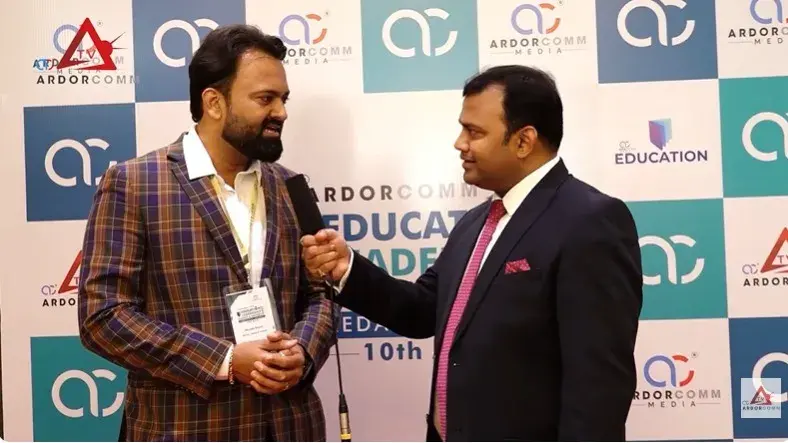
Please introduce yourself and your institute, sir. I am Dr. Balbinder Pathania from Dronacharya PG College of Education, Kangra, Himachal region. We have been running our college since 2006. We offer B.Ed, M.Ed, BBA, BCA, PGDCA, and B.Com courses. I am very happy and I want to appreciate ArdorComm Media Private Limited. The founder is with us, Mr. Kumar Chandan Anand. I really want to appreciate him for bringing all education leaders from school education to higher education together. There is a lot of exchange of learning, and through the latest technologies like AI, many experts from various schools and colleges are sharing and exchanging ideas. This initiative really enhances learning, and it will ultimately reach the children and students. This will lead to empowered citizens, which is the ultimate objective of education. I also see that these meetings are going to various regions. I would like to invite you, to Himachal, Dharamshala also, to do such kinds of events where there is a lot of learning. I am finding that most of the software companies here are informing us about various products that are going to add value to students’ lives, institutional growth, and student development. Skilling, upskilling, and reskilling are the need of the hour, and employment is also a big issue. I feel that Chandan sir is taking initiatives at the school level and college level with a vision that we will reach many people. It felt very good to be here in Jammu, and I am carrying a lot of learning with me to share with my faculty and students. Yes, it is going to have a big impact. Under your leadership, what initiatives has your institute taken toward Digital India in the Himalayan region? The schools and areas where we belong are village areas. Our BCA department is empowering students through blended learning and smart technology. They are giving students basic computer application skills. The idea that I got from your side is that we can sponsor a few very good students from government schools and bring them to the college level. We can offer internships during summer or winter vacations. When they go back to their schools, they will share their learning with their colleagues. That is something we can do. What is the takeaway from today’s event? The takeaway from today’s event is accelerating education through technology, learning exchange, and new skills that provide employment opportunities for students. We also learned how we can have better networking. I saw many multinational companies here. They have initiated ideas like including data analytics in BBA courses. I really want to appreciate the initiatives you have taken forward. There is a lot of learning and networking, and through such events, we can also include these ideas in our institution. We recently completed our fourth year, and this is our fourth anniversary. Any message or wishes you would like to share? Wonderful. I really want to appreciate this. Just four years, like a child, and you have done so much. It is highly appreciable. I bless you from the core of my heart, and I pray to God that every year you reach new heights and reach many villages and remote areas, spreading the message through technology and education. I want to appreciate your work and wish you all the best. Many congratulations on your four-year journey. God bless you.  

Dr. Balbinder Singh Pathania, Executive Director, Dronacharya PG College, Kangra shares insights on Skilling, Digital Learning, and Empowering Students in the Himalayan Region Read More »

Kumar Chandan Anand, Founder, CEO & Group Editor, ArdorComm Media Group Shares ArdorComm’s Vision for Education and Collaboration

Can you tell us a bit about ArdorComm Media? My name is Kumar Chandan Anand. I am the CEO, Group Editor, and Founder of ArdorComm Media Group. ArdorComm is a mix of two words — Ardor and Comm. Ardor means passion, zeal, and how enthusiastically you do your work. Comm stands for community and communication. So, with whatever intensity or passion we have, we engage the community through communication. That is what ArdorComm means. Our tagline is “Connecting Communities for Socio-Digital Transformation.” Today, media and digital media have an important role in every sector — whether it is education, healthcare, human resources, governance, media, entertainment, or art. If you look at different verticals, social media and digital media should be implemented everywhere. It is very important to move from traditional ways of working to an enhanced, elevated digital way of working. When organizations adopt this, they grow faster and stay competitive in the market. ArdorComm Education Leadership Summit & Awards has been organized so well. Many people did not imagine something like this would happen here. This is your 18th flagship event. Can you tell us more about it? Yes, this is our 18th flagship event. Small-scale events happen everywhere, but flagship events follow a defined pattern. Our flagship is called ArdorComm Education Leadership Summit & Awards. From the name itself, it is clear that ArdorComm Media organizes this event for the education and academic community. Along with knowledge-sharing sessions, we also organize an awards ceremony. This platform helps us recognize and honor academicians and educators who are doing exceptional work in education. Educators are often the unsung heroes, and there are very few platforms available to appreciate them. We want to change that. Our vision is not limited to metros and tier-one cities. We want to build strong education hubs in tier-two and tier-three cities as well. With the same passion with which we organize events in big cities, we are organizing them in smaller towns. We want to bring leadership together, create networking and collaboration opportunities, and generate meaningful outcomes. What is the purpose and long-term impact of such events? The purpose is knowledge sharing and collaboration, which is extremely important today. Government dignitaries have joined us on this forum. The Jammu & Kashmir government is supporting us, and today our Hon’ble Deputy Chief Minister is the Chief Guest. Directors from Skill Mission and Mission Yuva have also joined us. This forum brings government, academia, and corporate leaders together on one platform. When all stakeholders come together, meaningful solutions emerge that benefit the larger community. One of the panelists spoke about challenges such as lack of AI exposure, teacher training, and infrastructure in certain regions. What are your thoughts on this? Artificial Intelligence is trending because it has become part of our day-to-day life. It can be extremely helpful, but proper teacher training is essential. Whenever any technology is implemented, training must come first. Only then will implementation be successful. Students will consume technology better if teachers are well-equipped. Artificial Intelligence, machine learning, robotics, gaming, and IoT platforms are no longer optional. These must be integrated into the curriculum today. What message would you like to give to students and teachers? My message to students and the teaching community is simple: whatever you do, do it with passion. When you work with passion and intensity, success will definitely follow. At ArdorComm, passion is our foundation. Keep working diligently, stay committed, and you will achieve success. What are the future plans of ArdorComm Media Group? As a media organization, our focus is to create more networking platforms and maximize collaboration opportunities. We want to bring the three pillars of society — government, academia, and corporate — onto one platform to discuss meaningful solutions. This is our mission and our vision for community growth.  

Kumar Chandan Anand, Founder, CEO & Group Editor, ArdorComm Media Group Shares ArdorComm’s Vision for Education and Collaboration Read More »

Dr. Mohammed Azam, Principal, Shri Chhote Shah Govt. Degree College, Mendhar shares about NAAC Success, and Digital-First Education 

We have Dr. Mohammed Azam at this event, can you please introduce yourself? Myself Dr. Mohammed Azam, Principal of SCS Shri Chhote Shah Government Degree College, District Poonch. I’m leading the degree college where NEP has been introduced since 2022. Recently, in the month of May, my college has been accredited for the first time in J&K UT. My college is number one for virtual mode of NAAC accreditation, and our college has got a good B Grade. Our college is located just half a kilometer near the LoC line of control. My students and faculty have done very well. That’s why, for the first time in J&K UT, we got a B Grade accreditation at the national level. What streams are there in your college? Earlier, we had only two streams: Science and Arts. But nowadays, under NEP, there are 18 major subjects and 34 minor subjects. Multidisciplinary subjects and value-added courses are also offered based on the national-level education pattern. What are your thoughts on this event? I’m delighted to attend this function. I’m thankful to the organizers and your team for inviting me from the extreme border. I will bring back the message of this conference to my students and faculty members. Today’s sessions are one of the best I must say. I’m not exaggerating my views, but because you have made all the efforts and have a collective venture here in soft skilling, accelerating education patterns, school education, and higher education from different fields, covering what we need for the future — it’s all under one roof. I can say we’ll get a good message for the people, for our younger generation, so that they can excel in the coming days in the era of the internet and all these digital platforms. They can excel, and we can share our experiences with them as well. Tomorrow or the day after tomorrow, after returning, I will organize a program at the college level showcasing your valuable contribution in this field.  

Dr. Mohammed Azam, Principal, Shri Chhote Shah Govt. Degree College, Mendhar shares about NAAC Success, and Digital-First Education  Read More »

Sahitya Sudha, Headmistress, Sai International School, Kathua, shares insights on Embracing Value-Based Education and Emerging Technologies 

Welcome to ArdorComm Media. How are you feeling throughout this event? It’s a wonderful experience. Many educators are here. I came to know about many things. We discussed many topics that are very useful for educating students in the right way. We also talked about value education. I think it has been a well-spent day, a wonderful time spent together with all the educators and other company members. It was truly wonderful. You have witnessed different panels, industry speeches, and the inauguration. What are your thoughts on the event overall? I think such an event should definitely be done. Earlier, it was not happening in Jammu. It’s not a small city, but we really like such events. This event has been a real opening for educators. I think we will take the same things we learned here and deliver them to our students. They will come to know about recent developments, like upcoming technologies. For example, we discussed AI and IBM’s initiatives. We came here to learn about many things that should be incorporated for students in the education sector. I think it’s the need of the time, and Jammu really needs it.  Do you have any message or thoughts about ArdorComm Media? I would like to thank ArdorComm Media a lot for organizing this event. This is one of the best events I have ever attended in Jammu. 

Sahitya Sudha, Headmistress, Sai International School, Kathua, shares insights on Embracing Value-Based Education and Emerging Technologies  Read More »