






ArdorComm Media News Network
November 19, 2025
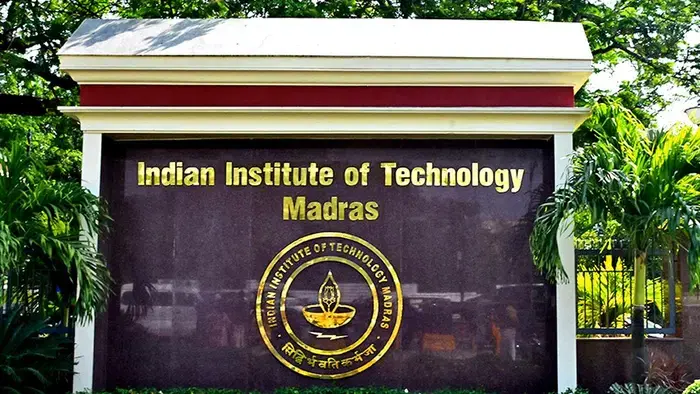
Researchers at the Indian Institute of Technology (IIT) Madras have identified key physiological signals that can help detect students who are most prone to test anxiety, potentially transforming how educational institutions understand and address academic stress.
The findings, published in the international peer-reviewed journal Behavioural Brain Research, explore the interaction between the brain and heart in students facing exam-related anxiety. This scientific approach offers early detection possibilities and paves the way for personalized coping strategies. According to NCERT (2022), nearly 81% of Indian students experience some level of test anxiety, which can adversely affect academic outcomes and long-term mental well-being.
Led by Venkatesh Balasubramanian from the Department of Engineering Design, the IIT-Madras team emphasized the value of using objective physiological data rather than relying solely on students’ self-reported feelings. Their research shows that a disruption in the brain-heart communication network during stressful situations can make certain students more vulnerable to anxiety and avoidance behaviours, highlighting a biological difference between healthy and unhealthy responses to exam pressure.
The study identifies two critical markers:
- Frontal Alpha Asymmetry (FAA): a brain-based indicator linked to emotional control
- Heart Rate Variability (HRV): a measure of how effectively the heart adjusts to stress
Researchers found that students exhibiting a negative FAA pattern showed weaker heart regulation under pressure, suggesting a biological predisposition to heightened anxiety.
This deeper understanding reframes academic stress as a condition rooted not only in psychology but also in measurable physiological interactions.
According to Swathy Parameswaran, Research Scholar at IIT Madras, these insights could lead to practical tools powered by artificial intelligence. Such tools may enable real-time, non-invasive monitoring systems capable of alerting educators and mental health professionals before visible symptoms arise. The research also supports the creation of personalized stress management strategies that can be integrated into school and university wellness programs.
Though based on a preliminary sample of 52 participants, the study marks a promising advancement in combining neuroscience with educational psychology. The team plans to expand the research with larger, more diverse groups and explore additional factors like sleep quality and physical activity. Upcoming phases will also include advanced methods such as EEG-based connectivity mapping to further unravel heart-brain dynamics during stress.
Source: PTI