





ArdorComm Media Bureau
February 23, 2026
A Transformational Turnaround under Sri R.C. Jain, IAS (Retd.)
Introduction
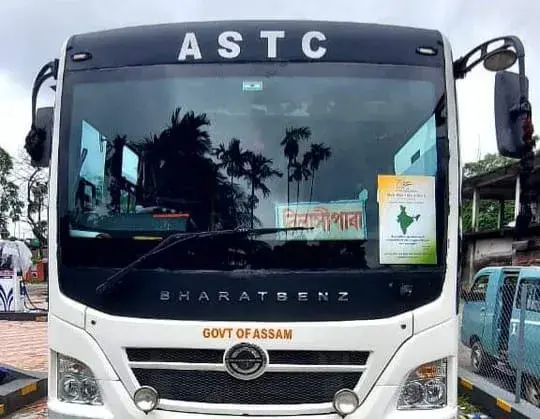
Urban transport discussions often focus on intra-city mobility. However, it is inter-city transport that drives regional growth. In Assam, inter-urban transport was once almost entirely managed by the Assam State Transport Corporation (ASTC), while private operators handled city services.
Until 1988, ASTC enjoyed near monopoly in inter-city operations. But policy changes under the Central Motor Vehicles Act, 1988, combined with severe internal mismanagement, pushed ASTC to the brink of collapse.
What followed, however, became one of India’s earliest and most successful experiments in Public-Private Partnership (PPP) in passenger transport.
Before 1988: A Stable Giant
- Established in 1948; corporatized in 1970
- Fleet strength: 500+ buses
- Strong infrastructure across districts
- Protected from private competition
- Operationally profitable (though declining)
Post-1988: Rapid Decline
With private operators entering inter-city routes, ASTC faced stiff competition. Internal weaknesses worsened the crisis:
- Overstaffing: 6,123 employees
- Staff–bus ratio: 70:1 (ideal: 6:1)
- Salaries unpaid for 14 months
- CPF dues pending for 13 years
- Retirement benefits unpaid for 14 years
- Total liabilities: ₹150 crore
- Only 70 buses operational (300 off-road)
- Dilapidated bus stations
- Demoralized workforce
ASTC stood on the verge of closure.
The Turning Point: Leadership of Sri R.C. Jain (2000)
In August 2000, Sri R.C. Jain took charge as Managing Director and launched a bold revival plan based on structural reform + private participation.
Despite strong protests, reforms began immediately.
The Revival Strategy
- Voluntary Retirement Scheme (VRS)
- 1,807 employees opted for VRS
- Monthly savings: ₹81 lakh
- First State PSU in India to receive Planning Commission grant for VRS
- Staff strength rationalized toward optimal levels
- Self-Employment Scheme (PPP Model) – 2001
The masterstroke of revival.
Private bus owners were brought under ASTC’s operational umbrella.
Why Private Operators Joined ASTC:
- Access to ASTC terminals statewide
- Freedom from private syndicate entry fees
- Cheaper repair facilities at ASTC workshops
- Centralized ticketing and scheduling
- Protection from arbitrary vehicle interception
- Marketing support (scratch card incentives)
- Route tracking services
Revenue Model:
- ₹5,000 registration fee
- ₹10,000–20,000 refundable security deposit
- 10% of fare revenue or fixed per-km charge (whichever higher)
- Operating and repair costs borne by owner
Gains for ASTC:
- Revenue without capital investment
- Productive use of idle infrastructure
- Regulated scheduling
- Employment opportunities for youth
- Protection for small operators
This became one of the first PPP transport models in India.
- Station-Based Zero Inventory Management
For ASTC’s own buses:
- Station Superintendents made vehicle-wise responsible
- No central spare inventory
- Incentive: 20% bonus on additional earnings
- Best Driver & Best Mechanic awards introduced
- One-time government grant revived grounded buses
- 34 new buses purchased
Fleet strength increased from 70 to 280 buses.
ASTC also introduced:
- Air-conditioned buses
- Low-floor buses
- Cargo & courier services
- Advertisement monetization
- Bus Station Renovation – Zero Investment Model
- Public participation encouraged
- Commercial shop spaces developed
- Rental income used for station renovation
- Surplus funds helped clear liabilities
- Support from Transport Minister Sri Anjan Dutta
- New Revenue Streams
- Diesel agreement with Indian Oil Corporation at concessional rates
- Sale of diesel to private operators
- Bulk procurement of tyres & batteries for resale
- Tyre rethreading services
- Bus advertisement rights monetized
The Outcome
- All employee dues cleared
- CPF and retirement benefits paid
- Liabilities settled
- ASTC turned profitable
- Surplus fund generated
When Sri R.C. Jain was transferred in October 2005, ASTC was financially stable and operationally revitalized.
Conclusion
The revival of ASTC stands as a landmark case of visionary leadership, bold reform, and innovative Public-Private Partnership.
What seemed an inevitable collapse transformed into a sustainable, profitable model — protecting employees, empowering private operators, and serving millions of commuters across Assam.
It remains a powerful example of how administrative courage and structural reform can revive even the most distressed public institutions.