ArdorComm Media Group

Monday, November 9, 2026 5:28 AM

agentic AI

Only 6% of companies achieve significant financial gains from AI: McKinsey survey

Despite widespread improvements in employee productivity, only a small proportion of companies are translating artificial intelligence (AI) adoption into substantial financial returns, according to McKinsey’s 2026 State of AI survey. The report found that 80 per cent of respondents had experienced improvements in individual productivity through AI. However, only 37 per cent reported a positive impact on earnings before interest and taxes (EBIT), while just 6 per cent of organisations qualified as high performers in AI implementation. McKinsey noted that companies making the greatest progress are redesigning their operating models around products, customer journeys and business processes. Such an approach can accelerate decision-making, strengthen accountability and help businesses respond more quickly to changing priorities. The report emphasised that there is no universal operating model for achieving AI success. Instead, organisations need to simplify workflows, eliminate unnecessary handoffs and ensure resources can be redirected efficiently as business requirements evolve. Only 11 per cent of surveyed organisations had reached the stage of fundamentally rethinking work and value creation through AI. The findings also pointed to growing organisational complexity, with coordinator roles expanding at approximately 1.5 to two times the rate of line roles over the past five years. According to McKinsey, AI could help businesses reduce administrative complexity and improve coordination rather than introduce additional layers of processes and oversight. Stanford economist Erik Brynjolfsson, in a recent conversation with McKinsey, argued that businesses risk overlooking AI’s broader potential when they focus primarily on reducing workforce numbers. He highlighted the importance of reorganising work to take advantage of the new capabilities that AI makes possible. However, the report warned that excessive automation could undermine employee development by removing opportunities to acquire essential skills through routine tasks. If AI agents take over entry-level responsibilities traditionally used to build professional expertise, organisations could face a future shortage of experienced workers capable of exercising sound judgement. A separate survey on AI readiness revealed a significant difference between individual confidence and organisational preparedness. While 70 per cent of respondents said they felt personally ready to work with AI, only 27 per cent of leaders considered their organisations prepared for the changes associated with an agentic AI future. McKinsey stressed the need for clear AI governance frameworks that establish appropriate usage guidelines and define accountability. As an example, the report cited a global life sciences company whose policy requires AI to support employees without undermining human creativity, expertise, autonomy or oversight. Employees remain responsible for work produced with AI assistance. The report concluded that the organisations extracting the greatest value from AI would not necessarily be those deploying the largest number of AI agents or automating the most tasks. Instead, long-term success would depend on rethinking how businesses create value and aligning workflows, talent strategies and leadership practices with the capabilities of AI. Source: ANI

Only 6% of companies achieve significant financial gains from AI: McKinsey survey Read More »

The Rise of Agentic AI Jobs: 15 Emerging Careers Shaping the Future of Work

Artificial intelligence is moving beyond simply answering questions. The next phase of AI is increasingly about taking action. Traditional AI systems typically respond to a user’s instructions. Agentic AI goes a step further. These systems can interpret a goal, break it into smaller tasks, select appropriate tools, make decisions, learn from feedback and complete multi-step workflows with limited human intervention. As businesses begin experimenting with these autonomous systems, a new employment landscape is emerging. Alongside conventional AI and software roles, companies are likely to need professionals who can build, integrate, evaluate, secure and manage AI agents. Here are 15 emerging career paths associated with the growth of agentic AI. 1. Agentic AI Engineer Agentic AI Engineers design and build autonomous AI systems capable of planning and completing complex tasks. They work with large language models, agent frameworks and tool-calling systems to create agents that can operate with limited human supervision. Key skills: Python, LLMs, agent orchestration, tool calling and software development. 2. AI Agent Developer AI Agent Developers focus on implementing the functionality of individual AI agents. They determine which tools an agent can access, how it should respond to different situations and how it should execute specific tasks. Key skills: Python, APIs, prompt engineering and application development. 3. AI Engineer AI Engineers build the broader machine learning systems and infrastructure that support intelligent applications. For professionals entering the agentic AI ecosystem, this can provide a strong foundation before specialising in autonomous systems. Key skills: Machine learning, deep learning, model development and cloud technologies. 4. LLM Engineer Large language models often serve as the reasoning engine behind AI agents. LLM Engineers work on model development, fine-tuning, optimisation and deployment to improve the reliability and performance of AI applications. Key skills: Natural language processing, fine-tuning, prompt engineering and vector databases. 5. AI Solutions Architect AI Solutions Architects design the larger technical ecosystem in which AI agents operate. They determine how agents interact with enterprise applications, databases and other systems while considering scalability, security and reliability. Key skills: System architecture, cloud computing, APIs and enterprise integration. 6. AI Automation Engineer AI Automation Engineers identify repetitive business processes that could be handled by intelligent systems. They work with business teams to convert complex workflows into processes that AI agents can execute. Key skills: Workflow automation, process mapping, AI tools and business-process analysis. 7. Multi-Agent Systems Engineer Some complex tasks may require several specialised AI agents rather than one system handling everything. Multi-Agent Systems Engineers develop architectures in which multiple agents communicate, coordinate and divide responsibilities. Key skills: Multi-agent orchestration, distributed systems and agent communication. 8. AI Product Manager AI Product Managers determine what AI-powered products should accomplish and how they can address genuine customer or business needs. The role requires an understanding of both technology and business strategy, without necessarily requiring advanced programming skills. Key skills: Product strategy, AI literacy, business analysis and communication. 9. AI Evaluation Engineer As AI systems become more autonomous, measuring their performance becomes increasingly important. AI Evaluation Engineers develop benchmarks, tests and metrics to determine whether agents are accurate, reliable and capable of handling unexpected situations. Key skills: AI evaluation, testing, statistics and performance analysis. 10. AI Safety Engineer Giving AI systems the ability to act independently also creates new safety challenges. AI Safety Engineers develop guardrails, monitoring mechanisms and risk controls designed to keep autonomous systems within defined boundaries. Key skills: Risk assessment, safety frameworks, guardrail design and model monitoring. 11. AI Governance Specialist AI Governance Specialists help organisations establish rules and processes for responsible AI deployment. They may work with legal, compliance, cybersecurity and business teams to ensure AI systems are used according to organisational policies and applicable regulations. Key skills: AI policy, regulatory awareness, governance and risk management. 12. RAG Engineer Retrieval-Augmented Generation, or RAG, enables AI systems to retrieve relevant information from external knowledge sources before generating an answer or taking action. RAG Engineers build these information-retrieval systems so agents can work with current and organisation-specific data. Key skills: RAG pipelines, embeddings, vector databases and search technologies. 13. AI Integration Engineer An AI agent becomes significantly more useful when it can interact with existing business systems. AI Integration Engineers build connections between agents and databases, enterprise applications, communication platforms and other digital tools. Key skills: API integration, databases, systems engineering and software architecture. 14. AI Operations Engineer Building an AI agent is only the beginning. AI Operations Engineers are responsible for deploying, monitoring and maintaining AI systems once they enter production. Their work has similarities with DevOps and MLOps, but is tailored to AI-powered applications. Key skills: MLOps, cloud infrastructure, deployment and monitoring. 15. AI Consultant AI Consultants help organisations identify where autonomous AI could deliver practical value. They analyse business processes, identify potential use cases and help companies develop strategies for adopting AI without necessarily building the technology themselves. Key skills: Business strategy, AI literacy, problem-solving and communication. How Can You Prepare for an Agentic AI Career? Despite the variety of roles, several foundational skills are common across the field. Learning Python, machine learning fundamentals, APIs and large language models can provide a strong starting point. The next step is experimentation. Building simple AI agents that can use tools, retrieve information, remember context or complete multi-step tasks can provide practical experience that goes beyond theoretical knowledge. From there, career paths begin to diverge. Those interested in technical development can explore areas such as agent engineering, RAG, AI integration and MLOps. Professionals who prefer strategy and coordination may find opportunities in AI product management, consulting or governance. Communication and problem-solving will remain important regardless of the specialisation. As AI systems become more capable, organisations will need people who understand not only what the technology can do, but also where and how it should be used. The Changing AI Career Landscape Agentic AI is creating a broader ecosystem around artificial intelligence. The emerging roles span software development, infrastructure, product management, cybersecurity, governance, business strategy and operations. Not every title listed above will become a


The Rise of Agentic AI Jobs: 15 Emerging Careers Shaping the Future of Work Read More »

Agentic AI Reduced Productivity at Nearly 30% of Companies, McKinsey Report Finds

The growing adoption of agentic artificial intelligence is not necessarily resulting in higher productivity for businesses, with productivity declining at nearly 30 per cent of companies after teams began using autonomous AI tools, according to McKinsey’s Technology Trends Outlook 2026. The report noted that organisations can face operational challenges when they introduce agentic AI into software development without making corresponding changes to their existing workflows and processes. While autonomous AI systems can automate several stages of software development, the productivity benefits have differed significantly across organisations. McKinsey cautioned that simply increasing the amount of coding does not necessarily lead to more useful products or faster business growth. In one study cited in the report, AI tools increased coding activity by 180 per cent, while the number of shipped releases increased by only 30 per cent. The report also highlighted a significant trust gap among developers. Globally, around 46 per cent of developers said they actively distrust the accuracy of AI tools, while 33 per cent said they trust them. Only 3 per cent expressed a high level of trust in AI-generated outputs. McKinsey said developer confidence and acceptance could become an important factor determining the value organisations derive from agentic software development. Despite these concerns, investment in agentic AI continues to grow rapidly. Equity investment in companies developing agentic software increased from relatively negligible levels through 2023 to around $5 billion in 2025. The figure crossed $61 billion in the first half of 2026, largely driven by a reported $60 billion acquisition of Cursor. Job postings related to agentic AI also rose 221 per cent between 2024 and 2025. The broader AI ecosystem is witnessing a similar surge in investment. Spending on AI infrastructure doubled within a year, while energy technologies attracted nearly $200 billion in investment during 2025 as companies sought to address the rising energy requirements associated with AI. McKinsey said the rapid pace of AI adoption is creating additional challenges for businesses, many of which are attempting to scale the technology without established implementation frameworks. Organisations must simultaneously address workforce upskilling, legacy-system upgrades and evolving cybersecurity risks as AI becomes increasingly integrated into business operations. Source: McKinsey

Agentic AI Reduced Productivity at Nearly 30% of Companies, McKinsey Report Finds Read More »

IIM Kozhikode Introduces 20-Week Executive Programme on Product Innovation with AI and Agentic AI

Responding to the growing demand for artificial intelligence-driven product development, the Indian Institute of Management (IIM) Kozhikode has launched a 20-week Executive Programme in Product Innovation with AI & Agentic AI. The programme is designed to equip working professionals with the expertise needed to create AI-powered products and drive innovation in an increasingly AI-centric business environment. The curriculum focuses on enabling participants to move beyond the use of conventional AI tools and develop AI-native products. It covers the complete product development lifecycle, including identifying market opportunities, understanding customer needs, rapid prototyping, deployment, optimisation, and scaling AI-enabled solutions. The programme will be delivered by IIM Kozhikode faculty alongside experienced industry professionals working on cutting-edge AI products. Participants will also attend four live masterclasses covering key topics such as AI-native product design, human-AI interaction, agentic AI systems, and emerging trends in AI-led product innovation. As part of the hands-on learning experience, learners will complete five applied mini projects and a capstone project focused on AI opportunity assessment, customer validation, experimentation, prototyping, agentic workflow development, and deployment-ready product creation. The course also offers practical exposure to more than 20 industry-standard AI and product management tools, including ChatGPT, Claude, Figma, Uizard, n8n, Mixpanel, Amplitude, Miro, Notion, Jira, and Google Looker Studio. Participants who successfully complete the programme will receive a certificate from IIM Kozhikode. They can also choose an optional one-day campus immersion, available at an additional cost, to engage in networking opportunities and academic interactions. The executive programme aims to help professionals understand how AI is transforming product strategy, business models, user experience, agile development, data strategy, and autonomous workflows, preparing them to build innovative products for the AI-first era. The launch comes at a time when AI adoption continues to accelerate globally. According to the McKinsey State of AI Report 2025, 88% of organisations have integrated AI into at least one business function, compared to 55% in the previous year. Meanwhile, insights from the Forrester 2026 and Figma AI Report 2025 indicate that 51% of AI product teams are now developing agentic AI solutions, a significant increase from 21% in 2024. Source: Indian Express  

IIM Kozhikode Introduces 20-Week Executive Programme on Product Innovation with AI and Agentic AI Read More »

Samsung Electronics to Transition to AI-Driven Autonomous Factories by 2030

South Korean tech giant Samsung Electronics has announced plans to convert its domestic and overseas manufacturing facilities into AI-powered autonomous factories by 2030, marking a major step in its manufacturing innovation strategy. The company said it will deploy digital twin-based simulations across the entire production cycle — from raw material warehousing to final shipment. These virtual replicas of physical operations will enable real-time monitoring and optimisation. In addition, Samsung will introduce AI agents dedicated to quality control, production management and logistics, strengthening data-driven analysis and verification systems. According to the company, the transformation is expected to significantly enhance productivity and product quality. Broader AI applications will also extend to environmental health and safety management, helping improve workplace safety standards. Building on its AI capabilities developed in the mobile segment, Samsung plans to incorporate “agentic AI” — first introduced with the Galaxy S26 — into its manufacturing ecosystem. Agentic AI systems are designed to autonomously set objectives and execute plans to achieve specific goals without constant human intervention. The company is also working on gradually deploying humanoid manufacturing robots across production lines, with the aim of creating fully optimised smart factories. Lee Young-soo, a senior company official, said the next phase of manufacturing innovation will go beyond automation. “The future lies in autonomous production sites where AI understands on-site conditions and independently makes optimal decisions,” he said, adding that Samsung aims to position itself as a global leader in AI-powered manufacturing. Samsung is set to present its industrial AI roadmap and digital twin-driven factory vision at the Mobile World Congress 2026 (MWC) in Barcelona later this month. On the sidelines of the event, during the Samsung Mobile Business Summit (SMBS), the company will outline its governance framework designed to strengthen oversight as agentic AI adoption expands across industries. Separately, Samsung recently unveiled its flagship Galaxy S26 lineup at the Galaxy Unpacked 2026 in San Francisco. The series includes the Galaxy S26, Galaxy S26+, and Galaxy S26 Ultra, featuring 6.3-inch, 6.7-inch and 6.9-inch displays, respectively. The Ultra model also introduces a built-in privacy display alongside enhanced AI-powered features. Source: IANS

Samsung Electronics to Transition to AI-Driven Autonomous Factories by 2030 Read More »

Digital Colleagues Incoming: Nvidia CEO Says AI ‘Employees’ Will Work Alongside Humans, IT to Become HR for Agentic AI

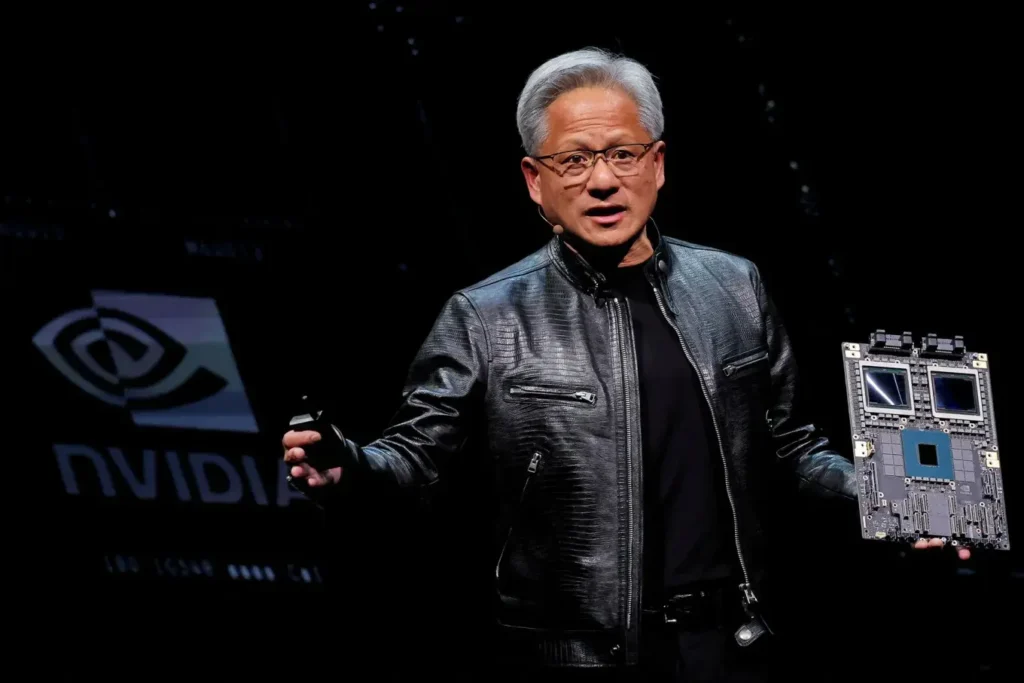
Nvidia CEO Jensen Huang has offered a bold vision of the corporate workforce’s future — one where digital employees powered by artificial intelligence (AI) will work hand-in-hand with humans. These AI “agents,” he says, will not only perform professional roles but also undergo formal hiring and onboarding processes to learn company values, culture, and workflows. Huang believes this emerging “agentic AI workforce” could create a trillion-dollar market opportunity. In a recent conversation with Citadel Securities, Huang said he expects future enterprises to employ digital nurses, lawyers, accountants, and marketers — some licensed from AI developers, others trained in-house. “You’ll hire some and license some, depending on their expertise,” he explained. “The future workforce will blend humans with digital humans.” Huang emphasized that these AI agents will need structured orientation and integration, much like their human counterparts. “I tell my CIO that our IT department will one day be the HR department for agentic AI,” he remarked. “Our digital employees will collaborate with our biological ones — that’s the future shape of our company.” These AI “workers” could come from multiple platforms, including OpenAI, Harvey, OpenEvidence, Cursor, Replit, and Lovable. Some may be internally developed — Nvidia already employs more AI cybersecurity agents than human experts to protect its data and systems. The conversation around agentic AI — self-directed, task-performing digital entities — is gaining traction across the tech industry. Salesforce CEO Marc Benioff said at the World Economic Forum in Davos that the current generation of executives will likely be the last to lead all-human workforces. “From now on, leaders will manage both human and digital employees,” Benioff said. Similarly, Anthropic CEO Dario Amodei predicted that by 2026 or 2027, AI systems will surpass humans “in almost all domains,” underscoring the rapid pace at which artificial intelligence is evolving toward autonomy and workplace integration. Source: TOI

Digital Colleagues Incoming: Nvidia CEO Says AI ‘Employees’ Will Work Alongside Humans, IT to Become HR for Agentic AI Read More »