ArdorComm Media Group

Monday, November 9, 2026 5:13 AM

AI Infrastructure

Agentic AI Reduced Productivity at Nearly 30% of Companies, McKinsey Report Finds

The growing adoption of agentic artificial intelligence is not necessarily resulting in higher productivity for businesses, with productivity declining at nearly 30 per cent of companies after teams began using autonomous AI tools, according to McKinsey’s Technology Trends Outlook 2026. The report noted that organisations can face operational challenges when they introduce agentic AI into software development without making corresponding changes to their existing workflows and processes. While autonomous AI systems can automate several stages of software development, the productivity benefits have differed significantly across organisations. McKinsey cautioned that simply increasing the amount of coding does not necessarily lead to more useful products or faster business growth. In one study cited in the report, AI tools increased coding activity by 180 per cent, while the number of shipped releases increased by only 30 per cent. The report also highlighted a significant trust gap among developers. Globally, around 46 per cent of developers said they actively distrust the accuracy of AI tools, while 33 per cent said they trust them. Only 3 per cent expressed a high level of trust in AI-generated outputs. McKinsey said developer confidence and acceptance could become an important factor determining the value organisations derive from agentic software development. Despite these concerns, investment in agentic AI continues to grow rapidly. Equity investment in companies developing agentic software increased from relatively negligible levels through 2023 to around $5 billion in 2025. The figure crossed $61 billion in the first half of 2026, largely driven by a reported $60 billion acquisition of Cursor. Job postings related to agentic AI also rose 221 per cent between 2024 and 2025. The broader AI ecosystem is witnessing a similar surge in investment. Spending on AI infrastructure doubled within a year, while energy technologies attracted nearly $200 billion in investment during 2025 as companies sought to address the rising energy requirements associated with AI. McKinsey said the rapid pace of AI adoption is creating additional challenges for businesses, many of which are attempting to scale the technology without established implementation frameworks. Organisations must simultaneously address workforce upskilling, legacy-system upgrades and evolving cybersecurity risks as AI becomes increasingly integrated into business operations. Source: McKinsey

Agentic AI Reduced Productivity at Nearly 30% of Companies, McKinsey Report Finds Read More »
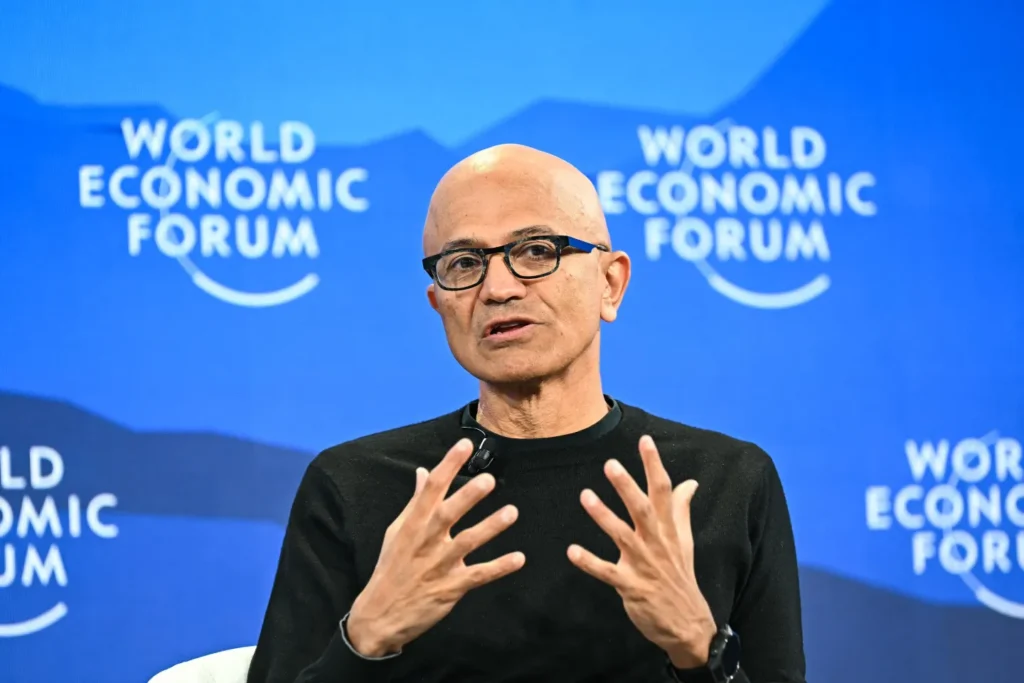
Microsoft CEO Satya Nadella Raises Concerns Over Growing AI Power Concentration

Satya Nadella, Chief Executive Officer of Microsoft, has voiced serious concerns about the increasing concentration of power within the artificial intelligence sector, cautioning against a future where only a few major companies control the rapidly evolving technology. In a recent interview with The Wall Street Journal, Nadella shared his perspective on the future of AI, emphasizing the importance of affordability, accessibility, and giving users greater control over how the technology develops and is deployed. He warned against a scenario where a small group of companies dominates AI development while simultaneously claiming that white-collar jobs could disappear and using those fears to justify massive investments in infrastructure such as large-scale data centres. According to Nadella, society is unlikely to accept a future where the benefits, learning, and deployment of AI remain concentrated in the hands of a select few organizations. Instead, he stressed the need for the industry to build public trust and earn what he referred to as “social permission” to continue advancing the technology responsibly. His comments come amid growing global debate over the direction of the AI race. Although he did not directly mention competitors, Nadella criticized business models where only a handful of firms capture most of the economic value generated by AI while also raising concerns about safety risks, employment disruption, and the enormous computing resources required for development. A key strategic question for Microsoft is whether it should host models from DeepSeek, a Chinese AI company that has recently gained attention worldwide for offering highly cost-effective AI models. Such a decision could intensify competition in the AI market and challenge established industry leaders by driving down costs. Nadella also pushed back against the idea that AI should replace human jobs entirely. Instead, he argued that businesses should focus on redesigning and restructuring work roles so employees can adapt alongside technological progress rather than being displaced permanently. While acknowledging that AI-driven transformation will inevitably bring disruption, he said companies must actively create pathways that help workers adjust to these changes and remain relevant in the evolving workforce. Describing AI as a “knowledge engine,” Nadella said the future should involve organizations leveraging multiple AI models with varying capabilities and price points rather than depending on a single dominant provider. He further emphasized that rebuilding public confidence in AI will require more than promises or carefully crafted narratives. According to Nadella, the technology industry must demonstrate through concrete action that AI development can be both responsible and beneficial for society. The remarks come at a time when competition around AI is accelerating globally, with major technology firms investing billions of dollars into infrastructure, advanced computing systems, and data centres. Microsoft continues to remain one of the leading forces shaping the future of the AI ecosystem through its partnerships and investments across the sector. Source: IANS

Microsoft CEO Satya Nadella Raises Concerns Over Growing AI Power Concentration Read More »

Sundar Pichai Unveils Google AI Professional Certificate, Announces India-America Connect Initiative

At the Artificial Intelligence Summit in New Delhi, Sundar Pichai, CEO of Google, announced the launch of a new Google AI Professional Certificate programme aimed at strengthening AI skills and deepening technology collaboration between India and the United States. During his keynote address, Pichai also introduced the India-America Connect Initiative, a major digital infrastructure project that will establish new subsea cable routes linking India, the US, and several regions across the southern hemisphere. The initiative is designed to enhance AI connectivity, improve data transfer speeds, and support the growing demand for advanced AI capabilities. Emphasising the need to pair infrastructure growth with talent development, Pichai described the AI certificate programme as one of Google’s most ambitious skilling efforts in India. He noted that as AI creates new opportunities, investing in workforce training is essential to ensure professionals can effectively integrate AI into their work. Reflecting on Visakhapatnam—popularly known as Vizag—Pichai recalled remembering it as a quiet coastal city filled with promise. He said he never imagined it would one day emerge as a global AI hub. As part of its planned $15 billion infrastructure investment in India, Google will establish a full-stack AI hub in the region. The facility will feature gigawatt-scale compute capacity along with a new international subsea cable gateway, a move expected to create jobs and bring cutting-edge AI resources to businesses and communities across the country. The Google AI Professional Certificate is designed to equip learners with both foundational and advanced AI expertise. The curriculum covers key areas such as artificial intelligence fundamentals, machine learning, neural networks, and practical real-world applications. Participants will gain hands-on experience using Google’s AI tools and technologies, enabling them to implement AI-driven solutions in professional settings and explore new career opportunities in a rapidly evolving digital economy. Source: NDTV

Sundar Pichai Unveils Google AI Professional Certificate, Announces India-America Connect Initiative Read More »

Oracle Clarifies OpenAI Ties as AI Spending Sparks Layoff Speculation

Oracle has issued a public statement addressing speculation around its partnership with OpenAI after analyst reports suggested that the company’s heavy push into artificial intelligence infrastructure could trigger significant job cuts. In a post on its official X handle, Oracle said that a widely cited Nvidia–OpenAI investment proposal had “no impact whatsoever” on its financial relationship with OpenAI. The company added that it remains “highly confident” in OpenAI’s ability to secure funding and honour its long-term commitments. The clarification came amid growing market chatter that Oracle may reduce its workforce by as many as 30,000 employees to help finance its expanding AI ambitions. The response followed a volatile period for firms linked to OpenAI. The Wall Street Journal reported that a proposed $100 billion investment by Nvidia into OpenAI never materialised and had stalled at an early stage. Nvidia CEO Jensen Huang later confirmed that discussions held last year were non-binding and did not progress into a formal deal. Despite Oracle’s reassurance, investor sentiment remained cautious. Shares of the software giant dropped nearly 3% to $160.06 shortly after the statement, reflecting concerns over the scale of Oracle’s exposure to the costly AI infrastructure build-out. Analysts have highlighted leverage as a growing pressure point. TD Cowen said Oracle is evaluating potential workforce reductions of between 20,000 and 30,000 roles, a move that could free up an estimated $8 billion to $10 billion in annual cash flow. The firm estimates Oracle’s long-term capital expenditure commitments linked to OpenAI — including massive data centre projects and advanced chip purchases — could reach roughly $156 billion. Oracle’s balance sheet has already expanded sharply. Analysts note the company has taken on around $58 billion in new debt in recent months to fund data centre campuses across the US, pushing total debt beyond the $100 billion mark. Since its peak in September 2025, Oracle’s market capitalisation has declined steeply, wiping out hundreds of billions of dollars in value. The strain is not limited to Oracle alone. According to Reuters, OpenAI has been exploring alternatives to Nvidia’s inference chips, holding discussions with AMD, Cerebras and Groq as it looks to lower costs and diversify its computing supply. While Oracle has not officially announced any job cuts, analysts say the situation highlights the enormous capital demands of the AI race and the growing challenge companies face in balancing long-term infrastructure investments with short-term financial discipline. With competition in AI infrastructure accelerating, investors are expected to closely watch how Oracle manages its spending, funding strategy and workforce decisions in the coming months.

Oracle Clarifies OpenAI Ties as AI Spending Sparks Layoff Speculation Read More »

Governance Emerges as India Inc’s Top Priority as Companies Race to Scale AI Infrastructure: IBM Study

India Inc is placing AI governance at the centre of its growth strategy, with a new study from the IBM Institute for Business Value revealing that strong oversight is now seen as the most critical factor for scaling AI infrastructure. In the report titled AI Infrastructure That Endures, 83% of Indian executives say that robust governance frameworks are essential for deploying AI at scale. Yet, only 4% claim their organisations have fully established mechanisms to manage AI-related risks — signalling a widening preparedness gap even as AI adoption accelerates. Despite this shortfall, enterprises are increasing investments significantly. Nearly 58% of companies have boosted their infrastructure budgets, with spending expected to rise by 19% in 2025, mirroring global trends. However, just one in ten leaders believes their current systems are fully ready to support AI needs, underscoring the urgent need for modernization to enable trust, speed and scalable performance. According to Subhathra Srinivasaraghavan, Vice President at the IBM India Systems Development Lab, Indian businesses are entering a defining stage of their AI evolution. She noted that organisations must now convert ambition into long-term impact by building agile, trustworthy and talent-driven AI ecosystems. Strengthening hybrid architectures, deepening AI skills and adopting governance-by-design were highlighted as key enablers for India’s progress toward its Viksit Bharat vision. The study finds that hybrid infrastructure is emerging as a performance catalyst — with 65% saying a fit-for-purpose hybrid strategy has improved cost and efficiency. Another 32% plan to expand hybrid AI environments over the next three years. On the skills front, companies recognise talent as a core driver of AI success. Eighty-three per cent are investing in training or hiring for AI-focused roles, though 75% admit they are still early in workforce maturity. Meanwhile, 43% have set up AI Centres of Excellence to scale internal capabilities. Source: ANI

Governance Emerges as India Inc’s Top Priority as Companies Race to Scale AI Infrastructure: IBM Study Read More »

Gujarat Rolls Out AI Action Plan to Revolutionize Governance by 2030

Ardorcomm news

The Gujarat government has approved a comprehensive Artificial Intelligence (AI) Implementation Action Plan for 2025–2030, signaling a major step toward embedding AI technologies into its governance and public service mechanisms. Endorsed by Chief Minister Bhupendra Patel, the initiative is geared toward enhancing service delivery, optimizing administrative efficiency, and leveraging AI across key sectors including healthcare, education, agriculture, and finance. This strategic blueprint, developed by the Department of Science and Technology and shaped by insights from a 10-member AI Taskforce, aligns with national development visions such as Viksit Gujarat@2047 and Viksit Bharat@2047. It also supports the Centre’s push under Prime Minister Narendra Modi’s leadership to integrate AI into governance, public policy, and digital infrastructure. The five-year roadmap highlights six core areas: Data Security and Compliance: Establishing a trusted, regulation-friendly data environment. Infrastructure Development: Expanding GPU- and cloud-powered digital frameworks, with plans to launch AI factories in smaller cities. Skilling Initiatives: Training 2.5 lakh individuals—including students, MSMEs, and government personnel—in AI, machine learning, and emerging technologies. Research & Industry Collaboration: Fostering academic-industry partnerships to develop real-world AI models tailored for governance. Startup Support: Boosting DeepTech innovation with funding, mentorship, and incubation for startups. Responsible AI: Instituting auditing systems, safety protocols, and ethical guidelines to ensure transparent and secure AI deployment. Implementation will be phased, beginning with the creation of a state-level AI data repository and the establishment of AI development hubs. Pilot programs will be rolled out in select government departments to test and refine AI use cases. To guide the initiative, a dedicated AI and Deep Tech Mission will be established—tasked with overseeing project design, monitoring, and cross-sectoral collaboration. Gujarat has already laid strong groundwork in the AI space, launching an AI Centre of Excellence at GIFT City, organizing capacity-building workshops for civil servants, and initiating efforts to develop Indian language-based AI solutions. The state also conducted an AI Innovation Challenge to source practical AI applications from innovators and entrepreneurs. With this action plan, Gujarat positions itself at the forefront of AI-enabled governance, aiming to create a smarter, more responsive, and future-ready administrative ecosystem. Source: The Hindu Photo Credit: PTI  

Gujarat Rolls Out AI Action Plan to Revolutionize Governance by 2030 Read More »

Meta Launches New AI Superintelligence Lab, Brings in Top Talent

Meta CEO Mark Zuckerberg has unveiled a major transformation in the company’s artificial intelligence strategy by introducing a newly formed division focused on building AI systems with superhuman capabilities. The initiative, titled Meta Superintelligence Labs, will spearhead efforts to create AI that can match or surpass human performance in various tasks. At the helm of this ambitious endeavor is Alexandr Wang, co-founder of data-labeling firm Scale AI, who joins Meta as the Chief AI Officer. Zuckerberg, in an internal message to employees on Monday, praised Wang as “the most impressive founder of his generation.” Wang will be joined by Nat Friedman, former GitHub CEO, who will co-lead the lab and guide Meta’s work in applied AI research and product development. Zuckerberg emphasized that AI has become the company’s highest priority this year. “The development of superintelligent AI is no longer a distant concept—it’s within reach,” he wrote. “This marks the dawn of a new era, and I am determined to ensure Meta leads this transformation.” The new direction comes amid an intense race between major tech giants—including OpenAI and Google—to dominate the frontier of AI innovation. Meta has ramped up investments in cutting-edge infrastructure like chips and data centers and has also aggressively recruited top-tier AI talent. A major milestone in this strategy was Meta’s recent $14.3 billion investment in Scale AI, which also brought Wang into the fold. The company is also in discussions to acquire AI startups such as Perplexity AI, Runway AI, and PlayAI, the latter known for using AI to replicate human voices. To further strengthen its superintelligence efforts, Meta has onboarded 11 elite AI researchers from companies including OpenAI, Anthropic, and Google DeepMind. Among the new hires are Jack Rae and Pei Sun from DeepMind, former OpenAI experts Jiahui Yu, Shuchao Bi, Shengjia Zhao, and Hongyu Ren, as well as Anthropic’s Joel Pobar—who previously spent over a decade at Meta. With these moves, Meta is positioning itself to be a dominant force in the next wave of AI evolution. Source: Bloomberg

Meta Launches New AI Superintelligence Lab, Brings in Top Talent Read More »