ArdorComm Media Group

Tuesday, March 10, 2026 8:41 AM

AIIMS Delhi

1 in 7 Stroke Patients in India Below 45, Says National Registry Analysis
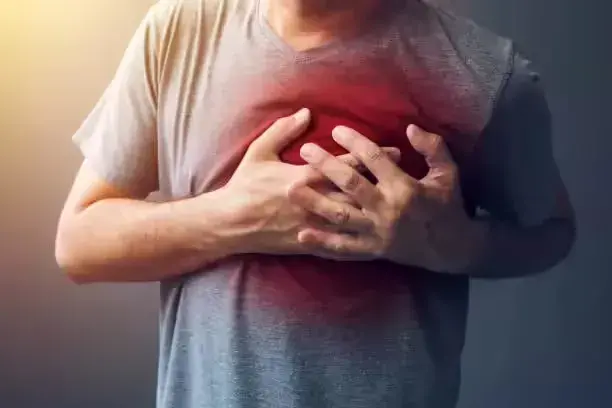
Nearly one in seven stroke patients in India is under the age of 45, while delayed hospital arrival continues to undermine survival and recovery, according to findings from the country’s largest hospital-based stroke registry study published in the International Journal of Stroke. The analysis, led by Prashant Mathur of the ICMR–National Centre for Disease Informatics and Research (ICMR-NCDIR) along with investigators from the National Stroke Registry Programme, reviewed 34,792 stroke cases recorded across 30 hospitals between 2020 and 2022. The mean age of patients was 59.4 years, but 13.8 per cent were younger than 45, highlighting the rising burden of stroke among younger Indians. Men accounted for 63.4 per cent of cases, while 72.1 per cent of patients were from rural areas, underscoring disparities in awareness, prevention and access to timely care. Hypertension emerged as the most significant risk factor, present in 74.5 per cent of patients. Diabetes affected 27.3 per cent, smokeless tobacco use 28.5 per cent, tobacco smoking 22.6 per cent and alcohol consumption 20.2 per cent. The study observed gender differences, with women showing higher rates of hypertension and diabetes, while men reported greater tobacco and alcohol use. Timely treatment remains a major challenge. Only 20 per cent of patients reached hospital within the critical 4.5-hour window for emergency stroke therapy, while 37.8 per cent arrived after 24 hours. Consequently, just 4.6 per cent of ischemic stroke patients received intravenous thrombolysis and 0.7 per cent underwent mechanical thrombectomy. Delayed hospital arrival, imaging bottlenecks and limited availability of medicines were cited as key barriers. Ischemic strokes accounted for 60 per cent of cases, while intracerebral haemorrhage comprised 34.2 per cent. Dr Manjari Tripathi, Head of Neurology at the All India Institute of Medical Sciences (AIIMS Delhi), stressed the urgency of rapid response. She emphasised that patients should reach hospital within three hours, undergo immediate brain imaging and receive thrombolysis without delay if eligible, noting that every minute of delay leads to irreversible brain damage and long-term disability. Outcomes remain severe. In-hospital mortality stood at 13.9 per cent, rising to nearly 28 per cent at three months, suggesting many deaths occurred after discharge. Overall, more than half of patients experienced poor outcomes — defined as death or significant disability. Women were more likely than men to have disability at follow-up, indicating possible gaps in rehabilitation and post-discharge care. Recurrent stroke within three months was reported in 1.1 per cent of patients. Researchers called for stronger control of hypertension and diabetes, tobacco cessation efforts, faster referral systems and improved access to acute stroke care, particularly in rural India. Without stronger prevention and rapid treatment systems, they warned, stroke will continue to affect younger populations and leave families facing avoidable disability. Source: TNN

1 in 7 Stroke Patients in India Below 45, Says National Registry Analysis Read More »
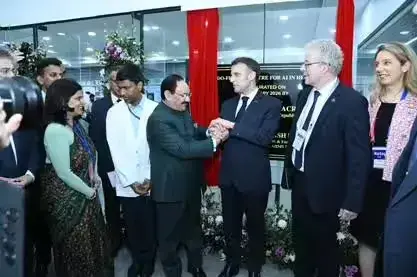
India, France Inaugurate Indo-French Centre for AI in Health at AIIMS Delhi

In a major step to deepen bilateral cooperation in healthcare and emerging technologies, Union Health Minister JP Nadda and French President Emmanuel Macron jointly inaugurated the Indo-French Centre for AI in Health (IFCAIH) at All India Institute of Medical Sciences (AIIMS), New Delhi. The newly launched centre is envisioned as a pioneering platform to accelerate AI-driven research, strengthen medical education, and promote clinical innovation. According to official sources, the IFCAIH aims to tackle complex healthcare challenges while fostering interdisciplinary collaboration between Indian and French institutions. Addressing the gathering, President Macron underlined the importance of developing sovereign AI capabilities. He stressed that India and France must build their own computing capacity and skilled talent to create trusted AI systems, rather than relying entirely on technologies developed elsewhere. He added that artificial intelligence must serve humanity, with strong safeguards for children, algorithmic transparency to reduce bias, and a commitment to preserving linguistic and cultural diversity. The launch of the centre coincided with the Rencontres Universitaires et Scientifiques de Haut Niveau (RUSH) 2026, a high-level academic and scientific forum organised at AIIMS on February 18 and 19 by the French Embassy. A key session titled “Indo-French Forum: AI in Brain Health and Global Healthcare” brought together scientists, clinicians, policymakers, and academic leaders from both nations to explore collaborative solutions in global health. The IFCAIH has been established under a joint Memorandum of Understanding between AIIMS, Sorbonne University, and Paris Brain Institute, with additional collaboration from Indian Institute of Technology Delhi and other leading French institutions. The initiative builds upon ongoing India-France cooperation in priority areas such as digital health, antimicrobial resistance, human resources for health, and the responsible use of health data. As part of the RUSH 2026 programme, President Macron engaged with young Indian innovators, including Priyanka Das Rajkakati and Manan Suri, during an interactive session moderated by Clara Chappaz, spotlighting youth-led innovation and cross-border AI collaboration. The event also featured a special segment at the Jawaharlal Auditorium highlighting major scientific and academic cooperation milestones between France and India. Moderated by Prof. Vijay Raghavan and Dr. Thierry Coulhon, Chairmen of RUSH, the session showcased expanding partnerships in higher education, research, and innovation. Union Minister JP Nadda reaffirmed India’s commitment to strengthening AI-enabled healthcare collaboration with France, noting that the new centre will serve as a catalyst for innovation, capacity building, and global knowledge exchange. President Macron later posted on X that France and India are mobilising AI for research, training, and innovation for the common good, reinforcing the shared vision of ethical, inclusive, and globally beneficial AI in healthcare. Source: ANI

India, France Inaugurate Indo-French Centre for AI in Health at AIIMS Delhi Read More »

IIT Delhi Introduces Executive Programme in Healthcare Entrepreneurship and Management

The Indian Institute of Technology (IIT) Delhi has rolled out a new executive programme focused on healthcare entrepreneurship and management, aimed at nurturing professionals who can drive innovation in India’s rapidly evolving healthcare sector. The programme will be conducted under IIT Delhi’s Continuing Education Programme (CEP), a statutory body authorised to run certificate courses and award credentials. According to IIT Delhi, the initiative is designed to equip participants with the skills and mindset required to navigate and shape the future of healthcare innovation. Applicants must possess a bachelor’s degree, while prior professional experience or exposure to projects in related domains will be considered an added advantage. The five-month programme will be delivered through live online classes held on weekends, complemented by dedicated hours for project work. The institute noted that India’s healthcare ecosystem is witnessing transformative changes, driven by the rise of digital health solutions, medical devices, artificial intelligence–enabled diagnostics, wearable technologies and a stronger focus on patient-centric care. However, persistent challenges such as fragmented service delivery, regulatory hurdles, limited commercialisation avenues and the demand for cross-disciplinary leadership continue to affect the sector. Against this backdrop, the executive programme aims to provide a comprehensive understanding of the entire healthcare innovation lifecycle. Through interactive online sessions and guided projects, participants will learn how to identify healthcare challenges and translate them into viable, market-ready solutions using design thinking, prototyping, testing and sound commercial strategies. The programme will be anchored by IIT Delhi’s Centre for Biomedical Engineering and supported by clinical expertise from specialists at AIIMS Delhi. Faculty members including Dr Arnab Chanda and Dr Biswarup Mukherjee will lead the sessions, integrating engineering, clinical practice, management and entrepreneurship to foster practical and scalable healthcare innovations. A major feature of the course is its strong emphasis on project-based learning. Participants will work on real-world healthcare problems, developing deployable prototypes with the help of structured mentoring, peer collaboration and continuous expert feedback. On successful completion, learners will receive an e-certificate from CEP, IIT Delhi, and gain access to a network of IIT Delhi faculty, AIIMS clinicians and industry professionals, enhancing both learning outcomes and professional opportunities. Source: Indian Express

IIT Delhi Introduces Executive Programme in Healthcare Entrepreneurship and Management Read More »

AIIMS Delhi Installs da Vinci Robot to Train Students in Robotic Surgery

ardorcomm news

All India Institute of Medical Sciences (AIIMS), New Delhi, has taken another step forward in surgical education by setting up a da Vinci Surgical Robot at its Skills, e-Learning and Telemedicine (SET) facility. The cutting-edge system, provided by Intuitive Surgicals under a memorandum of understanding, will be used exclusively for training purposes. According to the institute, AIIMS Delhi has now become the only medical institution in the country with two dedicated training robots. Alongside the newly installed da Vinci robot, the facility already houses a Hugo training robot, supplied earlier by Medtronic. The SET facility, already popular among AIIMS trainees, faculty, and medical professionals from other institutions, provides access to simulators and manikins in a stress-free learning environment. With the addition of the da Vinci robot, the centre will further expand opportunities for medical students, residents, nurses, and surgeons to gain hands-on experience in robotic-assisted surgery across specialities such as urology, gynaecology, general surgery, oncology, and head and neck surgery. AIIMS Director Dr. M. Srinivas highlighted that robotic surgery training, which previously required surgeons to travel abroad at significant personal cost, is now available within the country. “This centre will help improve surgical precision, reduce recovery times, and elevate the standard of patient care nationwide,” he said. Echoing the sentiment, Rohitt Mahajan, Vice President and General Manager of Intuitive India, assured complete support to ensure the effective use of the new system. Dr. Amlesh Seth, Professor and Head of Urology at AIIMS, described robotic-assisted surgery as a game-changer in modern healthcare. “This training centre will enable our senior surgeons to mentor the next generation of robotic surgeons. It also offers residents early exposure to advanced techniques, helping them build confidence and prioritise patient safety before stepping into independent practice,” he added. The collaboration is expected to accelerate the adoption of robotic-assisted surgeries in India, positioning AIIMS Delhi as a hub for innovation and excellence in surgical training. Source: PTI

AIIMS Delhi Installs da Vinci Robot to Train Students in Robotic Surgery Read More »

NIRF Rankings 2025: IIT Madras leads overall for 7th year, IISc retains top university spot for 10th year

The National Institutional Ranking Framework (NIRF) 2025, released by the Union Ministry of Education on Thursday, reaffirmed the dominance of India’s premier institutes. The Indian Institute of Technology (IIT) Madras once again clinched the top position in the overall category for the seventh consecutive year, while the Indian Institute of Science (IISc), Bengaluru, was named the best university for the tenth straight year. The top 10 list in the overall rankings was largely led by IITs, alongside All India Institute of Medical Sciences (AIIMS), New Delhi, Jawaharlal Nehru University (JNU), and IISc. Among universities, JNU retained its second rank, while Delhi University improved its standing to fifth. A major highlight was BITS Pilani breaking into the top 10 universities for the first time since 2016, after climbing from 19th place last year. In the colleges category, Delhi University institutions dominated. Hindu College and Miranda House maintained the first and second positions, while Hansraj College and Kirori Mal College achieved their best-ever rankings at third and fourth, overtaking St. Stephen’s College (fifth this year). Lady Shri Ram College slipped significantly from 10th to 17th. Notably, Hansraj had been ranked 21st and Kirori Mal 20th back in 2018, highlighting their steady rise. Institutions were assessed on parameters including Teaching, Learning & Resources (TLR), Research & Professional Practice (RP), Graduation Outcomes (GO), Outreach & Inclusivity (OI), and Perception (PR). IIT Madras excelled with a perfect 100 in perception—an achievement it has maintained since 2023—alongside strong scores in TLR (90.58). However, its weakest area remained inclusivity, with a score of 63.34. Among colleges, Hansraj College and Atma Ram Sanatan Dharma College recorded the strongest research and professional practice scores (above 96), whereas Hindu College led on perception. In the universities category, JNU stood out for graduation outcomes (99.93), while IISc topped in teaching, learning, and perception but lagged in inclusivity. The 2025 edition saw a record 7,692 institutions participate, compared to 2,426 in the inaugural 2016 rankings. This year introduced a new Sustainable Development Goals (SDG) category, recognizing institutions’ green and innovation practices. IIT Madras ranked first here as well, besides leading in engineering and innovation. In management, IIM Ahmedabad retained its crown. Anil D. Sahasrabudhe, Chairman of the National Board of Accreditation, highlighted a new rule—negative marking for retracted research papers—to address growing concerns over academic integrity. IIT Madras Director Prof. V. Kamakoti credited the institution’s consistent top performance to “focused team effort.” Source: Indian Express 

NIRF Rankings 2025: IIT Madras leads overall for 7th year, IISc retains top university spot for 10th year Read More »

Niti Aayog Plans Overhaul of AIIMS Delhi to Expand Reach and Ease Patient Load

Ardorcomm news

The All India Institute of Medical Sciences (AIIMS), Delhi, could soon undergo a major transformation, as Niti Aayog is reportedly drafting a comprehensive revamp plan for the country’s premier medical institution. The proposal envisions expanding AIIMS’ clinical services beyond its central campus to various locations across the National Capital Region (NCR), according to a senior government official. The initiative aims to alleviate the overwhelming pressure on the existing infrastructure and allow doctors to dedicate more time to research. The proposal seeks to reserve the main AIIMS campus for critical care and trauma patients, which would also help reduce the long wait times for vital medical procedures. Currently, AIIMS Delhi handles an average of 7,200 patients daily at its Out-Patient Department (OPD) and 400-500 cases at the casualty ward. To address this high patient load, the VK Paul-led committee under Niti Aayog is examining internal systems and exploring ways to decentralise services without compromising the institute’s renowned quality of care. The committee is preparing a detailed blueprint that includes phased reforms—short-term, medium-term, and long-term—complete with implementation timelines. The report is expected to be submitted to the Ministry of Health in the latter half of 2025. One of the strategies under consideration is to utilise underused infrastructure in other government and possibly private hospitals to host AIIMS OPD services. This would allow for more efficient distribution of patient care and help manage the caseload more effectively. “All factors are being reviewed to ensure that service quality remains uncompromised,” said the official. “A final decision will be based on the recommendations of the expert panel.” A medical practitioner involved in the stakeholder consultations emphasized the need for both patient load reduction and administrative reforms to elevate the institution to global standards. However, they cautioned that success will depend on strict oversight. “The idea of decentralising OPDs will only work if there’s a robust monitoring mechanism to ensure the same level of care is provided as at AIIMS,” the practitioner noted, requesting anonymity. If implemented, the overhaul could significantly reshape the future of healthcare delivery in Delhi and set a precedent for other government-run medical institutions across the country. Source: ET Health

Niti Aayog Plans Overhaul of AIIMS Delhi to Expand Reach and Ease Patient Load Read More »

Health Ministry Releases National Guidelines on Medical Oxygen Management

The Union Health Ministry has released the National Guidelines on Medical Oxygen Management, underscoring the critical importance of maintaining and utilizing medical oxygen infrastructure in healthcare facilities. The announcement was made at a workshop held at AIIMS Delhi, where Health Secretary Punya Salila Srivastava emphasized the need for efficient oxygen management to enhance clinical outcomes and emergency preparedness. The event also marked the launch of the National Capacity Building Programme on Oxygen Management, which aims to train 200 master trainers. These trainers will help hospital administrators and medical officers across India improve oxygen handling, reduce wastage, and optimize usage. Key Highlights of the Initiative: The National Guidelines provide a structured framework for the procurement, storage, and administration of medical oxygen. AIIMS Delhi will spearhead the capacity-building program, ensuring training at all levels of healthcare. The initiative, led by the Disaster Management Cell of the Ministry of Health and Family Welfare, is focused on patient safety, infrastructure preparedness, and best practices in oxygen management. Learnings from India’s COVID-19 response have been incorporated into the guidelines to strengthen future pandemic readiness. Addressing the gathering, Dr. M. Srinivas, Director of AIIMS, stressed the importance of awareness and training to ensure optimal oxygen management. The standardized guidelines are expected to enhance India’s healthcare resilience, ensuring hospitals nationwide are better equipped to handle medical oxygen needs during emergencies. Source: Business Standard

Health Ministry Releases National Guidelines on Medical Oxygen Management Read More »

AIIMS Delhi Identifies Cases of ‘Walking Pneumonia’-Causing Bacterium; Ministry Dismisses Link to China’s Recent Outbreak

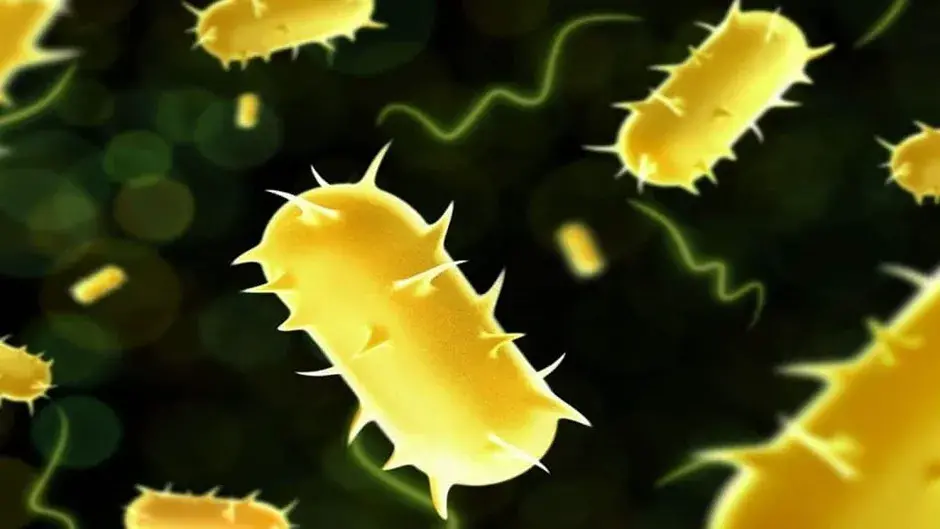
The All India Institute of Medical Sciences (AIIMS) in Delhi has identified seven cases of Mycoplasma pneumoniae, the bacterium associated with ‘Walking Pneumonia.’ The cases were detected between April and September this year and were reported in a study published in the Lancet Microbe journal. Notably, ‘Walking Pneumonia’ cases have been reported globally since October, including in China. Contrary to concerns about a link to the recent surge in respiratory infections in children, especially in China, the Union Health Ministry clarified that these seven cases have no connection to the ongoing outbreaks. The ministry stated that the cases were part of an ongoing study at AIIMS Delhi, spanning April to September 2023, and reassured the public that there’s no cause for worry. The ministry emphasized that no Mycoplasma pneumonia was detected in the 611 samples tested at AIIMS Delhi from January 2023 to the present, and there has been no surge reported in any part of India. AIIMS Delhi is part of a global consortium monitoring the spread of Mycoplasma pneumoniae, and the surveillance is conducted only at specific centers, including AIIMS Delhi. The study highlighted the re-emergence of Mycoplasma pneumoniae in Europe and Asia more than three years after the introduction of COVID-19 pandemic restrictions. ‘Walking Pneumonia’ is a milder form of bacterial infection that resembles a cold, allowing infected individuals to continue with daily activities. The infection is particularly risky for individuals aged 2 or younger, 65 or older, those with weakened immune systems, chronic respiratory conditions, or exposure to crowded places. Symptoms include sore throat, fatigue, chest pain, low-grade fever, chills, cough, sneezing, and headache. Preventive measures recommended by health experts include proper respiratory hygiene, regular handwashing, wearing masks around sick individuals (especially for those with respiratory conditions), getting an annual flu shot, avoiding smoking and secondhand smoke, and timely medical intervention using antibiotics and over-the-counter medicines. The Union Health Ministry continues to collaborate with state health authorities, closely monitoring the situation and providing timely updates to the public.

AIIMS Delhi Identifies Cases of ‘Walking Pneumonia’-Causing Bacterium; Ministry Dismisses Link to China’s Recent Outbreak Read More »