ArdorComm Media Group

Sunday, February 15, 2026 2:21 PM

Artificial Intelligence

Hollywood’s AI Anxiety Heightens Amid Scarlett Johansson’s OpenAI Feud

Scarlett Johansson’s public spat with OpenAI over the alleged replication of her voice for their AI model, ChatGPT, has reignited Hollywood’s fears of artificial intelligence encroaching on creative realms. The controversy stems from Johansson’s accusation that OpenAI mimicked her voice without permission, echoing her performance in the film “Her.” This incident has unsettled entertainment executives, particularly as Hollywood explores potential collaborations with OpenAI. While OpenAI CEO Sam Altman maintains that the voice was not intended to resemble Johansson’s, the dispute underscores broader concerns within the industry. Some fear that AI models trained on copyrighted works could infringe on intellectual property rights, hindering collaboration between content creators and tech companies. This clash highlights the evolving legal landscape surrounding digital likeness rights. Johansson’s case mirrors past legal battles over celebrity endorsements and sound-alikes, prompting discussions about federal regulations to protect voice and likeness rights. As Hollywood grapples with the implications of AI in content creation, the dialogue surrounding deep fakes and digital rights intensifies, signaling the need for comprehensive legal frameworks in the era of advanced AI technology.  

Hollywood’s AI Anxiety Heightens Amid Scarlett Johansson’s OpenAI Feud Read More »

Competition Commission of India to Soon Introduce New Merger Regulations

The Competition Commission of India (CCI) will soon release a new set of merger regulations following the amendments to the competition law enacted last year. These regulations are expected after the model code of conduct is lifted post-elections, as certain provisions of the amended law need to be notified by the government. According to the amendments, CCI approval is required for any transaction valued over ₹2,000 crore. CCI Chairperson Ravneet Kaur announced on Monday that the regulatory framework under the Competition (Amendment) Act, 2023, is in the final stages. This framework incorporates global best practices to address emerging market competition challenges. The new regulations will cover negotiated settlements on anti-competitive practices, merger and acquisition regulations based on deal value, and an expanded leniency scheme to encourage cartels to come forward. The upcoming focus is on merger regulations. The new merger regulations will detail how to assess the transaction value for CCI approval and expedite the merger regulation process by reducing the maximum decision time from 210 days to 150 days. These regulations aim to clarify and streamline the merger approval process, particularly for transactions exceeding ₹2,000 crore, even if they do not meet the traditional asset and sales thresholds. Kaur emphasized that the digital economy’s rise has prompted a global revamp of competition laws. The Ministry of Corporate Affairs is working on a Digital Competition Bill to address systemic digital economy firms’ issues. Public consultations on a draft bill are complete, and inter-ministerial consultations will follow before presenting it to parliament. In addition, CCI is initiating a market study on artificial intelligence (AI) to understand its impact on competition. Kaur highlighted the need to regulate digital markets to prevent dominance by a few companies and address data dominance concerns. Attorney General R. Venkataramani, speaking at an event marking CCI’s 15th foundation day, underscored the importance of regulating data as a new currency. He noted the global regulatory actions against data gatekeepers and the ongoing debate in India over the draft Digital Competition Bill, which will determine CCI’s approach to regulating digital markets.  

Competition Commission of India to Soon Introduce New Merger Regulations Read More »

Tripura Government to Implement E-Attendance System in Government Schools

In an effort to enhance the quality of education and monitor the performance of teachers and students, the Tripura government has announced plans to introduce an e-attendance system in all 4,912 government schools. The move, to be implemented under the Vidya Samiksha Kendra initiative, aims to bring transparency to the academic system and improve the overall functioning of schools. The digital attendance system will cover both teachers and students, with the entire process expected to be completed within a two-year timeframe. Initially launched by Prime Minister Narendra Modi in Gujarat in 2022, the Vidya Samiksha Kendra initiative is designed to enhance educational outcomes by leveraging technology and providing real-time monitoring of educational initiatives. Following the implementation of the e-attendance system, a geo-tagging feature will also be introduced to facilitate online access to essential school-related information. Once the e-attendance system is fully operational, monitoring of teacher and school performance will be conducted by the Chief Minister, relevant ministers, and senior officials. Training sessions for headmasters and other stakeholders are already underway to familiarize them with the new digital system. Tripura Chief Minister Manik Saha, who oversees the Education Department, recently inaugurated the state’s first Vidya Samiksha Kendra in Agartala. This center aims to digitize educational data, provide real-time visibility into educational initiatives, and support decision-making through data analysis and AI. With over 37,000 teachers and nearly 700,000 students enrolled across various levels of school education, the introduction of the e-attendance system is expected to significantly improve accountability and transparency in Tripura’s education sector.  

Tripura Government to Implement E-Attendance System in Government Schools Read More »

Google Urges US Government to Update Immigration Rules for AI Talent

Google is urging the US government to modernize its immigration policies, particularly focusing on the Schedule A list, to attract and retain top artificial intelligence (AI) and cybersecurity talent from around the world. In a letter addressed to the Department of Labor, the tech giant expressed concerns that outdated policies could lead to a loss of valuable talent in these critical sectors. The Schedule A list, last updated in 2005, identifies occupations with insufficient American workers. Google argues that this list needs to be expanded to include AI and cybersecurity-related fields and should be updated more frequently to reflect changing labor needs. The company emphasized the growing demand for AI talent within its ranks and stressed the importance of addressing the talent shortage to fully harness the potential of AI advancements. Google also highlighted the lengthy process of obtaining permanent labor certification (PERM) and called for a more efficient system to attract and retain top talent. Karan Bhatia, head of government affairs and public policy at Google, underscored the global shortage of AI talent and emphasized the need for the US to adapt its immigration policies accordingly. This call for immigration reform comes amid fierce competition among tech companies to attract AI talent, with Meta CEO Mark Zuckerberg reportedly making personal offers to AI researchers. Google CEO Sundar Pichai has also expressed concerns about losing key talent to rivals like Apple. The strict immigration policies in the US have exacerbated these concerns, making it challenging for companies to attract and retain AI talent from abroad. While President Joe Biden’s executive order on AI aims to increase AI talent in the country, Google’s letter suggests that more comprehensive reforms are needed to ensure the US remains competitive in the global race for AI dominance.

Google Urges US Government to Update Immigration Rules for AI Talent Read More »

The Present and Future of AI in Healthcare

Blog on health

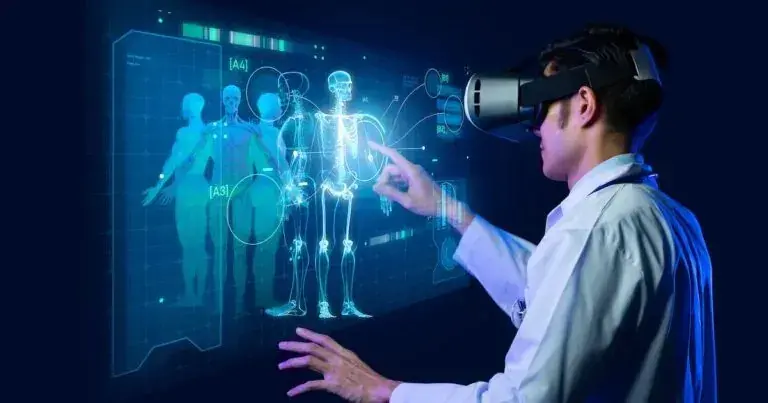
As technology advances at an unprecedented rate, its impact on various aspects of our lives becomes increasingly significant. In the realm of healthcare, artificial intelligence (AI) stands out as a transformative force with immense potential. However, to truly appreciate its importance and potential, it’s essential to delve into what AI has achieved and how it continues to shape the present and future of healthcare. The numbers paint a compelling picture of AI’s growing influence in healthcare. With over 500 AI algorithms approved by the U.S. FDA, and digital health startups receiving billions in investments, it’s evident that AI is not just a theoretical concept but a tangible reality in the healthcare landscape. Projections indicate that the global market for AI-based healthcare solutions will exceed $208 billion by 2030, underscoring the significant investments and expectations surrounding AI in healthcare. The promise of AI in healthcare is multifaceted, ranging from early disease detection to optimizing treatment plans and enhancing patient outcomes. For instance, AI algorithms have the potential to revolutionize cancer screening by analyzing vast amounts of data, including family history, imaging results, and genetic markers, to identify individuals at higher risk of developing the disease. Additionally, AI-powered interventions can monitor patients in real-time, enabling early detection of deteriorating health conditions such as sepsis, and facilitating timely medical interventions. Despite the immense potential, the full-scale implementation of AI in healthcare presents numerous challenges. From regulatory hurdles to the need for extensive clinical trials and the integration of AI into existing healthcare workflows, realizing the promise of AI requires concerted efforts from various stakeholders. Moreover, it’s crucial to recognize that AI is not a replacement for human expertise but rather a powerful tool that complements clinical decision-making. Human clinicians bring invaluable insights and intuition to the table, which AI augments by processing vast amounts of data and identifying patterns that might elude human observation alone. Currently, AI is being utilized in various medical applications, including screening tests for complex illnesses, monitoring patient vitals for signs of deterioration, and enhancing patient safety through early warning systems. Institutions are also leveraging AI to optimize resource allocation, improve operational efficiency, and streamline administrative tasks such as billing and coding. As AI continues to mature, its role in healthcare is expected to expand beyond individual applications to encompass organization-wide workflows, clinical decision support, patient engagement, and revenue cycle management. Looking ahead, the future of AI in healthcare holds even more transformative possibilities. Medical assistants powered by AI are undergoing trials in medical facilities, with the potential to streamline scheduling, access relevant patient information, and assist healthcare providers in delivering personalized care. Moreover, AI-driven algorithms are expected to play a crucial role in organizing and analyzing vast amounts of medical data, leading to more precise diagnoses, personalized treatment plans, and better patient outcomes. However, as AI becomes more integrated into healthcare systems, concerns about privacy, data security, and algorithmic bias must be addressed. Robust measures must be implemented to ensure that patient data is protected, and AI algorithms are trained on diverse and representative datasets to avoid perpetuating biases or disparities in healthcare delivery. AI holds immense promise as a transformative force in healthcare, revolutionizing patient care, clinical decision-making, and operational efficiency. While challenges remain, the collaborative efforts of researchers, clinicians, policymakers, and technology developers are paving the way for a future where AI augments human expertise to deliver better healthcare outcomes for all. As we embark on this journey, it’s essential to recognize that AI is not a replacement for human judgment but a powerful tool that, when wielded responsibly, has the potential to revolutionize the practice of medicine.  

The Present and Future of AI in Healthcare Read More »

Byju’s Seeks Fresh Funds, Slashes Valuation by 90% to Tackle Financial Woes

Indian education giant Byju’s is reportedly planning to raise funds through a share issuance next month, seeking over $100 million from existing investors. The catch, however, is that the valuation of the once $22 billion startup will plummet by more than 90%, now placing the company at less than $2 billion. Sources familiar with the matter revealed that Byju’s founder, Byju Raveendran, will partake in the share sale to maintain his stake in the company. The move comes as Byju’s grapples with financial challenges, planning to utilize the proceeds to settle outstanding payments to vendors and stabilize its operations. Byju’s had previously attained a valuation of $22 billion during its funding round in late 2022, marking a significant decline in its perceived value. The company has been navigating a cash crunch for several months and is concurrently engaged in a legal dispute with creditors over a missed interest payment on a $1.2 billion term loan. In a bid to alleviate financial pressures, Byju’s is set to sell its US-based kids’ digital reading platform for approximately $400 million. The spokesperson for the company has declined to comment on the recent developments. Post the share sale, Byju’s aims to refocus on its core business and intensify efforts in the realm of generative artificial intelligence for hyper-personalized learning. Backed by prominent investors like the Chan Zuckerberg Initiative, General Atlantic, and Prosus NV, Byju’s had previously embarked on a global acquisition spree before encountering the challenges of a tech funding downturn. Noteworthy participants in the upcoming share sale include existing shareholders, such as the Chan Zuckerberg Initiative, General Atlantic, and Prosus NV. Byju’s endeavors to rebuild its business amid the financial restructuring, emphasizing innovation in education technology. The company’s proactive measures highlight the resilience of Byju’s leadership in adapting to market dynamics while ensuring a sustainable future for the prominent education technology firm.

Byju’s Seeks Fresh Funds, Slashes Valuation by 90% to Tackle Financial Woes Read More »

AI in Government: Navigating the Uncharted Terrain of Deepfakes and Misinformation

Blog on Government

In a landmark move that may reshape the political advertising landscape, the Republican National Committee (RNC) recently unveiled the first national campaign advertisement entirely crafted by artificial intelligence (AI). As President Biden kicked off his re-election campaign, the thirty-second RNC ad depicted a dystopian vision of four more years under his leadership, leveraging AI-generated images. While the RNC openly acknowledged its use of AI, the emergence of such technology in political advertising raises concerns about misinformation and its potential impact on public perception. The integration of AI into political advertising echoes the predictions made by Robert Chesney and Danielle Citron in their 2018 Foreign Affairs article on deepfakes and the new disinformation war. The perfect storm of social media information cascades, declining trust in traditional media, and the increasing believability of deepfakes has created a breeding ground for misinformation. Recent instances, such as a deepfake video falsely portraying President Biden announcing a military draft for Ukraine, highlight the potential dangers of transparently shared AI being misconstrued as authentic information. While Chesney and Citron initially focused on geopolitical threats posed by deepfakes, the technology’s entry into political advertising introduces a new dimension. Past campaigns have witnessed a race to produce provocative ads, with digitally manipulated images becoming a common tool. Notably, the McCain campaign in 2015 utilized manipulated images of Barack Obama, underscoring the evolving landscape of political communication. However, the implications of AI-generated content extend beyond mere political attacks. Vulnerable populations, including women, people of color, and LGBTQI+ individuals, are likely to bear the brunt of these emerging technologies. A Center for Democracy and Technology report on the 2020 congressional election cycle revealed that women of color candidates were twice as likely to face mis- and disinformation campaigns online. The weaponization of deepfake technology in India against female politicians and journalists adds another layer of concern, emphasizing the potential for AI-generated content to be used in ways that undermine credibility and perpetuate harm. The “liars dividend,” as coined by Citron and Chesney, presents another risk. Realistic fake videos and images may provide politicians with an escape route from accountability, allowing them to dismiss problematic content as AI-generated or a deepfake. In an era characterized by negative partisanship, the liar’s dividend could become a potent tool for evading responsibility. As social media platforms grapple with the challenges posed by AI-generated content, there is a pressing need for comprehensive policies. Meta and TikTok have implemented measures to address deepfakes, but integrating these rules with existing political content policies remains a challenge. In response to the RNC ad, Representative Yvette Clark introduced the “REAL Political Advertisements Act,” seeking mandatory disclosures for AI-generated content in political ads. The Biden administration’s recent action plan to promote responsible AI innovation and the Senate Judiciary Privacy, Technology, and the Law Subcommittee’s hearing on AI technology oversight indicate a growing awareness of the need for regulatory measures. With another election cycle underway, the intersection of AI and politics demands urgent attention and thoughtful regulation to safeguard the integrity of political discourse and public trust.

AI in Government: Navigating the Uncharted Terrain of Deepfakes and Misinformation Read More »

Microsoft Enlists Former OpenAI CEO Sam Altman to Lead New Advanced AI Research Team

Microsoft has made a significant move in the field of artificial intelligence (AI) by hiring former OpenAI CEO Sam Altman and co-founder Greg Brockman to lead a newly established advanced AI research team. This development was announced by Microsoft CEO Satya Nadella, and it follows the recent appointment of Emmett Shear as CEO by OpenAI’s board, a decision that went against the wishes of some investors who sought the reinstatement of Sam Altman, a co-founder of OpenAI since its establishment in 2015. Satya Nadella expressed great excitement about the addition of Sam Altman and Greg Brockman to Microsoft, stating, “We’re extremely excited to share the news that Sam Altman and Greg Brockman, together with colleagues, will be joining Microsoft to lead a new advanced AI research team.” Nadella also hinted that the term “colleagues” suggests Microsoft might be planning to bring in other former OpenAI employees who departed over the weekend. Microsoft has invested significant financial resources in OpenAI, and Nadella emphasized the company’s ongoing commitment to its partnership with the startup. He mentioned, “We remain committed to our partnership with OpenAI and have confidence in our product roadmap, our ability to continue to innovate… and in continuing to support our customers and partners.” In response to the move, Sam Altman acknowledged his new role at Microsoft in a post on X, quoting Nadella and indicating continuity with the mission. Nadella responded by hinting at Altman’s role at Microsoft, noting the company’s experience in providing founders and innovators the space to build independent identities and cultures within the larger Microsoft ecosystem. He cited examples such as GitHub, Mojang Studios, and LinkedIn as instances where this approach has been successful. This strategic move by Microsoft not only bolsters its position in the AI research landscape but also reflects the dynamics of the tech industry, with companies actively seeking and securing top talent to drive innovation and advancements in artificial intelligence.

Microsoft Enlists Former OpenAI CEO Sam Altman to Lead New Advanced AI Research Team Read More »

IIT Kanpur Launches Four Innovative eMasters Programs, Eliminating GATE Score Requirement

IIT Kanpur has recently launched four new online postgraduate programs, and interestingly, applicants will not require GATE scores for admission. These programs cover various fields, including climate finance and sustainability, renewable energy, e-mobility, artificial intelligence, machine learning, and business leadership in the digital age. The application process for the first session, scheduled for January, is now open until October 31. Prospective students can apply through the official website at emasters.iitk.ac.in. Additionally, IIT Kanpur is introducing new sessions for its existing eMasters programs, covering areas such as data science, business analytics, financial technology, management, public policy, wireless technologies, cybersecurity, and more. The Climate Finance and Sustainability program aims to provide a comprehensive understanding of financial strategies and sustainable initiatives, while the Renewable Energy and e-Mobility program will cater to the growing alternative energy sector. The Artificial Intelligence and Machine Learning program will equip professionals with the skills needed in this rapidly evolving field, and the Business Leadership in the Digital Age program will enhance professionals’ knowledge of modern business dynamics. These new programs offer flexible completion times ranging from one to three years, accommodating various schedules. They include live interactive classes held exclusively on weekends, along with self-paced learning. Each program consists of a 60-credit, 12-module curriculum designed to meet industry demands. Faculty and researchers from IIT Kanpur will lead these programs, providing valuable real-world insights. Participants also have the opportunity to transfer up to 60 credits for future higher education pursuits (MTech/PhD) at IIT Kanpur. Moreover, these programs grant access to IIT Kanpur’s placement and incubation cells, as well as its extensive alumni network, enriching career growth and networking prospects. Participants may also visit IIT Kanpur’s campus, interact with esteemed faculty, and engage with experienced professionals, ultimately earning the prestigious IIT Kanpur alumni status. Notably, the eMasters program at IIT Kanpur will award senate-approved eMasters degrees during convocation, distinguishing it from diplomas or certificates.

IIT Kanpur Launches Four Innovative eMasters Programs, Eliminating GATE Score Requirement Read More »

NCERT Granted Deemed University Status

In a significant development, the National Council of Educational Research and Training (NCERT) has been granted the prestigious status of a deemed university, as announced by the Union Minister for Education and Skill Development and Entrepreneurship, Dharmendra Pradhan. This announcement was made during the commemoration of NCERT’s 63rd foundation day in the national capital. Over the years, NCERT has played a pivotal role in educational research and has actively influenced various aspects of school education, teacher training, and adult literacy. With this new status as a research university, NCERT will have the opportunity to engage in global collaborations and contribute to the international educational landscape. Minister Pradhan also highlighted the significance of “Jadui Pitara,” an innovative play-based learning-teaching material designed for children aged 3 to 8 years, which has the potential to positively impact 10 crore children across the country. During his address, Minister Pradhan stressed the importance of creating educational content in native languages. He proposed the establishment of Augmented Reality, Virtual Reality, and Artificial Intelligence labs in all seven regional NCERT centres to foster research and innovation in India. These centres should be equipped with state-of-the-art technologies from around the world and have infrastructure ready for the future. He also urged NCERT to standardize teacher training curricula in Early Childhood Care and Education (ECCE). Recognizing the significance of the fourth industrial revolution, Minister Pradhan suggested the creation of concise booklets covering various subjects, including recent developments like India’s Covid-19 management and Chandrayaan 3. He emphasized the importance of imparting knowledge about the latest advancements alongside Indian values and traditions to the new generation. During the event, students from the Regional Institute of Education in Bhopal performed a skit and song in 22 languages, showcasing the educational impact of “Jadui Pitara.” Additionally, a short film highlighted several noteworthy initiatives and achievements of NCERT. Minister Pradhan also inaugurated a new Information and Communication Technology (ICT) laboratory at the Central Institute of Educational Technology (CIET) as part of the celebrations. NCERT, established in 1961 under the Society Act, has been instrumental in advising and assisting the government in matters related to school education. This recent recognition as a deemed university marks a significant milestone in its educational journey.

NCERT Granted Deemed University Status Read More »