




PGIMER Doctors Make Major Breakthrough in Treatment of Deadly Celphos Poisoning
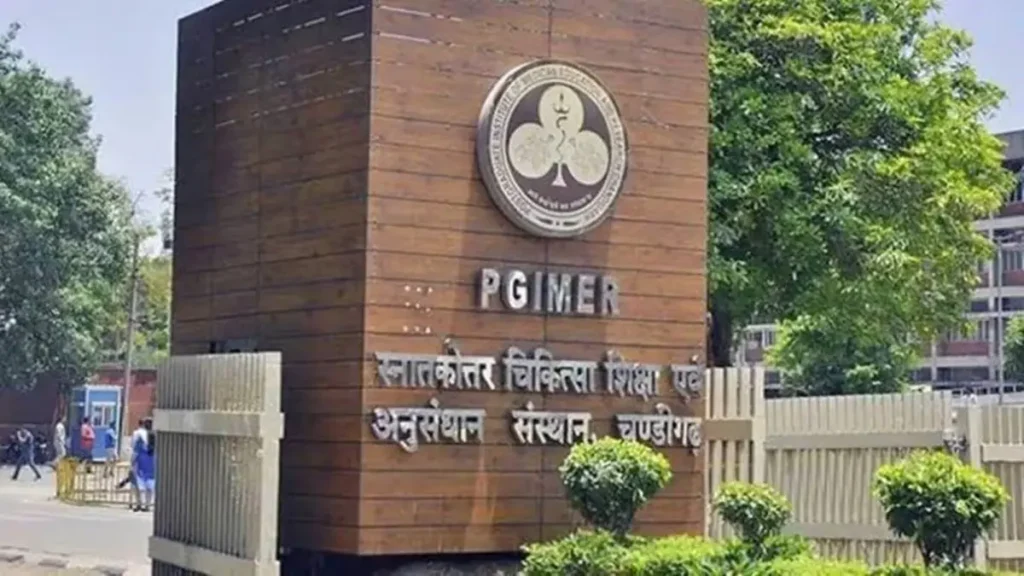
Doctors at the Postgraduate Institute of Medical Education and Research (PGIMER), Chandigarh, have achieved a significant medical breakthrough in treating aluminium phosphide poisoning—commonly known as Celphos—one of the most lethal forms of pesticide poisoning in India. In a first-of-its-kind clinical study, researchers from PGIMER’s Department of Internal Medicine have demonstrated that intravenous lipid emulsion (ILE) can act as a life-saving therapy when used alongside standard treatment. The findings mark a major advancement in managing a condition that has historically carried a very high mortality rate. The study has been published in the internationally respected European Review of Medical and Pharmacological Sciences, earning global recognition. The research was conducted under the guidance of Dr Sanjay Jain, Dean (Academics) and Professor & Head of Internal Medicine at PGIMER, whose leadership in emergency and critical care was instrumental in treating severely ill patients. The study was funded by the Medical Education and Research Cell, PGIMER, reflecting strong institutional backing for impactful clinical research. The randomised clinical trial was led by Dr Mandip Singh Bhatia, Associate Professor of Internal Medicine, PGIMER, as the principal investigator, with Dr Saurabh Chandrabhan Sharda serving as co-investigator, along with other faculty members from the department. According to the study, patients who received intravenous lipid emulsion in addition to conventional medical therapy showed a significant reduction in mortality. They also experienced quicker correction of severe metabolic acidosis, improved blood pressure stability, and better overall outcomes, even in cases involving shock and cardiac complications. Researchers noted that early administration of the therapy can substantially change the clinical course of aluminium phosphide poisoning. A key strength of this treatment is its feasibility. Intravenous lipid emulsion is affordable, widely available, and already stocked in most hospitals across India, including district and peripheral healthcare centres. This makes it especially valuable for rural and remote areas, where Celphos poisoning is most prevalent and access to advanced critical care is limited. Aluminium phosphide poisoning remains a major public-health concern, particularly in agricultural states such as Punjab, Haryana and Uttar Pradesh, where the chemical is commonly used as a grain preservative. The availability of an effective, low-cost, and evidence-based treatment could have a transformative impact in these high-burden regions. The study further reinforces PGIMER’s commitment to research that addresses region-specific health challenges and delivers tangible benefits to local populations. Source: PTI
PGIMER Doctors Make Major Breakthrough in Treatment of Deadly Celphos Poisoning Read More »