


ArdorComm Media Group

Friday, March 13, 2026 7:21 AM

competency-based learning

Govt Aims to Meet WHO’s 1:1000 Doctor-Patient Ratio, Says NMC Chairman Abhijat Sheth

ardorcomm news

The government is determined to increase the number of doctors across India in a uniform manner to meet the World Health Organization’s (WHO) standard of a 1:1000 doctor-patient ratio, National Medical Commission (NMC) Chairman Abhijat Sheth said on Saturday. Speaking at the 11th convocation of the Atal Bihari Vajpayee Institute of Medical Sciences (ABVIMS) and Dr. Ram Manohar Lohia Hospital in New Delhi, Sheth congratulated the graduating doctors, their families, and faculty members for their commitment to the medical profession. He underlined the government’s efforts to not only bridge the doctor-patient gap but also to achieve a balanced undergraduate-to-postgraduate (UG-PG) ratio of 1:1, which would bring India’s healthcare standards closer to those of developed nations. Sheth also highlighted initiatives by the NMC and the National Board of Examinations in Medical Sciences, including the integration of skill-based training, virtual learning, and competency-driven education alongside traditional methods. He urged students to focus on their health, resilience, and continuous learning throughout their careers. Addressing the graduating batch, Director General of Health Services (DGHS) Dr. Sunita Sharma reminded them that receiving a medical degree comes with a profound responsibility — to heal, lead, and serve. She emphasized that whether in clinical practice, research, or teaching, doctors must let their work be guided by empathy, evidence, and excellence. Calling medicine a noble calling rooted in compassion, she encouraged young doctors to stay humble and grounded as they advance in their professional journeys. Source: PTI

Govt Aims to Meet WHO’s 1:1000 Doctor-Patient Ratio, Says NMC Chairman Abhijat Sheth Read More »
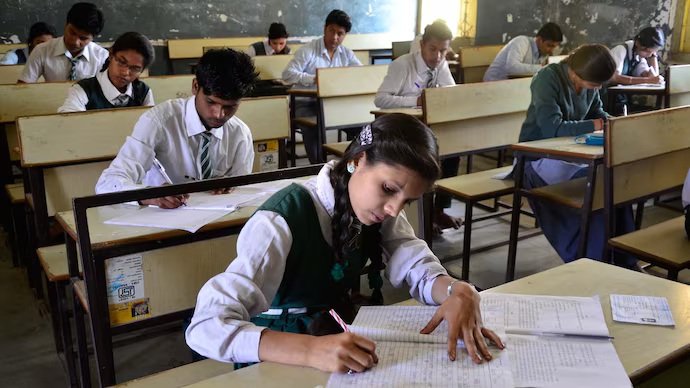
CBSE to Roll Out Open-Book Assessments for Class 9 from 2026-27

Starting from the 2026-27 academic year, the Central Board of Secondary Education (CBSE) will introduce open-book assessments (OBAs) for Class 9 students. The move, approved by the board’s Governing Body in June, is based on a pilot study that tested the feasibility and acceptance of the format in schools. The initiative aims to shift the focus from rote learning to competency-based education, in line with the National Curriculum Framework for School Education (NCFSE) 2023 and the National Education Policy (NEP) 2020. Under this system, students will be allowed to consult textbooks, class notes, and other approved materials during exams. The format will be applicable to core subjects such as languages, mathematics, science, and social science, and will be integrated into the three pen-and-paper tests conducted in each term. While CBSE will issue standard guidelines, schools will have the option to adopt the format. The decision follows a pilot project conducted after its approval in December 2023, which tested OBAs in Classes 9 to 12. Results revealed a performance range of 12% to 47%, highlighting difficulties in applying resources effectively and grasping interdisciplinary concepts. However, many participating teachers expressed confidence in the system’s potential to boost critical thinking skills. CBSE has previously experimented with similar formats, introducing the Open Text-Based Assessment (OTBA) in 2014 for Classes 9 and 11. In that model, students received reference materials months ahead of exams, but it was discontinued in 2017-18 due to limited success. To ensure smoother execution this time, the board plans to provide model question papers, detailed guidelines, and training for schools. Officials believe these measures will help students develop analytical and problem-solving abilities, aligning assessment practices with NEP 2020’s vision for future-ready learning. Source: NDTV

CBSE to Roll Out Open-Book Assessments for Class 9 from 2026-27 Read More »