ArdorComm Media Group

Saturday, March 7, 2026 11:44 AM

Corporate Governance

Reliance Power forms new Board of Management to boost governance, sharpen oversight

Reliance Power Ltd., part of the Anil Ambani-led Reliance Group, has approved the creation of a Board of Management (BOM) to strengthen governance standards and enhance strategic oversight across the organisation. The new structure, cleared by the board on November 19, will include the company’s CEO, key managerial personnel, and senior business leaders. The company said the move reflects its push toward a more agile, future-ready operating model, aligned with global best practices in corporate governance and long-term value creation for stakeholders. During the meeting, the board also reviewed growth developments at its subsidiary Reliance NU Energies, which has emerged as a leading player in the solar-plus-BESS (Battery Energy Storage Systems) segment. The subsidiary has secured up to 4 GW of solar capacity and 6.5 GW of BESS capacity through competitive bids, positioning it as a major force in India’s clean energy transition. Reliance Power said the formation of the BOM, along with its expanding renewable energy footprint, underscores its strategy to build a strong foundation for sustainable and forward-looking growth. Source: The Hindu

Reliance Power forms new Board of Management to boost governance, sharpen oversight Read More »

Sebi Proposes Stricter Governance for Stock Exchanges, Clearing Corporations, and Depositories

In a move aimed at reinforcing accountability and public-interest orientation within key market institutions, the Securities and Exchange Board of India (Sebi) has introduced a set of proposals to tighten governance norms for stock exchanges, clearing corporations, and depositories. Outlined in a consultation paper released on Tuesday, the proposed reforms focus on strengthening the oversight of Market Infrastructure Institutions (MIIs), which have witnessed a significant rise in trading volumes, investor participation, and profitability in recent years. Sebi emphasized that while MIIs have evolved into financially robust entities, their public-interest responsibilities must be prioritized over commercial gains. The key suggestions cover three broad areas: Mandatory Executive Directors: Sebi has proposed the compulsory appointment of at least two executive directors (EDs) on the boards of MIIs. These directors would be responsible for critical functions including trading operations, clearing and settlement, compliance, risk oversight, and investor grievance management. They would be designated as key management personnel (KMPs), with authority on par with the managing director (MD). Institutions can optionally appoint a third ED to focus on business development. Defined Roles for Key Officers: The regulator aims to formally codify the duties of the MD, EDs, and other senior officers such as the chief technology officer (CTO) and chief information security officer (CISO). At present, these responsibilities are either informally assigned or spread across departments, leading to potential governance gaps. Restrictions on Board Memberships: To avoid conflicts of interest and strengthen focus, Sebi proposes that MDs of MIIs should not serve on boards of any commercial entities, barring unlisted government-owned organizations involved in non-commercial activities. EDs would be restricted to board positions only within MII subsidiaries. This approach aligns with similar governance rules applied in the banking sector. Legal experts have weighed in on the potential impact of these recommendations. Diviay Chadha, Partner at Singhania & Co., said the proposals underline the need for fixed accountability within MIIs, especially given the rapid increase in retail investors. He added that the institutions would likely need to revise their corporate governance structures and charter documents to meet the new standards. However, some industry observers raised concerns about possible unintended consequences. Akshaya Bhansali, Partner at Mindspright Legal, noted that while the move to restrict EDs from serving on unrelated boards is intended to ensure accountability, it may inadvertently reduce the pool of experienced independent directors available to other listed companies. These recommendations arrive at a pivotal juncture as Sebi continues its evaluation of the National Stock Exchange’s (NSE) pending IPO, originally proposed in 2016. In its February communication with NSE, Sebi reiterated the need for a deep-rooted culture of prioritizing public interest over profits at the operational level. Bhansali clarified that although these proposed governance norms are not specifically targeted at NSE, they could become informal benchmarks or implicit prerequisites for regulatory approvals if not explicitly decoupled from the IPO review process. Sebi has invited stakeholders and the public to submit feedback on the proposals by 15 July 2025. Source: Mint


Sebi Proposes Stricter Governance for Stock Exchanges, Clearing Corporations, and Depositories Read More »

Nestlé India Sees Dip in Permanent Workforce Despite Higher Investments in FY25

Ardorcomm news

Nestlé India, the company behind popular brands like Maggi, Nescafé, and KitKat, reported a 3.8% decline in its permanent employee count during the financial year 2024-25 (FY25), even as it ramped up capital expenditure and focused on expanding its operational capabilities. The number of permanent, on-roll employees dropped to 8,419 in FY25 from 8,736 in the previous fiscal. Despite the reduction in headcount, the company saw an overall increase in employee compensation. The median salary hike for employees stood at 4.9%, with non-managerial staff receiving a 5.2% raise, while managerial personnel saw a 3.5% increase in their pay, according to the company. Nestlé India, which crossed ₹20,000 crore in annual sales in FY25, significantly boosted its capital expenditure over the years. Outgoing Chairman and Managing Director Suresh Narayanan highlighted that capex has surged from 1.8% of sales in 2015 to 10% in FY25, indicating the company’s commitment to long-term growth and infrastructure development. The company has also laid out a succession plan with Manish Tiwary appointed as the new Managing Director and Director for a five-year term beginning August 1, 2025. Prior to that, he will serve as Managing Director (Designate) from February 1, 2025, and will take on the role of Key Managerial Personnel starting April 24, 2025. Tiwary received a total remuneration of ₹29.94 million for his two-month stint in FY25. Additionally, he was paid a lump sum joining bonus of ₹151.96 million to compensate for long-term incentives forfeited from his previous employer. Meanwhile, outgoing CMD Suresh Narayanan earned ₹23.47 crore in total remuneration for the fiscal year, underscoring Nestlé India’s commitment to rewarding leadership even amid operational adjustments. This shift in workforce strategy comes as the company continues to invest heavily in capacity building while streamlining its human resource structure. Source: PTI

Nestlé India Sees Dip in Permanent Workforce Despite Higher Investments in FY25 Read More »

MAICSA Launches Third Annual YGP Award to Cultivate Future Governance Leaders

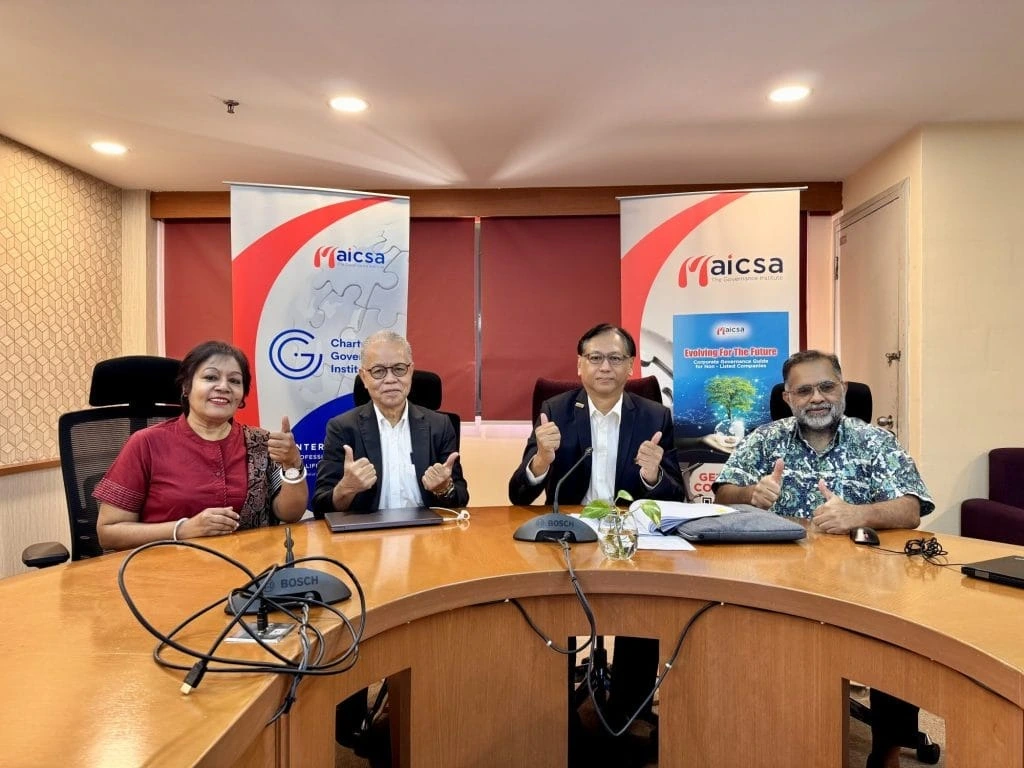
MAICSA has launched the third edition of its Young Governance Professionals (YGP) Award 2025, continuing its mission to empower final-year BCA students from universities such as TARUMT, UPTM, UiTM, USIM, and PBS. This prestigious annual competition fosters corporate governance expertise through case studies, expert mentorship, and real-world compliance challenges. Kicking off its preliminary rounds in March, the YGP Award 2025 underscores MAICSA’s dedication to shaping future governance leaders. MAICSA President, Dato’ Akbar bin Moidunny, highlighted the competition’s role in preparing students for the workforce, while Chief Judge Simon Yeoh emphasized its focus on integrity, accountability, and resilience. Hands-On Learning & Expert Guidance Participants will analyze corporate governance issues, applying key regulations such as: ✔ Corporate Governance Code 2021 ✔ Bursa Malaysia’s Listing Rules ✔ Companies Act 2016 This practical, problem-solving approach enhances their ability to navigate compliance challenges in real-world scenarios. Panel of Distinguished Judges The competition will be judged by three esteemed industry experts: Simon Yeoh (Chief Judge) Anil Joshi Hari Chand (Securities Commission) Datuk Petrus Gimbad (Inland Revenue Board Malaysia) These professionals will mentor participants through discussions, offering insights into corporate regulations and sustainable governance practices. Internship Opportunities & Industry Exposure Beyond the YGP Award, MAICSA strengthens its ties with universities by facilitating internships at corporate secretarial firms. These internships provide students with: Hands-on industry experience Practical governance skills A deeper understanding of corporate administration Through this initiative, MAICSA continues to bridge the gap between academic learning and professional practice, ensuring that young professionals are well-equipped for careers in governance and compliance. Source: Business Today

MAICSA Launches Third Annual YGP Award to Cultivate Future Governance Leaders Read More »

SEBI Launches RPT Portal to Enhance Corporate Transparency and Governance

The Securities and Exchange Board of India (SEBI) has launched a Related Party Transaction (RPT) portal to strengthen corporate governance and increase transparency in boardroom dealings. At the launch event, SEBI Whole Time Member Ashwani Bhatia likened the initiative to sunlight exposing hidden dealings, emphasizing its role in ensuring fair corporate transactions. RPTs, while capable of creating synergies, often face scrutiny due to unfair pricing and potential conflicts of interest. The portal will enable mutual funds and investors to track such transactions and demand better governance from companies. SEBI Chairperson Madhabi Puri Buch reaffirmed the regulator’s strong focus on RPTs, calling them a core governance concern. SEBI’s disclosure-based framework mandates that listed companies provide complete transparency in financial dealings to prevent unfair advantages. Looking ahead, SEBI plans to integrate supply chain data into the portal for a more comprehensive oversight of corporate transactions. The RPT portal is expected to boost investor confidence, reinforce corporate accountability, and ensure fair play in India’s financial markets. Source: CNBC

SEBI Launches RPT Portal to Enhance Corporate Transparency and Governance Read More »

SEBI Proposes Stricter Governance Norms for Listed Firms, Seeks Public Feedback

The Securities and Exchange Board of India (SEBI) has issued a consultation paper seeking public feedback on proposed regulatory changes aimed at strengthening corporate governance in listed companies. The proposals focus on enhancing compliance requirements, tightening auditor eligibility norms, improving disclosure practices, and setting clearer rules for related party transactions (RPTs). The move is expected to improve transparency, reduce financial risks, and increase investor confidence in the market. SEBI has invited stakeholders to submit their feedback by February 28, 2025. Key Proposals and Their Impact: Strengthened Compliance Reporting: SEBI has proposed refining the Annual Secretarial Compliance Report (ASCR) to ensure clearer confirmations of compliance with securities laws. The proposal includes making ASCR a mandatory part of the annual report and streamlining exemptions related to corporate governance certifications and secretarial auditor reports. These changes aim to enhance accountability and ensure companies adhere strictly to regulatory guidelines. Tighter Auditor Eligibility Rules: To improve financial oversight, SEBI has recommended introducing eligibility criteria for appointing statutory auditors in accordance with the Companies (Audit and Auditors) Rules, 2014. The new criteria will ensure that auditors’ qualifications and experience align with the size, operations, and complexity of listed entities. Additionally, SEBI has proposed that companies disclose key details about the appointment or reappointment of statutory and secretarial auditors to the audit committee, board of directors, and shareholders. A standardized disclosure format is also being considered to further improve transparency. This is expected to enhance trust in financial reporting and strengthen enforcement mechanisms. Stricter Rules for Related Party Transactions (RPTs): SEBI has suggested introducing monetary thresholds for RPT approvals to ensure better scrutiny of transactions conducted by subsidiaries of listed companies. Under the new guidelines: For subsidiaries with an established financial history, the approval threshold will be the lower of 10% of turnover or a monetary limit—₹1,000 crore for main-board listed firms and ₹50 crore for SME-listed subsidiaries. For subsidiaries without a financial track record, the threshold will be 10% of standalone net worth, certified by a chartered accountant, or the prescribed monetary limits. In cases where subsidiaries have a negative net worth, share capital plus securities premium may be considered instead of 10% of net worth. These changes aim to bring consistency in financial disclosures and prevent possible misuse of related party transactions for financial manipulation. Why These Reforms Matter: With these proposed amendments, SEBI aims to enhance corporate accountability, protect investor interests, and create a more transparent and well-regulated financial ecosystem. The tightening of audit regulations will help mitigate financial risks, while clearer RPT rules will prevent conflicts of interest. As corporate governance standards evolve, these measures are expected to improve the overall trust in India’s financial markets. Investors, companies, and financial professionals are encouraged to review the proposals and provide their feedback before the deadline. Source: CNBCTV

SEBI Proposes Stricter Governance Norms for Listed Firms, Seeks Public Feedback Read More »

Adani Group Faces Corporate Governance Crisis; Fitch Places Key Stocks on ‘Watch Negative’

The Adani Group is grappling with intensified corporate governance concerns following bribery charges against key executives of Adani Green Energy Limited (AGEL) by U.S. authorities. In response, Fitch Ratings placed Adani Energy Solutions Limited (AESL) and Adani Electricity Mumbai Limited (AEML) on a “Rating Watch Negative,” signaling a potential downgrade of their ‘BBB-‘ ratings. US Charges Spark Governance Concerns The allegations, tied to a 2021 offshore note offering, include bribery and misleading investors. With two accused executives linked to the Adani founding family, the controversy has amplified fears of systemic governance risks across the conglomerate. Fitch warned that any conviction or evidence of weak governance could significantly pressure ratings. Liquidity Remains Strong, But Risks Loom Fitch noted that AESL and AEML maintain robust liquidity, with AESL raising $1 billion via qualified institutions placement for near-term projects. AEML benefits from regulatory protections for operating costs. However, Fitch cautioned about increased reliance on onshore funding, which could elevate borrowing costs and refinancing risks in the medium term. Global Fallout The charges have drawn sharp reactions from international stakeholders. Total Energies has halted investments in Adani projects, and ESG rating agency Morningstar Sustainalytics is reviewing risks associated with Adani Green. Adani-linked dollar bonds, which initially plummeted, showed signs of stabilization but continue to face scrutiny. Future Challenges The indictment’s ripple effects extend beyond the group’s finances, potentially pressuring capital inflows and impacting India’s currency if funding risks persist. While the Adani Group has denied the allegations as “baseless” and pledged legal action, the conglomerate faces mounting global scrutiny. The coming weeks will test Adani’s ability to address governance issues and reassure investors, as reputational and financial challenges intensify. Source: Zeebiz Photo Credit: Zeebiz

Adani Group Faces Corporate Governance Crisis; Fitch Places Key Stocks on ‘Watch Negative’ Read More »

Moody’s to Review Adani Group’s Governance Following Bribery Allegations

Global credit rating agency Moody’s has announced a governance review of the Adani Group following allegations of bribery against its chairman Gautam Adani and other senior officials. U.S. prosecutors have accused the billionaire and his associates of orchestrating a scheme to pay over $250 million (approximately ₹2,100 crore) in bribes to Indian officials for favorable solar power contract terms. Moody’s Ratings issued a statement describing the charges as “credit negative” for the group’s companies, signaling potential repercussions for the conglomerate’s financial health and investor confidence. “Our primary focus is on the group’s ability to access capital to meet liquidity requirements and its governance practices,” the agency said. The indictment has raised fresh concerns over corporate governance within the Adani Group, which operates across sectors such as ports, energy, and infrastructure. The alleged bribery scheme, if proven, could tarnish the group’s reputation and strain its relationship with global investors. The allegations add to the challenges facing the Adani Group, which has already been under intense scrutiny following the Hindenburg Research report earlier this year. The report accused the group of financial irregularities and stock manipulation, leading to significant market volatility and questioning of the group’s governance standards. The new bribery charges, involving high-level officials, pose further risks to the group’s operations and financial standing. Moody’s review will likely consider the impact on the group’s ability to secure funding and its adherence to governance protocols in light of these developments. This latest controversy underscores the increasing importance of robust corporate governance in maintaining credibility and stability in global markets. The Adani Group has yet to issue a detailed response to the charges. Source: telanganatoday Photo Credit: telanganatoday

Moody’s to Review Adani Group’s Governance Following Bribery Allegations Read More »

Italy Launches Probe into Sinochem’s Governance Role at Pirelli

Italy’s Prime Minister’s Office has initiated an administrative review against Chinese state-owned Sinochem, the largest shareholder in Italian tire manufacturer Pirelli, over a potential governance breach. This move follows Italy’s use of its “Golden Power” legislation to safeguard strategic national assets by limiting Sinochem’s influence within Pirelli. Last year, Italy’s government set strict conditions requiring a qualified majority for key decisions at Pirelli and mandated that the company operate independently from Sinochem’s directives. The current investigation addresses whether there are any organizational or functional links between Pirelli and Sinochem that violate these terms. The review, dated October 31, has a 120-day timeline for resolution. Sinochem, which holds a 37% stake in Pirelli, has expressed confidence that it has complied with Italian regulations and plans to clarify its position during the proceedings. With Camfin, the vehicle of Italian executive vice chairman Marco Tronchetti Provera, holding a 25.7% stake, the probe highlights Italy’s commitment to shielding domestic companies from foreign state influence. Source: Reuters Photo Credit: Reuters

Italy Launches Probe into Sinochem’s Governance Role at Pirelli Read More »

Allegations of Irregularities in ISec Merger Deal Raise Concerns for Minority Shareholders

A recent merger deal between ICICI Securities (ISec) and ICICI Bank has come under scrutiny, with Quantum Mutual Fund raising strong objections against the merger. The allegations, including flawed valuation reports, potential conflict of interest among directors, and fraudulent voting practices, raise concerns for retail and minority shareholders of ISec. Key Points: Potential Loss for Minority Shareholders: Retail and minority shareholders of ISec stand to lose approximately Rs1,776 crore in the merger deal with ICICI Bank, according to Quantum MF. The merger is deemed flawed and irregular, prompting objections from the fund. Flawed Valuation: Quantum MF alleges that the merger deal is based on outdated valuation reports, with ICICI Bank using a 9-month-old report to determine the share swap ratio. This outdated valuation fails to account for market changes and undervalues ISec, leading to potential losses for minority shareholders. Conflict of Interest: Concerns arise over potential conflicts of interest among ISec directors who hold shares in ICICI Bank. Despite these conflicts, directors voted in favor of the merger deal, raising questions about the fairness and transparency of the process. Fraudulent Practices: Quantum MF alleges that ICICI Bank used fraudulent means to secure favorable votes from minority shareholders, including contacting retail shareholders to influence their voting decisions. This conduct undermines the integrity of the voting process and prejudices ISec shareholders. Regulatory Concerns: Quantum MF has registered its opposition to the deal with SEBI and threatens further legal action. The allegations highlight regulatory concerns regarding transparency, fairness, and shareholder rights in corporate mergers. The allegations of irregularities in the ISec merger deal underscore the importance of transparent and fair corporate governance practices to protect the interests of minority shareholders. Regulatory scrutiny and potential legal action may be necessary to address these concerns and ensure a fair outcome for all stakeholders involved.

Allegations of Irregularities in ISec Merger Deal Raise Concerns for Minority Shareholders Read More »