ArdorComm Media Group

Monday, June 22, 2026 2:04 PM

Digital Transformation

Education Ministry Urges Schools to Adopt UPI for Fee Payments Under Digital Transformation Drive

ardorcomm news

In a major push toward digital governance, the Union Ministry of Education has urged states and educational bodies to integrate the Unified Payments Interface (UPI) system for school fee collection. The initiative aims to enhance transparency, improve efficiency, and simplify the payment process for parents. In an official communication, the Department of School Education and Literacy advised states and affiliated institutions to adopt secure digital payment systems such as UPI, mobile wallets, and internet banking. This reform is part of the government’s broader digital transformation agenda in the education sector, ensuring smoother administrative operations and reducing dependency on cash transactions. The directive also extends to national education bodies, including the CBSE, NCERT, Kendriya Vidyalaya Sangathan (KVS), and Navodaya Vidyalaya Samiti (NVS), encouraging them to implement digital platforms for admission and examination fee submissions. According to the ministry, transitioning to digital payments brings multiple benefits—parents can pay from the comfort of their homes, ensuring greater convenience and transparency in transactions. The move is also expected to foster financial literacy among stakeholders and strengthen the culture of digital payments in educational institutions. The Education Ministry emphasized that this step marks a key milestone in aligning school-level administration with India’s vision of a digitally empowered society. Source: PTI

Education Ministry Urges Schools to Adopt UPI for Fee Payments Under Digital Transformation Drive Read More »

How to Build a Continuous Learning Culture in Your Organization

ardorcomm news

In today’s rapidly changing world, the most valuable asset any organization can cultivate isn’t just technology or capital — it’s the capacity to learn faster and adapt better than the competition. The shelf life of skills is shrinking, industries are being reshaped by innovation, and traditional job roles are continuously evolving. In this landscape, organizations that foster a continuous learning culture don’t just survive — they lead. So how can you move beyond occasional training programs and truly embed learning into the DNA of your organization? Let’s explore the mindset, strategies, and structures that make a continuous learning culture thrive. Redefine Learning: From an Event to a Mindset Most companies treat learning as a one-time event — a workshop, a certification, a webinar. But real learning cultures see it as an ongoing mindset. A true learning culture starts when employees — from interns to CEOs — see learning not as something they have to do, but something they want to do. It means rewarding curiosity, celebrating experimentation, and normalizing the idea that not knowing something today is just an invitation to grow tomorrow. Leaders can set the tone by modeling learning behavior: sharing what they’re reading, attending sessions themselves, and openly discussing their own growth areas. When curiosity flows top-down, it soon spreads sideways. Build the Infrastructure for Learning A culture cannot thrive without structure. Learning must be easy, accessible, and woven into daily workflows. Here’s how successful organizations make learning seamless: Digital Learning Platforms: Offer bite-sized, personalized content employees can access anytime. Think microlearning modules, internal MOOCs, or AI-driven learning journeys. Learning Experience Platforms (LXPs): Go beyond traditional LMS systems to provide tailored recommendations based on individual skills, goals, and performance data. Learning in the Flow of Work: Integrate learning into tools employees already use — Slack, Teams, or project management software — so that upskilling becomes a natural extension of their workday. By creating these learning touchpoints, you shift from training events to a continuous learning ecosystem. Connect Learning with Purpose Learning without purpose feels like homework; learning with purpose feels like growth. Employees are more likely to engage when they understand why learning matters — both for their career progression and the company’s mission. HR leaders and managers should tie learning opportunities directly to: Career pathways and promotions Skill-based projects and stretch assignments Organizational goals or innovation challenges When employees can see the connection between new skills and tangible outcomes, learning becomes meaningful — not mandatory. Empower Peer-to-Peer Learning Some of the most powerful learning doesn’t come from external trainers or e-learning platforms — it comes from peers. Encourage knowledge-sharing communities, mentorship programs, and internal “lunch and learn” sessions where employees teach each other. This not only builds skills but also creates a sense of belonging and cross-functional collaboration. For example, a data analyst could host a short session on Excel automation, while a communications specialist could share tips on persuasive writing. Over time, this peer-driven learning becomes self-sustaining — a hallmark of mature learning cultures. Measure, Recognize, and Reward Learning What gets measured gets valued. Organizations often track KPIs like revenue or customer satisfaction, but rarely measure learning progress. To make learning integral, establish metrics such as: Skill acquisition and certification rates Learning engagement scores Internal mobility linked to upskilling Moreover, reward learning behaviors, not just performance outcomes. Recognize employees who proactively learn new tools, mentor others, or contribute to knowledge bases. A small acknowledgment — a feature in the company newsletter or “learning champion” badge — can go a long way in reinforcing the right habits. Make Failure Part of Learning A continuous learning culture cannot exist without psychological safety. Employees must feel safe to experiment, fail, and learn from mistakes without fear of punishment. Leaders should create environments where failure is seen as data, not defeat. Sharing “lessons learned” stories or holding reflection sessions after projects helps normalize the learning loop. When teams know that innovation and imperfection can coexist, creativity blossoms — and learning accelerates. Align Learning with Organizational Strategy Finally, continuous learning must be tied to business priorities. The most successful organizations treat learning as a strategic lever — aligning it with goals like digital transformation, innovation, and customer experience. This ensures learning isn’t an HR initiative, but a business imperative. When learning drives measurable business outcomes — faster innovation cycles, reduced attrition, improved leadership pipelines — it becomes non-negotiable. Conclusion: Make Learning a Way of Life Building a continuous learning culture isn’t a quick project; it’s a long-term transformation. It requires leadership buy-in, thoughtful systems, and a deep respect for human potential. But once embedded, it transforms the organization into a living, breathing learning organism — adaptive, resilient, and always ready for what’s next. Because in the future of work, the best organizations won’t be the biggest or the fastest. They’ll be the ones that never stop learning.


How to Build a Continuous Learning Culture in Your Organization Read More »

PwC India Unveils Vision 2030, to Add 20,000 Jobs and Triple Revenue in Five Years

PwC India has announced an ambitious expansion plan under its Vision 2030, aiming to grow its workforce to 50,000 employees within the next five years by creating 20,000 new jobs. The consulting major is targeting a threefold increase in revenue, committing over 5% of annual revenues to technology, innovation, and capability building. The company will sharpen its focus on areas such as digital transformation, sustainability, risk and regulatory compliance, cloud, and cybersecurity, positioning itself to help clients navigate rapid market disruptions. Chairperson Sanjeev Krishan emphasised the firm’s goal of building a “future-ready workforce,” with investments in upskilling, women in leadership, and inclusive career growth from entry-level to the boardroom. PwC India will allocate 1% of its revenues to learning initiatives while expanding its presence in Tier 2 and Tier 3 cities to support decentralised economic growth and align with the government’s vision of self-reliant local economies. Recruitment will focus on sector-specific and digital expertise, with growth anchored in six priority sectors: financial services, healthcare, industrial manufacturing, automotive, technology, media, and telecom. Additionally, the company will explore emerging “horizon sectors” to secure an early strategic foothold. Source: PTI

PwC India Unveils Vision 2030, to Add 20,000 Jobs and Triple Revenue in Five Years Read More »

TCS to Lay Off Over 12,000 Employees Amid AI Disruption and Economic Pressures

Ardorcomm news

In a landmark decision, Tata Consultancy Services (TCS), India’s largest IT services provider and the crown jewel of the Tata Group, is set to let go of 12,261 employees — nearly 2% of its global workforce — making it the biggest layoff in the company’s history. The move comes as TCS navigates a rapidly evolving technology landscape marked by AI-driven disruption, weakening demand, and global economic headwinds. The company, which had a workforce of over 610,000 as of June, is restructuring to align with new business realities. Historically, workforce reduction at TCS has been modest — for instance, in FY15, the firm cut about 3,000 jobs, roughly 1% of its employee base. This latest wave of layoffs will largely impact mid- to senior-level professionals, particularly those who cannot be transitioned into new roles within the organization. The restructuring signals a major pivot for TCS, as it intensifies its focus on automation and AI to remain competitive in an increasingly margin-sensitive market. “This transformation is about preparing TCS for the future,” CEO K Krithivasan noted in an internal communication. “While such changes are essential for our continued growth, we recognize the challenges it brings to our colleagues. We deeply appreciate their contributions and will support them through this transition.” Analysts say the decision reflects a broader industry trend. Phil Fersht, CEO of HfS Research, highlighted that AI is significantly disrupting the traditional, manpower-heavy IT services model. Clients are also pushing for steep cost reductions — sometimes as much as 20-30% — compelling firms like TCS to reevaluate their cost structures. The trend isn’t isolated to TCS. Other Tata Group companies such as Tata Motors and Tata Steel have also undertaken job cuts in recent years to streamline operations and boost profitability. In 2019, Tata Steel cut 3,000 positions in its European business. This move by TCS underscores the shifting priorities within the IT industry, where future-readiness increasingly hinges on agility, automation, and leaner operations. Source: Economic Times

TCS to Lay Off Over 12,000 Employees Amid AI Disruption and Economic Pressures Read More »

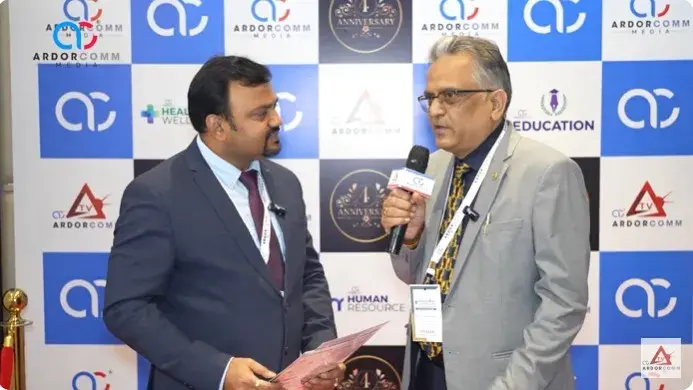
Prof. Himanshu Aeran, Vice Chancellor, Ras Bihari Bose Subharti University, Dehradun emphasizes on Industry-Academia Collaboration & Digital Empowerment at the ArdorComm Education Leadership Summit & Awards 2025 in Dehradun

Himanshu Aeran

We are delighted to welcome Prof. (Dr.) Himanshu Aeran, Vice Chancellor of Ras Bihari Bose Subharti University, Dehradun, thank you for joining us today. Thank you. It’s my pleasure to be here. Could you please tell us more about your university? Yes, certainly. We have two campuses—one in Meerut, named Swami Vivekanand Subharti University, and another in Dehradun, called Ras Bihari Bose Subharti University. We offer a wide range of programs. While we are primarily focused on medical faculties, we also offer courses in fashion designing, fine arts, hotel management, MBBS, nursing, pharmacy, and naturopathy. On the non-medical side, we are launching courses in mass communication, computer applications, business management, arts, liberal sciences, and more. In today’s context, where do smart skills and smarter workplaces come in? Do you see a gap between academia and industry? And how is your university addressing it? Yes, there is definitely a gap between academia and industry. To address this, we’ve been working on multiple fronts. I recently attended the VIKAS 2025 event organised by UGC, where the focus was on integrating industry with academia through apprenticeships and skill-based programs. UGC is now allowing universities to award academic credits for industry training, and we are actively implementing that. Being a medical university, our students are trained in our own hospitals and pharmacy companies. We are emphasizing industrial training in all domains to ensure our students are workforce-ready. Are there any digital initiatives or use of technologies like AI that your university has implemented? Also, how are you training your faculty? Yes, we’ve developed our own indigenous ERP system and digitized our records and administrative processes. Students are being trained on digital platforms, and we conduct regular faculty development programs to make them digitally competent. In the age of AI and tech advancement, we believe both students and faculty must be equipped to meet new challenges. At ArdorComm, we’re trying to create a unified platform from KG to PG, including representation from school education, higher education, skilling, government, and corporate sectors. How do you see this helping society? This is a wonderful initiative. I’m seeing such a platform for the first time in Dehradun, bringing together technical experts, reputed universities, and government stakeholders. It’s a great opportunity for collaboration. I’ve already interacted with several people here and we’re exploring partnerships. This is a step forward for improving education in Uttarakhand, especially given the unique challenges of our hilly regions. I congratulate you for this effort—it’s meaningful and much needed. We’ve recently completed four years of ArdorComm Media. As a growing media organization, do you have any words of encouragement for us? You’ve achieved so much in just four years—what a remarkable journey. If this is what you’ve done as a four-year-old, I can only imagine how you’ll shine as you grow. My best wishes to ArdorComm. I hope we can collaborate to create stronger bridges between academia and industry. Together, we can contribute to building a Viksit Bharat, as envisioned by our Hon’ble Prime Minister Shri Narendra Modi. And I want to say “Ham Jagat Guru the aur Jagat Guru rahenge”, that translates to “We were the world’s guru, and we will remain the world’s guru.”  

Prof. Himanshu Aeran, Vice Chancellor, Ras Bihari Bose Subharti University, Dehradun emphasizes on Industry-Academia Collaboration & Digital Empowerment at the ArdorComm Education Leadership Summit & Awards 2025 in Dehradun Read More »

IIM Sambalpur Unveils New Undergraduate Programmes in Public Policy and AI to Shape Future Leaders

In a strategic move aligned with the National Education Policy (NEP) 2020, the Indian Institute of Management (IIM) Sambalpur has launched two groundbreaking undergraduate programmes: Bachelor of Science in Management and Public Policy and Bachelor of Science in Data Science and Artificial Intelligence. These four-year, fully residential programmes are designed to nurture future-ready professionals with a blend of analytical, ethical, and leadership skills. The BSc in Management and Public Policy targets students interested in driving grassroots change, with a curriculum that emphasizes sustainability, ESG (Environmental, Social, and Governance) principles, and community-led development. The programme aspires to bridge the gap between policy formulation and real-world impact. Admissions to this course will be facilitated through the Common University Entrance Test (CUET). Meanwhile, the BSc in Data Science and Artificial Intelligence, developed in collaboration with industry stakeholders, aims to boost India’s digital transformation journey and enhance global competitiveness. It focuses on cultivating ethical AI use, advanced data analytics, and innovation-driven problem-solving. Entry into this programme will be via JEE Main scores. Highlighting the institution’s progressive approach, the courses are structured with multiple entry and exit options—students can earn a certificate after one year, a diploma after two, a degree after three, and an honors degree upon completing the fourth year. This flexibility is intended to support diverse learner pathways in line with NEP 2020 goals. IIM Sambalpur Director, Prof. Mahadeo Jaiswal, expressed pride in the launch, calling it a “pioneering step” in cultivating responsible, entrepreneurial leaders. “These programmes are not only about acquiring academic knowledge; they’re about building leaders equipped with a global outlook and the compassion to address societal challenges,” he noted. The launch event also featured a roundtable discussion on the theme: ‘Global Capability Centres (GCCs) as Engines of Innovation for Global Enterprises’. The dialogue spotlighted the emerging role of GCCs as strategic, innovation-led units rather than cost-effective back-offices. Bramhanand Jha, Vice President at the National eGovernance Division (MeitY), served as the chief guest. He emphasized the transformative role of GCCs in shaping future-ready, tech-enabled enterprises that drive global business strategies. Keynote speakers included Lt. Col. Piyush Shukla, Director of JEE at the National Testing Agency (NTA), and Rajesh Kumar, Director of CUET at NTA. Both underlined the significance of evolving India’s education assessment systems to support innovation, inclusivity, and talent discovery aligned with the country’s Atmanirbhar Bharat vision. “The education landscape in India is being reshaped to identify talent capable of thriving in dynamic, innovation-driven environments like GCCs,” said Shukla. Kumar added that initiatives like CUET are vital to democratizing access to quality higher education and preparing students for leadership in a global digital economy. The launch concluded with insightful panel discussions featuring academic and industry experts on “Transforming Operations through GCCs: The Digital Shift from Cost Efficiency to Strategic Value” and “Aligning Talent Upskilling with Policy Innovation for Sustainable GCC Growth.” With this initiative, IIM Sambalpur reaffirms its commitment to fostering responsible, innovation-driven leadership that is attuned to the evolving demands of both national and global landscapes. Admissions for both UG programmes will begin in June 2025, with classes set to commence in September 2025. Source: Indian Express Photo Credit: IIM Sambalpur    

IIM Sambalpur Unveils New Undergraduate Programmes in Public Policy and AI to Shape Future Leaders Read More »

IBM Integrates AI to Streamline HR Operations, Replaces 200 Roles

In a significant move toward embracing artificial intelligence (AI), IBM has begun a strategic overhaul of its internal processes, leading to the replacement of around 200 human resources (HR) positions with AI-powered systems. This development reflects a broader industry shift where automation is being leveraged to handle repetitive administrative tasks, freeing up human workers to focus on more strategic and client-centric responsibilities. According to reports from industry insiders, the tech giant has already automated several HR functions such as employee verification and internal job transfers. These changes are part of IBM’s vision to drive operational efficiency while simultaneously upskilling its workforce to thrive in an AI-integrated future. IBM’s CEO, Arvind Krishna, recently confirmed that hundreds of HR roles have been transitioned to AI agents. However, he emphasized that this transformation has not led to a decline in overall employment. On the contrary, the company has expanded its workforce in key areas like programming, marketing, and sales—fields that rely on critical thinking and interpersonal skills, and are thus less susceptible to automation. Strategic Shift Towards AI-Augmented Roles The decision to automate portions of the HR function is rooted in IBM’s broader objective of enabling employees to engage in higher-value work. By offloading routine tasks to AI, the organization aims to allow HR professionals to focus on strategic planning, employee engagement, and other complex functions that require human insight. Nickle LaMoreaux, IBM’s Chief Human Resources Officer, noted that the impact of AI on jobs is more about transformation than elimination. She clarified that while certain tasks will be automated, most roles will evolve rather than disappear—enabling professionals to work alongside AI tools that boost productivity and decision-making. Looking Ahead IBM anticipates that up to 30% of back-office roles, particularly those with minimal customer interaction, could be affected by AI within the next five years. This could influence approximately 7,800 positions globally. Nonetheless, the company remains committed to investing in talent across creative, analytical, and tech-driven domains—areas that continue to demand human ingenuity despite rapid advances in automation.   Source: The New Indian Express Image credit: Shutterstock  

IBM Integrates AI to Streamline HR Operations, Replaces 200 Roles Read More »

Elon Musk’s xAI Acquires X Corp in an $80 Billion Merger

In a groundbreaking move, Elon Musk’s artificial intelligence company, xAI, has acquired X Corp (formerly Twitter) in an all-stock transaction. The deal values xAI at $80 billion and X at $33 billion, including $12 billion in debt, marking a major shift in the AI and social media landscape. The Strategic Fusion Announcing the merger on X, Musk stated, “xAI and X’s futures are intertwined. Today, we officially take the step to combine the data, models, compute, distribution, and talent.” This merger is set to leverage xAI’s advanced artificial intelligence capabilities alongside X’s 600-million-strong user base. By integrating AI with real-time data, the move aims to enhance user experience and accelerate AI-driven knowledge discovery. Musk’s Financial Masterstroke Musk initially acquired Twitter in 2022 for $44 billion, facing skepticism over the hefty price tag. However, this latest merger reinforces his long-term vision—aligning AI with social media to create an unparalleled communication ecosystem. The deal also establishes a new holding company in Texas, with Musk maintaining control over X’s existing debt. Impact on AI and Social Media With X’s vast data stream, xAI is poised to rival industry giants in artificial intelligence. The merger will significantly enhance xAI’s chatbot, Grok, granting it real-time language learning capabilities. This could propel xAI to the forefront of artificial general intelligence (AGI) development. What This Means for Users For X users, the merger promises AI-driven enhancements, smarter interactions, and improved content recommendations. However, concerns around data privacy, content moderation, and AI’s growing influence in communication remain key discussion points. As Musk stated, “This is just the beginning.” The tech world now eagerly watches how this fusion of AI and social media will redefine the digital experience.

Elon Musk’s xAI Acquires X Corp in an $80 Billion Merger Read More »

Andhra Pradesh Partners with Wadhwani Foundation for AI-Driven Governance

In a significant step toward AI-driven governance, the Andhra Pradesh government has signed an MoU with the Wadhwani Foundation (WF) to integrate Artificial Intelligence (AI), Machine Learning (ML), Generative AI, and Drones into governance. The agreement was signed between Katamneni Bhaskar, Secretary of Information Technology, Electronics & Communication (ITE&C) Department, and Prakash Kumar, CEO of Wadhwani Centre for Government Digital Transformation (WGDT). Key Objectives: Enhancing service delivery and optimizing government schemes Implementing AI-driven solutions for greater efficiency and transparency Leveraging AI-based data analysis to refine policies and streamline programs Boosting citizen engagement through technology-enabled governance A critical component of this initiative is capacity building among government officials. The state will introduce an AI Bootcamp under WGDT’s ‘AI Champions’ and ‘AI Enablers’ programmes to train government employees in AI applications. Additionally, AI-enabled online resources will be provided for continuous digital learning. This partnership is a pro-bono effort, with both GoAP and WF contributing resources and expertise to drive effective AI adoption. Katamneni Bhaskar, Secretary of ITE&C, stated: “Andhra Pradesh is committed to leveraging AI for better governance and public service efficiency.” With this collaboration, Andhra Pradesh is set to become a pioneer in AI-powered governance, ensuring smarter policies and improved citizen services. Source: Indian Express

Andhra Pradesh Partners with Wadhwani Foundation for AI-Driven Governance Read More »

Digital Transformation to Boost Indian Media Revenue Growth to 8% by FY2027

The Indian media industry is projected to witness annual revenue growth of 8% by FY2027, driven by the increasing shift toward digital platforms, according to a recent CRISIL Ratings report. This marks an improvement from the 5% annual growth recorded between FY2019 and FY2024. The report, which analyzed 20 media companies accounting for 55% of the industry’s revenue, estimates that media revenue will reach approximately ₹60,000 crore by FY2027. Alongside revenue expansion, operating margins are expected to improve by nearly 500 basis points (bps) to 18%, aided by cost rationalization. Key Growth Drivers: Rising digital ad revenue as consumer preferences shift to online content Growth in traditional ad revenue from print, fueled by domestic retail demand in FMCG, automobiles, education, e-commerce, and real estate Increasing smartphone penetration, low-cost mobile data (approx. $0.2 per GB), and widespread 5G adoption Despite the delayed digital transformation by Indian media firms, the segment’s revenue share is expected to increase from 12% in FY2024 to over 18% by FY2027. However, high manpower, content creation, and marketing costs have kept digital ventures unprofitable, with the industry reporting a 20% operating loss in FY2024. Manish Gupta, Senior Director at CRISIL Ratings, stated: “To better leverage the digital wave, media companies have begun focusing on OTT platforms, social media, and mobile apps.” However, improved targeted advertising and customer segmentation are expected to enhance digital profitability, according to Ankit Hakhu, Director at CRISIL Ratings. At least 8 out of 20 companies in the study have successfully identified the right audience fit, allowing for more cost-effective promotional strategies. The report also warns of potential risks, particularly fluctuations in newsprint (NP) prices, which account for 30-40% of costs. Unexpected price surges, like the 23% spike in FY2023, could impact overall industry profitability. Conclusion: With an accelerated digital shift and stronger ad revenues, India’s media industry is poised for sustained growth. However, firms will need to optimize digital investments and mitigate supply chain risks to fully capitalize on this transformation. Source: Business Standard

Digital Transformation to Boost Indian Media Revenue Growth to 8% by FY2027 Read More »