

ArdorComm Media Group

Saturday, November 8, 2025 7:12 PM

e-Governance

India’s Digital Trust Revolution: National Blockchain Framework Redefines Governance

In the backdrop of India’s fast-evolving digital ecosystem, a quiet yet powerful transformation is underway—rooted not in additional red tape, but in a foundation of trust. The National Blockchain Framework (NBF), introduced by the Ministry of Electronics and Information Technology (MeitY) in September 2024 with an outlay of ₹64.76 crore, represents India’s strategic push toward embedding transparency, integrity, and accountability within digital governance. For decades, governance in India operated through siloed databases and hierarchical permissions, often slowing down service delivery and leaving room for inefficiencies or manipulation. The NBF signals a fundamental shift—from centralized control to decentralized validation, leveraging blockchain’s core principles of immutability, shared ledgers, and trust-by-design systems. At its core, the framework is powered by the Vishvasya Blockchain Stack—a homegrown, modular “Blockchain-as-a-Service (BaaS)” platform managed by the National Informatics Centre (NIC). The stack operates across data centers in Bhubaneswar, Pune, and Hyderabad, forming the technological backbone of this nationwide initiative. Complementing it are two crucial components: NBFLite, a sandbox environment fostering innovation by allowing startups, researchers, and educational institutions to experiment with blockchain-based solutions. Praamaanik, a blockchain-enabled verification tool ensuring mobile applications’ authenticity. The results, even at this early stage, are impressive. As of October 21, 2025, over 34 crore documents have been verified using the platform—spanning property records, judiciary databases, logistics systems, and educational certificates. What began as an ambitious architectural blueprint has swiftly evolved into a functional ecosystem delivering real-world trust and efficiency. For citizens, this translates to instant verification and reduced dependency on intermediaries. For governments, it ensures secure, auditable processes resistant to tampering. For businesses, it creates a transparent environment that enhances compliance and confidence. Collectively, it strengthens India’s push for Atmanirbhar Bharat, by nurturing indigenous technology and reducing reliance on external blockchain systems. However, this transformation isn’t without hurdles. Integrating blockchain across diverse state systems and departments demands continuous skill-building, harmonization of legal frameworks, and alignment between policy and technology. Equally vital is citizen awareness—without which digital trust cannot fully take root. Echoing Prime Minister Narendra Modi’s vision that “Digital India is an empowered India,” the NBF stands as more than an infrastructure project—it’s a reimagination of governance built on verified truth and transparency. As the framework expands, India is poised to witness governance that’s faster, verifiable, citizen-driven, and inherently trustworthy—anchored by a digital backbone designed for trust. Source: DD News

India’s Digital Trust Revolution: National Blockchain Framework Redefines Governance Read More »

MEGHA Project from India Wins Top Prize at Harvard’s AI for Good Hackathon

In a significant global recognition for inclusive technology, the MEGHA (Meghalaya E-Governance Human-centred Assistance) project has secured first place at the Kennedy AI for Good Hackathon held at Harvard Kennedy School. The AI-powered, voice-first initiative aims to bridge the digital divide by enabling rural citizens in Meghalaya and beyond to access government schemes through any basic mobile phone. Designed for low-literacy users in remote areas, MEGHA operates via a toll-free number and responds in conversational language, making government schemes more accessible without the need for smartphones or internet connectivity. Built by a team of Indian public leaders and technologists currently at Harvard, MEGHA represents a people-centric approach to responsible AI deployment. The team behind MEGHA includes notable figures such as Manish Maheshwari (former Twitter India Head and Harvard Fellow), Dr. Aarushi Jain (Policy Director at Bharti Institute), Mohammed Y Safirulla K (IAS officer), Manudev Jain (IRS officer), and Ashish Tiwari (IPS officer and Fulbright Scholar). Their collaborative efforts have created a powerful tool for digital inclusion grounded in verified government data. Speaking about MEGHA, Manish Maheshwari said, “The true power of AI lies in thoughtfully connecting proven technologies to urgent human needs. As implementation costs fall, AI’s ability to unlock dignity, opportunity, and inclusion becomes one of the greatest forces for good.” Dr. Aarushi Jain added, “MEGHA is built to break information barriers by offering honest, concise guidance through a voice-first interface grounded in official documents.” MEGHA’s win is a testament to how empathetic innovation and AI can be harnessed to create impactful, inclusive solutions for real-world challenges. Source: India Today

MEGHA Project from India Wins Top Prize at Harvard’s AI for Good Hackathon Read More »

Chhattisgarh Cabinet Approves Formation of ‘Good Governance and Convergence Dept’

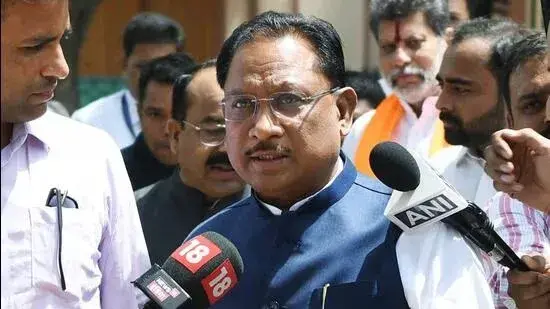
The Chhattisgarh government has announced the creation of a new “Good Governance and Convergence Department” to enhance the effective implementation of state welfare policies and ensure better governance. The decision was made during a cabinet meeting chaired by Chief Minister Vishnu Deo Sai on Tuesday. This newly formed department will integrate key initiatives such as e-Review, e-Public Service Guarantee, and the Digital Secretariat, which were previously managed by the General Administration department. The cabinet has also amended the “Chhattisgarh Government Work (Allocation) Rules” to facilitate this change. In addition, the cabinet approved the implementation of the National Education Policy (NEP) 2020 in the state. As part of this policy, education up to the 5th standard will be provided in local languages or dialects, and the current 10+2 academic structure will transition to the 5+3+3+4 format, focusing on equitable and inclusive education from pre-primary to the 12th grade. The cabinet also decided to extend the registration deadline for providing housing to economically weaker and lower-class families in Naya Raipur under the Mukhyamantri Aawas Yojana. The new deadline has been pushed from March 31, 2024, to March 31, 2027, allowing more time for eligible families to benefit from affordable housing schemes being developed in the area. Source: Hindustan Times

Chhattisgarh Cabinet Approves Formation of ‘Good Governance and Convergence Dept’ Read More »