ArdorComm Media Group

Saturday, February 7, 2026 7:26 PM

education

Prof. (Dr.) Shankar Ramamoorthy, Vice Chancellor, Jigyasa University, Dehradun Highlights Future-Ready Education at ArdorComm Education Leadership Summit & Awards 2025 in Dehradun
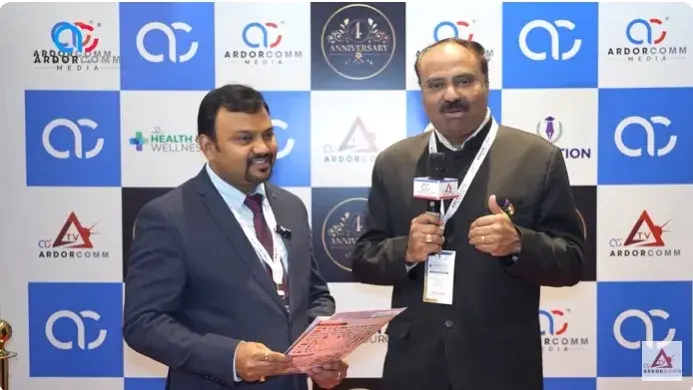
Prof. (Dr.) Shankar Ramamoorthy

We have a very senior academician with us, Prof. Dr. Shankar Ramamoorthy. He’s the Vice Chancellor of one of the finest universities of Uttarakhand, Jigyasa University, Dehradun. We welcome you to today’s event. Welcome and thank you very much. I think this has been a very wonderful journey, Mr. Anand, and I am pretty much honored to be part of the initiative that Mr. Anand has started—the ArdorComm Media. I think Ardor’s ensemble of putting all the people together in terms of industry and academia has been a very wonderful thing. We are enjoying this whole experience since morning. We’ve been hearing from all the educational leaders, we’ve been hearing from academicians, we’ve been hearing from industry experts—I think this has been a very wonderful journey. Personally, I must say that I feel that I’m a learner today. And after spending 35 years in the industry and academia, when I come back here, I say that what Mr. Anand is doing is very important because what we are teaching is something that is happening here. And we are going to factor the learnings from today and see that the curriculum is getting more and more enriched. I’ve been a very strong supporter of the job description model. In a job description model, I go to Naukri.com, I go to Shine, I go to Indeed, I see what are the job profiles. I tell my people to look at the job profiles, make curriculum, and make sure that you backfill all the knowledge that you have—from the industry to academia. Personally, spending in industry for 28 odd years in different cities like Bangalore, Mumbai, Pune—when I came back to academics, I really found that a lot has to be done here. And forums like this are a very, very enjoying experience. Thank you very much, Mr. Anand, for this.   Where do smart skills and a smarter workforce play a role? Do you really feel there is a gap here, and how should we overcome it? Absolutely. There is a lot of—a very big hiatus, a very big gap persists between the rubber and the ground. And the rubber has to hit the ground at the end of the day. So whatever rubber—or the students—we generate, they are working hard, but they’re not smart. They’re not industry-ready. They’re half-baked. And I think the moment has arrived that we have to make sure that we have industry-ready professionals. So it’s going to be a very different way of teaching them. It’s not going to be pedagogy—it has to be andragogy. It has to be more about micro-teaching, it has to be peer learning, it has to be activity-based learning. I think the formats—even of our benches in the classroom—have to undergo a sea change and a big overhaul. We need to have, you know, places where a conference-like setup is there, people think, people share, and people are able to give back to the class. Things like flipped learning, things like new forms of pedagogy have to come—and that’s the new normal future.   You very well said that the infrastructure of the school and university campuses also has to be changed. Do you feel there should be budget allocation or investment in infrastructure to be future-ready and digitalized? Exactly, I think when we start a school or a university or an education system, the most important thing they say is—like the six M’s of management—Men, Money, Material, Methods, Market, and Motivation. I think apart from having the right faculty (Men) and the Money, the most important thing is the Material. When I say material, I’m talking about infrastructure. I’m talking about digital infrastructure—right from smart classrooms, right from smart learning, right from everything. We need a good ERP, a good LMS, a good recruitment management system, faculty management system. I think we have to make sure that educational institutions’ workflow dynamics are becoming more optimized, more agile, and faster.   How is Jigyasa University growing, and what’s the vision of Jigyasa University? I am almost seven months old in Jigyasa University. I’m from Galgotias and Sharda before. So when I came to this university, I found that there’s a lot of things to be done. This university is trying to go up slowly in terms of its presence, visibility, and recognition. But the most important thing Jigyasa University has to do is—it has to make sure, apart from building a brand, it has to do the fundamental thing well: what happens in those 50 minutes of the class. I think that’s exactly where the lights, action, and the camera is. If you’re able to do that job well—the teaching and learning—I’ve told everyone, all will fall in place. That’s why I’m hiring the best faculty, I’m making sure that I have the best people, I pay the best possible remuneration to my faculty. And more important is—I’m developing a passion in the real teacher who has come to be an educator and not just for a job. So I’m telling them—I’m going to hire people who don’t want to do a job with us. And we really handpick students and faculty both for the same. I’m very pleased to share with you that we recently completed our fourth year of existence—this is our fourth anniversary as a media group. Any message or good wishes you’d like to give to ArdorComm Media Group? I think ArdorComm Media, in its last four years, has done a very wonderful job. I was going through your website before coming here and before I was selected to be a speaker here. I think in the last four years, you have been evolving continuously. And I have seen that the type of people you bring—right from the government, right from the policymakers, right from the academicians—I think the cast, ensemble, and the galaxy of people you bring is very perfect. And I wish all the best and good luck for the ArdorComm Media Group. Lots of
Prof. (Dr.) Shankar Ramamoorthy, Vice Chancellor, Jigyasa University, Dehradun Highlights Future-Ready Education at ArdorComm Education Leadership Summit & Awards 2025 in Dehradun Read More »

Arvind Mahajan, Chairman & MD, Spring Dales English School, Kathua shares insights on NEP, Innovation, and Global Collaboration in Schools, at ArdorComm Education Leadership Summit & Awards 2025 in Dehradun

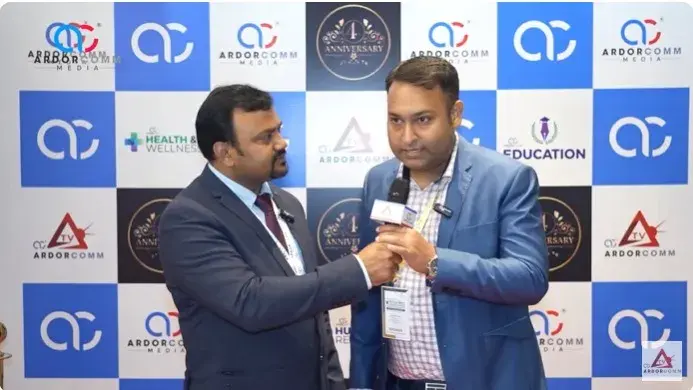
Arvind Mahajan

We have an esteemed educationist with us, Mr. Arvind Mahajan. He’s the Chairman and MD of Spring Dales English School, Kathua. We welcome you to today’s event. Thank you so much. And at the outset, I would like to heartily congratulate you for organizing such a wonderful event which is a platform for networking for all of us. Not only networking, but we get to learn so much and we collaborate with other co-educators. It’s a wonderful initiative you have started, and kudos to you and hats off to you. You’re giving certificates of achievement here, but I think you deserve the best achievement award for organizing such a wonderful event. I’m pleased and honored to hear that from you, Arvind. We’d like to know more about your schools. What are the key highlights? So we started in 1991 and we’ve been ranked among the top 10 state board schools of the country for four years by Education Today. The school is known as Spring Dales English School. We have a strength of around 1,100 students, and we have an Atal Tinkering Lab by NITI Aayog. We’ve produced state board toppers, IIIT-JEE 99.99 percentile scorers, and the like. The school boasts of excellent academic results. Recently, we also had a collaboration with Woosong University, South Korea, wherein students have a chance to study for their degrees online in India with opportunities to go abroad—multiple pathways across the US, UK, Canada, Australia, South Korea, etc. In terms of NEP implementation, what are the initiatives you are taking in your school? So one initiative came even before NEP—we got the gift of the Atal Tinkering Lab where project work, collaboration, and brainstorming began. Our students started preparing projects. One of our students got selected in Toycathon as one of the top 10 finalists of J&K and received an award from the Lieutenant Governor for creating a state locator game. Then our students went to IIT Delhi after winning the Budding Scientist McMillan Program. We also had Bhumika representing the Atal Innovation Marathon—her project was on a smart shopping cart. There are many achievements—many of our students have started creating innovative projects in school, and they’re getting highlighted. They’re presenting at exhibitions like IIT Jammu, National Startup Festivals, and more. How do events like this, with representation from KG to PG and from both government and corporates, help the education sector? I think it is very insightful. For example, the Ministry of Skill Development’s IAS, C. Ravi Shankar sir was here and gave a great insight into what the outlook is for the coming years. Connecting with universities—like Sunil Sir shared his view that education shouldn’t just stay in the institutions but must reach the student. That struck a chord with me. When we connect with such eminent educationists and learned persons, we also get many ideas that we can take back and implement at our schools. So I think you are creating a platform where educators are not only sharing their knowledge but also learning from others—and going back to implement that learning. It’s a learning opportunity for all of us. Though I’ve come here as a panel speaker, I treat it as a learning opportunity. I’m getting so many ideas and so much exposure to take back and implement for our students. ArdorComm Media recently completed its fourth year of existence. It’s our fourth anniversary. Any message or good wishes for the ArdorComm Media Group? I think you are doing a great job. Keep doing what you are doing. Your team is excellent—I’ve seen regular follow-ups from your team, educating me and guiding me. I think you guys are doing a brilliant job. Keep doing it. My best wishes are with you, and I hope to see you growing big—maybe at the international stage, going abroad and expanding. I wish you all the best for that.

Arvind Mahajan, Chairman & MD, Spring Dales English School, Kathua shares insights on NEP, Innovation, and Global Collaboration in Schools, at ArdorComm Education Leadership Summit & Awards 2025 in Dehradun Read More »

Govt Forms Panel to Probe Coaching Dependency and Fairness of Entrance Exams

The Ministry of Education has constituted a nine-member committee to investigate the growing dependence of students on coaching centres, the phenomenon of ‘dummy schools,’ and the integrity and fairness of competitive entrance exams like JEE and NEET, officials confirmed. Chaired by Higher Education Secretary Vineet Joshi, the committee will delve into systemic shortcomings within the school education framework that push students towards coaching hubs. The panel will examine the limited emphasis on critical thinking, analytical reasoning, innovation, and conceptual understanding in traditional schooling — factors that fuel rote learning and, in turn, coaching culture. One major concern to be addressed is the rise of ‘dummy schools’ — institutions where students enroll merely for board exam eligibility while devoting their full attention to intensive coaching. These setups allow aspirants to bypass classroom learning altogether, focusing solely on entrance exam preparation. Many also exploit state domicile criteria through such enrollments to gain regional admission advantages, such as eligibility for the Delhi state quota in medical colleges. “The committee will study how dummy schools undermine formal education and promote exclusive dependence on coaching. It will recommend ways to address this growing issue,” a senior ministry official said. The panel will also scrutinize the current model of entrance exams to assess their fairness and relevance in the context of mainstream schooling. It will investigate whether the absence of formative assessments and a weak focus on concept clarity in school systems are inadvertently supporting the proliferation of coaching institutes. Another key focus area is the imbalance between the rising demand for quality higher education and the limited seats available in top institutions — a gap that often drives students toward costly and stressful coaching environments. The panel’s mandate also includes evaluating students’ and parents’ awareness of diverse career opportunities beyond elite engineering and medical colleges. It aims to assess the status of career counselling mechanisms in schools and recommend strategies to enhance career guidance systems nationwide. Alongside Vineet Joshi, the committee comprises the CBSE chairperson, joint secretaries from the school and higher education ministries, representatives from IIT Madras, IIT Kanpur, NIT Trichy, NCERT, and principals from Kendriya Vidyalaya, Navodaya Vidyalaya, and a private school. This initiative follows increasing concerns over the coaching industry’s practices, including rising student suicides, fire hazards, inadequate infrastructure, and questionable teaching methods. The government hopes the panel’s findings will lead to more balanced, student-centric reforms in education and examination systems. Source: PTI

Govt Forms Panel to Probe Coaching Dependency and Fairness of Entrance Exams Read More »

PM Modi Chairs Day-Long Conclave with NDA CMs, Focuses on Good Governance and Development Synergies

Ardorcomm news

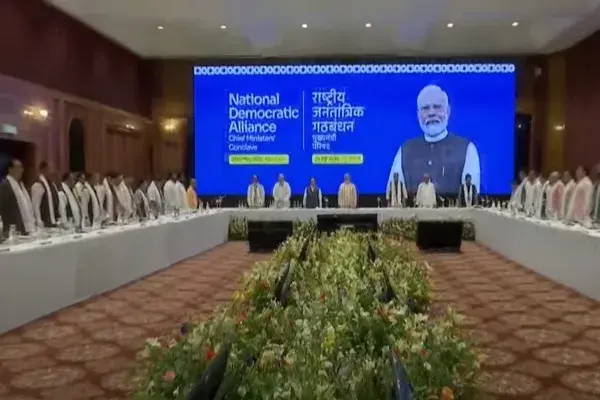
Prime Minister Narendra Modi chaired a comprehensive conclave in New Delhi, bringing together Chief Ministers and Deputy Chief Ministers from all 20 National Democratic Alliance (NDA)-governed states. The high-level meeting centred on strategies to accelerate development and ensure the effective delivery of governance through the “double-engine” model. Addressing the gathering, the Prime Minister stressed the importance of enhancing coordination and synergy across sectors such as healthcare, sanitation, agriculture, youth empowerment, and technology. He also encouraged states to intensify their efforts in delivering public services and creating impactful governance outcomes. In a post on social media, PM Modi highlighted the extensive discussions held during the conclave, which included sharing of successful models and initiatives from various states. These ranged from water conservation and grievance redressal mechanisms to administrative reforms, women empowerment, sports, and education. Organised by the BJP’s Good Governance Department, the conclave saw participation from 20 Chief Ministers and 18 Deputy Chief Ministers. Senior BJP leaders including Party President JP Nadda, Home Minister Amit Shah, and Defence Minister Rajnath Singh also took part in the day-long discussions. Speaking to the media after the meeting, BJP President JP Nadda stated that two key resolutions were adopted. The first praised the Indian armed forces for their bravery under Operation Sindoor, which targeted terror camps across the border. The second resolution reaffirmed the party’s stance on caste-based policies, clarifying that the BJP prioritises social integration and mainstreaming of backward communities without engaging in caste-based politics. The session also featured detailed presentations by the states showcasing their governance achievements. Additionally, leaders discussed preparations for major upcoming milestones, including the NDA government’s first anniversary on June 9, the 10th International Day of Yoga, and the 50th year since the declaration of the Emergency in 1975. The conclave reinforced the NDA’s collective commitment to good governance, innovation, and inclusive development across the nation. Source: newsonair  

PM Modi Chairs Day-Long Conclave with NDA CMs, Focuses on Good Governance and Development Synergies Read More »

Schools Reopen in Jammu and Kashmir Border Areas as Tensions Ease Between India and Pakistan

In a welcome move towards normalcy, the Directorate of School Education, Jammu, has announced the reopening of schools in several border regions of Jammu and Kashmir from May 15. The decision follows a period of heightened tension between India and Pakistan, which had led to the temporary closure of educational institutions for safety reasons. Students across districts like Jammu, Samba, Kathua, Rajouri, and Poonch are returning to classrooms after nearly a week-long suspension of academic activities. Zones in Jammu such as Chowki Choura, Bhalwal, Dansal, Gandhi Nagar, and Jammu are reopening their schools. In Samba, classes have resumed in the Vijaypur zone. Kathua district has also restarted educational operations in Barnoti, Lakhanpur, Sallan, and Ghagwal. In Rajouri, the affected zones of Peeri, Kalakote, Thanamandi, Moghla, Kotranka, Khawas, Lower Hathal, and Darhal have reopened schools. Similarly, in Poonch, educational institutions in Surankote and Buffliaz have resumed functioning. The move is a significant step towards restoring daily life and ensuring continuity in students’ education in these sensitive regions. The recent truce between India and Pakistan, marked by a halt in cross-border hostilities, has paved the way for this reopening. In Udhampur and parts of Kathua district—specifically Bani, Basholi, Mahanpur, Bhaddu, Malhar, and Billawar—government and private schools are also now operational. Morning visuals from Udhampur captured children enthusiastically returning to school in uniform, signaling a collective sigh of relief among families. This return to routine follows a tense period that began after the Pahalgam terror attack, which resulted in the loss of 26 lives. India responded with targeted strikes on terrorist camps in Pakistan and Pakistan-occupied Jammu and Kashmir under Operation Sindoor, reportedly neutralizing over 100 militants. The situation escalated briefly with retaliatory moves from Pakistan, but Indian Armed Forces swiftly countered the aggression. De-escalation efforts gained momentum after the Pakistani Director General of Military Operations (DGMO) reached out to his Indian counterpart, resulting in an understanding to cease further military actions. As classrooms once again fill with students and communities resume their daily rhythms, the reopening of schools stands as a hopeful indicator of peace returning to the border regions. Source: ANI Imagine credit: iStock    

Schools Reopen in Jammu and Kashmir Border Areas as Tensions Ease Between India and Pakistan Read More »

Andhra Pradesh Sanctions 2,260 Special Education Teacher Posts to Boost Inclusive Learning

In a landmark step towards strengthening inclusive education, the Government of Andhra Pradesh has sanctioned 2,260 new posts exclusively for special education teachers. This move is aimed at providing enhanced academic support to students with disabilities, particularly those with autism and mental challenges. According to the latest government order, 1,136 Special Grade Teacher (SGT) posts will be allocated at the primary level, while 1,124 School Assistant positions are sanctioned for secondary schools. These teachers will receive specialized training to address the unique learning requirements of children with special needs, fostering a more adaptive and inclusive educational environment. The District Selection Committee (DSC) is expected to release a recruitment notification soon. The selection process will assess candidates based on their qualifications, experience, and knowledge in special education, ensuring only well-equipped and empathetic educators take on these vital roles. Special education teachers are critical in tailoring instruction, modifying teaching methods, and supporting both the academic and social growth of students with disabilities. Their presence in classrooms is fundamental to nurturing an inclusive and empowering educational ecosystem. Welcoming the decision, the Andhra Pradesh Unemployed Special Teachers Federation (APUSTF) noted that this was a long-pending demand. The state had not recruited special educators in nearly seven years, and the federation had been advocating for their appointment for the past two years. APUSTF President M Venkata Naidu highlighted that the state has around 1.12 lakh children with special needs, and nearly 15,000 trained special educators have been awaiting the DSC notification. The new recruitment drive marks a hopeful turning point for inclusive education in Andhra Pradesh. Source: TOI

Andhra Pradesh Sanctions 2,260 Special Education Teacher Posts to Boost Inclusive Learning Read More »

University of Leeds Offers £6,000 Scholarships for International Students

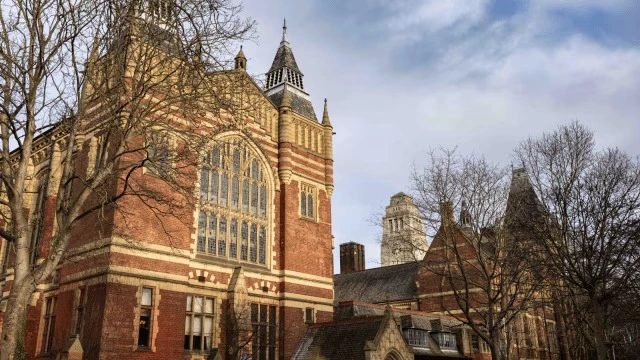
The University of Leeds has announced the International Masters Regional Scholarships for the 2025 academic session, offering a £6,000 tuition fee reduction for international students, including those from India. This initiative aims to support talented students by easing financial burdens. The scholarship is available to students from selected countries, including India, Egypt, France, Germany, Japan, Mexico, Peru, South Korea, Spain, Taiwan, Thailand, Turkey, UAE, USA, and Vietnam. Eligibility is limited to nationals of these countries, and mere domicile status does not qualify a student. To receive the scholarship, applicants must: Be classified as international fee-paying students. Hold a conditional or unconditional offer for a taught Masters course at the University of Leeds in 2025. Be self-funding or partially funded. Register as a University of Leeds student by January 30, 2026. Accept their admission offer and, if required, pay a £2,000 tuition fee deposit by the specified deadline. The Leeds MBA program and fully online courses are excluded from this scholarship. Additionally, students applying through International Partner Agreements can only accept the highest-value scholarship if eligible for multiple awards. Unlike many competitive scholarships, the International Masters Regional Scholarship does not require a separate application. Eligible students will automatically receive the award and be notified via email. The £6,000 scholarship will be applied as a tuition fee reduction in the second semester, with students encouraged to opt for an installment payment plan. It can also be combined with other School or Faculty scholarships or external funding, provided the total funding does not exceed 100% of tuition fees. Source: Indian Express

University of Leeds Offers £6,000 Scholarships for International Students Read More »

IIM Lucknow Faculty Research Reveals How Diversity & Inclusion Initiatives Shape Consumer Choices in Hospitality

Indian Institute of Management Lucknow faculty Prof. Vishakha Chauhan explores the ways in which Diversity, Equity, and Inclusion (DEI) initiatives influence consumer decisions in the hospitality industry. Published in the Journal of Hospitality Marketing and Management, the collaborative research emphasises that encouraging diversity and inclusion has now become a strategic requirement for hospitality brands to effectively serve an increasingly diverse customer base. The study examines how DEI initiatives affect consumer sentiments, brand integrity, and purchase decisions through two controlled experiments. Ø  The first experiment examines how DEI commitments influence brand attitudes in the context of a fictitious hospitality brand Ø  The second experiment builds on these findings using a real-world hotel brand. Based on the experiments, the research team from IIM Lucknow, IIM Sambalpur and Lal Bahadur Shastri Institute of Management, Delhi, found that consumers have a favorable opinion of hospitality brands that actively use DEI initiatives in hiring, training, marketing, and customer service. Additionally, DEI initiatives also influence brand integrity in a positive way, which enhances consumer perception. Also, compared to socially conscious customers, materialistic customers are less impacted by a hotel’s DEI initiatives. These insights highlight the necessity of customised marketing approaches that appeal to different customer segments. Speaking about the significance of this research, Dr. Vishakha Chauhan, Assistant Professor, Marketing, IIM Lucknow, said, “The hospitality and tourism sector is exposed to a diverse segment of consumers globally; hence it is extremely crucial for this industry to adopt diversity, equity and inclusion practices. Our research presents empirical evidence of the positive impact of these practices on how consumers perceive and choose a hospitality brand” The study underscores that it is important for the firms to match their advertisements with genuine internal processes, as simply showcasing diversity in advertisements is insufficient. Transparent communication regarding diversity and inclusion initiatives, workforce policies that encourage genuine inclusivity, diversity training for staff to enhance customer experience, and authentic representation of marginalised communities in campaigns and events are all examples of effective DEI techniques. For example, hospitality brands hosting LGBTQ+ Pride Month celebrations should collaborate with the represented communities to maintain credibility and consumer trust. With consumers, especially younger generations, aligning more with brands that reflect their values, DEI initiatives are not just moral obligations but also effective economic strategies. This research provides hospitality leaders with actionable insights to strengthen brand reputation, build consumer trust, and enhance competitiveness in an increasingly diverse marketplace. The complete study is available in a research paper co-authored by Dr. Vishakha Chauhan, Assistant Professor, Marketing, IIM Lucknow, Dr. Aqueeb Sohail Shaik, Assistant Professor, Strategy, IIM Sambalpur, and Dr. Mansi Gupta, Assistant Professor, Marketing, Lal Bahadur Shastri Institute of Management, Delhi. Disclaimer: This report is generated from PR/ PRO services. ‘ArdorComm Media’ holds no responsibility for its content.

IIM Lucknow Faculty Research Reveals How Diversity & Inclusion Initiatives Shape Consumer Choices in Hospitality Read More »

Marg Vidhyalaya Chennai Creates History with Three Elite World Records

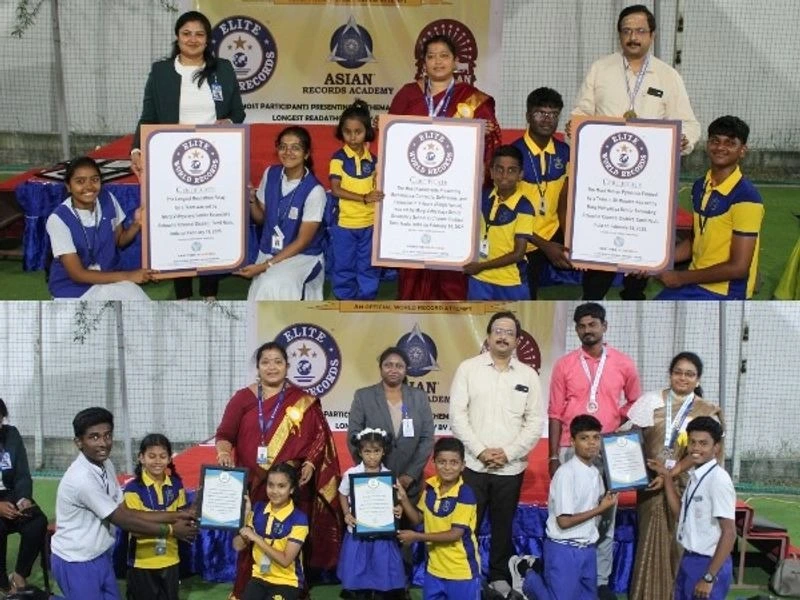
Marg Vidhyalaya Senior Secondary School has once again showcased its excellence on a global scale, setting three prestigious world records on February 14, 2025. Recognized by Elite World Records, Asian Records Academy, India Records Academy, and Tamilan Book of Records, this remarkable achievement highlights the school’s commitment to holistic student development. The students displayed extraordinary teamwork and coordination by setting a world record for the Most Human Pyramids Formed by a Team in 30 Minutes. A total of 133 human pyramids were successfully built by 290 participants, demonstrating exceptional agility, balance, and discipline. The second record, Longest Readathon Relay by a Team, saw 319 students engage in a reading marathon lasting 12 hours and 2 minutes in English, Tamil, and Hindi. This feat reflects the school’s dedication to fostering literacy and a strong reading culture. The third record, Most Participants Presenting Mathematics Concepts, Definitions, and Formulae in 3 Hours (Single Venue), featured 167 participants, with 165 successfully completing the challenge. This achievement underscores the institution’s focus on mathematical excellence and logical reasoning. Senior adjudicators praised the students’ dedication and perseverance. R. Rakshitha, Senior Adjudicator, Elite World Records, commended their talent, while P.G. Prathiba, Adjudicator, Asian Records Academy, lauded their enthusiasm. U. Nagajothi, Records Manager, Tamilan Book of Records, called it a historic moment for the school. Principal Smt. Geetha expressed immense pride, emphasizing the students’ hard work and commitment. Ganesh, Correspondent of Marg Vidhyalaya, highlighted the school’s focus on nurturing students beyond academics, fostering teamwork, endurance, and problem-solving skills. Students and parents also shared their excitement, calling the achievement an unforgettable experience that instilled confidence, resilience, and a spirit of perseverance. Marg Vidhyalaya’s outstanding success continues to set new benchmarks in education, inspiring students to aim higher in both academics and extracurricular pursuits. Source: Tribune

Marg Vidhyalaya Chennai Creates History with Three Elite World Records Read More »

Allegations of Paper Leak and Chaos Mar BPSC 70th Prelims Exam 2024

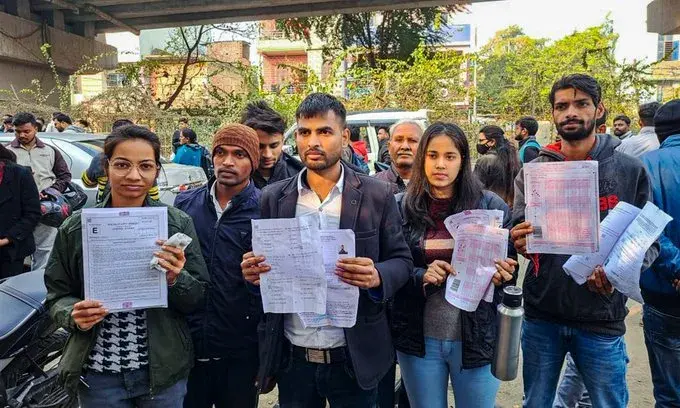
The BPSC 70th Integrated Combined Competitive Examination (CCE) 2024 prelims, held on December 13, faced allegations of paper leaks and chaos at a Patna exam center. Students reported late distribution of question papers and threats from unidentified individuals. The exam was conducted in a single shift across 912 centers in Bihar, with negative marking for incorrect answers. Successful candidates will proceed to the main exam, with 2,035 vacancies to be filled. The Bihar Public Service Commission (BPSC) 70th Integrated Combined Competitive Examination (CCE) 2024 preliminary exam, conducted on December 13, has been overshadowed by allegations of paper leaks and disorder at one of the exam centers in Patna. Reports indicate that some students experienced delays in receiving their question booklets and OMR sheets, with claims that the papers were distributed an hour late in some instances. Adding to the controversy, students alleged that unidentified individuals entered the examination halls and issued threats to candidates. These incidents have raised serious concerns about the integrity and security of the examination process. The BPSC 70th preliminary exam was held in a single shift from 12 noon to 2 pm across 912 centers throughout Bihar. Despite the issues reported at the Patna center, the exam proceeded as scheduled in other locations. The preliminary exam is a crucial step in the recruitment process, with negative marking applied for incorrect answers. Only those who pass this stage will be eligible to take the BPSC CCE main exam, the dates for which will be announced following the declaration of the prelims results. The BPSC aims to fill 2,035 vacancies through this competitive examination. However, the allegations of paper leaks and the chaotic scenes at the Patna center have cast a shadow over the process. Speaking to news agency ANI, several students expressed their frustration and disappointment, citing instances of torn question booklet seals and answer sheets found in inappropriate places, such as toilets. The BPSC has yet to respond to these allegations, and the situation remains tense as candidates and their families await further clarification and action from the authorities. The integrity of the examination process is paramount, and these allegations highlight the need for stringent measures to ensure fairness and transparency in future exams. Source: Indian Express Photo Credit: Indian Express

Allegations of Paper Leak and Chaos Mar BPSC 70th Prelims Exam 2024 Read More »