ArdorComm Media Group

Tuesday, April 14, 2026 2:21 PM

government schools

Delhi High Court Criticizes Poor Conditions in North-East District Government Schools, Calls for Urgent Action

The Delhi High Court has issued scathing criticisms of the deplorable conditions observed in government schools within the city’s north-east district. Highlighting issues such as broken desks, classroom shortages, and a lack of essential materials like books, the court has emphasized the urgent need for accountability among education officials and swift measures to rectify the situation. In response to a damning report presented by lawyer Ashok Agarwal, who documented the discrepancies firsthand, the court expressed dismay at the state of affairs and demanded immediate action. Acting Chief Justice Manmohan, leading the bench, admonished education department officials, urging them to take proactive steps beyond mere announcements in newspapers. The bench highlighted the gravity of the situation, noting overcrowded classrooms with up to 144 children per room and schools being run from tin buildings. Such conditions, the court argued, not only impede learning but also endanger the well-being of students, particularly in extreme temperatures. Emphasizing the fundamental importance of education and its impact on young lives, the bench underscored the need for officials to prioritize ground-level inspections and interventions. It pointed out the lack of senior functionaries’ children attending these schools as symptomatic of systemic neglect and called for urgent corrective action. Acknowledging the NGO Social Jurist’s public interest litigation, represented by Agarwal, the court emphasized the violation of students’ fundamental right to education. It directed the education secretary to file a detailed affidavit, outlining steps to address the reported deficiencies and assigning responsibility to negligent officials. Furthermore, the court ordered the relocation of students from schools housed in inadequate tin buildings and mandated the provision of essential resources, including desks, books, and writing materials, to all students without delay. With the matter scheduled for further hearing on April 23, the court’s firm stance reflects its commitment to ensuring quality education for all, holding officials accountable, and safeguarding the constitutional rights of students.  
Delhi High Court Criticizes Poor Conditions in North-East District Government Schools, Calls for Urgent Action Read More »

Chandigarh Education Department Sells E-Waste from Schools, Allocates Funds for New Computers

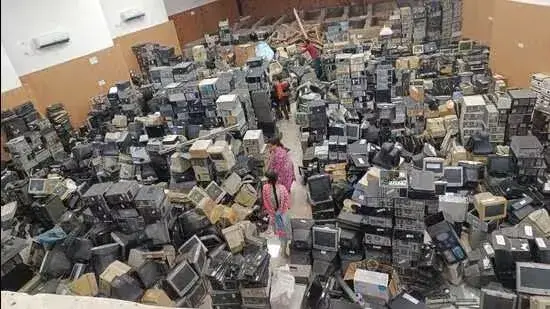
The Chandigarh education department has initiated the sale of e-waste from government schools, generating revenue of ₹36 lakh through the government e-marketplace (GeM) portal. This move, aimed at disposing of obsolete electronic items, aligns with the Swachhata Abhiyan launched by the prime minister. The e-waste sale includes a variety of items such as computers, monitors, CPUs, keyboards, typewriters, UPS, batteries, among others, totaling 87 categories. These items, currently stored in the basement of Government Model Senior Secondary School, Sector 10, will be recycled following the end of the academic year. The disposal process adheres to guidelines issued by the UT administration in 2014, categorizing items based on their lifespan and usability. E-waste, once declared obsolete, is disposed of in accordance with the e-Waste (Management & Handling) Rules, 2011, through registered e-waste collectors/recyclers. Director School Education Harsuhinderpal Singh Brar expressed satisfaction with the clearance of obsolete waste, noting that space can now be effectively utilized. Additionally, the education department has allocated funds to purchase around 1,000 new computers for government schools, meeting the requirement of 40 working computers per school mandated by the Central Board of Secondary Education (CBSE). The tender for new computers has been awarded to Dell, featuring specialized units with the CPU integrated behind the monitor, at a cost of ₹40,000 per computer. Through these initiatives, the Chandigarh education department aims to modernize school infrastructure, ensure compliance with CBSE standards, and contribute to environmental sustainability by responsibly managing e-waste.

Chandigarh Education Department Sells E-Waste from Schools, Allocates Funds for New Computers Read More »

Dr. S. K. Rathor, Founder, Chairman & MD, Sanfort Group of Schools, Shares his views on Vision 2030 for Education Sector

“My request is that every progressive private school should handhold one budget school, one government school, or one school in a rural area to help uplift them and bring their education level up to par with children in more privileged schools,” says Dr. S. K. Rathor, Founder, Chairman & MD, Sanfort Group of Schools, in an Interview with Pratik Ghosh, Content Writer, ArdorComm Media Group at the ‘New Normal – Education Leadership Summit & Awards 2023’ #ELSANewDelhi #ELSAGurugram How are you feeling to witness the New Normal Education Leadership Summit and Awards in Delhi? Thank you so much for inviting me. I’d like to share that when Chandan and Ashish were planning their first event two years ago, they met me. I’ve known them for many years, and they explained their plan to start their own venture. I’m delighted to see the remarkable growth that your company have achieved in just two short years. Today’s event is much better than the first one, which was the first physical event post-COVID in the industry. I must say it’s a significant achievement, and I look forward to an even bigger event with a larger audience next year. The theme of our event is India Vision 2030. What do you think should be the vision for the school education sector? The vision for the school education sector shouldn’t be limited to any particular group or individual; it should be a vision for the entire country. Our Prime Minister has introduced the National Education Policy, which prioritizes Early Childhood Education for the first time in our education system. When it comes to private schools, many have good infrastructure and budgets for investment. However, it’s crucial to remember that a significant portion of our population attends government schools, budget schools, or schools in rural areas, and these children come from less privileged backgrounds. My request is that every progressive private school should handhold one budget school, one government school, or one school in a rural area to help uplift them and bring their education level up to par with children in more privileged schools. Only then can the National Education Policy truly become a reality on the ground. The government cannot do it all; it’s the duty of every educator and private institution to support government schools and underprivileged children. Any message for ArdorComm Media Group? ArdorComm Media is doing a fantastic job, and I believe you will experience multi-fold growth in the next couple of years. I wish you to become the premier organization for education conferences and seminars in the country.

Dr. S. K. Rathor, Founder, Chairman & MD, Sanfort Group of Schools, Shares his views on Vision 2030 for Education Sector Read More »