ArdorComm Media Group

Tuesday, November 24, 2026 1:39 AM

Healthcare News

Government proposes immediate suspension of manufacturing licences for substandard drugs

The Union Health Ministry has proposed changes to the Drugs Rules, 1945, that would allow authorities to immediately suspend the manufacturing licences of pharmaceutical companies producing medicines that fail to meet specified critical quality standards. The proposed amendments, announced on November 4, 2026, aim to strengthen drug quality monitoring, enable faster regulatory action against substandard medicines and prevent potentially unsafe products from remaining in circulation. Under the existing rules, suspension or cancellation of a drug manufacturing licence generally involves a prescribed regulatory process, including the issuance of a show-cause notice. This can create a delay between the identification of a Not of Standard Quality (NSQ) drug and the initiation of action, during which the medicine may continue to be available in the market. To address this gap, the ministry has proposed empowering the Central Licensing Approving Authority or the concerned State Licensing Authority to immediately suspend a drug’s manufacturing licence after receiving a Government Analyst’s report declaring it NSQ on specified parameters. These include assay, dissolution, related substances, impurities and sterility. According to the ministry, failures involving these parameters can directly affect medicine quality and patient safety, requiring immediate regulatory intervention. Manufacturers must implement corrective measures The proposed framework also specifies conditions for revoking a suspension. Manufacturers will be required to conduct a comprehensive root cause analysis to identify the reasons behind the quality failure and implement appropriate Corrective and Preventive Action (CAPA). The suspension will remain in force until the licensing authority is satisfied that the necessary corrective measures have been implemented and verified. This is intended to ensure that quality deficiencies are properly addressed and measures are taken to prevent similar failures in the future. The ministry has also proposed changes to Form 13, which covers Government Analyst test reports, to improve communication and coordination among regulatory authorities and industry stakeholders. Under the revised mechanism, copies of NSQ reports will be sent to the Drugs Controller General of India (DCGI), the relevant State or Union Territory Licensing Authority overseeing the manufacturing facility, and the manufacturer and marketer of the concerned medicine. The government said the arrangement would facilitate faster information sharing, coordinated regulatory action and greater accountability across the pharmaceutical manufacturing and distribution chain. Draft amendments open for public consultation The proposed changes follow discussions at the 65th meeting of the Drugs Consultative Committee held on December 20, 2024, and recommendations made during the 92nd meeting of the Drugs Technical Advisory Board on April 24, 2025. The amendments are expected to improve post-marketing drug surveillance, strengthen action against manufacturers of substandard medicines and enhance accountability among pharmaceutical companies and marketers. The draft rules have been released for public consultation. Stakeholders and members of the public can submit their objections and suggestions within 30 days from the date on which the relevant Gazette of India notification becomes available. Source: The Hindu

Government proposes immediate suspension of manufacturing licences for substandard drugs Read More »
J&K MBBS, BDS Interns Begin Indefinite Strike Over Rs 12,300 Stipend, Demand Rs 30,000

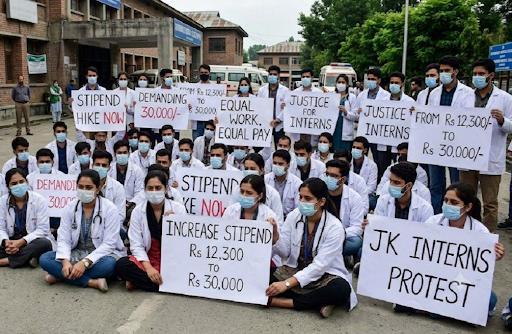
MBBS and BDS interns across medical colleges in Jammu and Kashmir have launched an indefinite strike demanding an increase in their monthly stipend from the existing Rs 12,300 to Rs 30,000. The interns staged dharnas in Jammu, alleging that their stipend has remained unchanged for nearly seven years despite repeated representations to the authorities. The protesting interns said the current stipend has failed to keep pace with inflation, rising living costs and the compensation offered to medical interns in other states. They also highlighted the workload involved in their clinical duties, including emergency services, night shifts and rural postings. Dr Shahnawaz, one of the protesting interns, said MBBS and BDS interns across J&K had joined the agitation over the long-pending demand. He said interns routinely work 24-hour and night shifts and are posted in rural areas, while receiving roughly Rs 400 a day. According to the interns, stipends in several other states range between Rs 25,000 and Rs 45,000 or more. They argued that since interns across the country perform broadly similar clinical responsibilities, the significant difference in stipends is difficult to justify. The protesters said interns are often among the first medical personnel to attend to patients in emergency departments and also assist doctors in OPDs, wards, procedures and other hospital services. Despite these responsibilities, they continue to receive Rs 12,300 a month in J&K. “We have launched an indefinite strike and are on dharna in support of our demand to enhance our stipend to Rs 30,000,” said Dr Abhinav Bhat, another protesting intern. He added that the interns want a formal written order from the government rather than verbal assurances. The interns also pointed to previous efforts to revise the stipend. According to Dr Bhat, a committee constituted by the Health and Medical Education Department in 2023 had recommended increasing the stipend to around Rs 25,000 for 2025-26. The matter was subsequently raised during the 2026 Assembly session, where a proposed stipend of around Rs 26,300 was mentioned. However, the interns claimed that the proposed revision has not yet been implemented and that the file remains pending. They alleged that they have received conflicting information regarding its status, with different officials directing them towards the Chief Minister’s office or the Finance Department. The comparative figures shared by the protesting interns show a substantial gap between J&K and several other states. Odisha has the highest listed monthly stipend at Rs 44,319, followed by West Bengal at Rs 43,099 and Assam at Rs 35,000. Karnataka offers Rs 30,000, while Kerala provides Rs 27,300 and Delhi and Meghalaya Rs 26,300. Telangana’s stipend is listed at Rs 25,900, while Arunachal Pradesh and Uttar Pradesh offer Rs 25,000. Tamil Nadu provides around Rs 25,000, followed by Haryana at Rs 24,310 and Andhra Pradesh at approximately Rs 21,840. Gujarat, Bihar, Goa and Himachal Pradesh offer around Rs 20,000 a month, while Puducherry provides Rs 18,000. In comparison, J&K’s Rs 12,300 stipend is the lowest among the figures cited by the interns. The protesters said their demand for a Rs 30,000 stipend takes into account both inflation and the responsibilities handled by interns in government medical colleges. Their banners carried the message, “Same work, same dedication and fair stipend.” The interns have maintained that the strike will continue indefinitely until the government accepts their demand and formally issues an order revising the stipend. Source: PTI

J&K MBBS, BDS Interns Begin Indefinite Strike Over Rs 12,300 Stipend, Demand Rs 30,000 Read More »

Novartis India Launches Pluvicto, Bringing Advanced Precision Therapy for Prostate Cancer Patients

Novartis India has announced the launch of Pluvicto, India’s first regulatory-approved radioligand therapy designed for eligible patients suffering from PSMA-positive metastatic prostate cancer, marking a significant advancement in precision oncology treatment in the country. The newly introduced therapy, Pluvicto (lutetium-177Lu vipivotide tetraxetan), works by specifically targeting prostate cancer cells while reducing damage to surrounding healthy tissues. The treatment offers a new approach for managing advanced-stage prostate cancer, a condition that continues to place a growing health burden on patients and families across India. Prostate cancer is emerging as one of the fastest-rising cancers among Indian men, with nearly 250,000 cases reported annually, particularly affecting urban populations. According to the company, nearly half of all diagnosed patients are detected at the metastatic stage, making treatment more challenging and limiting available therapeutic options. Judith Love, Region Head for Asia Pacific, Middle East, and Africa at Novartis, highlighted that India remains a key market for the company as demand grows for advanced cancer treatments. She noted that the introduction of Pluvicto reflects Novartis’ commitment to expanding access to globally recognized innovations while leveraging India’s rapidly growing nuclear medicine infrastructure. Amitabh Dube, Country President and Managing Director of Novartis India, emphasized that many prostate cancer patients in India are diagnosed only after the disease progresses significantly, reducing treatment effectiveness. He stated that bringing Pluvicto to India addresses the increasing demand for precision oncology solutions and supports the future development of nuclear medicine-based therapies. India’s nuclear medicine ecosystem has expanded considerably over the past decade, with more than 250 nuclear medicine centres currently operational nationwide. Novartis plans to work closely with hospitals, oncologists, nuclear medicine specialists, and healthcare institutions to strengthen treatment access and ensure readiness for radioligand therapy adoption. Pluvicto will be introduced through selected hospitals and nuclear medicine centres across India under Novartis’ partnership-driven strategy to improve access to next-generation cancer care. Source: The Hindu  

Novartis India Launches Pluvicto, Bringing Advanced Precision Therapy for Prostate Cancer Patients Read More »

Kerala Reports 85 Confirmed Shigellosis Cases in 2026, Health Department Intensifies Preventive Measures

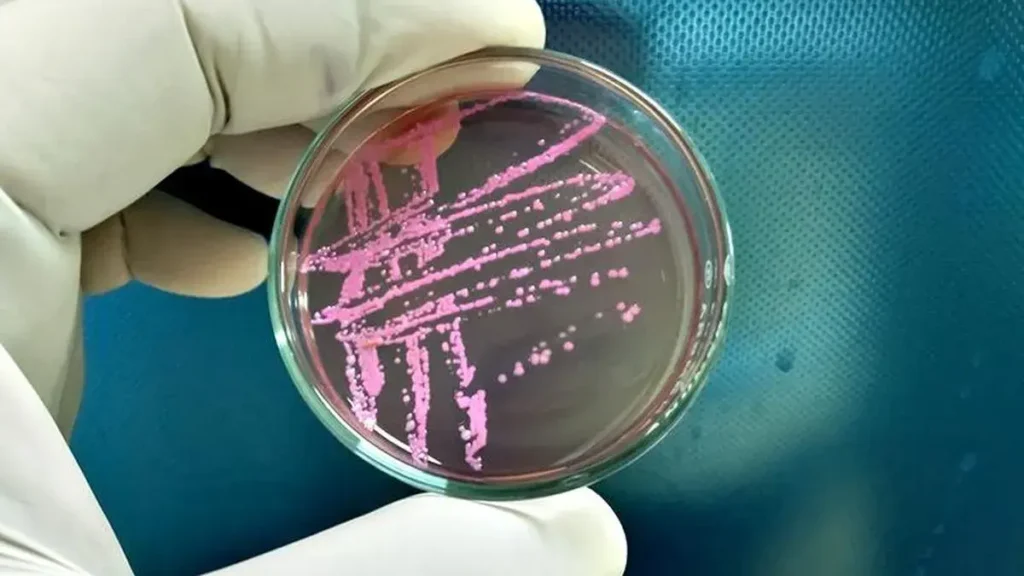
Kerala has reported 85 confirmed cases and more than 70 suspected cases of shigellosis, a highly contagious bacterial infection commonly known as bacillary dysentery, as of June 7, prompting health authorities to strengthen preventive measures across the state. The disease, caused by Shigella bacteria, has been detected sporadically in all districts, with localized outbreaks reported in Wayanad, Kozhikode, Alappuzha, and Malappuram. In Wayanad, two students from Mar Baselios School tested positive on Monday, while several other children are suspected to have contracted the infection. Health officials have expressed concern over the vulnerability of children under five years of age, the elderly, and immunocompromised individuals. While most healthy adults recover without complications, the disease can prove fatal in high-risk groups. Kerala has recorded two child fatalities linked to shigellosis this year, one in April and another on June 6, both in Kozhikode. Shigellosis spreads through contaminated food, water, and surfaces, as well as through close contact with infected individuals. Symptoms typically appear within one to two days and include fever, diarrhoea, vomiting, nausea, abdominal discomfort, blood in stools, and frequent painful bowel movements. The Health Department has urged the public to maintain strict personal and food hygiene practices, including thorough handwashing with soap before meals, food preparation, and after using the toilet. People have also been advised to consume boiled drinking water, avoid stale or raw foods, use ORS to prevent dehydration, and complete prescribed antibiotic courses. Households with infected individuals have been instructed to keep personal items, utensils, clothing, and bedding separate to prevent transmission. Recovered patients have also been advised to avoid serving food or attending public gatherings for at least two weeks after symptoms disappear. Food establishments have been directed to ensure hygienic food handling practices and verify the health status of food handlers. Authorities have also warned against the use of industrial ice in beverages. Health Minister K. Muraleedharan said the Food Safety Department has been instructed to intensify inspections and take action, including issuing closure notices, against eateries and street vendors found violating hygiene norms. Meanwhile, Opposition Leader Pinarayi Vijayan called for urgent and coordinated action by health authorities and local self-government bodies to prevent further spread of the infection across the state. Source: The Hindu

Kerala Reports 85 Confirmed Shigellosis Cases in 2026, Health Department Intensifies Preventive Measures Read More »

PCOS Renamed as PMOS in Landmark Move to Improve Global Diagnosis and Women’s Healthcare

In a major step toward better awareness and treatment, the condition long known as Polycystic Ovary Syndrome (PCOS) has officially been renamed Polyendocrine Metabolic Ovarian Syndrome (PMOS). The disorder affects more than 170 million women globally, or roughly 1 in 8 women, and experts say the new name more accurately reflects its complex nature. The renaming initiative was the result of a 14-year international collaboration involving over 50 medical and patient advocacy organizations, including the Endocrine Society. The announcement and findings were published in The Lancet. Health experts explained that the old term “PCOS” often created confusion by focusing on ovarian cysts, despite evidence showing that abnormal cysts are not a defining feature of the condition. This misunderstanding frequently led to delayed diagnoses, incomplete treatment, and a narrow view of a disorder that also impacts hormones, metabolism, mental health, skin, weight management, and reproductive health. Professor Helena Teede of Monash University, who led the global process, said the new terminology is designed to improve recognition and long-term care for millions of women. She noted that although medical guidelines have improved over time, changing the name was essential to better reflect the science and lived experiences of patients. The consultation process included more than 22,000 survey responses, workshops with healthcare professionals, and direct input from women living with the condition across multiple countries. Experts also emphasized the importance of selecting a name that works across cultures and avoids unnecessary stigma, especially in regions where reproductive terminology can carry social sensitivity. A three-year transition period has now begun, with global education campaigns underway. PMOS is expected to be fully adopted in the 2028 International Guideline update. Patient advocates welcomed the change, calling it a historic moment that could lead to earlier diagnosis, fairer healthcare access, and stronger research investment for future generations. Source: Endocrine Society  

PCOS Renamed as PMOS in Landmark Move to Improve Global Diagnosis and Women’s Healthcare Read More »